
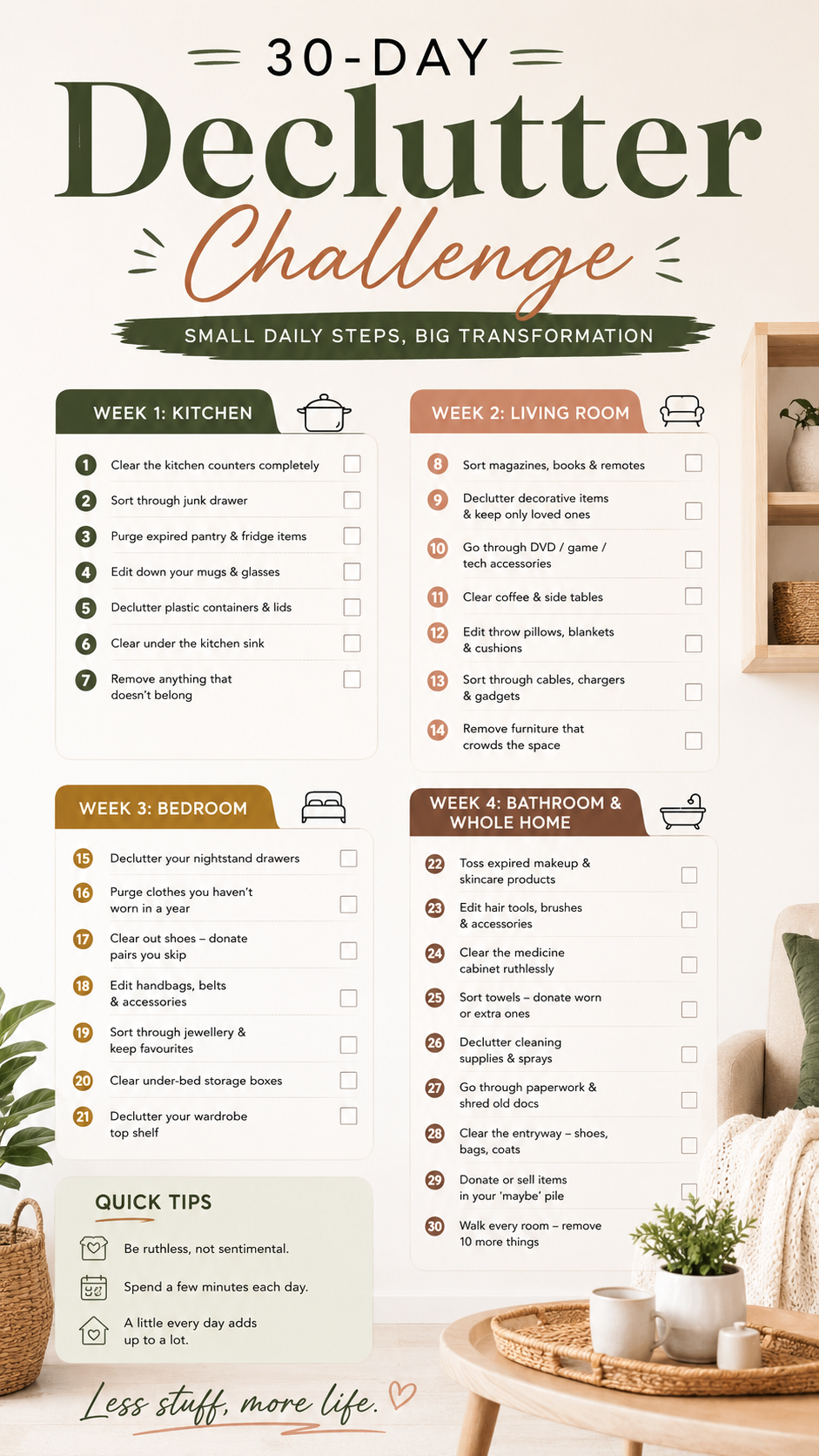
A cluttered home can make everyday life feel more stressful than it needs to be. Piles of paperwork, overflowing drawers, crowded countertops, and closets packed with unused items all compete for attention. The good news is that creating a more organized living space does not require a complete home makeover in a single weekend. A structured 30-day decluttering challenge can help you make meaningful progress through small, manageable daily tasks that fit into a busy schedule.
Instead of trying to tackle an entire house at once, the secret is focusing on one area each day. This approach reduces overwhelm, builds momentum, and creates lasting habits that support a cleaner and more peaceful home. Whether you are embracing minimalism, preparing for a fresh start, or simply looking to improve your home organization, a month-long decluttering plan can be a powerful solution.
Key Takeaways
- Small daily decluttering tasks are easier to maintain than large cleaning projects.
- Focusing on one room at a time reduces decision fatigue.
- Consistent decluttering creates a more functional and relaxing home.
- Removing unused items can free up valuable storage space.
- Daily organization habits help prevent future clutter buildup.
- A 30-day challenge creates structure and accountability.
Why a 30-Day Decluttering Challenge Works
Many people fail at organizing because they approach it as a massive project. Looking at an entire home full of clutter can feel intimidating. A 30-day decluttering challenge breaks the process into simple steps that are easier to complete and maintain.
When you focus on one small task per day, you avoid burnout. Each completed task provides a sense of accomplishment, motivating you to continue. Over time, these small wins add up to significant transformation.
Important: Sustainable home organization is not about perfection. It is about creating systems and routines that make daily life easier while reducing visual and mental clutter.
Week 1: Transforming the Kitchen
The kitchen is often one of the busiest spaces in the home. It collects everything from expired food and duplicate utensils to random household items that do not belong there.
Start with Clear Surfaces
Kitchen counters tend to become catch-all spaces. Clearing them creates an immediate visual improvement and makes cleaning easier. Keep only the items you use daily and store everything else in designated spaces.
Conquer the Junk Drawer
Almost every kitchen has one. Empty the drawer completely, sort items into categories, discard broken objects, and create simple organizational zones for what remains.
Purge Expired Pantry Items
Expired spices, forgotten snacks, and old canned goods take up valuable space. Reviewing expiration dates and removing unused products creates room for items you actually use.
- Check all pantry shelves.
- Inspect refrigerator contents.
- Donate unopened, non-expired items when appropriate.
- Group similar foods together.
Small kitchen improvements often have a surprisingly large impact because this room is used multiple times every day.
Why This Matters
An organized kitchen saves time, reduces food waste, and makes meal preparation significantly less stressful. Even a few minutes of daily decluttering can improve how the space functions.
Week 2: Refreshing the Living Room
The living room is often the center of family activity. Because it serves multiple purposes, clutter can accumulate quickly.
Reduce Visual Clutter
Magazines, remote controls, cables, decorative accessories, and blankets can create a crowded appearance. Start by removing everything from visible surfaces and only returning what serves a purpose or brings genuine enjoyment.
Review Decorative Items
Decor should enhance a space rather than overwhelm it. Select a few meaningful pieces and consider storing or donating items that no longer match your style.
Manage Electronics and Accessories
Old gaming accessories, unused DVDs, tangled cords, and outdated devices can take up considerable space. Sort these items carefully and recycle electronics responsibly whenever possible.
Pro Tip: Keep a small basket in the living room for everyday items that tend to wander around the house. This creates a designated home for clutter before it spreads.
Week 3: Creating a Peaceful Bedroom
Your bedroom should promote rest and relaxation. Excess clutter can interfere with that goal by creating visual distractions and reducing storage efficiency.
Simplify Nightstands and Drawers
Nightstands often collect books, chargers, receipts, and miscellaneous items. Limit contents to essentials that support your evening and morning routines.
Evaluate Your Wardrobe
One of the most effective decluttering strategies is reviewing clothing you no longer wear. Ask yourself practical questions:
- Have I worn this in the past year?
- Does it fit comfortably?
- Would I buy it again today?
- Does it suit my current lifestyle?
Answering honestly can help identify items that are ready to be donated or recycled.
Organize Accessories and Shoes
Shoes, handbags, belts, and jewelry often accumulate faster than expected. Group similar items together and keep only your favorites easily accessible.
Reducing wardrobe clutter not only saves space but also simplifies daily decision-making.
Week 4: Bathroom and Whole Home Reset
The final week focuses on overlooked spaces and finishing touches that bring the entire home together.
Clear Expired Products
Bathrooms often contain expired skincare products, makeup, medications, and personal care items. Reviewing expiration dates helps improve organization and safety.
Streamline Towels and Linens
Many households keep more towels than necessary. Retain enough for regular use and guests while donating extras in good condition.
Sort Important Papers
Paper clutter can become overwhelming when left unmanaged. Create separate categories for:
- Documents to keep
- Documents to shred
- Items requiring action
- Reference materials
This simple system can dramatically reduce stacks of paperwork throughout the home.
The Psychological Benefits of Decluttering
Decluttering is not only about appearance. A more organized environment can positively influence productivity, focus, and emotional well-being.
Visual clutter constantly competes for attention. When surfaces are clear and belongings have designated homes, it becomes easier to concentrate and relax.
Important: Many people discover that decluttering improves more than their home. It often creates a greater sense of control, reduces stress, and encourages healthier daily routines.
How to Prevent Clutter from Returning
Completing a decluttering challenge is a major achievement, but maintaining results is equally important.
Follow the One-In, One-Out Rule
Whenever a new item enters your home, consider removing a similar item. This prevents belongings from accumulating over time.
Create Daily Reset Habits
Spend five to ten minutes each evening returning items to their proper places. This small habit can dramatically reduce future clutter.
Schedule Seasonal Decluttering Sessions
Review closets, storage areas, and household items every few months. Regular maintenance prevents clutter from becoming overwhelming again.
Common Decluttering Mistakes to Avoid
- Trying to organize everything in one day.
- Keeping items out of guilt rather than usefulness.
- Purchasing storage solutions before decluttering.
- Moving clutter from one area to another.
- Comparing your progress to others.
Remember that every home is different. The goal is creating a space that works for your lifestyle rather than following a perfect standard.
At a Glance
- Focus on one small decluttering task each day.
- Work room by room for better results.
- Donate, recycle, or discard unused items responsibly.
- Build simple daily habits to maintain progress.
- Celebrate small wins throughout the process.
Conclusion
A 30-day decluttering challenge proves that lasting home organization does not require dramatic changes or endless hours of work. By focusing on one manageable task each day, you can gradually transform every room into a cleaner, more functional, and more enjoyable space.
The true value of decluttering extends beyond neat shelves and tidy countertops. It creates room for better habits, greater peace of mind, and a home that supports the way you want to live. Start with a single drawer, shelf, or surface today, and let small daily actions build toward a clutter-free home that feels lighter, calmer, and easier to maintain.
Tags
Declutter Challenge Home Organization Minimalist Living Decluttering Tips Organized Home Cleaning Motivation Simple Living Home Declutter