
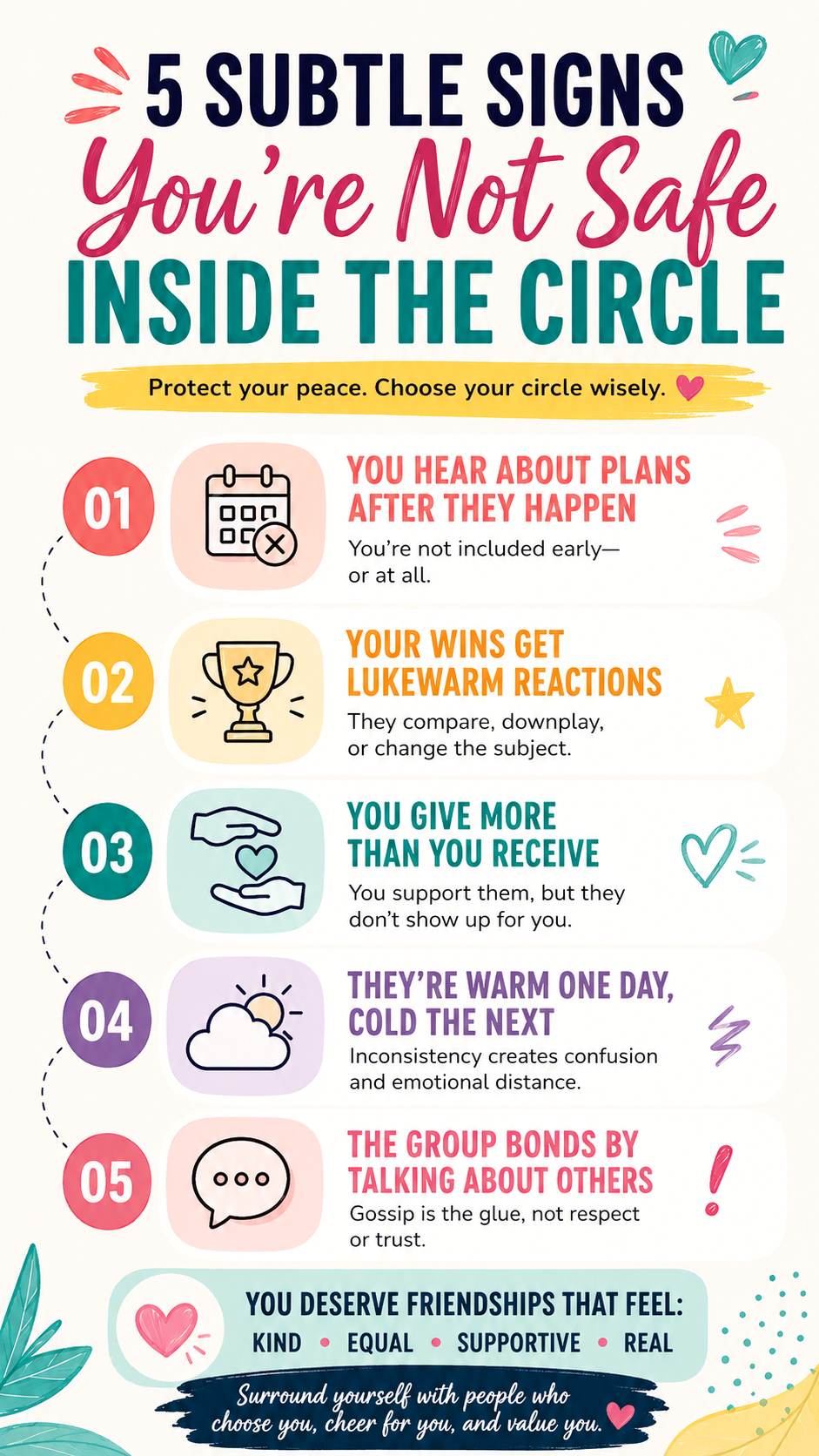
Friendships can be some of the most meaningful relationships in our lives. They provide support during difficult seasons, celebrate our successes, and create a sense of belonging that strengthens emotional well-being. Yet not every friendship circle is as healthy as it appears on the surface. Sometimes subtle patterns emerge that leave one person feeling overlooked, undervalued, or emotionally drained. Learning how to recognize these signs can help you protect your peace, strengthen your boundaries, and invest your energy in relationships that genuinely support your growth.
Many people stay in unbalanced friendships because the warning signs are often quiet rather than obvious. Exclusion can be disguised as forgetfulness. Dismissive behavior may appear as harmless teasing. One-sided emotional labor can slowly become normalized. By paying attention to recurring patterns instead of isolated incidents, you can gain valuable clarity about the health of your social connections.
Key Takeaways
- Healthy friendships are built on mutual respect, support, and reciprocity.
- Repeated exclusion can indicate deeper social hierarchy dynamics.
- True friends celebrate your successes without competition.
- Balanced relationships involve giving and receiving support.
- Consistent communication is often more valuable than grand gestures.
- Strong boundaries help protect emotional well-being.
Understanding Friendship Hierarchies
Friendship hierarchies exist when certain individuals hold more influence, attention, or social value within a group. While every social circle naturally develops closer and more casual relationships, unhealthy hierarchies create an environment where some members consistently feel less important than others.
These dynamics are not always intentional. Sometimes people fall into habits without realizing how their actions affect others. However, when exclusion, favoritism, or emotional imbalance becomes a pattern, it can significantly impact confidence, trust, and emotional health.
Important: A single disappointing experience does not automatically indicate a toxic friendship. The key is identifying repeated behaviors that consistently leave you feeling unseen, undervalued, or disconnected.
Sign #1: You Hear About Plans After They Happen
One of the clearest indicators of social exclusion is regularly discovering events, gatherings, or activities after they have already occurred. While occasional scheduling oversights happen to everyone, repeated exclusion often signals that you occupy a peripheral position within the group.
When people genuinely value your presence, they typically consider you during planning stages. Healthy friendships involve inclusion, communication, and effort. If invitations consistently arrive late or not at all, it may be worth examining whether the relationship is as reciprocal as you believe.
What Healthy Inclusion Looks Like
- Friends check in before plans are finalized.
- Your availability is considered.
- You are informed about group activities in advance.
- Communication feels open and transparent.
Instead of waiting for others to reach out, consider initiating plans with people who consistently show genuine interest in spending time together.
Sign #2: Your Successes Receive Lukewarm Reactions
Healthy friendships create space for celebration. Friends who care about your happiness generally feel excited when positive opportunities come your way. Whether it is a promotion, personal achievement, milestone, or exciting life update, supportive friends acknowledge and celebrate your wins.
In unhealthy dynamics, accomplishments may be minimized, ignored, redirected, or met with subtle competitiveness. Sometimes conversations quickly shift away from your achievement. Other times your success may be compared against someone else’s experience.
Why This Matters
- Celebration strengthens emotional connection.
- Supportive friends can feel proud of your growth without feeling threatened.
- Repeated minimization may indicate insecurity, comparison, or emotional distance.
Pay attention to who celebrates your victories wholeheartedly. These relationships often reveal where genuine emotional safety exists.
Sign #3: You Are Valued Mainly for What You Give
Many caring people become the designated helper within their friendship groups. They offer advice, emotional support, practical assistance, and encouragement whenever needed. While generosity is a beautiful quality, problems arise when the flow of support moves only in one direction.
If friends consistently seek your help but disappear when you need support, the relationship may lack reciprocity. Over time, this imbalance can create resentment, exhaustion, and emotional burnout.
Questions to Ask Yourself
- Do people check in on you as often as you check in on them?
- Can you share struggles without feeling guilty?
- Are your needs treated with the same importance as theirs?
- Do conversations feel balanced?
Pro Tip: Practice receiving support without immediately shifting the focus back to others. Healthy friendships allow both people to contribute and receive care.
Mutual support creates stronger bonds because each person feels valued for who they are rather than what they provide.
Sign #4: Warm and Cold Behavior Creates Confusion
Consistency is one of the strongest indicators of emotional safety. In healthy relationships, people generally behave in predictable ways. They communicate openly, address misunderstandings, and work toward resolution when conflict arises.
By contrast, some friendship dynamics involve cycles of warmth followed by distance. One week you feel deeply connected. The next week you are ignored, dismissed, or treated differently without explanation. This inconsistency can create confusion and emotional uncertainty.
When someone alternates between closeness and withdrawal, you may spend excessive energy trying to understand what changed. Rather than focusing on the relationship itself, you become preoccupied with restoring approval or connection.
Healthy Communication Includes
- Clear expectations.
- Direct conversations about concerns.
- Respectful conflict resolution.
- Consistent effort over time.
If confusion becomes a recurring theme, asking for clarity can provide valuable information. Honest communication often reveals whether someone is willing to participate in a mature and respectful friendship.
Sign #5: The Group Bonds Through Talking About Others
Every social group discusses people occasionally. However, when criticism, gossip, and judgment become the primary source of connection, the environment can become emotionally unsafe.
Groups that rely heavily on discussing absent members often create a culture of mistrust. If people frequently criticize others behind their backs, it becomes reasonable to wonder whether similar conversations occur when you are not present.
Strong friendships are usually built around shared values, mutual interests, personal growth, support, and meaningful experiences. They do not require negativity to maintain connection.
Important: If a friendship circle depends on gossip as social glue, establishing boundaries can help protect your emotional well-being and reduce unnecessary drama.
The Emotional Impact of Feeling Excluded
Repeated exclusion can affect much more than social satisfaction. It can influence confidence, self-worth, stress levels, and overall mental wellness. Humans naturally seek belonging, which means social rejection often feels deeply personal.
When friendships become unbalanced, many people begin questioning their value rather than evaluating the relationship itself. They assume they need to become more interesting, more helpful, or more accommodating to earn acceptance.
In reality, healthy friendships do not require constant performance. Genuine connection is rooted in authenticity, respect, and mutual appreciation.
Common Emotional Responses
- Self-doubt.
- Overthinking social interactions.
- Fear of rejection.
- People-pleasing behaviors.
- Difficulty trusting others.
Recognizing these effects is often the first step toward rebuilding confidence and creating healthier social experiences.
How to Build Healthier Friendships
Awareness alone is valuable, but meaningful change comes through intentional action. Once you identify unhealthy patterns, you can begin investing in relationships that align with your values and emotional needs.
Focus on Reciprocity
Seek friendships where support flows naturally in both directions. Mutual effort often creates deeper trust and stronger emotional connections.
Communicate Clearly
Express concerns respectfully rather than assuming others understand your perspective. Open conversations can prevent misunderstandings and strengthen relationships.
Strengthen Boundaries
Healthy boundaries help protect your energy and clarify expectations. They also encourage more respectful interactions.
Invest in Aligned Relationships
Pay attention to how people make you feel. Relationships characterized by respect, consistency, encouragement, and trust often deserve greater investment.
Recognizing the Difference Between Imperfect and Unhealthy
No friendship is perfect. Even healthy relationships experience misunderstandings, busy schedules, and occasional disappointments. The difference lies in willingness to communicate, repair, and grow together.
When someone values the relationship, they generally make efforts to address concerns and improve communication. In contrast, unhealthy patterns tend to repeat without accountability or meaningful change.
The goal is not to seek flawless friendships. The goal is to cultivate relationships where both people feel respected, appreciated, and emotionally safe.
At a Glance
- Repeated exclusion deserves attention.
- Supportive friends celebrate your achievements.
- Healthy relationships involve mutual care.
- Consistency creates emotional safety.
- Shared values are stronger than shared gossip.
Conclusion
Friendship should feel supportive, respectful, and emotionally nourishing. While every relationship experiences challenges, recurring patterns of exclusion, imbalance, inconsistency, or competition can signal deeper issues within a social circle. Learning to recognize these signs allows you to make informed choices about where you invest your time, energy, and emotional trust.
The most meaningful friendships are not necessarily the loudest or largest. They are the relationships where you feel seen, valued, celebrated, and accepted. By prioritizing emotional safety, healthy boundaries, and mutual respect, you can create a social environment that supports both your well-being and personal growth for years to come.
Tags
Female Friendships Friendship Red Flags Healthy Relationships Emotional Wellness Personal Growth Social Dynamics Self Care Boundaries