
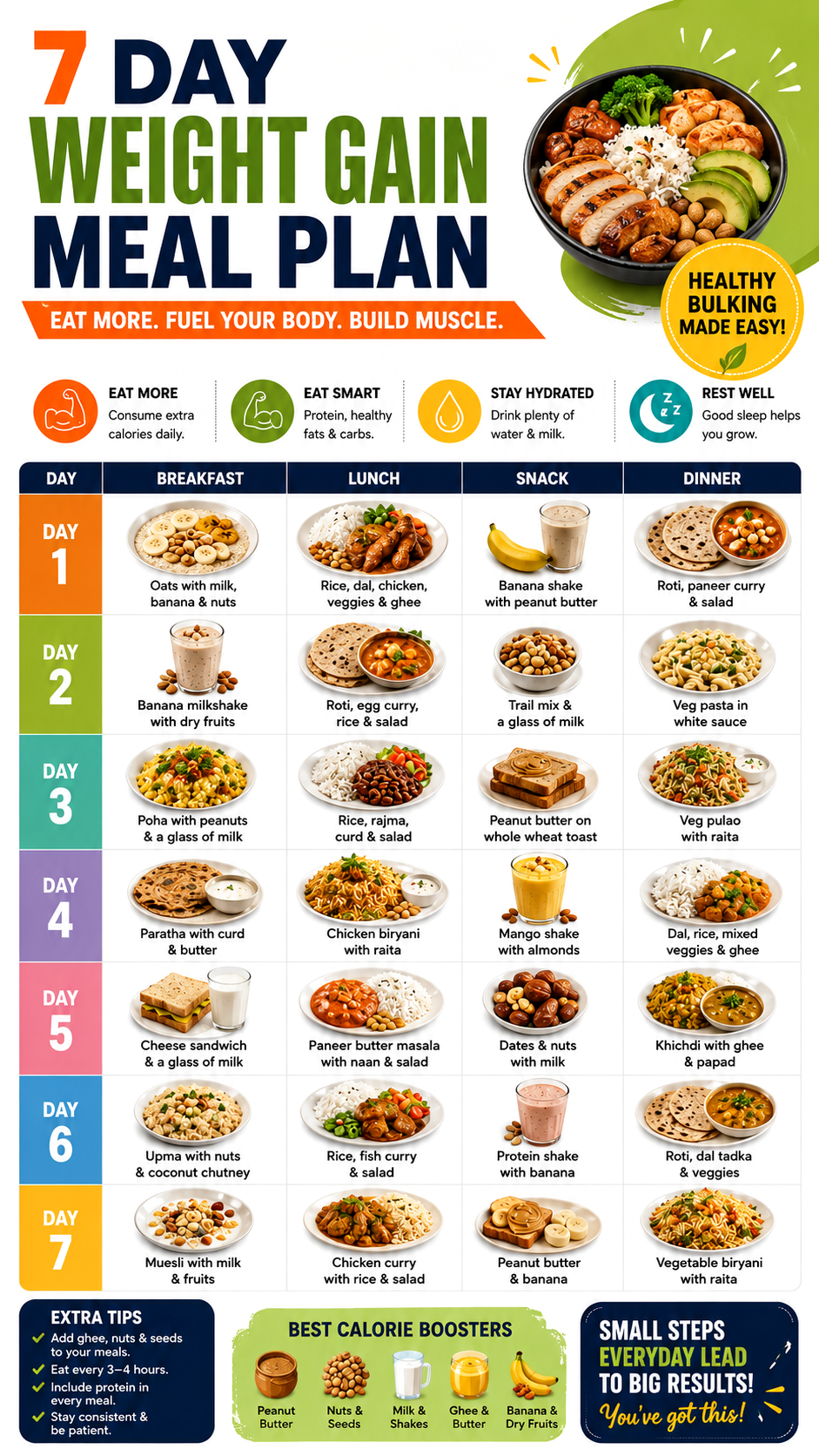
A well-structured weight gain meal plan can make a significant difference for anyone struggling to add healthy body weight, build muscle mass, or increase daily calorie intake. Many people focus heavily on weight loss content, yet healthy weight gain requires just as much planning, consistency, and nutritional awareness. The key is not simply eating more food, but consuming the right balance of calories, protein, healthy fats, and carbohydrates throughout the day.
This 7-day weight gain diet meal plan is designed to provide a practical framework for healthy bulking and sustainable muscle growth. By combining nutrient-dense meals, calorie-rich snacks, hydration, and proper recovery, you can create a strong foundation for gaining weight without relying on unhealthy processed foods.
Key Takeaways
- Focus on calorie surplus using nutritious whole foods.
- Include protein in every meal to support muscle growth.
- Eat regularly throughout the day instead of skipping meals.
- Add healthy fats for extra calories and nutrients.
- Stay hydrated and prioritize quality sleep.
- Consistency matters more than occasional overeating.
Understanding Healthy Weight Gain
Healthy weight gain is different from simply increasing body fat. The goal is to provide the body with enough nutrients to support muscle development, energy production, recovery, and overall wellness. A proper weight gain diet focuses on quality calories rather than empty calories.
People who struggle to gain weight often have fast metabolisms, physically demanding lifestyles, inconsistent eating habits, or simply fail to consume enough calories to exceed their daily energy expenditure.
Important: The most successful weight gain strategies combine a moderate calorie surplus with strength training and adequate protein intake. This approach helps increase lean muscle mass instead of excessive body fat.
The Core Principles Behind a Successful Weight Gain Diet
Eat More Frequently
Many individuals trying to gain weight find it difficult to consume large meals. Eating every three to four hours can help increase total calorie intake without causing discomfort. Multiple meals and snacks throughout the day provide a steady supply of nutrients.
Prioritize Protein
Protein is essential for muscle repair and growth. Foods such as chicken, fish, eggs, dairy products, legumes, paneer, and protein shakes help support lean mass development.
- Eggs
- Chicken
- Fish
- Milk
- Greek yogurt
- Paneer
- Beans and lentils
- Protein smoothies
Choose Calorie-Dense Foods
Calorie-dense foods allow you to increase energy intake without dramatically increasing meal volume. Nuts, seeds, peanut butter, avocado, whole milk, cheese, and healthy oils are excellent additions.
Do Not Fear Healthy Carbohydrates
Carbohydrates provide energy for workouts and recovery. Rice, oats, whole wheat bread, pasta, potatoes, fruits, and grains help fuel muscle growth while increasing overall calorie consumption.
A Breakdown of the 7-Day Weight Gain Meal Plan
The meal plan follows a simple structure that includes breakfast, lunch, an evening snack, and dinner. This pattern helps distribute calories throughout the day while maintaining energy levels.
Day 1 Focus: Balanced Calories and Protein
The first day emphasizes oats with milk, bananas, and nuts at breakfast. Lunch combines rice, lentils, chicken, vegetables, and ghee. Snacks include a banana shake with peanut butter, while dinner consists of roti, paneer curry, and salad.
This combination delivers carbohydrates, protein, and healthy fats from multiple sources.
Day 2 Focus: Energy-Dense Shakes and Meals
A banana milkshake with dry fruits provides a calorie-rich start to the day. Meals throughout the day include eggs, rice, vegetables, pasta, and milk-based snacks.
Liquid calories are particularly useful for individuals with smaller appetites because they increase energy intake without creating excessive fullness.
Day 3 Focus: Whole Foods and Nutritious Snacks
Poha with peanuts and milk offers a nutritious breakfast option. Lunch includes rice, kidney beans, curd, and salad. Peanut butter toast serves as a practical snack, while vegetable pulao and raita round out the day.
The inclusion of legumes adds valuable plant protein and fiber.
Why This Matters
- Small calorie increases each day can produce significant long-term results.
- Balanced meals help improve consistency and digestion.
- Nutrient-rich foods support muscle growth and overall health.
Day 4 Focus: High-Calorie Traditional Foods
Paratha with curd and butter increases calorie intake early in the day. Chicken biryani provides a protein-rich lunch, while a mango shake with almonds contributes healthy fats and additional energy.
Dinner combines lentils, rice, vegetables, and ghee for a satisfying meal that supports recovery and growth.
Day 5 Focus: Dairy and Healthy Fats
Cheese sandwiches paired with milk create a calorie-dense breakfast. Paneer butter masala provides both protein and fats, while dates and nuts offer a naturally sweet snack loaded with nutrients.
Meals rich in dairy products can be particularly beneficial for individuals seeking additional calories and protein.
Day 6 Focus: Protein Variety
Variety helps ensure a broad range of nutrients. Breakfast includes upma with nuts and chutney, while lunch features rice with fish curry and salad. A protein shake and balanced dinner complete the day.
Including different protein sources can improve nutrient diversity and make the diet easier to maintain long term.
Day 7 Focus: Consistency and Recovery
The final day continues the balanced approach with muesli, milk, fruits, chicken curry, rice, peanut butter snacks, and vegetable biryani.
Consistency across all seven days is what ultimately supports sustainable progress.
Best Calorie Boosters to Include Daily
Several foods can increase calorie intake without requiring large portions. These additions can transform ordinary meals into powerful weight gain tools.
- Peanut butter
- Mixed nuts
- Seeds
- Whole milk
- Milkshakes
- Ghee
- Butter
- Dried fruits
- Cheese
- Avocado
Pro Tip: Adding a tablespoon of peanut butter, a handful of nuts, or a serving of dried fruit to meals can significantly increase calories without making meals much larger.
The Role of Hydration During Weight Gain
Hydration is often overlooked when discussing muscle gain and healthy bulking. Water supports digestion, nutrient transport, workout performance, and recovery.
Milk, smoothies, protein shakes, and fruit-based beverages can contribute both hydration and additional calories.
Aim to stay hydrated throughout the day, especially if you are engaging in resistance training or physically demanding activities.
Why Sleep Matters for Muscle Growth
Nutrition alone is not enough to maximize healthy weight gain. Recovery plays an equally important role.
During sleep, the body repairs muscle tissue, regulates hormones, and supports recovery processes essential for growth.
- Aim for seven to nine hours of sleep nightly.
- Maintain a consistent sleep schedule.
- Limit caffeine late in the day.
- Create a relaxing bedtime routine.
Important: Inadequate sleep can reduce workout performance, slow recovery, and make it harder to build muscle despite consuming enough calories.
Common Weight Gain Mistakes to Avoid
Relying on Junk Food
While fast food may increase calories quickly, it often lacks the nutrients needed for healthy growth and recovery.
Skipping Meals
Missing meals makes it difficult to maintain a calorie surplus. Planning meals in advance can help prevent this problem.
Ignoring Protein Intake
Without sufficient protein, extra calories may contribute more to fat gain than muscle development.
Expecting Immediate Results
Healthy weight gain takes time. Gradual progress is often more sustainable and easier to maintain.
Combining This Meal Plan With Strength Training
A structured workout routine can help direct additional calories toward muscle growth rather than fat storage.
Effective exercises include:
- Squats
- Deadlifts
- Bench presses
- Pull-ups
- Rows
- Overhead presses
Progressive overload, which involves gradually increasing resistance over time, remains one of the most effective ways to stimulate muscle growth.
Creating Long-Term Success
The best weight gain diet is one that can be maintained consistently. Rather than focusing on perfection, aim for steady improvements in calorie intake, food quality, exercise habits, hydration, and recovery.
Tracking meals, body weight, workout performance, and energy levels can help identify what works best for your body.
At a Glance
- Eat every 3 to 4 hours.
- Include protein in every meal.
- Use healthy calorie boosters daily.
- Stay hydrated throughout the day.
- Prioritize sleep and strength training.
Conclusion
A 7-day weight gain meal plan provides a practical roadmap for individuals seeking healthy bulking and muscle growth. By combining calorie-dense foods, balanced meals, nutritious snacks, proper hydration, and quality sleep, it becomes much easier to achieve consistent results.
The most important factor is consistency. Small daily habits such as adding nutrient-rich snacks, increasing protein intake, staying active, and maintaining a structured eating schedule can create meaningful progress over time. Focus on quality calories, support your body with regular strength training, and remain patient throughout the process. Sustainable weight gain is not about eating everything in sight. It is about fueling your body intelligently and consistently for long-term success.
Tags
Weight Gain Diet Healthy Bulking Muscle Gain High Calorie Meals Weight Gain Meal Plan Fitness Nutrition Protein Rich Foods Healthy Weight Gain