
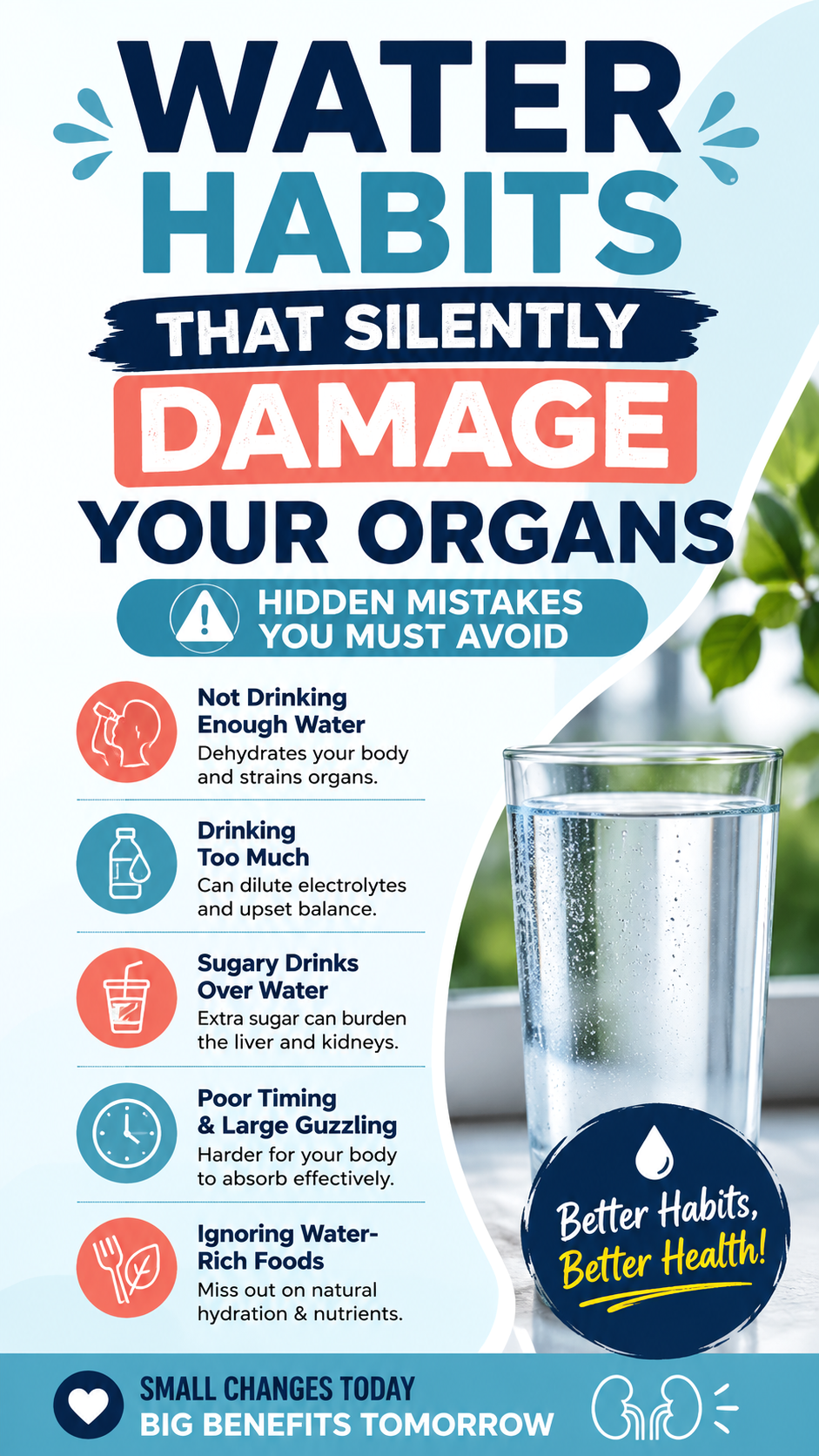
Many people focus on drinking enough water each day, but few stop to consider whether their hydration habits are actually helping or harming their health. Water is essential for nearly every function in the body, from regulating temperature and transporting nutrients to supporting the kidneys, liver, digestive system, and brain. However, certain hydration mistakes can quietly place stress on important organs over time.
While drinking water is generally one of the healthiest habits you can adopt, the way you consume it matters. From excessive water intake to relying on sugary drinks for hydration, seemingly harmless behaviors may create long-term consequences. Understanding these hidden mistakes can help you make smarter choices and support your overall well-being.
Key Takeaways
- Both too little and too much water can affect organ function.
- Consistently ignoring thirst signals may impact overall health.
- Hydration quality matters just as much as hydration quantity.
- Kidneys are especially sensitive to poor water habits.
- Simple daily changes can improve hydration efficiency.
- Balanced water intake supports long-term wellness.
Why Hydration Matters More Than Most People Realize
Water makes up a significant portion of the human body and is involved in countless biological processes. Every organ relies on proper hydration to function efficiently. When hydration levels fall outside a healthy range, the body’s systems must work harder to compensate.
The kidneys filter waste from the bloodstream, the liver processes toxins and nutrients, and the digestive tract depends on adequate fluids to move food efficiently. Even mild dehydration can affect these systems, leading to fatigue, headaches, reduced concentration, and other symptoms.
Important: Hydration is not simply about drinking more water. Healthy hydration involves timing, balance, and paying attention to your body’s needs.
Habit #1: Waiting Until You Feel Extremely Thirsty
Many people treat thirst as a signal to start drinking water, but intense thirst often indicates that mild dehydration has already begun. While the body is remarkably effective at maintaining balance, frequently ignoring thirst can place unnecessary stress on multiple organs.
When hydration levels drop, the kidneys work harder to conserve water. Over time, chronic dehydration may contribute to urinary issues and increase the likelihood of developing kidney stones in susceptible individuals.
Better Approach
- Drink water consistently throughout the day.
- Keep a reusable water bottle nearby.
- Increase fluid intake during hot weather or exercise.
- Pay attention to early signs of thirst.
Habit #2: Drinking Excessive Amounts of Water
Although dehydration gets most of the attention, overhydration can also create problems. Drinking far beyond your body’s needs may dilute essential electrolytes such as sodium.
Electrolytes help regulate nerve function, muscle contractions, and fluid balance. Excessive water intake over a short period can disrupt this balance and potentially lead to serious complications.
Most healthy individuals naturally regulate their water needs through thirst and normal eating patterns. The goal should be adequate hydration, not excessive hydration.
Why This Matters
- Both dehydration and overhydration can affect organ function.
- Balance is more important than chasing arbitrary water goals.
- Your activity level, environment, and health status influence hydration needs.
Habit #3: Replacing Water with Sugary Beverages
Many beverages contain water, but not all hydration sources offer the same benefits. Regular consumption of sugary sodas, sweetened teas, energy drinks, and flavored beverages may introduce excessive amounts of sugar into the diet.
Over time, high sugar intake can contribute to metabolic challenges that affect multiple organs, including the liver. The body must process these additional sugars, and excessive intake may increase the burden placed on various systems.
Healthier Alternatives
- Plain water
- Infused water with fruit slices
- Unsweetened herbal tea
- Sparkling water without added sugar
Pro Tip: If plain water feels boring, add cucumber, lemon, berries, or mint for flavor without excessive calories or sugar.
Habit #4: Ignoring Hydration During Physical Activity
Exercise increases fluid loss through sweat. Failing to replace these fluids can affect circulation, temperature regulation, and overall performance.
The kidneys depend on adequate blood flow to perform their filtration duties efficiently. Significant fluid loss may temporarily reduce blood volume, making hydration particularly important during and after physical activity.
Individuals who participate in intense exercise, outdoor work, or endurance activities often need more fluids than sedentary individuals.
Habit #5: Drinking Most of Your Water All at Once
Some people consume very little water throughout the day and then attempt to compensate by drinking large amounts in a short period. While this may seem efficient, the body generally benefits from steady hydration.
Spreading water intake throughout the day allows the body to maintain more stable fluid levels. It also helps support digestion, circulation, and temperature regulation more effectively.
Simple Strategy
Consider drinking a glass of water:
- After waking up
- With meals
- Before exercise
- After exercise
- During work or study breaks
Habit #6: Overlooking Water-Rich Foods
Hydration does not come exclusively from beverages. Many fruits and vegetables contain substantial amounts of water and contribute to overall fluid intake.
Foods such as watermelon, cucumber, oranges, strawberries, celery, and lettuce provide hydration while also delivering vitamins, minerals, and antioxidants.
Incorporating water-rich foods into your diet can support hydration naturally and help improve nutritional quality at the same time.
Habit #7: Consuming Too Much Alcohol Without Rehydrating
Alcohol can increase fluid loss and contribute to dehydration. This is one reason people often experience headaches, fatigue, and dry mouth after drinking alcohol.
The liver already works hard to process alcohol. Combining alcohol consumption with poor hydration may place additional strain on the body’s recovery processes.
Alternating alcoholic beverages with water can help support hydration and reduce the likelihood of dehydration-related symptoms.
Important: Hydration becomes especially important when consuming alcohol, exercising intensely, spending time in hot weather, or recovering from illness.
Understanding the Kidney Connection
The kidneys play a critical role in maintaining fluid balance. These remarkable organs filter waste products, regulate electrolytes, and help control blood pressure.
Consistent hydration supports healthy kidney function by helping remove waste through urine. When fluid intake is inadequate for extended periods, urine may become more concentrated, increasing the likelihood of certain urinary issues.
While healthy hydration supports kidney health, it is important to remember that individual hydration needs vary based on age, body size, activity level, climate, and medical conditions.
Signs You May Need More Water
- Persistent thirst
- Dark yellow urine
- Dry mouth
- Fatigue
- Headaches
- Reduced concentration
How Healthy Water Habits Support Multiple Organs
Proper hydration supports far more than kidney health. Nearly every organ system benefits from adequate fluid intake.
- Brain: Supports concentration and cognitive performance.
- Heart: Helps maintain healthy circulation.
- Digestive System: Assists normal digestion and bowel function.
- Skin: Supports overall skin health and appearance.
- Muscles: Helps reduce fatigue during activity.
- Liver: Supports metabolic and detoxification processes.
When hydration is optimized, the body can perform many essential functions more efficiently, contributing to overall wellness and quality of life.
Creating Better Daily Hydration Habits
Improving hydration does not require dramatic changes. Small, sustainable adjustments often produce the best long-term results.
Practical Daily Tips
- Start your morning with a glass of water.
- Carry a reusable water bottle.
- Eat more fruits and vegetables.
- Monitor hydration during exercise.
- Limit sugary beverages.
- Pay attention to thirst cues.
- Drink consistently throughout the day.
These simple habits can help maintain healthy hydration without making water consumption feel like a chore.
At a Glance
- Hydration affects nearly every organ system.
- Too little and too much water can both be problematic.
- Steady water intake is often better than large amounts at once.
- Water-rich foods contribute to hydration.
- Simple daily habits can improve long-term wellness.
Conclusion
Healthy hydration goes beyond simply meeting a daily water target. The habits surrounding when, how, and what you drink can have a meaningful impact on your kidneys, liver, digestive system, and overall health. By avoiding common hydration mistakes such as ignoring thirst, consuming excessive sugary beverages, overhydrating, or neglecting fluids during physical activity, you can better support your body’s natural functions.
Small adjustments made consistently often deliver the greatest benefits. Focus on balanced hydration, listen to your body’s signals, and create sustainable habits that support your long-term wellness goals. Your organs work around the clock for you, and proper hydration is one of the simplest ways to help them perform at their best.
Tags
Hydration Tips Kidney Health Healthy Habits Wellness Water Intake Preventive Health Healthy Living Nutrition Tips