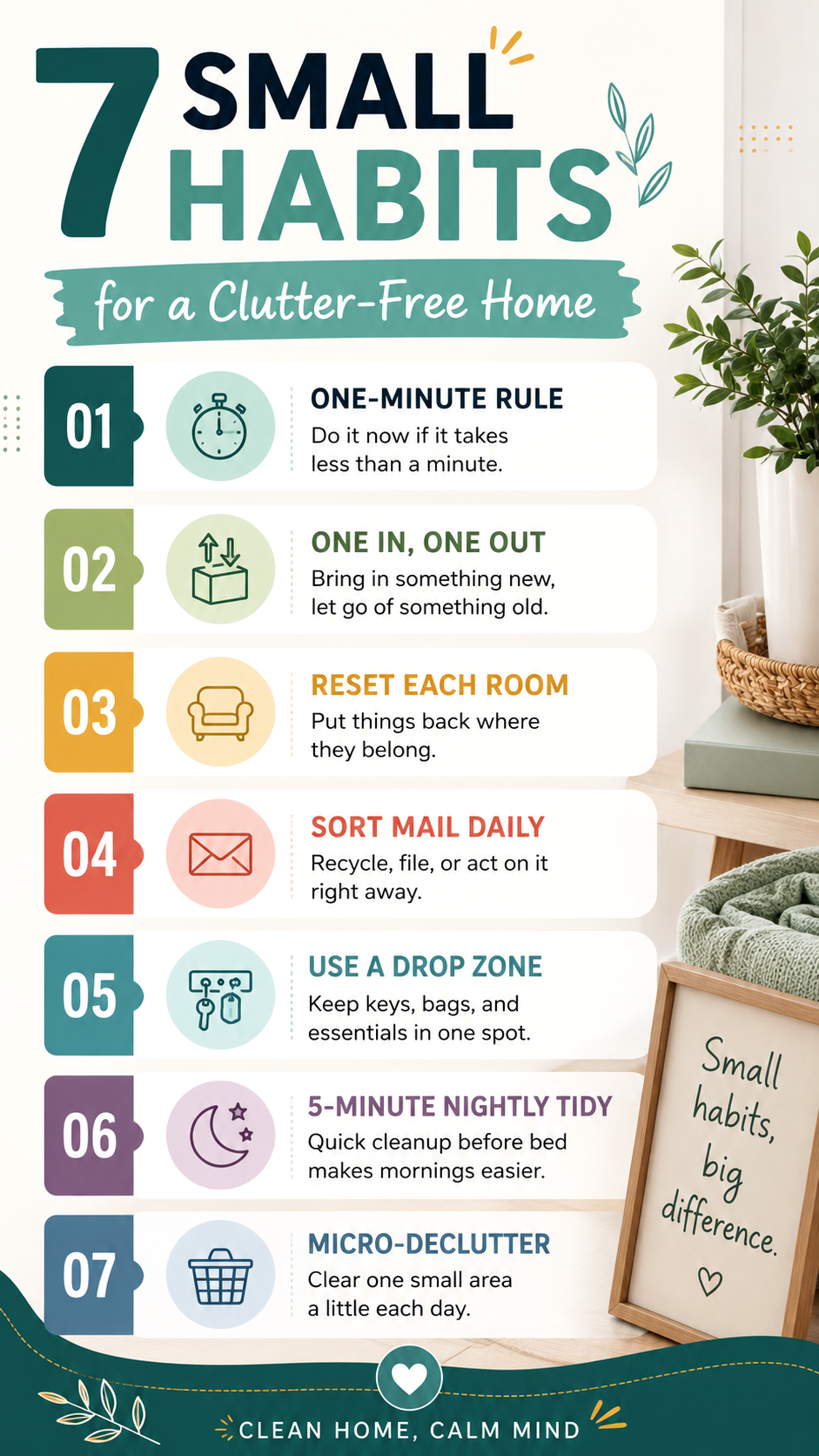
A clutter-free home is not built through occasional deep cleaning sessions. It is created through small, consistent actions that become part of everyday life. Many people assume that maintaining an organized home requires hours of work each week, but the reality is often much simpler. Tiny habits performed regularly can prevent clutter from accumulating and make cleaning feel far less overwhelming.
When organization becomes part of your daily routine, your living space stays calmer, cleaner, and more functional. Instead of spending entire weekends trying to regain control, you can enjoy a home that feels welcoming every day. The secret lies in creating systems that are easy to maintain and realistic for your lifestyle.
Key Takeaways
- Small daily habits prevent clutter from building up.
- Consistency matters more than perfection.
- Simple organization systems save time and reduce stress.
- Quick resets keep every room functional and inviting.
- Decluttering becomes easier when done in small steps.
- Daily routines create long-term organization success.
Why Small Habits Make a Big Difference
Many homeowners struggle because they view organization as a large project rather than an ongoing practice. Clutter rarely appears overnight. It accumulates through countless small decisions such as leaving mail unopened, placing items on counters, or postponing quick cleaning tasks.
Daily habits interrupt this cycle. They allow you to address small messes before they become major problems. Over time, these actions require less effort because they become automatic parts of your day.
Important: A consistently tidy home is usually the result of repeatable routines, not endless cleaning marathons. The less clutter you allow to accumulate, the easier your home becomes to maintain.
The One-Minute Rule
One of the simplest organization strategies is the one-minute rule. The concept is straightforward: if a task takes less than a minute to complete, do it immediately.
This might include:
- Putting shoes back in their designated spot.
- Hanging up a coat.
- Loading a dish into the dishwasher.
- Throwing away junk mail.
- Returning an item to its proper place.
These tasks seem insignificant individually, but when postponed repeatedly, they create visible clutter throughout the home.
How It Helps
The one-minute rule reduces procrastination and prevents clutter from multiplying. It also creates momentum, making it easier to tackle larger tasks later.
Follow the One In, One Out Method
One of the biggest reasons homes become overcrowded is that new items constantly enter while very few leave. Clothing, décor, kitchen gadgets, books, and household accessories can accumulate rapidly.
The one in, one out rule helps maintain balance. Whenever you bring something new into your home, remove a similar item.
For example:
- Buy a new sweater and donate an old one.
- Purchase a kitchen gadget and remove one you never use.
- Add a decorative item and let go of another.
This approach prevents storage spaces from becoming overloaded and encourages more intentional purchasing decisions.
Expert Insight
Many organization experts focus less on storage solutions and more on controlling incoming items. Managing what enters your home is often more effective than constantly searching for additional storage space.
Reset Each Room Before Leaving
A room reset takes only a few moments but has a powerful impact on home organization. Before leaving a room, spend a minute returning items to their proper locations.
Examples include:
- Fluffing sofa cushions.
- Folding blankets.
- Putting away remote controls.
- Returning books to shelves.
- Clearing cups and dishes.
These tiny actions keep rooms looking maintained throughout the day and prevent clutter from spreading into other areas of the home.
The Psychological Benefit
Walking into a tidy room creates a sense of calm and control. Small resets reduce visual noise and help your home feel more peaceful.
Sort Mail Immediately
Paper clutter is one of the most common organizational challenges. Bills, advertisements, flyers, receipts, and miscellaneous paperwork can quickly pile up on countertops and tables.
Developing the habit of sorting mail as soon as it enters your home can eliminate this problem.
Create simple categories such as:
- Recycle
- Action Required
- File
- Shred
By processing mail immediately, you prevent stacks from forming and avoid losing important documents.
Pro Tip: Place a recycling bin near your entryway or workspace. This makes it easier to dispose of junk mail before it has a chance to become clutter.
Create a Dedicated Drop Zone
Every home benefits from a designated area where frequently used items can be stored. Keys, wallets, bags, sunglasses, and chargers often become clutter because they lack a permanent home.
A drop zone creates an organized landing space for daily essentials.
What to Include
- Wall hooks for bags and jackets.
- A tray for keys and loose items.
- A charging station for devices.
- Small baskets for accessories.
This simple system minimizes misplaced items and helps streamline busy mornings.
Adopt a Five-Minute Nightly Tidy
One of the most effective daily habits is dedicating just five minutes before bed to tidying up. This brief routine can dramatically improve how your home looks and feels.
Focus on high-impact areas such as:
- Kitchen counters.
- Living room surfaces.
- Dining tables.
- Entryways.
- Bathroom counters.
Setting a timer can make the task feel manageable and even enjoyable.
The reward is significant. Waking up to a clean environment creates a positive start to the day and reduces morning stress.
Why Consistency Wins
Five minutes every day adds up to more than thirty hours of tidying each year. Small efforts performed consistently often outperform occasional large cleaning sessions.
Practice Micro-Decluttering
Many people avoid decluttering because they believe they need an entire day to tackle the project. Micro-decluttering offers a more practical approach.
Instead of organizing an entire room, focus on one small area at a time.
Examples include:
- A single kitchen drawer.
- One shelf in a closet.
- A bathroom cabinet.
- A bedside table.
- A storage basket.
These mini projects are easier to complete and provide immediate results, creating motivation to continue.
Important: Progress does not require perfection. Clearing one drawer today is far more effective than waiting months for the perfect time to organize an entire room.
Building Habits That Actually Stick
Knowing what to do is only part of the equation. Long-term success depends on making these habits sustainable.
Start Small
Trying to implement every habit at once can feel overwhelming. Begin with one or two habits and gradually add more as they become automatic.
Pair Habits Together
Attach a new habit to an existing routine. For example, sort mail immediately after entering the house or perform a room reset before leaving for work.
Make Organization Convenient
The easier a habit is to perform, the more likely you are to maintain it. Keep storage bins accessible, provide designated homes for frequently used items, and simplify your systems whenever possible.
Common Mistakes That Lead to Clutter
Even with good intentions, certain habits can undermine organization efforts.
- Keeping items “just in case.”
- Buying organizational products before decluttering.
- Leaving items without designated storage spaces.
- Ignoring small messes until they become overwhelming.
- Accumulating duplicate items unnecessarily.
Recognizing these patterns can help you prevent clutter before it starts.
The Long-Term Benefits of a Clutter-Free Home
An organized home offers benefits that extend beyond aesthetics. Reduced clutter can improve productivity, decrease stress, and make everyday tasks easier.
When everything has a place, you spend less time searching for lost items and more time enjoying your space. Cleaning becomes faster, storage becomes more efficient, and your home feels more comfortable overall.
Many people also find that maintaining an organized environment encourages healthier routines, better focus, and greater peace of mind.
At a Glance
- Handle one-minute tasks immediately.
- Use the one in, one out rule to control accumulation.
- Reset rooms before leaving them.
- Sort incoming mail right away.
- Maintain a five-minute nightly tidying routine.
Conclusion
Creating a clean and organized home does not require perfection, expensive storage systems, or endless cleaning sessions. The most effective approach is often the simplest. Small daily habits performed consistently can transform your living space over time.
Whether you start with the one-minute rule, establish a drop zone, sort mail immediately, or commit to a five-minute nightly tidy, each habit contributes to a more organized and stress-free home. Focus on progress rather than perfection, and remember that every small action helps build the clutter-free environment you want.
Tags
Home Organization Decluttering Tips Organized Home Minimalist Living Cleaning Routine Home Management Simple Living Productivity Habits