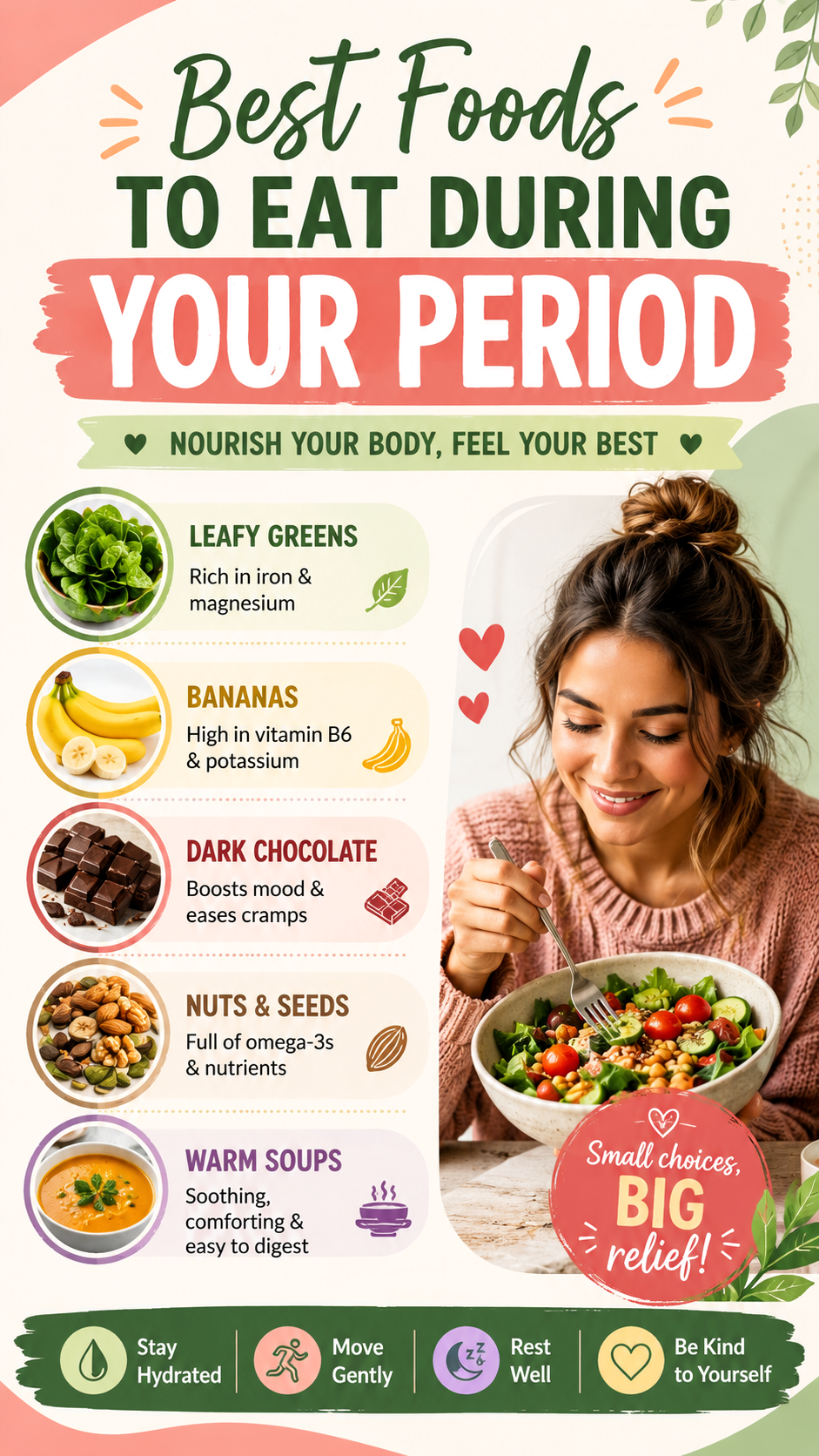
Eating well during your menstrual cycle can make a meaningful difference in how you feel. Many people experience symptoms such as fatigue, cramps, bloating, mood changes, and food cravings during their periods. While there is no single food that can eliminate every symptom, choosing nutrient-rich ingredients can help support your body through the natural hormonal shifts that occur each month.
The best period-friendly foods are often simple, wholesome, and easy to incorporate into everyday meals. Leafy greens, bananas, nuts, seeds, dark chocolate, and warm soups are all popular choices because they provide essential nutrients that may help support energy, comfort, and overall wellness.
Key Takeaways
- Iron-rich foods can help support energy levels during menstruation.
- Magnesium-rich ingredients may help promote relaxation and comfort.
- Healthy fats from nuts and seeds contribute important nutrients.
- Warm soups can be soothing and easy to digest.
- Balanced meals may help reduce energy crashes and cravings.
- Hydration is just as important as food choices.
Why Nutrition Matters During Your Period
Your body works hard throughout the menstrual cycle. During menstruation, nutrient demands can increase, especially when blood loss occurs. At the same time, fluctuating hormone levels may influence appetite, mood, digestion, and energy levels.
Choosing foods that provide vitamins, minerals, fiber, protein, and healthy fats can help create a more balanced nutritional foundation. While dietary needs vary from person to person, focusing on whole foods is often one of the most practical ways to support menstrual health.
Important: Consistent nutrition throughout the month often has a greater impact than making changes only during your period. Building healthy eating habits can help support long-term hormonal wellness and overall health.
Leafy Greens: A Nutrient Powerhouse
Spinach and other leafy greens are commonly recommended during menstruation because they contain important nutrients including iron, magnesium, folate, and vitamin K.
Iron is particularly important because menstrual bleeding can contribute to lower iron levels in some individuals. Maintaining adequate iron intake supports oxygen transport throughout the body and may help reduce feelings of fatigue.
Popular Leafy Green Options
- Spinach
- Kale
- Swiss chard
- Arugula
- Romaine lettuce
- Collard greens
Adding leafy greens to salads, smoothies, soups, wraps, or grain bowls can be an easy way to increase nutrient intake during your cycle.
Bananas for Energy and Comfort
Bananas are a convenient and naturally sweet food that provide potassium, vitamin B6, and carbohydrates. These nutrients make them a popular choice during menstruation.
Potassium plays a role in fluid balance and muscle function, while vitamin B6 is involved in several important processes throughout the body. Because bananas are easy to digest, they can be a helpful snack when energy levels feel low.
Simple Ways to Enjoy Bananas
- Sliced over oatmeal
- Blended into smoothies
- Paired with nut butter
- Added to yogurt bowls
- Frozen for a refreshing snack
The natural sweetness of bananas can also help satisfy cravings without relying entirely on heavily processed sweets.
Dark Chocolate: A Favorite Period Treat
Dark chocolate has become one of the most talked-about foods associated with menstrual wellness. Beyond its rich flavor, it contains minerals such as magnesium and iron.
Many people crave chocolate during their periods, making dark chocolate a satisfying option that can fit into a balanced eating pattern. Choosing varieties with a higher cocoa content often provides more nutrients and less added sugar.
Pro Tip: Pair a small portion of dark chocolate with fruit, nuts, or yogurt for a more balanced snack that combines carbohydrates, healthy fats, and protein.
Benefits of Choosing Dark Chocolate
- Contains beneficial minerals
- Satisfies sweet cravings
- Can fit into a balanced diet
- Pairs well with other nutrient-rich foods
Nuts and Seeds for Healthy Fats and Minerals
Nuts and seeds provide a combination of healthy fats, protein, fiber, and essential minerals. They are among the most nutrient-dense snacks available and can be especially helpful when your body needs sustained energy.
Common choices include almonds, walnuts, pumpkin seeds, sunflower seeds, flaxseeds, and chia seeds. Each variety offers its own unique nutritional profile.
Why They Are Worth Adding to Your Meals
- Provide satisfying healthy fats
- Support balanced energy levels
- Contain important minerals
- Add texture and flavor to meals
- Easy to carry as a snack
Sprinkling seeds over salads, oatmeal, yogurt, or soups is a simple way to boost nutrient intake without much effort.
Expert Insight
Balanced snacks that combine protein, healthy fats, and fiber may help promote steadier energy levels compared to highly processed foods that can lead to rapid energy fluctuations.
The Comfort of Warm Soups
Warm soups are often associated with comfort, nourishment, and relaxation. During menstruation, many people prefer warm meals because they feel soothing and satisfying.
Soup can also be a practical way to consume a variety of nutrient-rich ingredients in a single meal. Vegetables, legumes, grains, herbs, and proteins can all be incorporated into one bowl.
Nutritious Soup Ingredients
- Leafy greens
- Carrots
- Lentils
- Beans
- Chicken
- Sweet potatoes
- Herbs and spices
Warm soups can also contribute to hydration, which is another important aspect of menstrual wellness.
Hydration and Menstrual Wellness
Food is only one piece of the puzzle. Staying hydrated is equally important during your period. Drinking enough fluids helps support normal bodily functions and may contribute to overall comfort.
Water remains the best choice for most people, but herbal teas, broths, and water-rich foods can also contribute to daily hydration goals.
Many fruits and vegetables contain substantial amounts of water, making them a helpful addition to a period-friendly eating plan.
Building Balanced Period-Friendly Meals
Rather than focusing on a single superfood, consider creating meals that combine several nutrient-rich ingredients. Balanced meals help provide a wider range of vitamins, minerals, fiber, protein, and healthy fats.
Example Breakfast
- Oatmeal topped with bananas
- Chia seeds
- A handful of berries
- A small serving of nuts
Example Lunch
- Spinach salad
- Grilled protein source
- Mixed vegetables
- Pumpkin seeds
Example Dinner
- Vegetable soup
- Whole grains
- Leafy greens
- Healthy fats from seeds or nuts
Foods That Support Sustainable Energy
Periods can sometimes leave you feeling tired or less motivated than usual. Choosing foods that provide a steady release of energy may help you feel more balanced throughout the day.
Complex carbohydrates, lean proteins, healthy fats, fruits, and vegetables all play a role in supporting sustained energy. Combining these nutrients at meals and snacks can help create a more satisfying eating experience.
Important: Skipping meals during your period may leave you feeling even more fatigued. Regular meals and nourishing snacks can help maintain consistent energy throughout the day.
Managing Cravings in a Balanced Way
Cravings are a normal experience for many people during menstruation. Instead of viewing cravings as something negative, it can be helpful to approach them with balance and flexibility.
Enjoying favorite foods in moderation while also prioritizing nutrient-rich options can create a healthier and more sustainable relationship with food.
For example, pairing dark chocolate with fruit or combining a sweet snack with nuts can provide both enjoyment and nutritional value.
Lifestyle Habits That Complement Good Nutrition
Nutrition works best when paired with other healthy habits. Gentle movement, quality sleep, stress management, and hydration can all contribute to a more positive menstrual experience.
- Prioritize restful sleep
- Stay physically active when comfortable
- Drink enough water throughout the day
- Plan balanced meals ahead of time
- Listen to your body’s hunger and fullness signals
Even small changes can add up over time and support overall well-being throughout your cycle.
At a Glance
- Leafy greens provide valuable nutrients including iron.
- Bananas offer potassium and convenient energy.
- Dark chocolate can satisfy cravings while providing minerals.
- Nuts and seeds contribute healthy fats and protein.
- Warm soups offer comfort, hydration, and nourishment.
Conclusion
Eating well during your period does not require a complicated diet or expensive ingredients. Simple foods such as leafy greens, bananas, dark chocolate, nuts, seeds, and warm soups can become valuable additions to a balanced eating routine. These foods provide nutrients that support energy, comfort, and overall wellness during the menstrual cycle.
By focusing on nourishing meals, staying hydrated, and listening to your body’s needs, you can create habits that help you feel your best throughout the month. Small, consistent choices often have the greatest impact, making period-friendly nutrition both practical and sustainable.
Tags
Period Nutrition Menstrual Health Healthy Eating Women’s Wellness Hormone Balance Cycle Support Self Care Wellness Tips