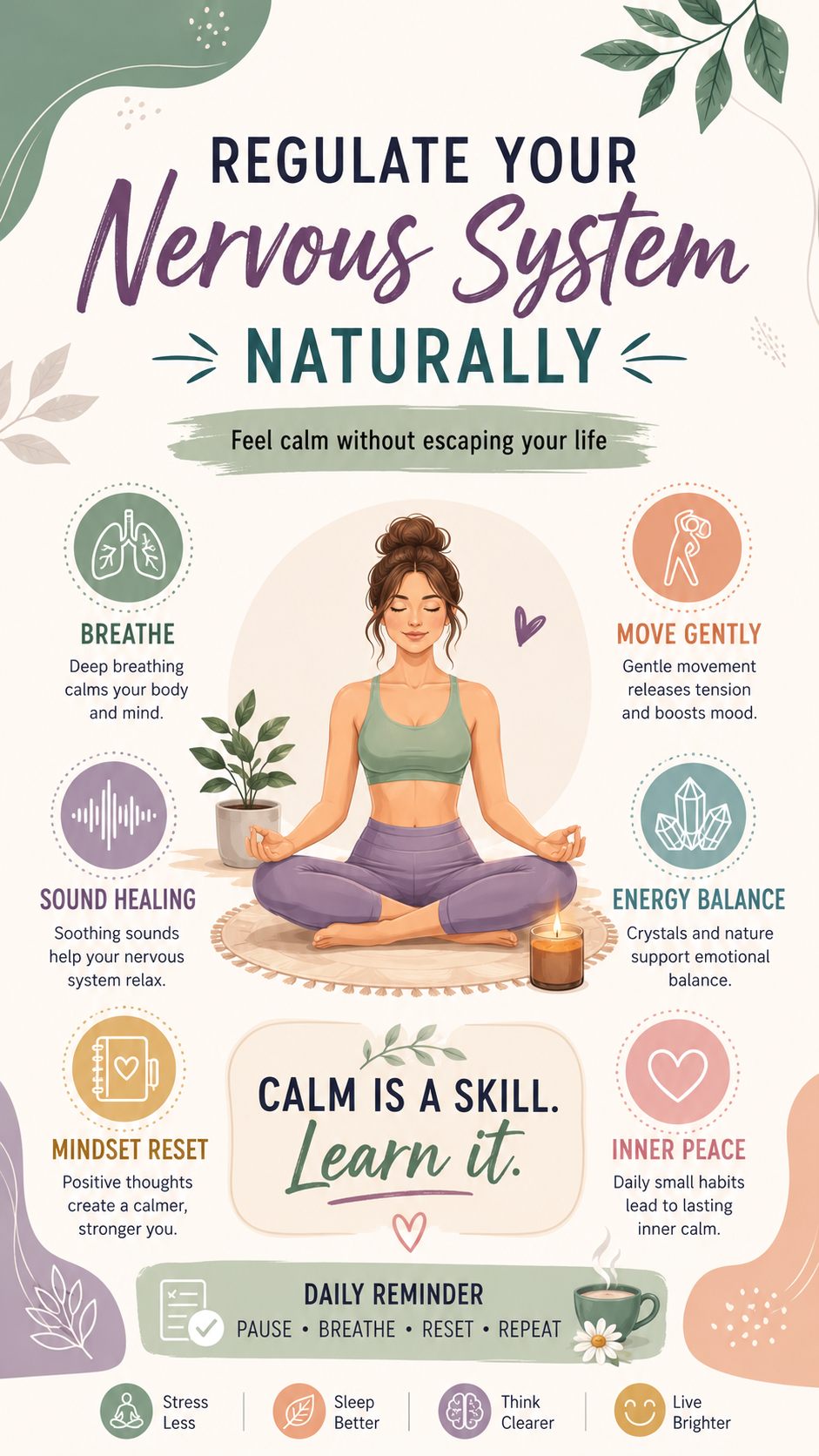
Modern life often places the nervous system under constant pressure. Notifications, deadlines, emotional challenges, and daily responsibilities can leave many people feeling overwhelmed, exhausted, or disconnected from a sense of inner calm. While stress is a natural part of life, learning how to regulate the nervous system can help create greater resilience, emotional balance, and overall well-being.
The good news is that nervous system regulation does not require completely escaping from daily responsibilities. Small, intentional practices can help the body and mind return to a state of balance. From mindful breathing and gentle movement to positive thought patterns and sensory relaxation techniques, there are many accessible ways to support emotional wellness naturally.
Key Takeaways
- The nervous system influences how we respond to stress, emotions, and daily experiences.
- Simple practices such as breathing exercises can help calm the body’s stress response.
- Gentle movement supports both physical and emotional regulation.
- Positive mindset habits can improve resilience over time.
- Creating a calming environment enhances relaxation and recovery.
- Consistency is more important than perfection when building wellness routines.
Understanding Nervous System Regulation
The nervous system acts as the body’s communication network. It constantly processes information from both the external world and internal experiences. When faced with a challenge or perceived threat, the nervous system activates stress responses designed to keep us safe.
While this response is useful during genuine emergencies, many people spend long periods in a heightened state of alertness. Chronic stress can contribute to emotional fatigue, difficulty concentrating, sleep disturbances, and feelings of anxiety.
Regulation refers to the process of helping the nervous system shift back toward a calmer, more balanced state. Rather than eliminating stress entirely, the goal is to develop skills that support recovery and resilience.
Important: Nervous system regulation is not about avoiding life’s challenges. It is about improving the body’s ability to recover from stress and respond more effectively to everyday situations.
The Connection Between Mind and Body
Many people view emotional wellness and physical wellness as separate concepts, but they are deeply connected. Thoughts, emotions, physical sensations, and behaviors constantly influence one another.
When stress levels rise, the body may experience muscle tension, shallow breathing, increased heart rate, or digestive discomfort. Likewise, physical relaxation techniques can positively affect emotional states.
Understanding this connection helps explain why holistic practices can be so effective. Activities that engage both the mind and body often provide the greatest support for nervous system regulation.
Why Daily Habits Matter
Large transformations rarely happen overnight. Instead, emotional resilience is often built through consistent daily actions. Small habits repeated regularly create meaningful changes over time.
- Taking a few mindful breaths during stressful moments
- Moving the body gently each day
- Practicing gratitude
- Limiting unnecessary overstimulation
- Creating moments of intentional rest
These simple actions can gradually teach the nervous system that safety, stability, and calm are available even during busy periods.
Breathing Exercises for Instant Calm
Breathing is one of the most accessible tools for regulating the nervous system. Unlike many wellness practices, conscious breathing can be done almost anywhere and requires no special equipment.
When stress increases, breathing often becomes rapid and shallow. Slow, controlled breathing sends signals to the body that it can begin relaxing.
Simple Breathing Practice
- Inhale slowly through the nose for four counts.
- Pause briefly.
- Exhale gently through the mouth for six counts.
- Repeat for several minutes.
This technique encourages a slower breathing rhythm and may help reduce feelings of tension.
Many people find it helpful to pair breathing exercises with quiet reflection, meditation, or mindful observation of their surroundings.
Why This Matters
- Breathing techniques are available anytime and anywhere.
- They help shift attention away from racing thoughts.
- Regular practice can improve emotional awareness and relaxation.
Gentle Movement and Emotional Balance
Movement is another powerful way to support nervous system health. Physical activity helps release accumulated tension while encouraging the body to reconnect with the present moment.
Not every form of movement needs to be intense. In fact, gentle exercises are often especially effective for relaxation.
Examples of Gentle Movement
- Yoga
- Walking outdoors
- Stretching routines
- Tai chi
- Mindful mobility exercises
These activities promote circulation, improve body awareness, and help release physical stress stored within muscles and connective tissues.
Many people notice that even a short walk can significantly improve mood and mental clarity.
Creating a Calming Sensory Environment
The environment around us can influence our emotional state more than we often realize. Sensory experiences such as sounds, scents, lighting, and textures all contribute to nervous system responses.
Creating a peaceful space does not require a complete home transformation. Small adjustments can make a meaningful difference.
Simple Ways to Support Relaxation
- Use soft lighting in the evening
- Listen to calming music or nature sounds
- Reduce unnecessary noise
- Incorporate comforting textures and natural elements
- Keep relaxation spaces uncluttered
The goal is to create an environment that communicates comfort and safety to the nervous system.
Pro Tip: Consistency helps reinforce feelings of calm. Even a dedicated corner for relaxation can become a powerful signal that it is time to slow down and recharge.
The Role of Positive Thinking in Regulation
Thought patterns influence how we interpret experiences and respond to challenges. While positive thinking does not mean ignoring difficult emotions, it can help create a healthier perspective.
Repeated negative thoughts may contribute to ongoing stress responses. Developing balanced and supportive thinking habits can encourage emotional stability.
Practical Mindset Practices
- Keeping a gratitude journal
- Writing encouraging self-reflections
- Celebrating small accomplishments
- Practicing self-compassion
- Replacing harsh self-criticism with constructive language
These habits gradually influence emotional resilience and self-confidence.
Mindfulness as a Daily Reset Tool
Mindfulness encourages awareness of the present moment without judgment. It allows individuals to observe thoughts, emotions, and sensations without becoming overwhelmed by them.
Many people associate mindfulness exclusively with meditation, but it can be practiced throughout the day.
Everyday Mindfulness Examples
- Paying attention while drinking tea
- Observing nature during a walk
- Focusing on breathing for one minute
- Listening carefully during conversations
- Noticing physical sensations without judgment
These moments help interrupt autopilot patterns and encourage a stronger connection to the present.
Building a Sustainable Self-Care Routine
One of the biggest challenges in wellness is maintaining consistency. Many people attempt dramatic lifestyle changes only to feel discouraged when they cannot sustain them.
Effective nervous system regulation often comes from realistic routines that fit naturally into daily life.
Start Small and Build Gradually
Instead of creating an overwhelming wellness schedule, consider introducing one or two supportive habits at a time.
- Five minutes of breathing practice
- A short evening walk
- Ten minutes of stretching
- A gratitude journal entry before bed
- Listening to calming music during breaks
Small actions performed consistently often create stronger long-term results than ambitious routines that become difficult to maintain.
Important: Self-care is most effective when it feels supportive rather than stressful. Choose practices that genuinely fit your lifestyle and personal preferences.
Recognizing Signs of Improved Regulation
Nervous system regulation is often a gradual process. Improvements may appear subtly before becoming more noticeable.
Positive Signs to Watch For
- Improved emotional awareness
- Faster recovery after stressful events
- Better concentration
- More restful sleep
- Greater patience and flexibility
- Increased sense of calm during daily activities
These changes often reflect growing resilience rather than the complete absence of stress.
The Importance of Self-Compassion
Many people become frustrated when they experience stress despite practicing wellness habits. However, regulation is not about achieving perfection.
Everyone encounters challenging days. Self-compassion helps create a healthier relationship with those experiences.
Instead of viewing setbacks as failures, consider them opportunities to reconnect with supportive practices. A gentle and understanding approach often creates more sustainable progress than harsh self-judgment.
Integrating Multiple Regulation Techniques
The most effective wellness routines often combine several approaches rather than relying on a single strategy.
For example, a calming evening routine might include:
- Gentle stretching
- Breathing exercises
- Mindful reflection
- Relaxing music
- Positive journaling
Combining these techniques creates a comprehensive experience that supports both physical and emotional relaxation.
At a Glance
- Breathing exercises support immediate calm.
- Gentle movement helps release physical tension.
- Mindfulness strengthens present-moment awareness.
- Positive thought habits build resilience.
- Consistency is the key to long-term nervous system support.
Conclusion
Learning to regulate the nervous system naturally is a valuable skill that can improve emotional wellness, resilience, and overall quality of life. Through mindful breathing, gentle movement, positive thinking, sensory relaxation, and consistent self-care habits, it becomes possible to support the body’s natural ability to recover from stress.
Calm is not something reserved for perfect circumstances. It is a skill that can be developed through practice, patience, and intentional daily choices. By creating supportive routines and nurturing self-awareness, anyone can take meaningful steps toward greater balance, inner peace, and long-term well-being.
Tags
Nervous System Regulation Stress Relief Mindfulness Emotional Wellness Anxiety Management Self Care Inner Peace Mental Wellness