
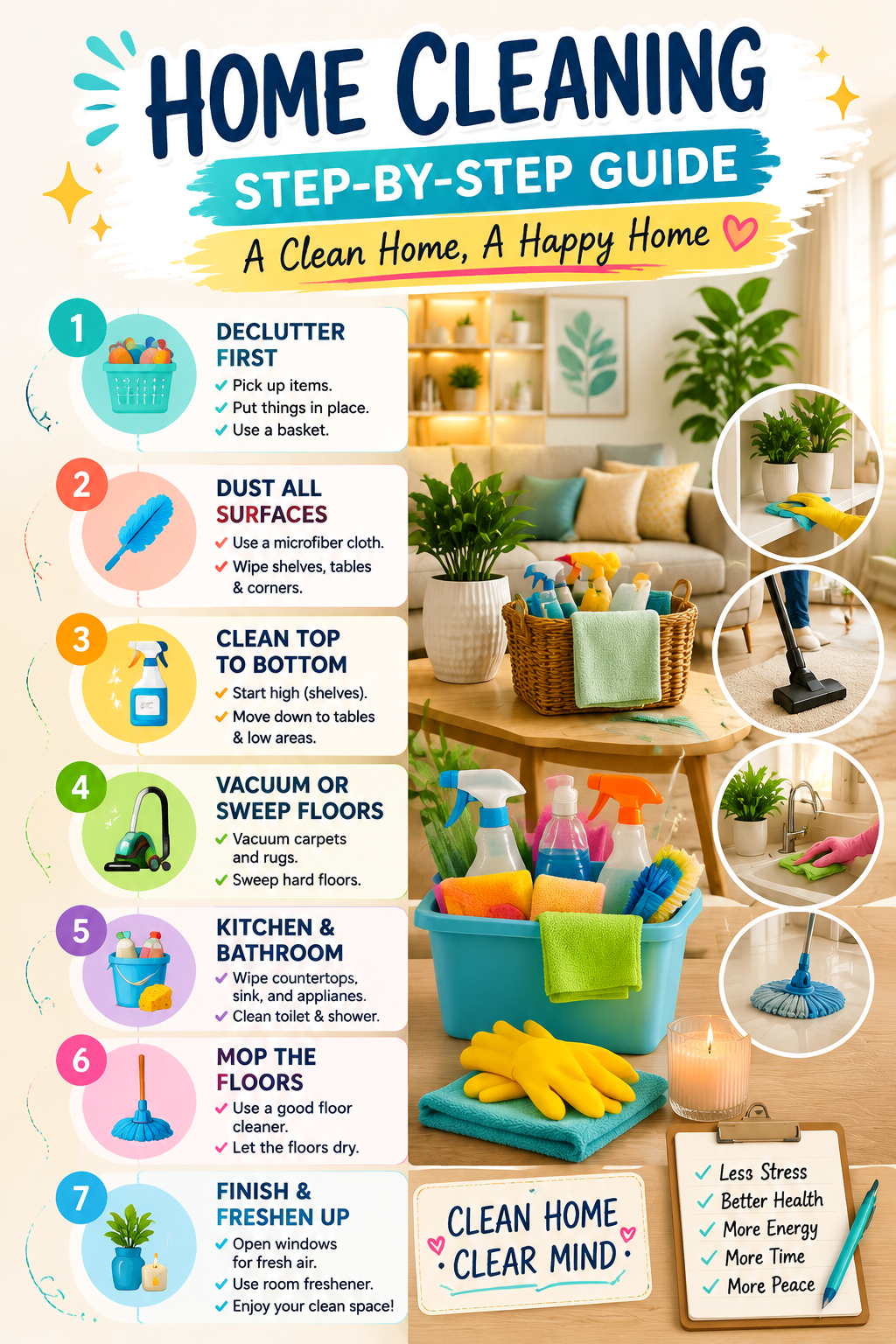
A clean and organized home does more than look good. It creates a comfortable environment, reduces stress, improves productivity, and helps maintain a healthier living space. The secret to keeping a home consistently tidy is not spending entire weekends cleaning. Instead, it is following a structured routine that breaks the process into manageable steps.
Whether you are tackling a weekly refresh, preparing for guests, or simply trying to establish better housekeeping habits, a step-by-step cleaning system can make the process faster and more effective. By following a logical order, you can avoid repeating tasks, save time, and achieve professional-level results throughout your home.
Key Takeaways
- Always declutter before beginning any cleaning tasks.
- Dust surfaces before vacuuming or sweeping floors.
- Work from top to bottom to prevent re-cleaning areas.
- Focus extra attention on kitchens and bathrooms.
- Finish with mopping and freshening the air.
- A structured routine saves time and improves results.
Why Following a Cleaning Routine Matters
Many people approach cleaning without a plan. They start in one room, move to another, and often find themselves cleaning the same areas multiple times. A step-by-step cleaning routine removes the guesswork and creates a system that works efficiently.
When each task is completed in the correct order, dirt and dust are removed more effectively. Floors stay cleaner, surfaces remain spotless longer, and the entire home feels more organized. A routine also makes cleaning less overwhelming because each step has a clear purpose.
Important: Consistency is often more valuable than deep cleaning. Following a simple cleaning routine regularly prevents dirt buildup and reduces the need for major cleaning sessions.
Step 1: Declutter Before You Clean
The first and most important step is removing clutter. Cleaning around scattered items wastes time and makes it difficult to reach surfaces properly.
Walk through each room and gather items that are out of place. Return books to shelves, put away clothing, organize paperwork, and clear countertops. Use baskets or storage bins to temporarily collect misplaced items if needed.
Benefits of Decluttering First
- Makes surfaces easier to clean.
- Reduces visual stress.
- Speeds up the overall cleaning process.
- Creates a more organized living space.
- Helps identify areas that need better storage solutions.
Once clutter is removed, every cleaning task becomes simpler and more effective.
Step 2: Dust All Surfaces Thoroughly
Dust accumulates surprisingly quickly on furniture, shelves, electronics, decorations, and hard-to-reach corners. Before cleaning floors, it is important to remove dust from all elevated surfaces.
Using a microfiber cloth or quality duster helps trap particles instead of spreading them around. Work systematically through each room and pay special attention to areas that are often overlooked.
Areas Commonly Missed During Dusting
- Ceiling fan blades
- Window sills
- Picture frames
- Baseboards
- Light fixtures
- Behind electronics
- Decorative items and plants
Regular dusting not only improves appearance but can also contribute to better indoor air quality.
Expert Insight
Microfiber cloths are highly effective because they attract and trap dust particles instead of pushing them around. Washing and reusing them also makes them an eco-friendly cleaning choice.
Step 3: Clean from Top to Bottom
One of the most effective cleaning principles is working from the highest surfaces downward. Dust and debris naturally fall during cleaning, so tackling elevated areas first prevents freshly cleaned surfaces from becoming dirty again.
Start with shelves, cabinets, countertops, and furniture tops. Then move down to lower surfaces and finally the floors.
Why Top-to-Bottom Cleaning Works
- Eliminates unnecessary re-cleaning.
- Improves cleaning efficiency.
- Creates a logical workflow.
- Ensures debris ends up on floors where it can be removed later.
This simple strategy is widely used by professional cleaners because it consistently delivers better results.
Pro Tip: Always clean ceiling corners, shelves, and furniture tops before wiping tables and countertops. This prevents dust from falling onto freshly cleaned surfaces.
Step 4: Vacuum or Sweep Floors
After dust and debris have settled on the floor, it is time to remove them completely. Depending on your flooring type, vacuuming or sweeping may be the best option.
Carpeted areas benefit from thorough vacuuming, while hardwood, laminate, and tile floors should be swept carefully before mopping.
Tips for Better Floor Cleaning
- Move lightweight furniture when possible.
- Pay attention to corners and edges.
- Clean underneath sofas and beds.
- Use attachments for stairs and tight spaces.
- Vacuum slowly to improve dirt removal.
Regular floor cleaning helps maintain indoor cleanliness and reduces allergens throughout the home.
Step 5: Focus on Kitchens and Bathrooms
Kitchens and bathrooms require special attention because they experience heavy daily use and are more likely to accumulate bacteria, grease, moisture, and soap residue.
These areas should be cleaned thoroughly as part of any complete home cleaning routine.
Kitchen Cleaning Priorities
- Countertops
- Sink and faucet
- Appliance surfaces
- Cabinet handles
- Dining tables
- Backsplashes
Bathroom Cleaning Priorities
- Toilet
- Sink
- Mirror
- Shower and bathtub
- Floor areas around fixtures
- Frequently touched surfaces
Using appropriate cleaning products for each surface helps maintain both cleanliness and longevity.
Important: Kitchens and bathrooms often contain the highest concentration of germs in the home. Prioritizing these spaces has a significant impact on overall household hygiene.
Step 6: Mop Hard Floors for a Fresh Finish
Once sweeping or vacuuming is complete, mopping removes remaining dust, stains, and residue. This step gives floors their final polished appearance.
Choose a cleaning solution that matches your floor type and avoid using excessive water, particularly on wood flooring.
Effective Mopping Techniques
- Use clean water whenever it becomes cloudy.
- Work backward toward the room exit.
- Allow floors to dry completely.
- Rinse mop heads regularly.
- Use appropriate cleaning solutions.
Clean floors instantly make a home feel brighter, fresher, and more inviting.
Step 7: Finish by Freshening the Space
The final step is often the most rewarding. Once surfaces and floors are clean, focus on creating a fresh atmosphere throughout the home.
Open windows to allow fresh air circulation whenever possible. Fresh air helps remove lingering odors and creates a more pleasant indoor environment.
Additional ways to freshen your home include:
- Changing air filters.
- Using natural room sprays.
- Adding fresh flowers.
- Running an air purifier.
- Using essential oil diffusers responsibly.
- Washing blankets and throw pillows regularly.
A fresh-smelling home enhances the sense of cleanliness and comfort.
How Often Should You Follow This Routine?
The ideal frequency depends on your household size, lifestyle, and cleaning preferences.
Daily Tasks
- Put items away.
- Wipe kitchen counters.
- Wash dishes.
- Make beds.
Weekly Tasks
- Dust surfaces.
- Vacuum carpets.
- Sweep floors.
- Clean bathrooms.
- Mop hard flooring.
Monthly Tasks
- Clean appliances.
- Wash windows.
- Deep clean upholstery.
- Organize storage areas.
- Clean light fixtures.
Breaking responsibilities into manageable intervals prevents cleaning from becoming overwhelming.
Common Cleaning Mistakes to Avoid
Even with the best intentions, certain habits can reduce cleaning effectiveness.
- Cleaning floors before dusting.
- Using dirty cleaning cloths.
- Skipping decluttering.
- Using too much cleaning product.
- Ignoring hidden areas.
- Rushing through high-touch surfaces.
Avoiding these mistakes can dramatically improve your results while reducing cleaning time.
At a Glance
- Declutter before starting.
- Dust all surfaces thoroughly.
- Clean from top to bottom.
- Vacuum or sweep before mopping.
- Give extra attention to kitchens and bathrooms.
Conclusion
A structured home cleaning routine transforms what can feel like a daunting task into a simple, repeatable process. By decluttering first, dusting thoroughly, cleaning from top to bottom, vacuuming or sweeping floors, focusing on high-use rooms, mopping hard surfaces, and finishing with fresh air, you can maintain a cleaner and more comfortable home with less effort.
The beauty of this approach lies in its simplicity. Each step builds on the previous one, creating an efficient workflow that delivers noticeable results. Whether you are performing weekly maintenance or preparing for a deeper seasonal clean, following these proven steps will help keep your home looking organized, fresh, and welcoming year-round.
Tags
Home Cleaning Cleaning Routine Housekeeping Tips Decluttering Cleaning Checklist Organized Home Deep Cleaning Clean House