
Keeping houseplants healthy often comes down to one essential habit: watering them correctly. While sunlight, soil quality, and humidity all play important roles, watering is where most plant owners either help their plants thrive or unintentionally cause problems. Many indoor plants suffer not from neglect, but from too much attention and too much water.
The good news is that different houseplants tend to follow predictable watering patterns. Understanding those patterns can help you avoid root rot, yellowing leaves, wilting, and stunted growth. Whether you care for a lush Monstera, a striking fiddle-leaf fig, hardy snake plants, or delicate orchids, learning the right watering schedule can dramatically improve plant health and longevity.
Key Takeaways
- Overwatering is one of the most common causes of houseplant problems.
- Different plant species require different watering frequencies.
- Succulents and cacti need far less water than tropical foliage plants.
- Environmental conditions affect watering needs year-round.
- Checking soil moisture is more reliable than following a strict calendar.
- Healthy watering habits encourage stronger roots and better growth.
Why Watering Schedules Matter
Watering may seem simple, but it directly affects root health. Plant roots need both moisture and oxygen. When soil remains constantly wet, roots can suffocate and begin to rot. On the other hand, allowing plants to become excessively dry can stress the plant and reduce growth.
Different houseplants evolved in different environments. Some originated in tropical rainforests where moisture is plentiful, while others developed in dry desert regions where water is scarce. Understanding these natural conditions helps explain why some plants need water every few days while others can go weeks between waterings.
Important: Successful watering is not about sticking to an exact calendar. It is about understanding your plant’s natural preferences and adjusting based on environmental conditions.
Understanding Common Houseplant Watering Needs
Popular indoor plants generally fall into several categories based on how much moisture they prefer. Recognizing these categories makes plant care much easier.
Moisture-Loving Plants
Some houseplants naturally prefer consistently moist soil. These plants often originate from humid forests and tropical regions where rainfall is common.
- Ferns
- Peace Lilies
- Certain tropical foliage plants
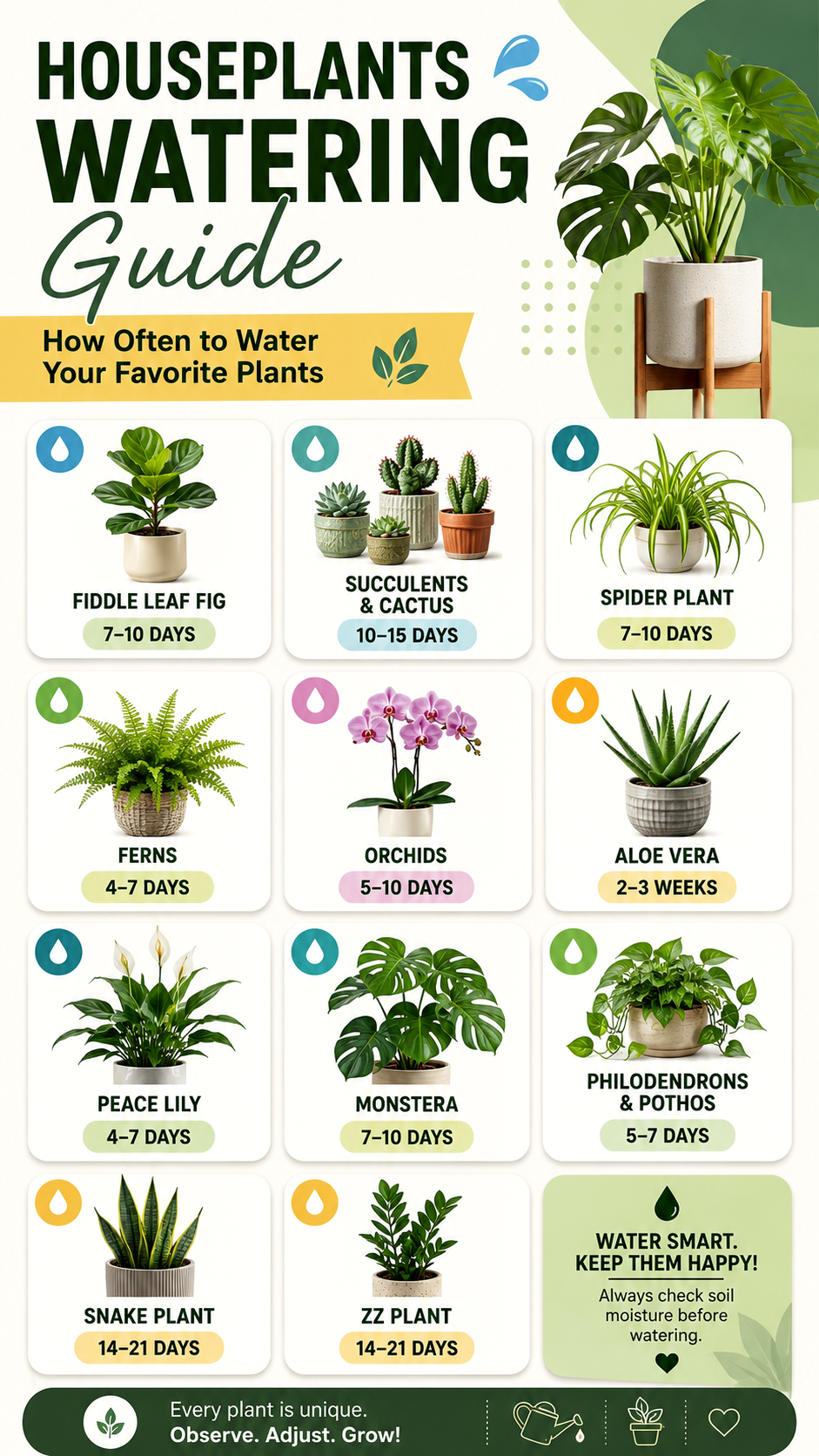
These plants usually perform best when watered every 4 to 7 days, depending on temperature and humidity levels. The soil should remain lightly moist but never waterlogged.
Moderate Water Users
Many popular houseplants fall into this category. They appreciate regular watering but prefer the soil to dry slightly between waterings.
- Monstera
- Fiddle-Leaf Fig
- Spider Plant
- Philodendrons
- Pothos
- Orchids
These plants generally thrive when watered every 5 to 10 days, though seasonal changes may affect frequency.
Drought-Tolerant Plants
Plants adapted to dry climates store water within their leaves, stems, or roots. They prefer extended periods between watering sessions.
- Snake Plants
- ZZ Plants
- Aloe Vera
- Succulents
- Cacti
These resilient plants may only require watering every two to three weeks, making them ideal for busy plant owners.
Watering Guide for Popular Houseplants
Fiddle-Leaf Fig
The fiddle-leaf fig has become one of the most recognizable indoor plants thanks to its large, glossy leaves and architectural appearance.
These plants generally benefit from watering every 7 to 10 days. Allow the top layer of soil to dry before watering again. Consistency is important because sudden changes in moisture levels can cause leaf drop.
Spider Plant
Spider plants are adaptable, forgiving, and perfect for beginners. They appreciate moderate watering and can tolerate occasional neglect.
Watering every 7 to 10 days is often sufficient. During warmer months, they may require slightly more frequent watering.
Monstera
Monstera plants are prized for their dramatic split leaves and fast growth. They prefer evenly moist soil without becoming soggy.
Most Monstera plants thrive when watered every 7 to 10 days. Always check soil moisture before watering to avoid overwatering.
Pro Tip: Large-leaf tropical plants such as Monstera and fiddle-leaf figs often benefit from occasional leaf cleaning. Dust-free leaves absorb light more efficiently and support healthier growth.
Philodendrons and Pothos
These popular trailing plants are known for their adaptability and ease of care. They tolerate a range of indoor conditions and grow vigorously when properly watered.
Water every 5 to 7 days when the top inch of soil feels dry. Avoid keeping the soil constantly saturated.
Peace Lily
Peace lilies are famous for their elegant white blooms and dramatic wilting signals when thirsty.
Most peace lilies need water every 4 to 7 days. They appreciate consistently moist soil and higher humidity levels.
Orchids
Orchids have unique watering needs due to their specialized growing medium. Unlike traditional houseplants, they are often grown in bark mixtures rather than standard potting soil.
Water every 5 to 10 days, depending on humidity, air circulation, and potting medium dryness.
Expert Insight
Many watering mistakes occur because plant owners water on a fixed schedule rather than checking the soil. Using your finger or a moisture meter can provide a much more accurate assessment of when a plant truly needs water.
Aloe Vera
Aloe vera stores water in its thick leaves and thrives when allowed to dry thoroughly between waterings.
Most indoor aloe plants only need water every 2 to 3 weeks. Excess moisture is far more dangerous than temporary dryness.
Snake Plant and ZZ Plant
These are among the most drought-tolerant houseplants available. Their ability to withstand irregular watering makes them excellent low-maintenance options.
Water approximately every 14 to 21 days. During winter, intervals may become even longer.
Succulents and Cacti
Succulents and cacti are adapted to arid environments where rainfall is infrequent. They store water within their tissues and require minimal irrigation.
Water every 10 to 15 days or whenever the soil becomes completely dry. Always use containers with proper drainage.
Factors That Affect Watering Frequency
Even the best watering schedule should be treated as a guideline rather than a strict rule. Several environmental factors influence how quickly soil dries.
Light Exposure
Plants receiving bright indirect light typically use water faster than plants placed in low-light areas. Increased photosynthesis encourages stronger growth and higher water consumption.
Temperature
Warm rooms accelerate evaporation and plant metabolism. During hot weather, plants may require more frequent watering.
Humidity Levels
High humidity slows moisture loss, while dry indoor air increases watering needs. Homes using heating systems during winter often experience lower humidity.
Pot Size and Material
Small pots dry faster than large containers. Terracotta pots also absorb moisture and may require more frequent watering compared to plastic or glazed ceramic pots.
Important: The same plant can have different watering needs depending on its environment. Always observe the soil and plant condition rather than relying solely on a calendar.
Signs of Overwatering
Overwatering is one of the leading causes of houseplant decline. Learning to recognize warning signs can help prevent serious damage.
- Yellow leaves
- Soft stems
- Mushy roots
- Persistent wet soil
- Foul-smelling potting mix
- Leaf drop
If overwatering is suspected, reduce watering frequency and check drainage conditions immediately.
Signs of Underwatering
While less common than overwatering, underwatering can also stress plants and reduce their vitality.
- Dry, crispy leaf edges
- Wilting foliage
- Slow growth
- Dry potting mix pulling away from container edges
- Premature leaf drop
When plants become severely dry, rehydrate them gradually rather than flooding the soil all at once.
Best Practices for Watering Indoor Plants
Water Thoroughly
When watering, soak the soil until excess water drains from the bottom. This encourages roots to grow deeper and stronger.
Use Proper Drainage
Every container should have drainage holes whenever possible. Proper drainage helps prevent water accumulation and root rot.
Check Soil Moisture
Insert a finger into the soil before watering. This simple habit can prevent many common watering mistakes.
Adjust Seasonally
Most houseplants require less water during winter because growth slows and evaporation decreases.
Creating a Sustainable Plant Care Routine
Consistency is the secret to long-term plant success. Rather than following a rigid schedule, establish a routine of checking plants regularly. Observing leaves, soil moisture, and overall growth patterns will help you understand each plant’s unique needs.
Keeping a simple plant journal or using reminders can make it easier to track watering habits, especially if you care for multiple species with different requirements.
At a Glance
- Ferns and Peace Lilies prefer frequent watering.
- Monstera and Fiddle-Leaf Figs enjoy moderate moisture.
- Snake Plants and ZZ Plants tolerate extended dry periods.
- Succulents and cacti need the least frequent watering.
- Always check soil moisture before watering.
Conclusion
A thoughtful watering routine is one of the most valuable skills any plant owner can develop. Understanding how often different houseplants need water helps prevent common problems while promoting healthy roots, vibrant foliage, and steady growth. Whether you are caring for tropical favorites like Monstera and Peace Lily or drought-tolerant options such as snake plants and succulents, matching watering habits to plant needs creates a stronger foundation for success.
By observing soil moisture, adjusting for environmental conditions, and learning the natural preferences of each plant, you can create a thriving indoor garden that remains beautiful throughout the year. Healthy houseplants reward consistent care with cleaner air, enhanced décor, and the satisfaction of watching living greenery flourish in your home.
Tags
Houseplant Care Indoor Plants Watering Schedule Plant Care Tips Monstera Snake Plant Succulents Indoor Gardening