
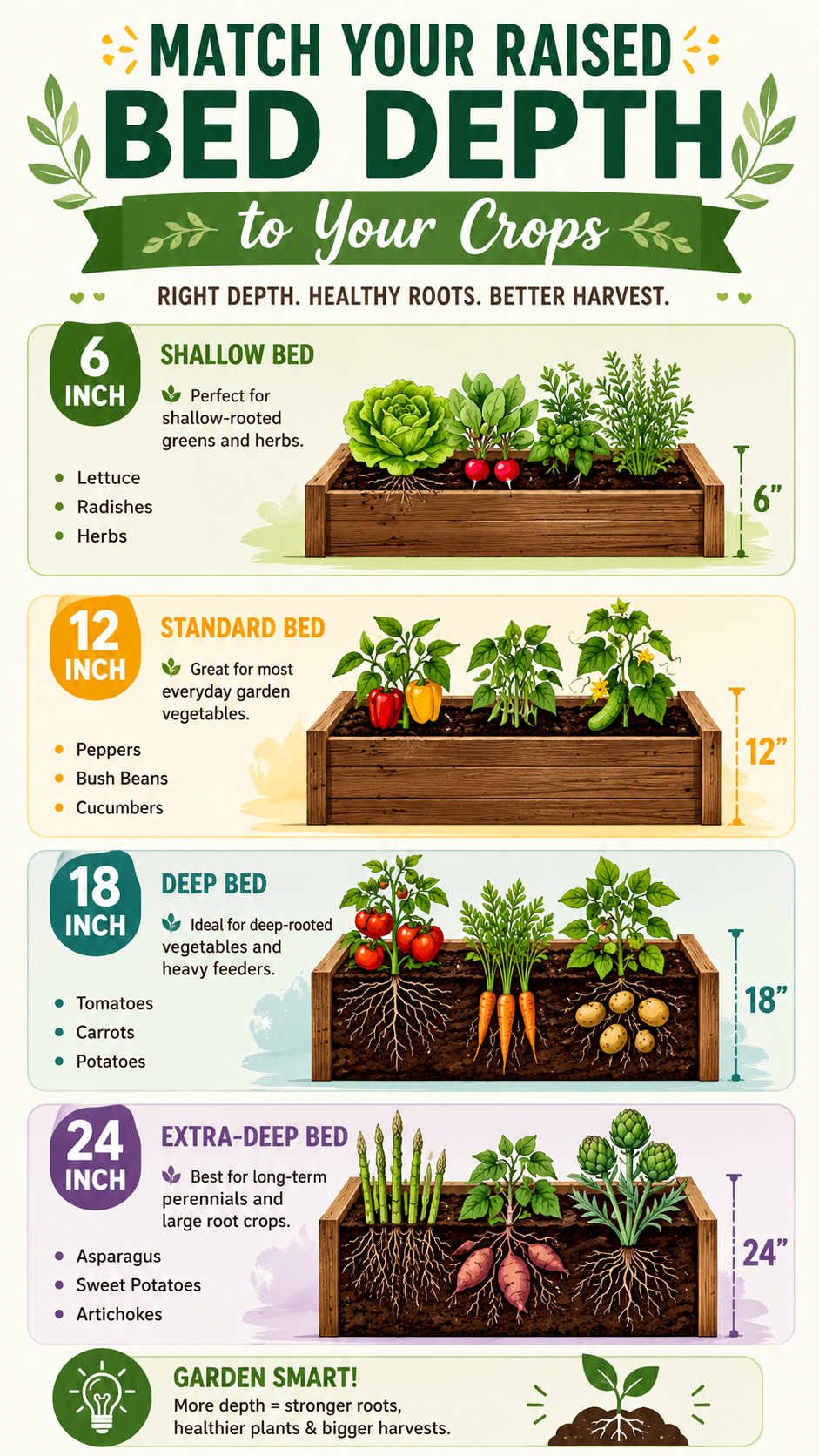
Choosing the right raised garden bed depth is one of the most important decisions for growing healthy vegetables. While many gardeners focus on sunlight, watering schedules, and plant varieties, the depth of the soil often determines how well roots develop and how productive plants become. Different crops have different root systems, and providing enough space beneath the surface allows plants to access nutrients, moisture, and oxygen more effectively.
Whether you’re building a new raised bed or improving an existing vegetable garden, understanding the relationship between root depth and bed depth can help maximize yields while reducing common growing problems. From shallow-rooted lettuce to deep-rooted asparagus and sweet potatoes, matching bed depth to crop needs creates healthier plants and more successful harvests.
Key Takeaways
- Different vegetables require different soil depths for healthy root development.
- Shallow beds work well for leafy greens, herbs, and radishes.
- Medium-depth beds support many popular vegetables including peppers and beans.
- Deep beds are ideal for root crops such as carrots and potatoes.
- Extra-deep beds help perennial vegetables and large root systems thrive.
- Proper bed depth improves drainage, nutrient access, and overall plant health.
Why Raised Bed Depth Matters
Raised bed gardening offers numerous advantages, including improved drainage, better soil control, reduced compaction, and easier maintenance. However, these benefits are only fully realized when the bed provides adequate depth for the crops being grown.
Roots perform several critical functions. They anchor plants, absorb water, collect nutrients, and store energy. When roots encounter limited space, growth can become restricted. Plants may struggle during hot weather, require more frequent watering, or produce smaller harvests.
Important: Root development directly influences plant health above ground. A vegetable with sufficient root space is generally more resilient to drought, nutrient deficiencies, and temperature fluctuations.
Understanding root depth requirements allows gardeners to design raised beds that efficiently support specific crops while making the best use of available space and resources.
6-Inch Raised Beds for Shallow-Rooted Crops
Shallow raised beds around 6 inches deep are often overlooked, yet they can be highly productive when planted with suitable crops. These beds require less soil, cost less to build, and are ideal for compact gardens.
Best Vegetables for 6-Inch Beds
- Lettuce
- Radishes
- Many culinary herbs
- Baby greens
- Spinach
- Arugula
Leafy vegetables generally develop relatively shallow root systems. They grow quickly and spend most of their energy producing foliage rather than extensive underground structures.
Radishes are another excellent choice because their roots mature rapidly and do not require deep soil profiles compared to larger root vegetables.
Benefits of Shallow Beds
- Lower construction costs
- Reduced soil requirements
- Faster warming in spring
- Easier installation in small spaces
- Perfect for balconies and patios
Gardeners looking to grow fresh salad ingredients throughout the season often find shallow raised beds surprisingly productive.
12-Inch Raised Beds: The Versatile Standard
A 12-inch raised bed is often considered the standard depth for vegetable gardening. It provides enough soil volume to support a wide variety of crops while remaining relatively affordable and easy to build.
Vegetables That Thrive in 12 Inches of Soil
- Peppers
- Bush beans
- Cucumbers
- Many annual vegetables
- Compact squash varieties
These plants develop larger root systems than leafy greens but typically do not require extremely deep soil. A foot of quality growing medium allows roots to spread comfortably while maintaining good moisture retention.
Peppers particularly benefit from consistent soil conditions. A 12-inch bed provides enough volume to stabilize temperature and moisture levels, encouraging stronger growth and improved fruit production.
Why This Matters
- Most home gardeners can successfully grow a large percentage of vegetables in 12-inch raised beds.
- This depth strikes an excellent balance between cost, versatility, and productivity.
- It offers enough soil volume to reduce frequent watering compared to shallower beds.
18-Inch Raised Beds for Deep-Rooted Vegetables
When growing crops that produce substantial underground structures, deeper beds become increasingly important. An 18-inch raised bed provides significantly more room for roots to expand and develop properly.
Ideal Crops for 18-Inch Beds
- Tomatoes
- Carrots
- Potatoes
- Parsnips
- Large root vegetables
Tomatoes are often thought of as surface plants because the fruit grows above ground. However, they develop extensive root systems that benefit from additional depth. More root space often translates into larger plants and better fruit production.
Carrots require deep, loose soil to form straight, attractive roots. Shallow beds may cause roots to fork, twist, or become stunted. Potatoes also benefit from extra depth because tubers develop beneath the soil surface and require room to expand.
Pro Tip: If your goal is to grow high-quality carrots or productive tomato plants, investing in deeper raised beds can dramatically improve results and reduce common growth issues.
Additional Advantages
Deeper beds typically hold moisture longer and offer improved temperature stability. During summer heat, this extra soil mass can help protect roots from extreme fluctuations.
Gardeners in regions with hot summers often appreciate the reduced watering demands that deeper beds provide.
24-Inch Raised Beds for Extra-Deep Root Systems
Extra-deep raised beds around 24 inches provide exceptional growing conditions for plants with extensive root systems or perennial growth habits.
Best Crops for 24-Inch Beds
- Asparagus
- Sweet potatoes
- Artichokes
- Long-term perennial vegetables
- Large-rooted specialty crops
Asparagus is a long-lived perennial crop that can produce for many years. Providing ample root space during establishment helps create a productive planting that remains healthy over time.
Sweet potatoes develop large storage roots that require room to expand. Artichokes also benefit from deep, nutrient-rich soil that supports vigorous growth.
Although these beds require more materials and soil, they offer unmatched flexibility for gardeners interested in long-term food production.
Understanding Root Zones in Vegetable Gardening
Every vegetable accesses water and nutrients from a specific root zone. Some crops concentrate roots near the surface, while others explore much deeper layers.
Shallow Root Systems
Shallow-rooted crops generally focus growth within the top few inches of soil. These vegetables often require more frequent watering because the upper soil layers dry quickly.
Moderate Root Systems
Many common garden vegetables fall into this category. They benefit from consistent moisture and adequate depth but do not require exceptionally deep beds.
Deep Root Systems
Large fruiting vegetables and root crops often extend much deeper into the soil profile. Providing sufficient depth encourages stronger growth and greater productivity.
How to Choose the Right Raised Bed Depth
Selecting the best depth depends on several factors beyond crop choice alone.
Consider Your Crop Mix
If you plan to grow a variety of vegetables, a 12-inch or 18-inch bed often provides the greatest flexibility. Mixed plantings become easier when the bed accommodates multiple root depths.
Evaluate Budget and Materials
Deeper beds require more lumber, soil, and filling materials. While they offer advantages, gardeners should balance benefits against overall project costs.
Think About Water Management
Shallow beds dry out faster than deep beds. In warmer climates, extra depth may help reduce irrigation needs throughout the growing season.
Plan for Long-Term Gardening Goals
If you intend to grow perennial vegetables or large root crops, deeper beds may be a worthwhile long-term investment.
Building Productive Raised Beds
Depth is important, but soil quality matters equally. Even the deepest raised bed cannot compensate for poor growing media.
A balanced mix often includes compost, topsoil, and organic matter that improves structure and fertility. Healthy soil encourages beneficial microorganisms, improves drainage, and supports vigorous root development.
Important: High-quality soil paired with the appropriate bed depth creates the foundation for successful vegetable gardening. Both factors work together to support healthy plant growth.
Common Raised Bed Mistakes to Avoid
Growing Deep Crops in Shallow Beds
One of the most common mistakes is planting carrots, potatoes, or large fruiting vegetables in beds that lack sufficient depth.
Ignoring Future Growth
Seedlings may appear small initially, but root systems expand rapidly. Planning for mature plant size is essential.
Using Poor Soil
Compacted or low-quality soil restricts root growth regardless of bed depth.
Overcrowding Plants
Even deep beds can become problematic when too many plants compete for limited resources.
At a Glance
- 6-inch beds suit lettuce, herbs, and radishes.
- 12-inch beds are versatile and support many vegetables.
- 18-inch beds are excellent for tomatoes, carrots, and potatoes.
- 24-inch beds support asparagus, sweet potatoes, and artichokes.
- Matching bed depth to root depth improves harvests.
Conclusion
Successful raised bed gardening starts below the surface. While sunlight, watering, and fertilization are all important, providing the correct soil depth for each crop creates the foundation for healthy root development and abundant harvests. Shallow beds can produce excellent leafy greens, standard beds support a wide range of vegetables, and deeper beds unlock the full potential of root crops and long-lived perennials.
By matching raised bed depth to the specific needs of your vegetables, you can improve plant health, reduce maintenance challenges, and enjoy a more productive garden season after season. Whether you’re growing lettuce, tomatoes, carrots, potatoes, or asparagus, giving roots the room they need is one of the smartest investments any gardener can make.
Tags
Raised Bed Gardening Vegetable Garden Garden Planning Root Vegetables Organic Gardening Growing Vegetables Garden Tips Backyard Gardening