
Healthy smoothies have become one of the most popular tools for people looking to support their weight loss goals while enjoying delicious, nutrient-dense meals. Unlike restrictive diets that leave you feeling hungry and unsatisfied, smoothies can provide a balanced combination of vitamins, minerals, fiber, protein, and healthy fats that help fuel your body throughout the day. Whether you are trying to lose a few pounds, boost your metabolism, or simply make healthier choices, incorporating the right smoothie recipes into your routine can be a practical and enjoyable strategy.
From berry-packed antioxidant blends to refreshing green detox drinks and protein-rich chocolate smoothies, there are countless ways to create satisfying beverages that support a healthy lifestyle. The key lies in choosing ingredients that nourish your body while helping control cravings and support long-term wellness.
Key Takeaways
- Healthy smoothies can support fat loss when made with nutrient-dense ingredients.
- Protein and fiber help increase fullness and reduce unnecessary snacking.
- Green vegetables add nutrients without significantly increasing calories.
- Natural ingredients are often better choices than sugary processed additions.
- Consistency and balanced nutrition matter more than quick fixes.
- Smoothies work best as part of an active and healthy lifestyle.
Why Smoothies Can Support Fat Loss
Smoothies can be a valuable addition to a weight management plan because they allow you to combine multiple nutritious ingredients into a single meal or snack. When carefully prepared, they deliver a balance of protein, fiber, hydration, and micronutrients that can help keep hunger under control.
Many people struggle with cravings due to meals that lack protein or fiber. A well-designed smoothie addresses both concerns. Ingredients such as berries, Greek yogurt, spinach, chia seeds, and protein powder contribute nutrients that help support satiety while providing sustained energy.
Important: Smoothies are not magic weight loss solutions. Their effectiveness depends on the ingredients used and how they fit into your overall eating habits. Choosing whole-food ingredients and avoiding excessive added sugars can make a significant difference.
The Benefits of Berry-Based Smoothies
Berry smoothies remain a favorite among health-conscious individuals because berries are naturally rich in antioxidants, fiber, and flavor. They offer sweetness without the need for refined sugars and provide nutrients that support overall wellness.
Key Ingredients Commonly Used
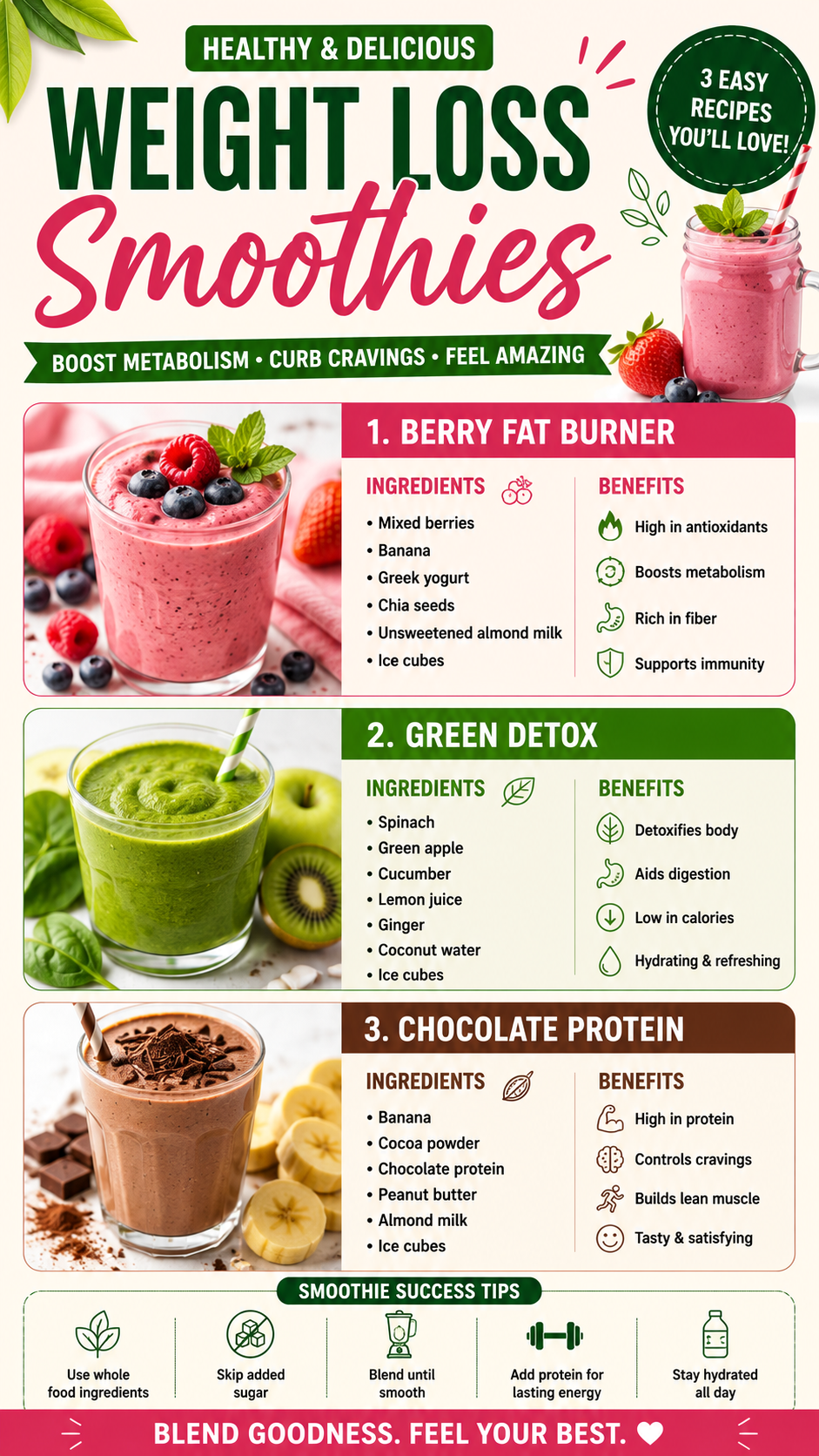
- Mixed berries such as strawberries, blueberries, and raspberries
- Bananas for natural sweetness and creaminess
- Greek yogurt for protein
- Chia seeds for fiber and healthy fats
- Unsweetened almond milk for a lighter base
- Ice cubes for texture and refreshment
One reason berry smoothies are so popular is their versatility. They can be enjoyed as breakfast, post-workout recovery fuel, or an afternoon snack. Their vibrant flavors make healthy eating feel enjoyable rather than restrictive.
How Berries Help
Berries are naturally lower in calories than many processed snacks while delivering valuable nutrients. Their fiber content may help slow digestion, contributing to a feeling of fullness that can reduce the temptation to overeat later in the day.
Antioxidants found in berries also support overall health and wellness, making them a smart choice for anyone seeking nutrient-rich foods.
Green Smoothies and Their Role in Healthy Eating
Green smoothies have gained popularity for good reason. They make it easy to consume leafy vegetables and other nutrient-dense ingredients in a convenient format. Even people who struggle to eat enough vegetables often find green smoothies surprisingly enjoyable.
Popular Green Smoothie Ingredients
- Fresh spinach
- Green apple
- Cucumber
- Lemon juice
- Fresh ginger
- Coconut water
These ingredients work together to create a refreshing beverage that feels light yet satisfying. Green smoothies often contain fewer calories than many traditional breakfast options while still delivering hydration and nutrients.
Why This Matters
- Many adults do not consume enough vegetables daily.
- Green smoothies provide an easy and enjoyable way to increase vegetable intake.
- Consistent healthy habits often produce better results than extreme dieting.
The Power of Hydration
Hydration is often overlooked in discussions about weight management. Ingredients such as cucumber, coconut water, and leafy greens contribute water content that supports hydration. Proper hydration can help maintain energy levels and may reduce confusion between thirst and hunger.
Protein Smoothies for Fullness and Recovery
Protein is one of the most important nutrients for individuals seeking to manage their weight. It plays a critical role in muscle maintenance and can help increase feelings of fullness after meals.
A protein-rich smoothie can be especially beneficial after exercise or during busy mornings when preparing a balanced meal feels challenging.
Common Protein Smoothie Components
- Bananas
- Cocoa powder
- Chocolate protein powder
- Peanut butter
- Almond milk
- Ice cubes
The combination of protein and healthy fats can help create a rich, satisfying texture while supporting appetite control throughout the day.
Pro Tip: Combining protein with fiber-rich ingredients often creates a more filling smoothie than relying on fruit alone. This balance can help reduce cravings and support more stable energy levels.
Ingredients That Can Improve Smoothie Nutrition
The nutritional value of a smoothie depends heavily on what goes into it. While fruits provide natural sweetness and vitamins, adding complementary ingredients can create a more balanced beverage.
Protein Sources
- Greek yogurt
- Protein powder
- Cottage cheese
- Silken tofu
- Nut butters
Fiber Sources
- Chia seeds
- Flaxseeds
- Oats
- Berries
- Leafy greens
Healthy Fat Sources
- Avocado
- Nut butters
- Chia seeds
- Flaxseeds
- Unsweetened coconut products
Adding these ingredients strategically can transform a simple fruit drink into a balanced meal that supports your nutritional goals.
Common Smoothie Mistakes to Avoid
Even healthy foods can become less beneficial when prepared improperly. Many commercial smoothies contain excessive amounts of sugar, syrups, or high-calorie additions that may undermine weight management efforts.
Using Too Much Fruit
Fruit is nutritious, but relying exclusively on fruit can lead to a smoothie that is high in natural sugars while lacking protein and healthy fats.
Ignoring Portion Sizes
Large smoothies can easily contain hundreds of calories. Measuring ingredients helps maintain balance and ensures your smoothie aligns with your goals.
Adding Sweetened Ingredients
Flavored yogurts, sweetened milk alternatives, syrups, and sweet toppings can dramatically increase sugar content. Choosing unsweetened options often provides better nutritional value.
Important: Many people assume all smoothies are healthy. Reading labels and understanding ingredient quality can help prevent unnecessary sugar and calorie intake.
Best Times to Enjoy Smoothies
One advantage of smoothies is their flexibility. They can fit into many different parts of your daily routine.
Breakfast
A balanced smoothie can provide a quick and convenient morning meal packed with nutrients.
Post-Workout Recovery
Protein-rich smoothies can support recovery after exercise while replenishing energy levels.
Healthy Snack
A smaller smoothie can serve as a satisfying snack that helps bridge the gap between meals.
Smoothie Tips for Better Results
Healthy smoothie habits often produce the best long-term outcomes. Small adjustments can improve both nutrition and satisfaction.
- Use fresh and whole ingredients whenever possible.
- Limit added sugars and artificial sweeteners.
- Include a protein source for fullness.
- Add fiber-rich ingredients for better satiety.
- Drink smoothies as part of a balanced eating plan.
- Stay physically active to support overall wellness.
Consistency matters more than perfection. Building sustainable habits around nutrition and exercise often produces more meaningful results than chasing quick fixes.
At a Glance
- Berry smoothies provide antioxidants and fiber.
- Green smoothies help increase vegetable intake.
- Protein smoothies support fullness and recovery.
- Balanced ingredients are key for weight management.
- Healthy habits work best when maintained consistently.
Conclusion
Healthy smoothie recipes can be a practical, delicious, and nutrient-rich addition to a fat loss journey. Whether you prefer fruity berry blends, refreshing green smoothies, or satisfying protein-packed options, the right ingredients can help support your goals while making healthy eating more enjoyable.
Remember that successful weight management is built on consistency, balanced nutrition, hydration, and regular physical activity. Smoothies are not a shortcut, but they can be a valuable tool that helps you stay nourished, energized, and motivated. By focusing on whole ingredients and mindful preparation, you can create smoothies that support both your wellness goals and your enjoyment of healthy living.
Tags
Healthy Smoothies Fat Loss Weight Loss Recipes Green Smoothies Protein Smoothies Healthy Eating Smoothie Recipes Wellness Nutrition