
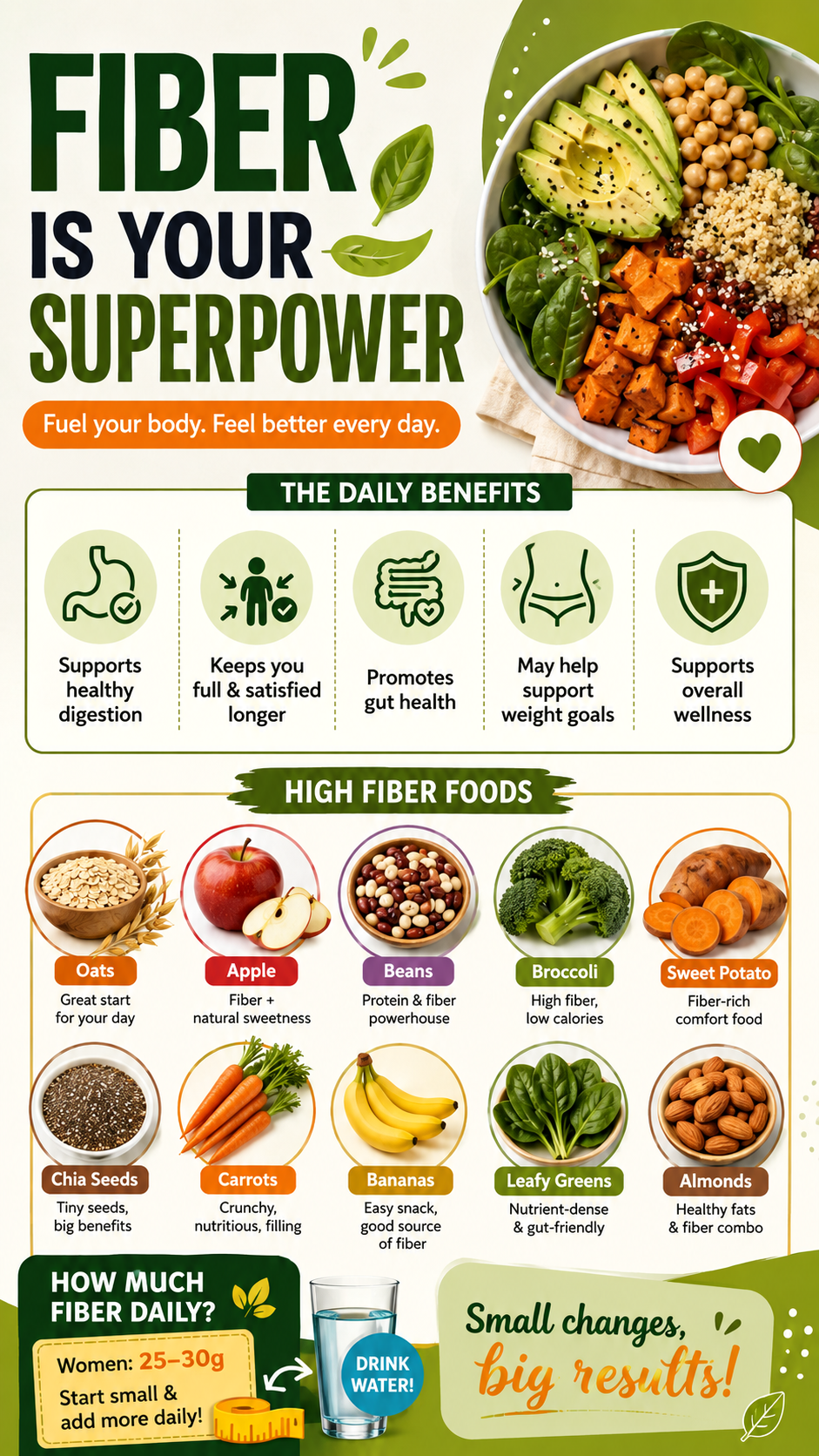
Fiber is one of the most important nutrients for overall health, yet it is often overlooked in everyday eating habits. While many people focus on protein, healthy fats, or vitamins, dietary fiber quietly supports digestion, helps regulate appetite, promotes a healthy gut, and contributes to long-term wellness. The best part is that increasing your fiber intake does not require complicated meal plans or expensive superfoods. Simple choices like adding oats to breakfast, enjoying fresh fruit, eating more vegetables, and including beans or seeds in your meals can make a noticeable difference.
Whether your goal is better digestion, improved gut health, steady energy, or maintaining a healthy weight, understanding the role of fiber can help you make smarter food choices. This guide explains why fiber matters, how much you need, the best food sources, and practical ways to include more fiber in your daily routine.
Key Takeaways
- Fiber supports healthy digestion and regular bowel movements.
- High-fiber foods help you stay full longer and reduce unnecessary snacking.
- A diverse range of plant foods improves gut microbiome health.
- Most adults eat less fiber than recommended.
- Increase fiber gradually and drink enough water for the best results.
What Is Dietary Fiber?
Dietary fiber is a type of carbohydrate found in plant-based foods that your body cannot fully digest. Unlike sugars or starches, fiber travels through the digestive system largely intact, providing numerous health benefits along the way.
There are two primary types of fiber, and both play valuable roles.
Soluble Fiber
Soluble fiber dissolves in water and forms a gel-like substance during digestion. This type helps slow digestion, supports healthy blood sugar levels, and may contribute to maintaining healthy cholesterol levels. Foods rich in soluble fiber include oats, apples, chia seeds, beans, and many fruits.
Insoluble Fiber
Insoluble fiber adds bulk to stool and helps food move more efficiently through the digestive tract. It is commonly found in vegetables, whole grains, nuts, and leafy greens.
Important: A balanced diet naturally provides both soluble and insoluble fiber, allowing your digestive system to benefit from the strengths of each type.
Why Fiber Is So Important
Fiber supports multiple systems throughout the body. Instead of focusing on a single benefit, think of fiber as a daily health partner that works behind the scenes every time you eat.
Supports Healthy Digestion
Perhaps the most recognized benefit of fiber is its role in digestion. It helps food move smoothly through the digestive tract, supports regular bowel movements, and promotes overall digestive comfort.
Keeps You Feeling Full Longer
Fiber-rich foods take longer to digest, helping you stay satisfied after meals. Feeling full for longer periods can make it easier to manage portions and reduce unnecessary snacking between meals.
Promotes Gut Health
Your digestive tract is home to trillions of beneficial bacteria. Many forms of dietary fiber act as food for these helpful microbes, supporting a balanced gut microbiome that contributes to digestive wellness.
May Help Control Cravings
Meals that combine fiber with protein and healthy fats often provide longer-lasting satisfaction. This can help reduce sudden hunger and support healthier food choices throughout the day.
Why This Matters
- Small increases in daily fiber can improve meal satisfaction.
- Whole foods provide fiber along with vitamins, minerals, and antioxidants.
- Consistency matters more than perfection.
How Much Fiber Do You Need?
Daily fiber recommendations vary depending on age, sex, and overall nutritional needs. Adult women generally benefit from around 25 to 30 grams of fiber each day, while many men may require even more.
Despite these recommendations, many people consume much less fiber than their bodies need. Highly processed foods often replace naturally fiber-rich ingredients, making it easy to fall short without realizing it.
Pro Tip: Increase your fiber intake gradually rather than making dramatic changes overnight. Drinking plenty of water helps fiber work effectively and supports comfortable digestion.
Best High-Fiber Foods to Add to Your Diet
Many delicious everyday foods naturally contain fiber. Including a variety of these options throughout the week provides both nutrition and flavor.
Oats
Oats are an excellent breakfast choice that contains soluble fiber. A warm bowl of oatmeal topped with fruit and seeds creates a satisfying meal that supports fullness.
Apples
Apples provide fiber along with natural sweetness. Eating the skin increases the total fiber content, making this fruit a convenient snack.
Bananas
Bananas offer fiber while serving as an easy addition to smoothies, breakfast bowls, or afternoon snacks.
Beans
Beans are among the richest natural sources of fiber. They also provide plant protein, making them an excellent ingredient for soups, salads, stews, and grain bowls.
Chia Seeds
These tiny seeds are packed with fiber and absorb liquid to form a gel-like texture. Sprinkle them into yogurt, smoothies, or overnight oats.
Leafy Greens
Spinach, kale, and other leafy vegetables contribute fiber while delivering a wide range of vitamins and minerals.
Carrots and Cucumbers
Fresh vegetables make excellent snacks and meal additions. They provide fiber, hydration, and satisfying crunch.
Sweet Potatoes
Sweet potatoes are naturally rich in fiber and nutrients. Baking or roasting them creates a flavorful side dish that pairs well with many meals.
Almonds
Almonds contribute fiber along with healthy fats and protein, making them an ideal snack when enjoyed in moderate portions.
Easy Ways to Eat More Fiber Every Day
- Choose oatmeal instead of sugary breakfast cereals.
- Snack on fresh fruit instead of candy.
- Add beans to soups, tacos, and salads.
- Include vegetables with both lunch and dinner.
- Top yogurt with chia seeds and berries.
- Replace refined grains with whole grain alternatives.
- Keep nuts available for convenient snacks.
- Add leafy greens to smoothies and sandwiches.
These small adjustments can gradually increase your daily fiber intake without requiring major dietary changes.
Common Mistakes When Increasing Fiber
Adding too much fiber too quickly may cause temporary digestive discomfort. A gradual approach allows your digestive system to adjust more comfortably.
Another common mistake is forgetting hydration. Fiber works best when paired with adequate water intake. Staying hydrated supports healthy digestion and helps prevent constipation.
Important: Aim for progress instead of perfection. Building consistent habits around fiber-rich meals is far more effective than following restrictive diets or making drastic changes that are difficult to maintain.
Building Long-Term Healthy Habits
The healthiest eating patterns are sustainable. Rather than focusing on short-term diet trends, prioritize adding more colorful fruits, vegetables, whole grains, legumes, nuts, and seeds to your meals. These foods naturally increase fiber while providing many other valuable nutrients.
Meal planning can also make healthy choices easier. Keeping fiber-rich foods stocked at home helps you prepare balanced meals even on busy days.
Quick Points
- Eat a variety of plant-based foods every day.
- Increase fiber gradually while drinking more water.
- Combine fiber with protein for satisfying meals.
- Whole foods are usually the best fiber sources.
- Consistency creates lasting results.
Conclusion
Fiber is one of the simplest ways to support overall wellness through everyday nutrition. From promoting healthy digestion and supporting gut health to helping you feel satisfied after meals, this essential nutrient offers benefits that extend throughout the body. Fortunately, meeting your fiber needs does not require complicated diets or expensive ingredients. By filling your plate with foods like oats, apples, beans, leafy greens, carrots, chia seeds, almonds, cucumbers, bananas, and sweet potatoes, you can steadily improve your eating habits one meal at a time.
Remember that lasting health is built through consistent daily choices. Start with one or two fiber-rich additions each day, stay hydrated, and allow these simple habits to become part of your routine. Small changes made consistently often lead to the biggest long-term improvements.
Tags
Fiber Benefits High Fiber Foods Gut Health Healthy Eating Digestive Health Nutrition Tips Balanced Diet Wellness