
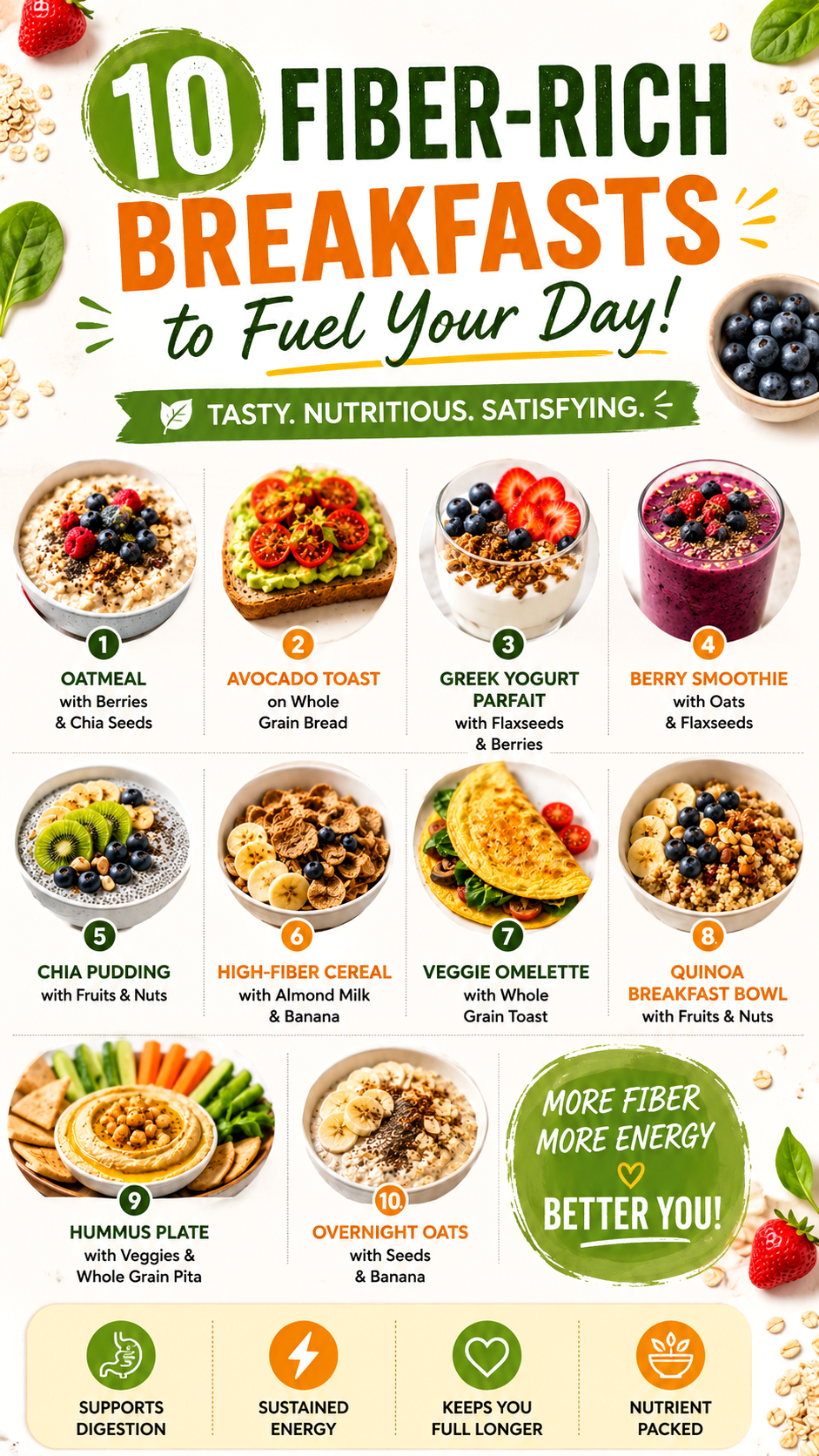
Starting your morning with a fiber-rich breakfast is one of the simplest ways to support better digestion, maintain steady energy levels, and stay satisfied until your next meal. Whether your goal is improving gut health, managing weight, reducing cravings, or simply creating a healthier daily routine, adding more fiber to your breakfast can make a noticeable difference.
Many people focus on protein when planning breakfast, but fiber deserves equal attention. Foods such as oats, berries, chia seeds, whole grains, fruits, vegetables, and legumes provide valuable nutrients while helping support overall wellness. The good news is that high-fiber breakfasts can also be incredibly delicious, colorful, and easy to prepare.
Key Takeaways
- Fiber supports healthy digestion and regularity.
- High-fiber breakfasts can help keep you full longer.
- Whole grains, fruits, seeds, and vegetables are excellent fiber sources.
- Balanced breakfasts provide more sustained energy throughout the day.
- Simple ingredient swaps can significantly increase daily fiber intake.
- Meal prep makes healthy breakfast habits easier to maintain.
Why Fiber Matters at Breakfast
Fiber is a type of carbohydrate that the body cannot fully digest. Unlike refined carbohydrates that are quickly broken down, fiber moves through the digestive system more slowly. This process helps support digestive health while contributing to feelings of fullness.
Breakfast provides the perfect opportunity to increase daily fiber intake. Since many people consume less fiber than recommended, choosing fiber-rich foods in the morning helps build a strong nutritional foundation for the rest of the day.
Important: A fiber-rich breakfast does more than support digestion. It can help stabilize hunger levels, reduce unnecessary snacking, and promote more consistent energy throughout the morning.
Foods rich in dietary fiber often contain additional nutrients such as vitamins, minerals, antioxidants, and plant compounds that contribute to overall health. This makes high-fiber breakfasts a smart choice for people seeking balanced nutrition.
The Benefits of High-Fiber Breakfasts
Improved Digestive Health
Fiber helps support healthy digestion by promoting regular bowel movements and nourishing beneficial gut bacteria. A consistent intake of fiber-rich foods can contribute to a healthier digestive system over time.
Longer Lasting Fullness
One of the most appreciated benefits of fiber is its ability to increase satiety. High-fiber foods often take longer to digest, helping you feel satisfied between meals.
Steady Morning Energy
Instead of relying on sugary breakfast options that may lead to energy crashes, fiber-rich meals support a more gradual release of energy. This can help improve focus and productivity throughout the morning.
Better Nutrient Intake
Many high-fiber breakfast foods are naturally nutrient-dense. Fruits, vegetables, seeds, nuts, and whole grains provide essential nutrients while increasing fiber consumption.
10 Fiber-Rich Breakfast Ideas to Inspire Your Morning
1. Oatmeal with Berries and Chia Seeds
Oatmeal remains one of the most popular high-fiber breakfast choices. Rolled oats provide soluble fiber, while fresh berries add natural sweetness and antioxidants. Chia seeds further boost fiber content and create a satisfying texture.
- Use rolled or steel-cut oats.
- Top with blueberries, raspberries, or strawberries.
- Add chia seeds for extra fiber and texture.
2. Avocado Toast on Whole Grain Bread
Avocado toast has earned its place among healthy breakfast favorites. Whole grain bread provides complex carbohydrates and fiber, while avocado contributes healthy fats and additional fiber.
For extra flavor, top with sliced tomatoes, herbs, or a sprinkle of seeds.
3. Greek Yogurt Parfait with Berries and Flaxseeds
Greek yogurt paired with berries and flaxseeds creates a balanced breakfast packed with protein and fiber. Layering ingredients creates an appealing presentation while delivering excellent nutrition.
Why This Matters
- Combining fiber with protein can improve satisfaction after meals.
- Berries and seeds add both texture and nutritional value.
- Simple combinations often become the easiest healthy habits to maintain.
4. Berry Smoothie with Oats and Flaxseeds
Smoothies offer a convenient way to include multiple fiber-rich ingredients in one meal. Blending berries, oats, flaxseeds, and fruit creates a filling breakfast that is easy to enjoy on busy mornings.
Choose whole fruits rather than juices whenever possible to maximize fiber intake.
5. Chia Pudding with Fruit and Nuts
Chia pudding is a favorite among meal-prep enthusiasts. When soaked overnight, chia seeds absorb liquid and develop a creamy consistency. Adding fruits and nuts creates a flavorful, nutrient-dense breakfast.
Pro Tip: Prepare chia pudding the night before to save time and ensure a healthy breakfast is ready when you wake up.
6. High-Fiber Cereal with Banana
Choosing a cereal made from whole grains can provide a quick and convenient fiber boost. Pairing it with banana slices adds natural sweetness and additional nutrients.
Look for cereals that contain whole grains as a primary ingredient and minimal added sugar.
7. Veggie Omelette with Whole Grain Toast
Vegetables are not just for lunch and dinner. Adding spinach, tomatoes, mushrooms, and peppers to an omelette increases fiber and nutrient content while creating a flavorful breakfast.
Serving it alongside whole grain toast provides even more fiber and helps create a balanced meal.
8. Quinoa Breakfast Bowl
Quinoa is often associated with lunch and dinner, but it also works wonderfully as a breakfast grain. Topped with fruits, nuts, and seeds, quinoa creates a satisfying bowl packed with texture and nutrition.
Its versatility makes it easy to customize based on personal preferences.
9. Hummus Plate with Vegetables and Whole Grain Pita
For those who prefer savory breakfasts, a hummus plate offers a refreshing alternative. Hummus contains fiber from chickpeas, while fresh vegetables add crunch, color, and additional nutrients.
- Carrot sticks
- Cucumber slices
- Bell pepper strips
- Whole grain pita bread
10. Overnight Oats with Seeds and Banana
Overnight oats continue to grow in popularity because they are simple, affordable, and highly customizable. Combining oats with chia seeds, flaxseeds, and banana creates a filling breakfast loaded with fiber.
Experiment with different fruits, spices, and toppings to keep the meal interesting throughout the week.
How to Increase Fiber Intake Without Overcomplicating Breakfast
Increasing fiber intake does not require a complete dietary overhaul. Small changes often have the greatest long-term impact.
- Choose whole grain bread instead of white bread.
- Add berries to yogurt or oatmeal.
- Include chia or flaxseeds in smoothies.
- Select whole grain cereals.
- Add vegetables to egg-based breakfasts.
- Keep nuts and seeds available for toppings.
These simple adjustments can dramatically improve the nutritional quality of your breakfast while keeping preparation easy and enjoyable.
Common Mistakes to Avoid
Relying on Sugary Breakfast Foods
Many packaged breakfast products appear healthy but contain large amounts of added sugar and minimal fiber. Reading labels can help identify better options.
Ignoring Hydration
Fiber works best when paired with adequate fluid intake. Drinking water throughout the morning supports digestion and overall wellness.
Making Changes Too Quickly
Gradually increasing fiber intake can help the digestive system adjust comfortably. Small, consistent improvements are often more sustainable than dramatic changes.
Important: Consistency matters more than perfection. Choosing a fiber-rich breakfast several times each week can deliver meaningful benefits over time.
Building a Sustainable Healthy Morning Routine
A nutritious breakfast becomes much easier when healthy ingredients are readily available. Keeping oats, berries, seeds, whole grain bread, fruits, and vegetables on hand allows you to create quick, satisfying meals without much effort.
Meal preparation can also simplify mornings. Preparing overnight oats, chopping fruits, or portioning smoothie ingredients in advance can save valuable time while supporting healthy habits.
The best breakfast is one that combines nutrition, enjoyment, and practicality. When a meal tastes good and fits naturally into your schedule, you are far more likely to stick with it.
At a Glance
- Prioritize whole grains, fruits, vegetables, seeds, and legumes.
- Combine fiber with protein for better satisfaction.
- Prepare breakfast ingredients ahead of time.
- Choose minimally processed foods whenever possible.
- Aim for consistency rather than perfection.
Conclusion
Fiber-rich breakfasts offer an effective and delicious way to support digestive health, maintain steady energy, and create healthier eating habits. From hearty oatmeal and overnight oats to savory avocado toast, veggie omelettes, and hummus plates, there are countless ways to enjoy more fiber in the morning.
By incorporating whole grains, fruits, vegetables, nuts, seeds, and legumes into your breakfast routine, you can create meals that are satisfying, nutritious, and easy to prepare. Small daily choices often lead to lasting results, and a fiber-rich breakfast is one of the best places to start.
Tags
Fiber Rich Breakfast Healthy Breakfast Ideas High Fiber Foods Gut Health Breakfast Meal Prep Healthy Eating Morning Nutrition Balanced Diet