
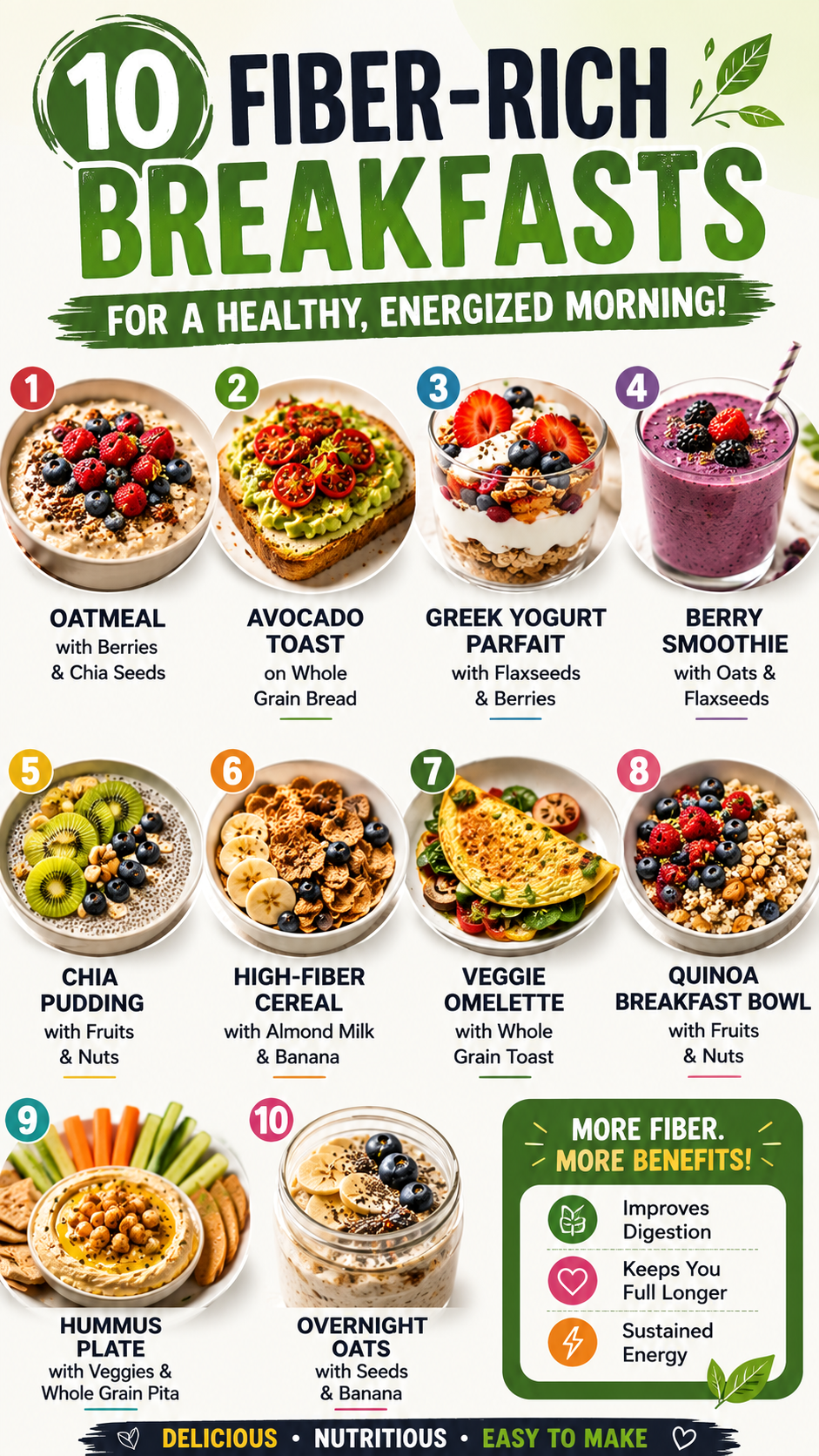
Starting the day with a fiber-rich breakfast is one of the simplest ways to support overall health, improve digestion, and maintain steady energy levels. Many people focus on calories or protein when planning their morning meal, but fiber deserves equal attention. A well-balanced breakfast packed with fiber can help keep hunger under control, support gut health, and provide lasting satisfaction throughout the morning.
Whether you enjoy warm bowls of oatmeal, creamy yogurt parfaits, fresh fruit combinations, hearty avocado toast, or convenient overnight oats, there are countless ways to increase your fiber intake without sacrificing flavor. The best part is that these breakfasts are simple, versatile, and easy to adapt to your personal preferences.
Key Takeaways
- Fiber supports healthy digestion and regularity.
- High-fiber breakfasts help you stay full longer.
- Whole grains, fruits, seeds, and vegetables are excellent fiber sources.
- Balanced breakfasts can provide sustained morning energy.
- Simple ingredients can create nutritious and satisfying meals.
- Consistent fiber intake contributes to long-term wellness.
Why Fiber Matters at Breakfast
Breakfast sets the tone for the rest of the day. Choosing foods rich in fiber helps slow digestion, which can contribute to more stable energy levels and reduce the temptation to snack excessively between meals.
Dietary fiber is found primarily in plant-based foods, including fruits, vegetables, legumes, whole grains, nuts, and seeds. Unlike other nutrients, fiber passes through the digestive system largely intact, providing unique benefits that support digestive health and overall wellness.
Important: Many adults consume less fiber than recommended. Adding fiber-rich choices to breakfast is one of the easiest ways to increase daily intake without making major dietary changes.
When combined with protein and healthy fats, fiber-rich breakfasts can create a satisfying meal that supports both physical and mental performance throughout the morning.
Oatmeal with Berries and Chia Seeds
Oatmeal remains one of the most popular high-fiber breakfast options for good reason. Whole oats provide soluble fiber, while fresh berries add additional fiber along with natural sweetness and antioxidants.
Adding chia seeds enhances both texture and nutritional value. These tiny seeds absorb liquid and create a pleasant consistency while contributing additional fiber.
- Easy to prepare
- Budget-friendly
- Highly customizable
- Suitable for meal prep
Try experimenting with blueberries, raspberries, strawberries, or blackberries to keep your breakfasts interesting and flavorful.
Avocado Toast on Whole Grain Bread
Avocado toast has become a breakfast favorite because it combines simplicity, flavor, and nutrition. Whole grain bread provides fiber-rich carbohydrates, while avocado contributes healthy fats and additional fiber.
Adding sliced tomatoes, herbs, or seeds can elevate the dish while introducing more nutrients and texture.
This breakfast works especially well for busy mornings because it can be prepared quickly without sacrificing nutritional quality.
Simple Ways to Upgrade Avocado Toast
- Add sliced tomatoes for freshness.
- Sprinkle chia or flaxseeds on top.
- Include leafy greens for extra nutrients.
- Use sprouted whole grain bread for additional fiber.
Greek Yogurt Parfaits with Fruits and Seeds
Greek yogurt parfaits combine creamy texture with satisfying crunch and natural sweetness. Layering yogurt with berries, granola, flaxseeds, and other fiber-rich toppings creates a breakfast that feels indulgent while supporting healthy eating goals.
The combination of protein from yogurt and fiber from fruits and seeds can help keep you feeling satisfied for longer periods.
Why This Matters
- Combining protein and fiber can increase satiety.
- Layered breakfasts encourage variety and nutrient diversity.
- Fresh fruits add natural sweetness without relying on excessive added sugars.
Berry Smoothies with Oats and Flaxseeds
Smoothies offer a convenient way to include multiple fiber-rich ingredients in a single meal. Blending berries, oats, flaxseeds, and fruit creates a nutritious breakfast that can be enjoyed at home or on the go.
The key to creating a fiber-rich smoothie is including whole ingredients rather than relying solely on juice. Whole fruits retain their fiber content and help create a more filling beverage.
Frozen berries are particularly useful because they provide a thick, creamy texture without requiring additional sweeteners.
Pro Tip: Adding rolled oats to smoothies increases fiber content and creates a more satisfying texture, making the smoothie feel more like a complete meal.
Chia Pudding for a Make-Ahead Breakfast
Chia pudding has become a favorite among meal-prep enthusiasts. Simply combining chia seeds with milk or a dairy-free alternative creates a pudding-like consistency after several hours of soaking.
Fresh fruits, nuts, and seeds can be added before serving to increase flavor, texture, and nutritional value.
Because chia seeds are naturally rich in fiber, even a small serving can make a meaningful contribution to daily fiber intake.
Benefits of Chia Pudding
- Requires minimal preparation.
- Can be made in advance.
- Offers excellent versatility.
- Pairs well with many fruits and toppings.
Choosing High-Fiber Cereals Wisely
Breakfast cereal can be a convenient option, but not all cereals are created equal. Choosing varieties made from whole grains with minimal added sugar can significantly improve nutritional quality.
Pairing cereal with sliced bananas, berries, or nuts can further boost fiber content while improving flavor and texture.
Reading ingredient labels and selecting products with recognizable whole-food ingredients can help consumers make better choices.
Vegetable-Packed Omelets for Balanced Nutrition
Although eggs themselves do not contain fiber, adding vegetables to omelets is an excellent way to increase fiber intake at breakfast.
Spinach, tomatoes, mushrooms, onions, and peppers can transform a simple omelet into a nutrient-rich meal that supports fullness and balanced nutrition.
Serving the omelet alongside whole grain toast adds another source of fiber and creates a more complete breakfast.
Important: Combining vegetables with protein-rich foods is a practical strategy for creating breakfasts that support satiety, nutrition, and sustained energy.
Quinoa Breakfast Bowls
Quinoa is often associated with lunch and dinner meals, but it can also serve as a delicious breakfast base. Cooked quinoa pairs beautifully with fruits, nuts, seeds, and warm spices.
Its slightly nutty flavor makes it a versatile ingredient that can be customized to suit different tastes and dietary preferences.
Breakfast bowls built around quinoa provide variety for individuals seeking alternatives to traditional oats or cereal.
Popular Quinoa Bowl Additions
- Bananas
- Blueberries
- Almonds
- Walnuts
- Chia seeds
- Cinnamon
Hummus and Fresh Vegetables for a Savory Start
Breakfast does not always have to be sweet. A savory plate featuring hummus, fresh vegetables, and whole grain crackers or pita bread can provide a refreshing alternative.
Chickpeas, the primary ingredient in hummus, contain fiber and pair well with colorful vegetables such as carrots, cucumbers, celery, and bell peppers.
This option works particularly well for individuals who prefer savory flavors in the morning.
The Convenience of Overnight Oats
Overnight oats have become a staple breakfast choice because they combine convenience with nutrition. By soaking oats overnight, breakfast is ready to enjoy as soon as the day begins.
Adding bananas, berries, flaxseeds, chia seeds, or nuts increases both flavor and fiber content.
Overnight oats are particularly useful for busy schedules because they eliminate morning preparation time while still delivering a satisfying meal.
Tips for Better Overnight Oats
- Use rolled oats for the best texture.
- Add fruit just before serving for freshness.
- Include seeds for extra fiber.
- Experiment with different spices and toppings.
How to Increase Fiber Intake Gradually
While fiber offers numerous benefits, increasing intake too quickly may cause digestive discomfort for some individuals. A gradual approach is often the most comfortable and sustainable strategy.
Adding one fiber-rich ingredient at a time allows the body to adjust naturally. Drinking sufficient water is also important because fiber works best when paired with adequate hydration.
Consistency matters more than perfection. Small improvements repeated daily can lead to meaningful long-term benefits.
Building the Ideal Fiber-Rich Breakfast
The most satisfying breakfasts often combine several key components. A balanced meal may include whole grains, fruits, vegetables, healthy fats, and protein sources.
This combination supports fullness, nutritional balance, and enjoyable eating experiences.
- Whole grains for sustained energy
- Fruits for natural sweetness and fiber
- Seeds and nuts for texture and nutrients
- Protein sources for satiety
- Vegetables for additional fiber and vitamins
At a Glance
- Fiber supports digestion and fullness.
- Oats, fruits, seeds, and vegetables are excellent choices.
- Meal-prep options make healthy breakfasts easier.
- Combining fiber with protein creates balanced meals.
- Small daily habits contribute to lasting wellness.
Conclusion
Fiber-rich breakfasts offer a practical and delicious way to support healthy digestion, steady energy levels, and long-lasting satisfaction throughout the day. Whether you prefer oatmeal topped with berries, avocado toast, Greek yogurt parfaits, chia pudding, vegetable omelets, quinoa bowls, or overnight oats, there are countless opportunities to build nutritious morning meals.
The beauty of high-fiber breakfasts lies in their flexibility. Simple ingredients can be combined in creative ways to suit different tastes, lifestyles, and schedules. By making fiber a priority each morning, you can create a foundation for healthier eating habits and a more energized start to every day.
Tags
High Fiber Breakfast Healthy Breakfast Ideas Fiber Rich Foods Gut Health Overnight Oats Healthy Eating Breakfast Recipes Nutrition Tips