
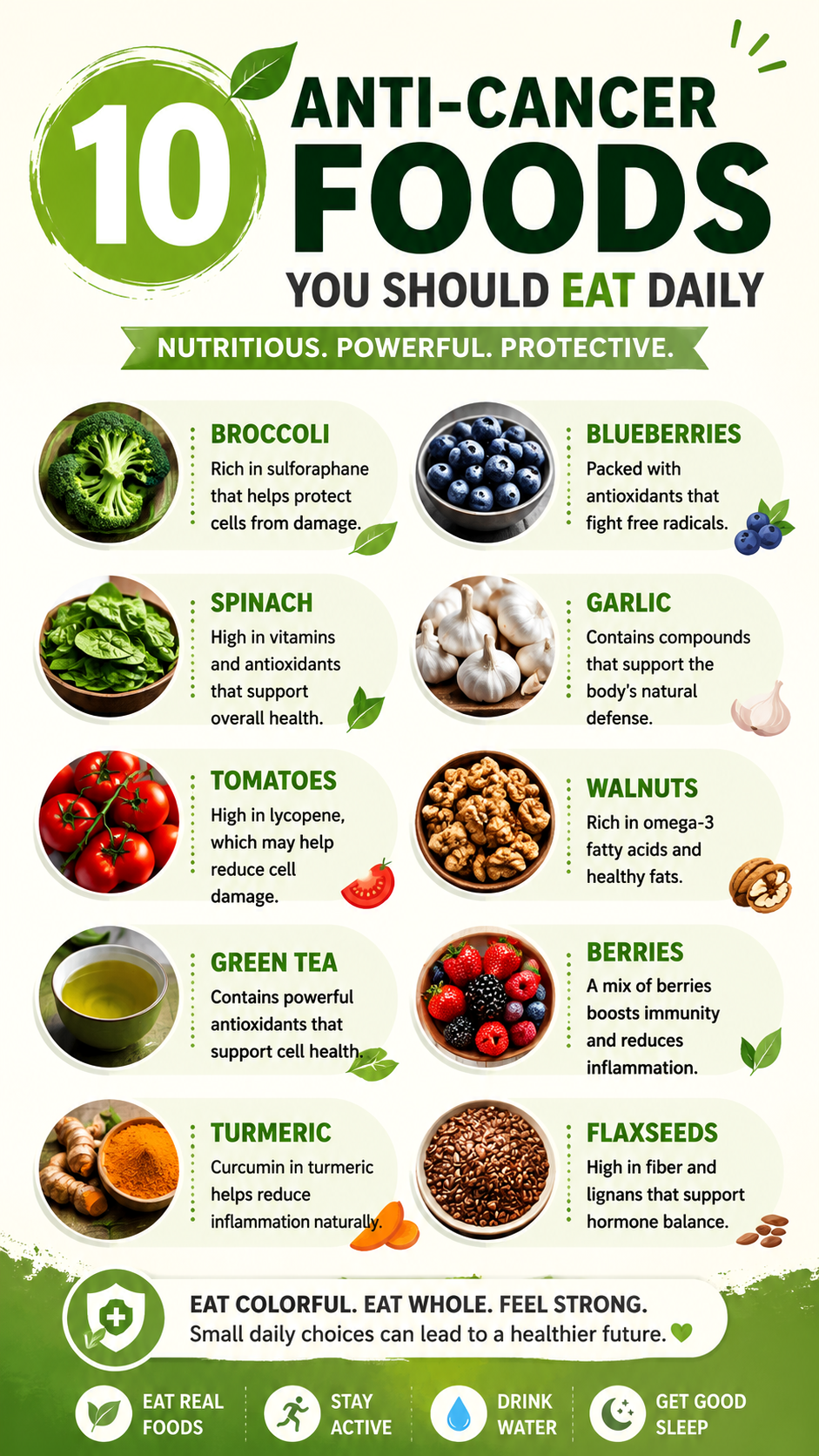
Eating a balanced diet filled with colorful fruits, vegetables, whole grains, legumes, nuts, and healthy fats is one of the best ways to support overall wellness. While no single food can prevent or cure cancer, many everyday foods contain antioxidants, vitamins, minerals, and plant compounds that help protect cells from damage and support a healthy immune system. Choosing nutrient-dense foods consistently can contribute to better long-term health while reducing inflammation and promoting healthy body function.
Key Takeaways
- Focus on a colorful variety of fruits and vegetables every day.
- Choose whole foods over highly processed options whenever possible.
- Include foods rich in antioxidants, fiber, and healthy fats.
- Healthy eating works best alongside regular exercise and good lifestyle habits.
- Consistency matters more than perfection when building nutritious meals.
Why Nutrition Plays an Important Role
Your body depends on nutrients to repair tissues, support immune function, and maintain healthy cells. Fruits and vegetables provide powerful phytochemicals, vitamins, and minerals that work together to protect the body from everyday oxidative stress.
Important: Research consistently shows that eating a diet rich in plant foods supports overall health. Rather than searching for a single “miracle food,” focus on building balanced meals that include a wide variety of nutrient-rich ingredients.
Powerful Foods to Include More Often
Leafy Green Vegetables
Spinach, kale, Swiss chard, and other leafy greens provide vitamins A, C, K, folate, and beneficial antioxidants. They are also naturally low in calories while offering plenty of fiber.
- Add spinach to smoothies.
- Use kale in salads.
- Mix greens into soups and omelets.
Berries
Blueberries, strawberries, raspberries, and blackberries are packed with antioxidants that help protect cells. They also provide vitamin C and fiber while making healthy snacks naturally sweet.
Cruciferous Vegetables
Broccoli, cauliflower, cabbage, Brussels sprouts, and bok choy contain naturally occurring plant compounds that have been widely studied for their health-supporting properties.
Try roasting these vegetables with olive oil, garlic, and herbs for a flavorful side dish.
Tomatoes
Tomatoes contain lycopene, a natural antioxidant that becomes even more available when tomatoes are cooked. Tomato sauces, soups, and roasted tomatoes can all fit into a healthy eating pattern.
Garlic and Onions
These flavorful kitchen staples contain sulfur compounds that contribute both taste and nutrition. Regularly using garlic and onions is an easy way to add more plant-based goodness to meals.
Expert Insight
Healthy eating patterns consistently outperform restrictive diets. Building meals around vegetables, fruits, beans, whole grains, and healthy proteins creates lasting habits that are easier to maintain over time.
Healthy Fats That Support Wellness
Healthy fats are essential for many body functions. Instead of avoiding fat altogether, choose nutrient-rich sources.
- Extra virgin olive oil
- Avocados
- Walnuts
- Almonds
- Flaxseeds
- Chia seeds
These foods provide healthy unsaturated fats along with vitamins, minerals, and fiber.
Whole Grains Matter
Whole grains contain more fiber and nutrients than refined grains. Fiber supports digestive health and helps maintain steady energy levels.
Excellent choices include:
- Brown rice
- Quinoa
- Oats
- Whole wheat bread
- Barley
- Farro
Pro Tip: Replace refined grains one meal at a time. Small, sustainable changes often lead to healthier long-term habits than dramatic diet overhauls.
Beans and Legumes
Beans, lentils, peas, and chickpeas are affordable nutritional powerhouses. They provide protein, fiber, iron, and complex carbohydrates while helping create satisfying meals.
Ideas include:
- Lentil soup
- Black bean tacos
- Chickpea salads
- White bean pasta dishes
Colorful Fruits Add More Than Sweetness
Each fruit offers its own unique combination of nutrients.
- Oranges provide vitamin C.
- Apples supply fiber.
- Pomegranates contain antioxidants.
- Grapes offer beneficial plant compounds.
- Kiwi provides vitamin C and potassium.
Eating a rainbow of fruits helps maximize nutritional variety.
Spices and Herbs Worth Using Daily
Fresh herbs and spices can boost flavor without relying on excess salt or sugar.
- Turmeric
- Ginger
- Cinnamon
- Parsley
- Basil
- Oregano
Adding herbs to everyday cooking is an easy way to increase plant diversity in your diet.
Simple Habits That Support Healthy Eating
- Fill half your plate with vegetables.
- Choose water instead of sugary drinks.
- Cook more meals at home.
- Limit heavily processed foods.
- Read nutrition labels.
- Practice portion awareness.
- Plan healthy snacks in advance.
Healthy eating becomes much easier when nutritious options are readily available in your kitchen.
Lifestyle Habits That Work Together With Nutrition
Food is just one part of overall wellness. Other healthy habits include staying physically active, getting quality sleep, managing stress, avoiding tobacco, and limiting alcohol intake. Together, these habits support long-term health and complement a nutritious diet.
Important: No individual food can eliminate disease risk. The greatest benefits come from maintaining a balanced dietary pattern combined with healthy lifestyle choices over many years.
Creating a Balanced Plate
A simple meal template makes healthy eating easier.
- Half vegetables and fruits.
- One quarter lean protein.
- One quarter whole grains.
- Add healthy fats in moderation.
- Drink water with meals.
This balanced approach provides a wide variety of nutrients while keeping meals satisfying and enjoyable.
At a Glance
- Eat a colorful variety of plant foods every day.
- Prioritize whole foods over processed alternatives.
- Include fiber-rich grains, beans, fruits, and vegetables.
- Healthy habits work best when practiced consistently.
Conclusion
Building a healthy diet does not require complicated meal plans or expensive ingredients. Consistently choosing colorful vegetables, fresh fruits, whole grains, legumes, nuts, seeds, and healthy fats creates a strong nutritional foundation that supports overall wellness. Instead of focusing on one specific superfood, aim for variety, balance, and long-term consistency. Every nutritious meal is an opportunity to nourish your body and support a healthier future.
Tags
Anti-Cancer Foods Superfoods Healthy Eating Nutrition Whole Foods Plant Based Healthy Lifestyle Wellness