
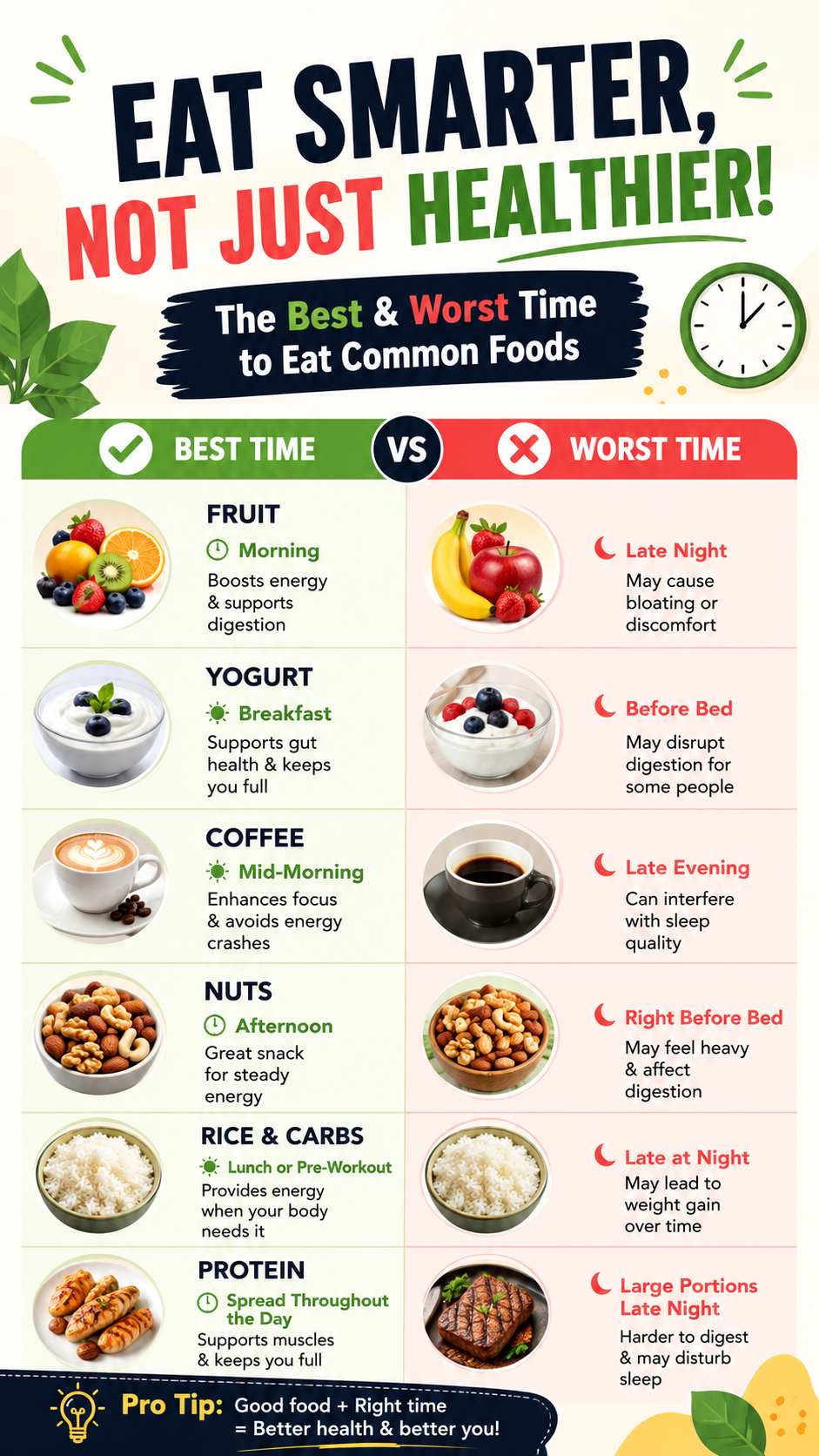
Many people focus on what they eat, but far fewer pay attention to when they eat it. The timing of your meals and snacks can have a surprising impact on digestion, energy levels, nutrient absorption, metabolism, and even sleep quality. While there is no single perfect eating schedule that works for everyone, understanding the best and worst times to eat common foods can help you make smarter nutrition choices throughout the day.
From fruit and yogurt to coffee and nuts, certain foods may offer greater benefits when consumed at specific times. Learning how meal timing affects your body can help reduce digestive discomfort, support consistent energy, and improve overall wellness.
Key Takeaways
- Food timing can influence digestion, energy, and nutrient absorption.
- Some foods are better suited for mornings, while others support evening recovery.
- Eating certain foods at the wrong time may lead to discomfort or energy crashes.
- Balanced meal timing can help control hunger and cravings.
- Small adjustments often produce noticeable improvements in daily wellness.
- Consistency is just as important as food quality.
Why Food Timing Matters
Your body follows natural biological rhythms throughout the day. Hormones, digestive enzymes, blood sugar regulation, and energy production all fluctuate according to these rhythms. Because of this, your body may process the same food differently depending on when you eat it.
For example, foods that provide quick energy can be particularly useful during the morning or before physical activity. Meanwhile, foods that digest slowly may be more beneficial in the evening when sustained satiety is desired.
Important: Food timing does not replace healthy eating habits, but it can enhance the benefits of a nutritious diet. Combining quality food choices with strategic timing often leads to better results than focusing on either factor alone.
The Best and Worst Times to Eat Fruit
Fruit is packed with vitamins, minerals, antioxidants, and fiber. However, timing can affect how comfortably your body digests it.
Best Time
Many people find fruit easiest to digest during the morning or between meals. Fresh fruit can provide natural sugars that help boost energy levels without the heaviness associated with larger meals.
- Breakfast
- Mid-morning snack
- Pre-workout snack
Potentially Less Ideal Time
Some individuals experience bloating or digestive discomfort when eating large amounts of fruit immediately before bedtime. This varies from person to person, but it is worth paying attention to how your body responds.
When to Eat Yogurt for Maximum Benefits
Yogurt is a popular source of protein, calcium, and beneficial bacteria. It can fit into nearly any meal plan, but timing may influence its benefits.
Best Time
Yogurt works well as a breakfast item or a healthy snack. Pairing it with fruit, nuts, or seeds can create a balanced combination of nutrients.
- Breakfast
- Afternoon snack
- Post-workout recovery
Less Ideal Time
Heavy sweetened yogurt late at night may contribute unnecessary sugar intake and could feel overly filling before sleep.
Expert Insight
Choosing nutrient-dense foods at the right time often helps maintain steady energy throughout the day. Even small adjustments, such as moving fruit to the morning or enjoying protein-rich snacks in the afternoon, can improve how you feel between meals.
Coffee Timing Can Make a Difference
Coffee remains one of the world’s most consumed beverages. While it provides a welcome energy boost, timing can influence its effectiveness.
Best Time
Many experts suggest waiting a short period after waking before consuming coffee. This approach may help you avoid relying solely on caffeine during your body’s natural wake-up process.
- Mid-morning
- Early afternoon
Worst Time
Late evening coffee can interfere with sleep quality for many people. Poor sleep may then affect appetite regulation and energy the following day.
Pro Tip: If you enjoy coffee daily, try avoiding it several hours before bedtime. Better sleep often delivers more energy than an extra cup of caffeine.
Nuts and Seeds: Small Foods With Big Benefits
Nuts and seeds are packed with healthy fats, fiber, vitamins, minerals, and plant-based protein. They are among the most convenient healthy snacks available.
Best Time
Mid-morning and afternoon are often ideal periods to enjoy nuts. Their combination of protein and healthy fats can help keep hunger under control.
- Between meals
- Before workouts
- As part of breakfast
Less Ideal Time
Large portions right before bed may feel heavy for some individuals, particularly if digestion is already sensitive.
Eating Bananas at the Right Time
Bananas provide potassium, fiber, and natural carbohydrates that support energy production.
Best Time
Because bananas contain easily digestible carbohydrates, they are popular before exercise or as part of breakfast.
- Morning meals
- Pre-workout snacks
- Recovery meals
Possible Drawbacks
Eating bananas alone may not keep you satisfied for long. Pairing them with protein or healthy fats can provide longer-lasting fullness.
When Should You Eat Rice and Other Carbohydrates?
Carbohydrates often receive mixed opinions, but they remain an important energy source for the body.
Best Time
Many active individuals benefit from consuming carbohydrates earlier in the day or around physical activity when energy demands are higher.
- Breakfast
- Lunch
- Before exercise
- After exercise
Considerations
Large portions of refined carbohydrates late at night may leave some people feeling sluggish. Choosing balanced meals with protein and vegetables can improve overall satisfaction.
Important: The quality of carbohydrates matters. Whole grains, fruits, vegetables, and legumes generally offer more nutrients and fiber than highly processed options.
The Right Time for Protein-Rich Foods
Protein supports muscle maintenance, recovery, satiety, and many other essential functions.
Best Time
Rather than consuming all your protein in a single meal, spreading protein intake throughout the day may help support muscle health and appetite control.
- Breakfast
- Lunch
- Dinner
- Post-workout meals
Why It Works
Regular protein intake can help stabilize hunger and support more consistent energy levels throughout the day.
Foods That May Be Better in the Evening
Not every food belongs in the morning. Some foods can fit naturally into evening routines.
Good Evening Choices
- Balanced protein-rich meals
- Vegetables and salads
- Light yogurt servings
- Small portions of nuts
- Whole-food snacks
These options often provide satisfaction without excessive heaviness before bedtime.
Common Food Timing Mistakes
Even nutritious foods can create challenges when eating habits become inconsistent.
Skipping Breakfast and Overeating Later
Many people unintentionally compensate for missed meals by consuming excessive calories later in the day.
Eating Too Close to Bedtime
Heavy meals shortly before sleep may contribute to discomfort, indigestion, or disrupted rest.
Relying on Sugary Snacks for Energy
Quick sugar spikes are often followed by energy crashes, making it harder to maintain productivity and focus.
Building a Smarter Daily Eating Schedule
Instead of obsessing over exact meal times, focus on creating a routine that supports your lifestyle and health goals.
- Start the day with balanced nutrition.
- Include protein throughout the day.
- Use fruits and whole-food snacks strategically.
- Stay hydrated consistently.
- Avoid excessively large late-night meals.
- Pay attention to personal digestion and energy patterns.
Your body’s response is ultimately the best guide. Experiment with meal timing and monitor how you feel after making small changes.
At a Glance
- Eat fruit earlier in the day for convenient energy.
- Use nuts and yogurt as satisfying snacks.
- Avoid excessive caffeine late in the evening.
- Spread protein intake across meals.
- Keep evening meals balanced and moderate.
Conclusion
Understanding the best and worst times to eat common foods can be a valuable tool for improving your overall health. While food quality remains the foundation of good nutrition, meal timing can influence digestion, energy levels, appetite control, and daily performance.
Rather than following rigid rules, use food timing as a flexible strategy. Pay attention to how your body responds, make gradual adjustments, and build habits that fit your lifestyle. Small changes such as moving fruit to the morning, spacing protein throughout the day, or limiting late-night caffeine can produce meaningful benefits over time.
Tags
Healthy Eating Meal Timing Nutrition Tips Healthy Lifestyle Food Timing Digestive Health Wellness Habits Healthy Nutrition