
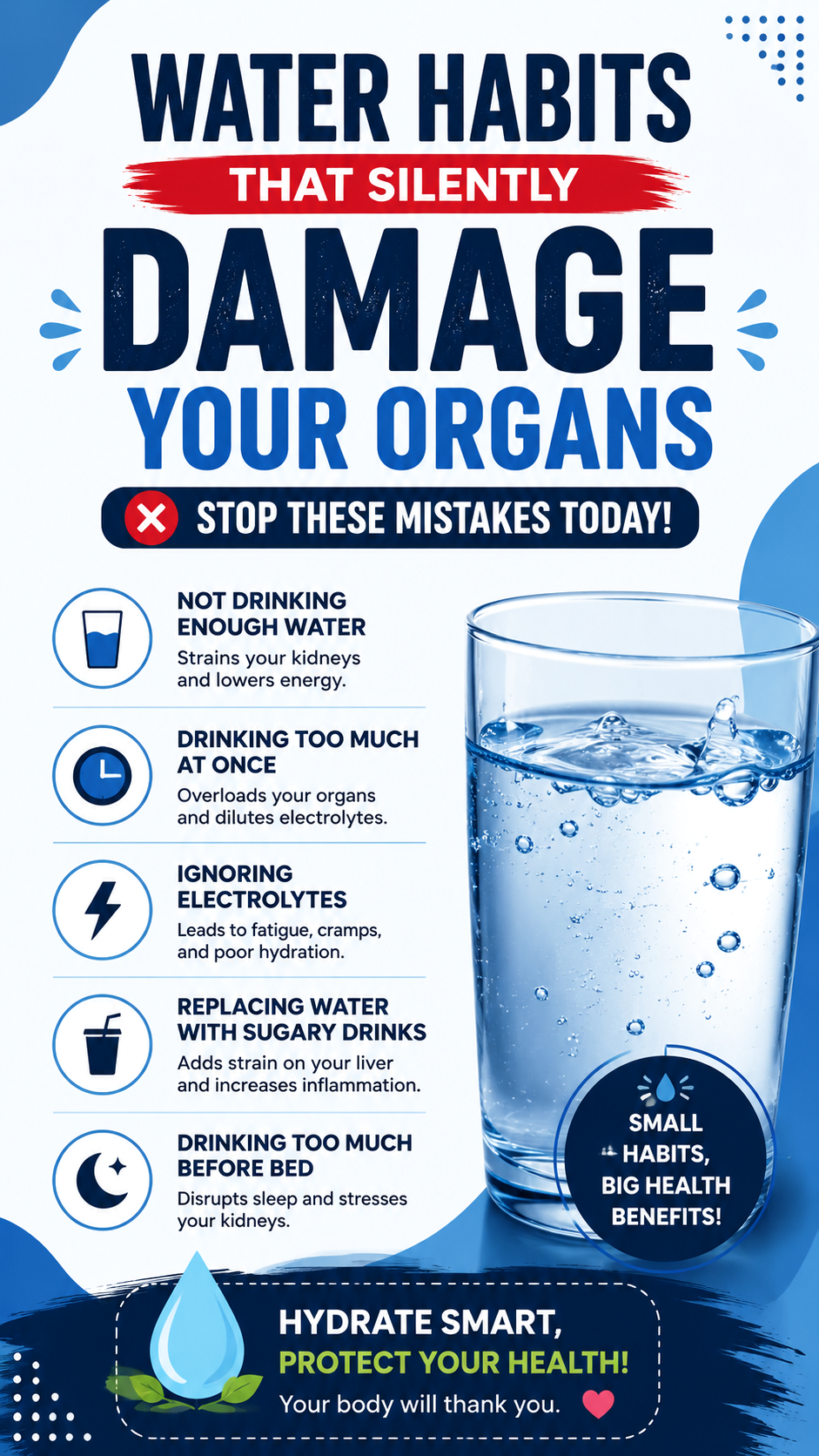
Most people know that staying hydrated is important, but fewer realize that the way they drink water can have a significant impact on overall health. While water supports nearly every function in the body, certain hydration habits can quietly place stress on vital organs over time. Small daily mistakes may seem harmless, yet they can affect kidney function, digestion, electrolyte balance, and even cardiovascular health.
Understanding how to drink water properly is not about following complicated rules. It is about developing smart, balanced habits that support your body’s natural systems. By recognizing common hydration mistakes and making simple adjustments, you can protect your organs and improve your long-term well-being.
Key Takeaways
- Drinking too little water can strain important organs.
- Overhydration may also create health challenges.
- Timing and consistency matter more than drinking large amounts at once.
- Electrolyte balance is essential for healthy hydration.
- Listening to your body’s signals can help prevent common mistakes.
- Healthy water habits support kidney, heart, digestive, and brain function.
Why Proper Hydration Matters
Water is involved in countless processes throughout the body. It helps transport nutrients, regulate body temperature, remove waste products, lubricate joints, and support cellular function. Every organ relies on adequate hydration to operate efficiently.
When hydration levels are consistently too low or excessively high, the body must work harder to maintain balance. Over time, this extra stress can contribute to health concerns that affect multiple systems.
Important: Healthy hydration is not simply about drinking more water. It is about drinking the right amount, at the right times, while maintaining proper electrolyte balance and responding to your body’s needs.
Mistake #1: Not Drinking Enough Water Throughout the Day
One of the most common hydration mistakes is failing to drink enough water consistently. Many people become busy and forget to hydrate until they feel extremely thirsty.
By the time intense thirst develops, mild dehydration may already be present. This can affect several organs and bodily functions.
How It Affects Your Organs
- The kidneys must work harder to concentrate urine.
- The digestive system may become less efficient.
- The cardiovascular system may experience increased strain.
- Brain function and concentration can decline.
Chronic low-level dehydration may contribute to fatigue, headaches, reduced physical performance, and decreased mental clarity. Making hydration a consistent habit throughout the day is generally more beneficial than relying solely on thirst signals.
Mistake #2: Drinking Large Amounts of Water All at Once
Some people realize they have not consumed enough water and attempt to compensate by drinking several large glasses in a short period. While this may seem like a practical solution, the body processes fluids more effectively when intake is spread throughout the day.
Rapidly consuming excessive water can overwhelm normal fluid regulation mechanisms. In rare situations, it may contribute to dangerously low sodium levels.
A Better Approach
Instead of drinking huge amounts at once, aim for steady hydration from morning to evening. Keeping a reusable water bottle nearby can help create a more consistent pattern.
Why This Matters
- Consistent hydration helps organs function efficiently.
- Gradual intake supports better fluid absorption.
- Steady water consumption may reduce hydration-related stress on the kidneys.
Mistake #3: Ignoring Electrolyte Balance
Water and electrolytes work together. Electrolytes such as sodium, potassium, magnesium, and calcium help regulate fluid movement, nerve signals, and muscle function.
People often focus only on water intake while overlooking electrolyte needs. This can become especially important during intense exercise, hot weather, illness, or prolonged sweating.
The Role of Electrolytes
Electrolytes help the body maintain fluid balance between cells and tissues. When this balance becomes disrupted, symptoms such as fatigue, muscle cramps, dizziness, or weakness may occur.
Most individuals can support healthy electrolyte levels through a balanced diet that includes fruits, vegetables, dairy products, nuts, and other nutrient-rich foods.
Mistake #4: Replacing Water With Sugary Beverages
Many people assume all fluids provide the same benefits. While beverages contribute to fluid intake, sugary drinks can introduce additional concerns.
Regular consumption of high-sugar beverages may affect metabolic health and contribute to excessive calorie intake. Over time, this may increase strain on multiple organ systems.
Healthier Alternatives
- Plain water
- Infused water with fruit slices
- Unsweetened herbal tea
- Sparkling water without added sugar
Replacing sugary beverages with water can support hydration goals while reducing unnecessary sugar consumption.
Mistake #5: Drinking Too Much Water Before Bed
Hydration is important throughout the day, but consuming excessive amounts immediately before sleep may disrupt rest.
Frequent nighttime bathroom trips can interrupt sleep cycles, reducing overall sleep quality. Since restorative sleep supports numerous organ systems, repeated disruptions may indirectly affect health and recovery.
Rather than consuming most of your daily water intake at night, try distributing fluids more evenly during daytime hours.
Pro Tip: Front-loading hydration earlier in the day often makes it easier to meet fluid needs while minimizing sleep interruptions and improving overall comfort.
Mistake #6: Assuming Clear Urine Is Always Better
Many people believe completely clear urine is the ultimate sign of hydration. While pale yellow urine is often considered a healthy indicator, constantly clear urine may sometimes suggest excessive water intake.
The body naturally regulates fluid balance, and hydration needs vary based on age, activity level, climate, and health status.
Finding Balance
Healthy hydration generally focuses on maintaining balance rather than pursuing extremes. Drinking water steadily and paying attention to thirst, activity levels, and environmental conditions can help support that balance.
Mistake #7: Waiting Until You Feel Extremely Thirsty
Thirst is an important signal, but it is not always the earliest sign that the body needs fluids. Older adults, athletes, and individuals working in hot environments may not experience thirst in the same way as others.
Waiting until severe thirst develops can increase the likelihood of mild dehydration.
Simple Prevention Strategies
- Drink water with meals.
- Keep water accessible during work hours.
- Increase fluid intake during exercise.
- Pay attention to hot weather conditions.
- Create hydration reminders if needed.
How Water Supports Kidney Health
The kidneys play a central role in maintaining fluid balance and removing waste products from the bloodstream. Adequate hydration helps support these important processes.
When water intake remains consistently low, urine becomes more concentrated. This can increase the workload placed on the kidneys and may contribute to the formation of certain urinary issues.
Balanced hydration helps the kidneys perform their filtration functions efficiently while supporting overall urinary health.
The Connection Between Hydration and Digestion
Water supports healthy digestion in several ways. It assists with nutrient absorption, helps move food through the digestive tract, and contributes to normal bowel function.
Insufficient hydration may make digestion less comfortable for some individuals. Maintaining steady fluid intake can support regular digestive processes and overall gastrointestinal comfort.
Hydration-Friendly Habits
- Start the day with a glass of water.
- Drink fluids consistently between meals.
- Include water-rich foods in your diet.
- Monitor hydration during physical activity.
- Adjust intake based on weather conditions.
Signs Your Hydration Habits May Need Improvement
Hydration needs vary from person to person, but several common signs may indicate that adjustments are needed.
- Persistent fatigue
- Dry mouth
- Frequent headaches
- Dizziness
- Dark urine
- Difficulty concentrating
- Reduced exercise performance
Important: Symptoms can have many causes beyond hydration. Persistent or concerning symptoms should always be discussed with a qualified healthcare professional.
Creating Healthier Daily Water Habits
Improving hydration habits does not require dramatic changes. Small, sustainable adjustments often deliver the best results.
Practical Strategies
- Carry a refillable water bottle.
- Set hydration reminders on your phone.
- Drink water before and after exercise.
- Increase intake during hot weather.
- Eat fruits and vegetables with high water content.
- Reduce dependence on sugary beverages.
Consistency is usually more effective than attempting to meet hydration goals in a short period. Developing habits that fit naturally into your routine can make healthy hydration easier to maintain.
At a Glance
- Drink water steadily throughout the day.
- Avoid both dehydration and excessive water intake.
- Support electrolyte balance through healthy nutrition.
- Limit sugary drinks when possible.
- Build simple habits that encourage consistent hydration.
Conclusion
Water is one of the most important resources for maintaining good health, yet many people unknowingly develop hydration habits that may place unnecessary stress on their bodies. Drinking too little water, consuming excessive amounts at once, ignoring electrolyte balance, and relying heavily on sugary beverages are just a few examples of common mistakes.
Fortunately, these habits are often easy to correct. Consistent hydration, mindful fluid intake, balanced nutrition, and attention to your body’s signals can help support healthy organ function for years to come. Small improvements made today can contribute to better energy levels, improved well-being, and stronger long-term health.
Tags
Hydration Tips Water Intake Kidney Health Healthy Habits Wellness Organ Health Preventive Health Healthy Lifestyle