
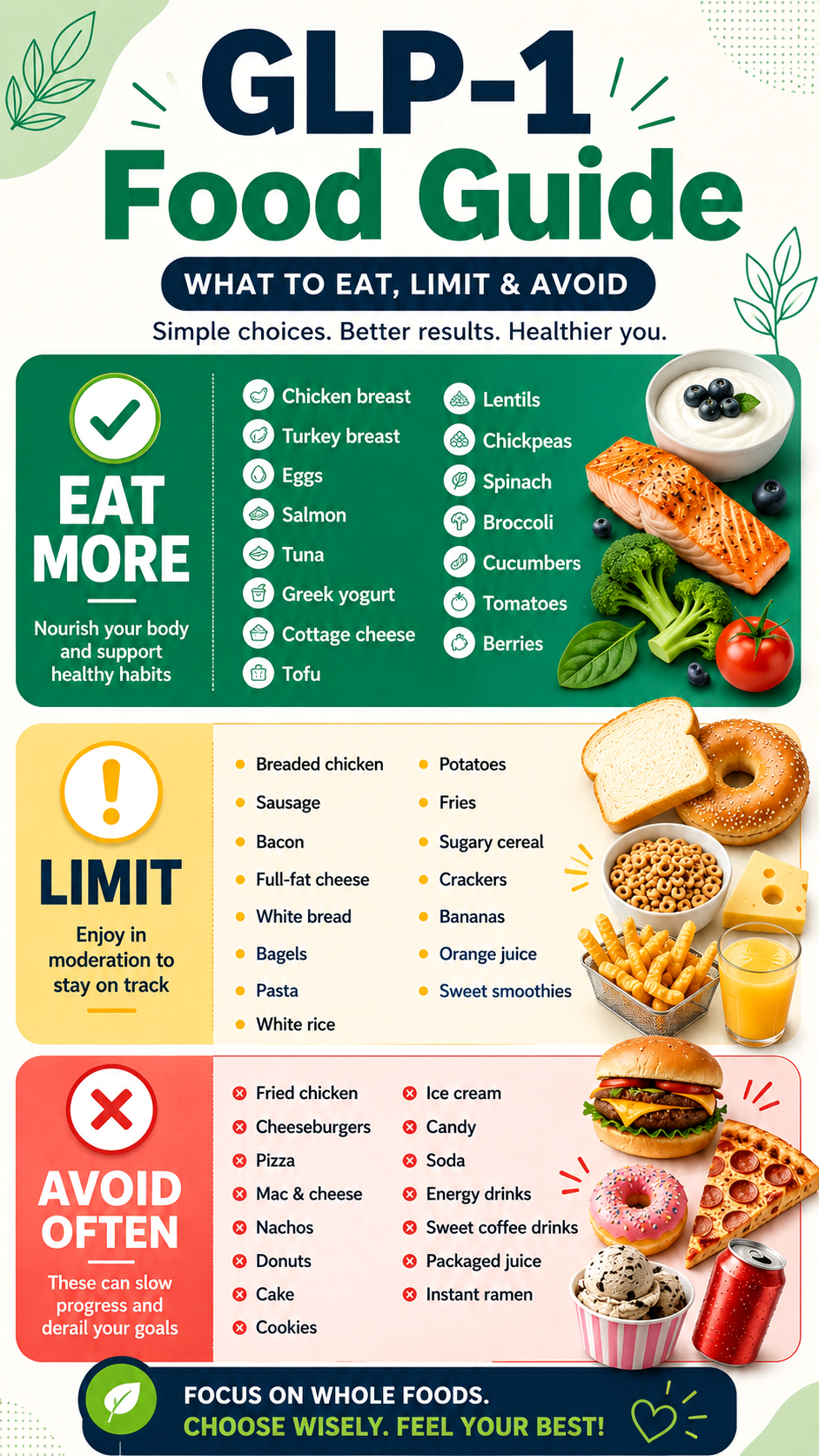
Starting a GLP-1 journey can feel exciting and overwhelming at the same time. Whether you are using medications that support appetite regulation or simply following a GLP-1-friendly eating plan, one thing quickly becomes clear: food choices matter. The right foods can help you feel full longer, reduce cravings, stabilize energy, and support sustainable weight management.
This GLP-1 food list serves as a practical guide to help you decide what to eat more of, what to enjoy in moderation, and what to avoid often. Instead of complicated meal rules, think of this as a simple framework built around whole foods, protein, fiber, and smart choices that work with your body.
Key Takeaways
- Protein-rich foods help preserve muscle and improve fullness.
- Fiber supports digestion and helps reduce hunger spikes.
- Processed foods often increase cravings and overeating.
- Balanced meals improve long-term adherence to a GLP-1 diet.
- Consistency beats perfection when building sustainable habits.
Understanding the GLP-1 Diet Approach
GLP-1 stands for glucagon-like peptide-1, a hormone involved in appetite control, blood sugar regulation, and digestion. Many people following GLP-1-related nutrition strategies aim to reduce overeating and improve satiety.
Because GLP-1 slows digestion and helps you feel full sooner, meals that are nutrient-dense become especially valuable. Since you may naturally eat less, every bite matters more.
Important: On a GLP-1-focused eating plan, the goal is not to eat as little as possible. The goal is to eat foods that maximize nourishment, support muscle retention, and keep you satisfied.
Foods to Eat More Of on a GLP-1 Diet
The best GLP-1 foods generally share two characteristics: high satiety and strong nutritional value. These foods help you stay fuller longer while supporting metabolism and energy.
1. Lean Protein Sources
Protein should be a major priority. It helps preserve muscle mass during weight loss and supports fullness.
- Chicken breast
- Turkey breast
- Eggs
- Salmon
- Tuna
- Tofu
- Greek yogurt
- Cottage cheese
Why Protein Matters
When calorie intake decreases, your body may lose muscle alongside fat. Protein helps protect lean mass while encouraging better body composition.
Try aiming for protein at every meal. Even a small serving can improve satiety significantly.
2. Legumes and Plant Protein
Lentils and chickpeas are excellent because they provide both protein and fiber.
- Lentils
- Chickpeas
- Beans
- Edamame
These foods digest slowly, making them helpful for hunger management and blood sugar balance.
3. Non-Starchy Vegetables
Vegetables add volume to meals without excessive calories. This makes them ideal for a GLP-1 meal plan.
- Spinach
- Broccoli
- Cucumbers
- Tomatoes
- Zucchini
- Cauliflower
- Leafy greens
Vegetables also provide micronutrients, hydration, and digestive support.
4. Low-Sugar Fruits
Fruit can absolutely fit into a healthy GLP-1 diet. Choosing lower-sugar options can help reduce blood sugar spikes.
- Berries
- Strawberries
- Blueberries
- Raspberries
Berries offer antioxidants and fiber while satisfying sweet cravings naturally.
Why This Matters
Many people struggle with cravings not because of willpower, but because their meals lack protein and fiber. Improving meal quality often reduces snacking naturally.
Foods to Limit
These foods are not “bad,” but eating them too often may slow progress. They can still fit into a balanced lifestyle when portioned mindfully.
Refined Carbohydrates
- White bread
- Bagels
- Pasta
- White rice
- Crackers
These digest quickly and may leave you hungry sooner.
Starchy Sides
- Potatoes
- Fries
These can be enjoyable occasionally, but portion size matters.
Processed Breakfast Foods
- Sugary cereal
- Sweet smoothies
- Orange juice
Liquid calories and sugary breakfasts often trigger hunger again quickly.
Processed Meats
- Sausage
- Bacon
- Breaded chicken
These tend to be higher in saturated fat and sodium.
Pro Tip: Instead of eliminating favorite foods, pair them with protein or fiber. For example, eat pasta with chicken and vegetables rather than pasta alone.
Foods to Avoid Often
These foods commonly combine refined carbs, added sugar, and high fat in ways that encourage overeating.
Fast Food and Fried Foods
- Fried chicken
- Cheeseburgers
- Pizza
- Nachos
- Mac and cheese
These foods are calorie-dense and easy to overconsume.
Sugary Snacks
- Donuts
- Cake
- Cookies
- Candy
- Ice cream
These often trigger reward-based eating and cravings.
Sugary Drinks
- Soda
- Energy drinks
- Sweet coffee drinks
- Packaged juice
Drinks can be especially deceptive because they add calories without creating fullness.
Ultra-Processed Convenience Foods
- Instant ramen
- Highly processed frozen meals
These may be convenient, but often lack protein and fiber.
How to Build a GLP-1 Friendly Plate
Instead of obsessing over calories, focus on building balanced meals.
- Fill half your plate with vegetables.
- Add a palm-sized serving of protein.
- Include healthy fats in moderation.
- Add smart carbs if desired.
Simple Meal Examples
- Greek yogurt with berries
- Eggs with spinach
- Salmon with broccoli
- Chicken salad bowl
- Tofu stir fry
Meals do not need to be complicated to be effective.
Common GLP-1 Nutrition Mistakes
Eating Too Little
Some people unintentionally under-eat because appetite drops dramatically. This can lead to fatigue, weakness, and poor recovery.
Ignoring Hydration
Hydration matters more than many realize. Water supports digestion and energy.
Not Prioritizing Protein
Protein remains one of the most important nutrients during weight loss.
Important: Rapid weight loss without adequate protein and strength training can increase muscle loss. Protecting muscle helps preserve metabolism and long-term results.
Practical Grocery Shopping Tips
Shopping becomes easier when you stick to simple priorities.
- Buy protein first
- Stock easy vegetables
- Choose minimally processed foods
- Read labels for added sugar
- Keep healthy snacks available
Smart Snack Ideas
- Cottage cheese with berries
- Greek yogurt
- Boiled eggs
- Tuna packs
- Cucumber slices with hummus
Quick Points
- Eat more protein and fiber
- Limit refined carbs
- Avoid sugary drinks often
- Choose whole foods whenever possible
- Consistency matters most
Conclusion
A successful GLP-1 diet is not about perfection or strict food rules. It is about making smarter food choices that help your body work with hunger-regulating signals rather than against them.
Prioritize lean protein, vegetables, fiber-rich foods, and minimally processed meals. Limit refined carbohydrates and ultra-processed snacks. Avoid foods that repeatedly trigger cravings and overeating.
Small choices made consistently create meaningful progress. Focus on nourishment, build sustainable habits, and remember that long-term health is shaped by what you do most often, not what you do occasionally.
Tags
GLP-1 Diet Weight Loss Foods Healthy Eating Food List Meal Planning High Protein Low Sugar Printable Guide