
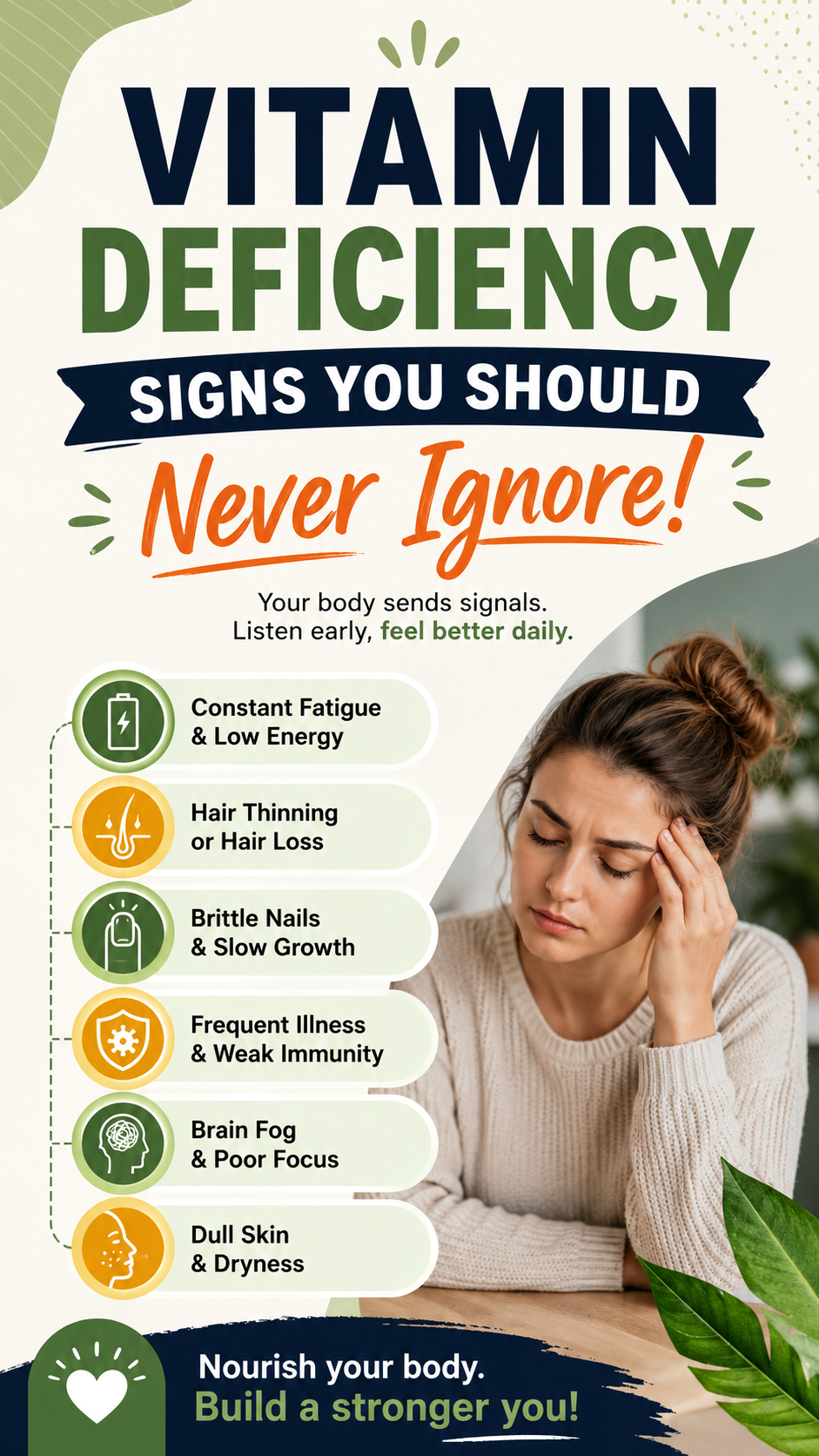
Many people focus on calories, exercise routines, and sleep habits when trying to improve their health, but often overlook a critical factor that influences how the body functions every day: vitamins and essential nutrients. When the body lacks key vitamins, it often sends warning signals long before a serious health problem develops. Recognizing these signs early can help you make informed decisions about your diet, lifestyle, and overall wellness.
Vitamin deficiencies can affect energy levels, skin health, cognitive function, immunity, and much more. While occasional symptoms may have many possible causes, persistent issues should never be ignored. Understanding common vitamin deficiency symptoms can help you identify potential nutritional gaps and take proactive steps toward better health.
Key Takeaways
- Vitamin deficiencies often develop gradually and may be easy to overlook.
- Fatigue, hair loss, brittle nails, and poor immunity can signal nutrient shortages.
- A balanced diet is the foundation of healthy vitamin intake.
- Different vitamins support different body systems and functions.
- Early recognition can help prevent more significant health concerns.
- Professional medical advice is important for persistent symptoms.
Why Vitamin Deficiencies Are More Common Than Many People Think
Modern lifestyles can contribute to nutritional gaps even among people who believe they eat relatively well. Busy schedules, processed foods, restrictive diets, digestive issues, and limited exposure to sunlight can all affect nutrient intake and absorption.
In some cases, people may consume enough calories but still fail to obtain adequate amounts of essential vitamins. This condition is sometimes called “hidden hunger” because nutrient deficiencies can exist without obvious signs in the early stages.
Important: The body often provides subtle warning signs before a deficiency becomes severe. Paying attention to persistent changes in energy, appearance, and overall well-being can help identify potential issues earlier.
Persistent Fatigue and Low Energy
One of the most common complaints associated with nutritional deficiencies is ongoing fatigue. While occasional tiredness is normal, constant exhaustion that does not improve with adequate rest may indicate a nutrient imbalance.
Several vitamins and minerals contribute to energy production within the body. Deficiencies can interfere with cellular processes that convert food into usable energy.
Common Signs Associated With Nutrient-Related Fatigue
- Feeling tired despite adequate sleep
- Difficulty concentrating
- Reduced productivity
- Lack of motivation
- General weakness
If fatigue persists for weeks or months, it is worth evaluating dietary habits and discussing concerns with a healthcare professional.
Hair Thinning and Excessive Hair Loss
Hair health is closely linked to nutrition. While genetics, stress, hormones, and medical conditions can influence hair growth, nutrient deficiencies may also contribute to hair thinning or increased shedding.
The body prioritizes essential functions when nutrients are limited. As a result, hair growth may slow, and hair quality can decline.
People experiencing unusual hair loss may notice more strands on pillows, brushes, or in the shower. Although hair loss does not automatically indicate a vitamin deficiency, it is one potential factor worth considering.
Healthy Habits That Support Hair Health
- Eat a variety of fruits and vegetables
- Include protein-rich foods regularly
- Stay hydrated
- Avoid highly restrictive diets
- Maintain consistent eating habits
Brittle Nails and Slow Nail Growth
Your nails can reveal a surprising amount about your nutritional status. Healthy nails are generally smooth, strong, and resilient. Brittle, weak, or splitting nails may indicate that the body is missing important nutrients.
Nails grow slowly, which means nutritional deficiencies may take time to appear. However, persistent nail problems should not be dismissed, especially when accompanied by other symptoms.
Changes may include:
- Frequent nail breakage
- Peeling layers
- Slow growth
- Ridges or unusual texture
- Weak nail structure
Frequent Illness and Reduced Immunity
The immune system depends on a variety of vitamins and nutrients to function properly. When nutritional intake falls short, the body’s ability to defend itself may be compromised.
People experiencing nutrient deficiencies may notice that they become sick more frequently or take longer to recover from common illnesses.
Pro Tip: Consistent consumption of nutrient-dense foods supports both short-term wellness and long-term immune function. Small dietary improvements made consistently often produce meaningful benefits over time.
Signs of Potential Immune Weakness
- Frequent colds
- Recurring infections
- Slow wound healing
- Extended recovery periods
- Persistent feelings of being run down
Why This Matters
- Deficiencies often affect multiple body systems simultaneously.
- Early detection can help prevent symptoms from worsening.
- Nutrition plays a foundational role in overall health and vitality.
Dry Skin and Skin Changes
The skin is one of the largest organs in the body and often reflects internal health. Persistent dryness, irritation, or changes in skin appearance may sometimes be linked to nutritional deficiencies.
Healthy skin relies on a steady supply of nutrients to maintain structure, repair damage, and support hydration.
Although environmental factors such as weather and skincare habits can affect skin health, nutrient intake should not be overlooked.
Skin Changes Worth Monitoring
- Persistent dryness
- Rough texture
- Increased sensitivity
- Delayed healing
- Dull appearance
Muscle Cramps and Physical Discomfort
Muscle cramps can occur for many reasons, including dehydration, overexertion, and nutrient imbalances. When certain vitamins and minerals are lacking, normal muscle function may be affected.
Some individuals experience occasional cramps, while others notice recurring discomfort that interferes with daily activities.
Maintaining proper hydration and consuming a balanced diet can help support normal muscle function and reduce the likelihood of nutrient-related issues.
Brain Fog and Difficulty Concentrating
Mental clarity depends on many factors, including sleep quality, stress levels, hydration, and nutrition. Nutrient deficiencies may contribute to difficulty concentrating, forgetfulness, or a general sense of mental sluggishness.
Brain fog is not a medical diagnosis, but many people use the term to describe challenges with focus and cognitive performance.
When the brain does not receive adequate nutritional support, cognitive function may be affected in subtle but noticeable ways.
Common Cognitive Symptoms
- Difficulty focusing
- Forgetfulness
- Mental fatigue
- Reduced productivity
- Trouble staying alert
Mood Changes and Emotional Well-Being
Nutrition influences far more than physical health. Vitamins play important roles in processes that affect mood, emotional balance, and mental well-being.
While mood changes can have many causes, persistent feelings of low motivation, irritability, or emotional fluctuations may warrant a closer look at overall dietary habits.
A nutrient-rich eating pattern supports not only physical performance but also emotional resilience.
The Role of Diet in Preventing Vitamin Deficiencies
Prevention is generally easier than correction. One of the best ways to reduce the risk of vitamin deficiencies is to consume a varied and balanced diet that includes foods from multiple food groups.
Nutrient-Dense Foods to Include Regularly
- Colorful fruits and vegetables
- Whole grains
- Lean proteins
- Legumes
- Nuts and seeds
- Dairy or fortified alternatives
- Healthy fats
Variety is important because different foods provide different nutrients. No single food contains everything the body needs.
Important: Supplements can be useful in specific situations, but they should not replace a balanced diet. Food provides a complex combination of nutrients and beneficial compounds that work together to support overall health.
Lifestyle Factors That Influence Nutrient Status
Diet is only one piece of the puzzle. Several lifestyle factors can affect nutrient absorption, utilization, and overall nutritional status.
Factors That May Increase Deficiency Risk
- Restrictive eating patterns
- Chronic stress
- Digestive disorders
- Certain medications
- Limited sun exposure
- Heavy alcohol consumption
- Poor sleep habits
Understanding these influences can help people make informed choices that support long-term wellness.
When to Seek Professional Guidance
Although recognizing potential vitamin deficiency symptoms is valuable, self-diagnosis has limitations. Many symptoms associated with nutrient deficiencies can also be caused by other health conditions.
If symptoms persist, worsen, or interfere with daily life, professional evaluation is important. Healthcare providers can assess individual circumstances, review dietary habits, and determine whether further testing is appropriate.
Seeking guidance early often leads to more effective solutions and greater peace of mind.
At a Glance
- Persistent fatigue may signal nutritional concerns.
- Hair, skin, and nail changes can reflect vitamin status.
- Strong immunity depends on adequate nutrient intake.
- A balanced diet remains the best long-term strategy.
- Professional advice is recommended for ongoing symptoms.
Conclusion
Vitamin deficiencies can affect nearly every aspect of health, from energy and immunity to cognitive function and physical appearance. Because symptoms often develop gradually, they are easy to dismiss as normal parts of a busy lifestyle. However, persistent fatigue, brittle nails, hair thinning, dry skin, recurring illness, and difficulty concentrating may be signs that the body needs additional nutritional support.
Paying attention to these warning signs and prioritizing a nutrient-rich diet can help support overall wellness and improve quality of life. Small, consistent improvements in daily habits often make a significant difference over time. When symptoms continue despite healthy lifestyle changes, consulting a qualified healthcare professional is always the most appropriate next step.
Tags
Vitamin Deficiency Nutrition Healthy Living Wellness Tips Vitamin Symptoms Nutrient Deficiency Health Awareness Balanced Diet