
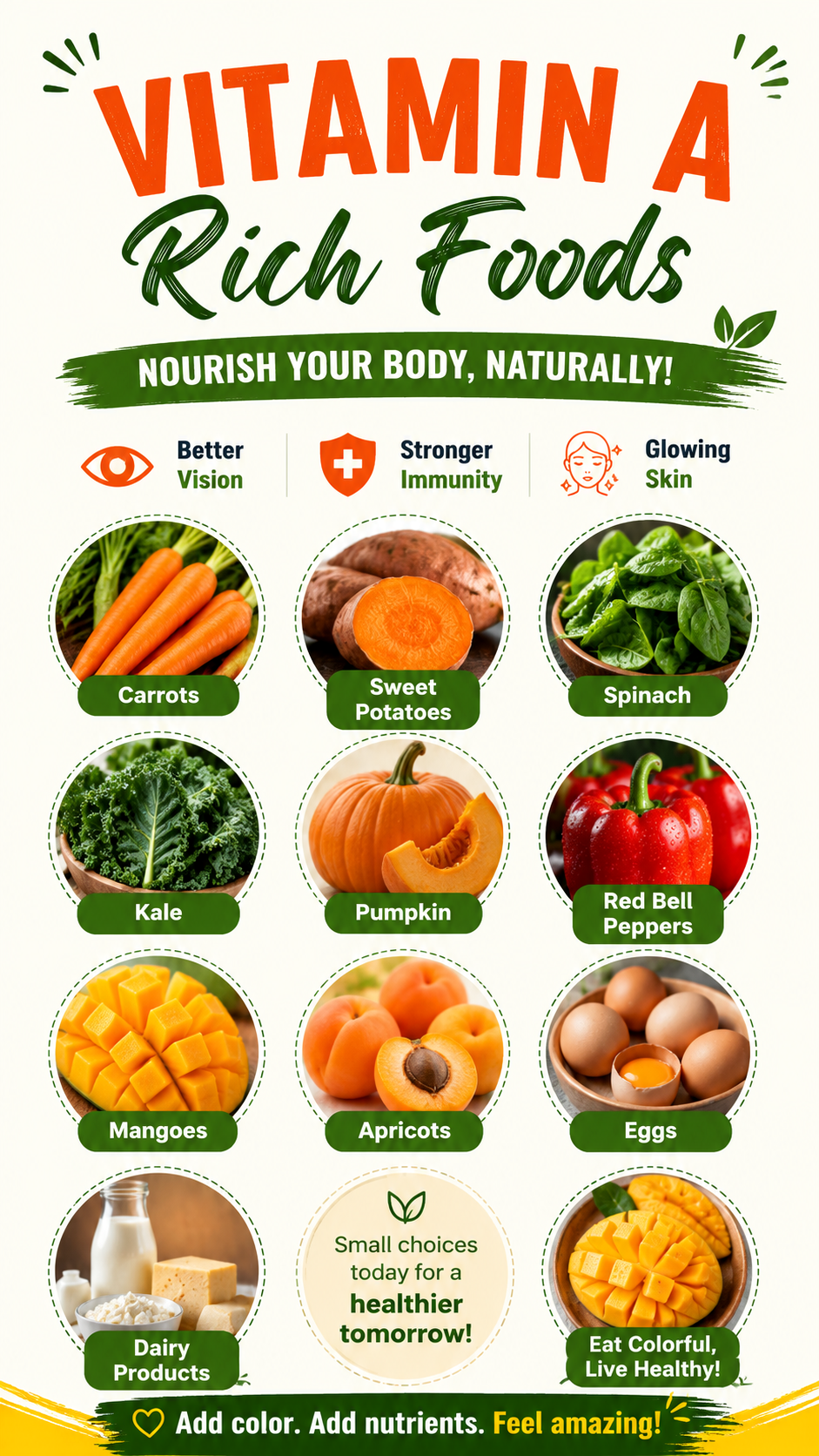
Eating a balanced diet is one of the most effective ways to support long term health, and vitamin A plays a major role in that journey. This essential nutrient is well known for promoting healthy vision, but its benefits extend far beyond your eyes. From strengthening your immune system to maintaining healthy skin and supporting normal growth, vitamin A is a nutrient your body relies on every day.
Fortunately, getting enough vitamin A does not have to be complicated. Many delicious fruits, vegetables, dairy products, and animal based foods naturally contain this important vitamin. By including a variety of colorful, nutrient rich foods in your meals, you can enjoy the benefits while creating a healthy and satisfying diet.
Key Takeaways
- Vitamin A supports healthy eyesight and normal vision.
- It helps strengthen the immune system.
- Many colorful fruits and vegetables are excellent natural sources.
- Healthy skin depends on adequate vitamin A intake.
- A balanced diet usually provides enough vitamin A for most people.
Why Vitamin A Is Essential
Vitamin A is a fat soluble vitamin involved in many important processes throughout the body. It contributes to healthy eyesight, supports the body’s natural defenses, promotes normal cell growth, and helps maintain healthy skin and mucous membranes.
Important: Vitamin A works best as part of an overall balanced diet. Rather than focusing on a single food, aim to eat a wide variety of nutrient dense foods throughout the week.
Health Benefits of Vitamin A
Supports Better Vision
Vitamin A is perhaps most famous for its role in eye health. It contributes to normal vision by supporting the retina, particularly in low light conditions. Getting enough vitamin A may help maintain healthy eyesight throughout life.
Strengthens the Immune System
Your immune system depends on a variety of nutrients, including vitamin A. It supports healthy immune cells and helps maintain protective tissues that act as barriers against harmful microorganisms.
Promotes Healthy Skin
Healthy skin starts from within. Vitamin A contributes to normal skin cell production and renewal, helping your skin maintain a healthy appearance.
Supports Growth and Development
Vitamin A plays an important role in normal growth, tissue repair, and cell differentiation. It is especially important during periods of growth and development.
Best Foods High in Vitamin A
One of the easiest ways to increase your vitamin A intake is by eating naturally colorful foods. Orange, yellow, dark green, and red produce often contains carotenoids, which the body can convert into vitamin A.
1. Carrots
Carrots are among the best known sources of beta carotene. Enjoy them raw as a snack, roasted as a side dish, or blended into soups.
2. Sweet Potatoes
Sweet potatoes provide generous amounts of beta carotene while also offering fiber and potassium. Their natural sweetness makes them incredibly versatile.
3. Spinach
Dark leafy greens like spinach contain valuable amounts of carotenoids along with vitamins C, K, and folate.
4. Kale
Kale is another nutrient dense leafy green that fits easily into salads, smoothies, soups, and stir fries.
5. Pumpkin
Pumpkin delivers vibrant color and impressive nutritional value, making it a great addition to soups, baked goods, and purees.
6. Red Bell Peppers
These colorful vegetables provide antioxidants alongside vitamin A precursors, making them a nutritious choice for snacks and meals.
7. Mangoes
Mangoes offer natural sweetness while contributing vitamin A, vitamin C, and dietary fiber.
8. Apricots
Fresh or dried apricots make a convenient snack while supplying beneficial carotenoids.
9. Eggs
Egg yolks naturally contain vitamin A along with protein and several essential nutrients.
10. Dairy Products
Milk, yogurt, and cheese often contribute vitamin A to a balanced eating pattern while providing calcium and protein.
Expert Insight
Combining vitamin A rich vegetables with healthy fats such as avocado, olive oil, nuts, or seeds can improve the body’s ability to absorb this fat soluble vitamin.
Plant Sources vs Animal Sources
Vitamin A comes from two primary dietary forms.
- Preformed vitamin A: Found in foods like eggs, dairy, and liver.
- Provitamin A carotenoids: Found in colorful fruits and vegetables that the body converts into vitamin A.
Including both plant and animal foods when appropriate creates a balanced nutritional approach.
Simple Ways to Eat More Vitamin A
- Add shredded carrots to salads.
- Blend spinach into smoothies.
- Roast sweet potatoes for dinner.
- Snack on sliced bell peppers.
- Include eggs at breakfast.
- Add pumpkin puree to soups.
- Enjoy mango as a healthy dessert.
Pro Tip: Aim for colorful meals. A plate filled with orange, red, yellow, and dark green produce naturally provides a wider variety of vitamins, minerals, and antioxidants.
Can You Get Too Much Vitamin A?
Most people who eat a balanced diet obtain appropriate amounts of vitamin A from food alone. However, excessive intake from high dose supplements or certain animal sources may not be suitable for everyone. If you are considering supplements, consult a healthcare professional for personalized advice.
Who Should Pay Attention to Vitamin A Intake?
Vitamin A is important for everyone, but it deserves extra attention during periods of growth, healthy aging, and when following restrictive eating patterns. Focusing on whole foods can help support overall nutritional balance.
Meal Planning Ideas
- Vegetable omelet with spinach and peppers.
- Roasted sweet potato bowls.
- Carrot and ginger soup.
- Kale salad with avocado.
- Mango yogurt parfait.
- Pumpkin smoothie with cinnamon.
Important: Consistency matters more than perfection. Building meals around nutrient rich whole foods over time is one of the best strategies for supporting overall health.
At a Glance
- Vitamin A supports vision, immunity, and healthy skin.
- Carrots, sweet potatoes, spinach, and pumpkin are excellent choices.
- Healthy fats improve vitamin A absorption.
- Balanced eating is the best long term strategy.
Conclusion
Vitamin A is one of the most valuable nutrients for maintaining healthy vision, supporting the immune system, and promoting glowing skin. Fortunately, many delicious foods naturally provide this essential vitamin, making it easy to include in your daily meals. Whether you enjoy crisp carrots, creamy sweet potatoes, leafy greens, colorful peppers, or juicy mangoes, every nutritious choice contributes to your overall wellbeing.
By focusing on a colorful, balanced diet filled with whole foods, you can naturally increase your vitamin A intake while enjoying a variety of flavors and textures. Small dietary improvements made consistently over time often produce the greatest long term health benefits.
Tags
Vitamin A Healthy Eating Eye Health Immune Support Glowing Skin Nutrition Healthy Foods Wellness