
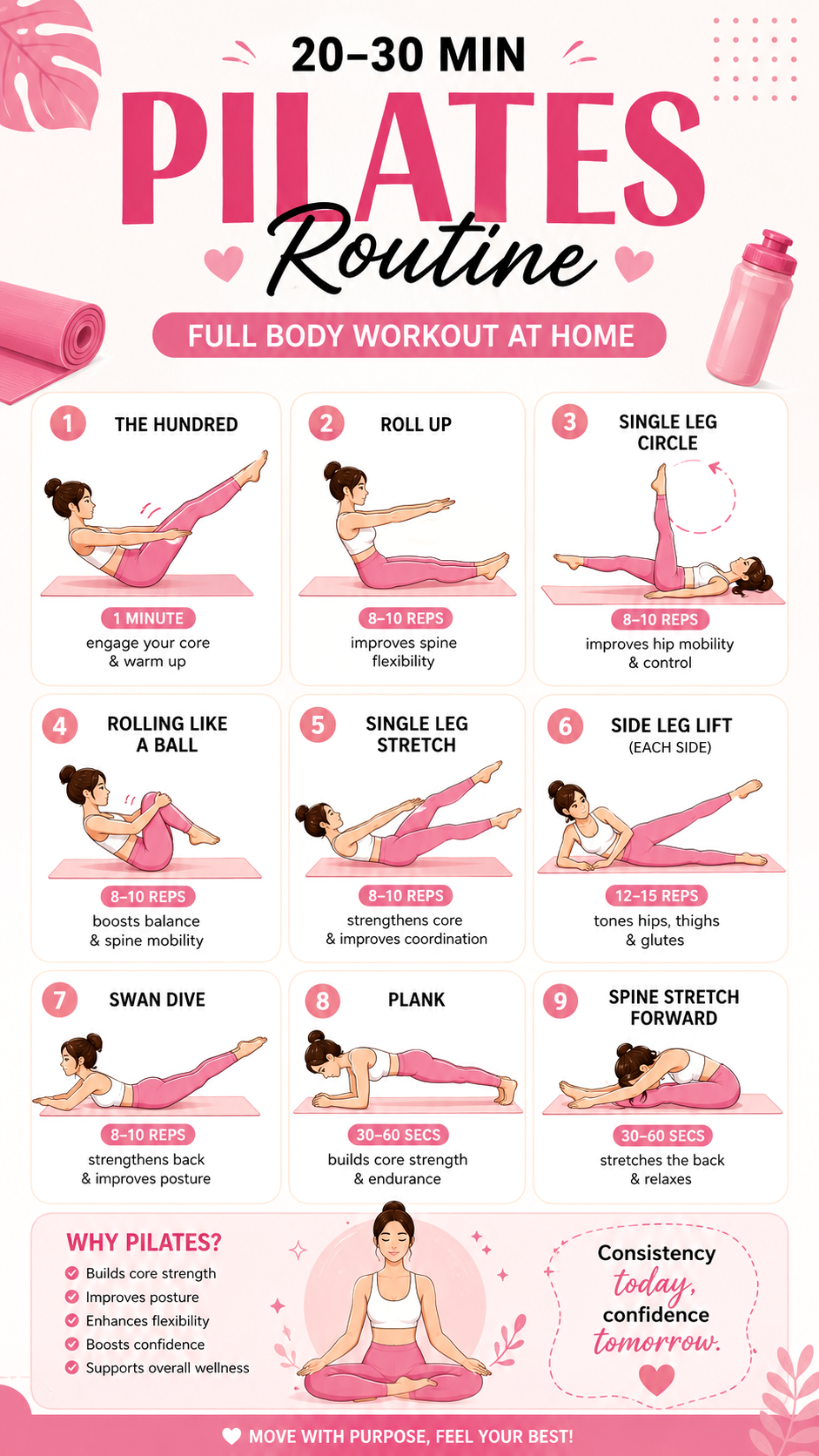
Pilates has become one of the most popular ways to build strength, improve flexibility, and create a healthier relationship with movement. Its gentle yet highly effective approach makes it suitable for beginners and experienced fitness enthusiasts alike. A simple full-body Pilates routine can help improve posture, strengthen the core, increase body awareness, and support long-term mobility without requiring complicated equipment or intense workouts.
Whether you are starting a new wellness journey or looking for a balanced workout that fits into a busy lifestyle, a short Pilates session can deliver impressive results when practiced consistently. The beauty of Pilates lies in its focus on controlled movement, proper breathing, and mindful exercise, helping both the body and mind work together.
Key Takeaways
- Pilates strengthens the core while improving posture and balance.
- Short daily routines can produce meaningful long-term results.
- Controlled movements help reduce unnecessary strain on joints.
- Flexibility and mobility naturally improve with consistent practice.
- Mindful breathing enhances workout effectiveness.
- Beginners can start with simple exercises and progress gradually.
Why Pilates Continues to Grow in Popularity
Unlike many fitness trends that focus exclusively on calorie burning or muscle building, Pilates offers a more balanced approach. It targets multiple areas of fitness simultaneously, including strength, flexibility, stability, coordination, and posture.
One reason so many people embrace Pilates is accessibility. Exercises can be modified for different fitness levels, making it easier for beginners to start while still providing enough challenge for advanced practitioners.
Important: Consistency often matters more than workout length. Even a 20 to 30 minute Pilates session performed regularly can lead to noticeable improvements in strength, mobility, and overall body confidence.
Another advantage is that Pilates encourages mindful movement. Instead of rushing through repetitions, participants focus on precision, control, and breathing. This creates a deeper connection between movement and body awareness.
The Benefits of a Full-Body Pilates Routine
A well-rounded Pilates workout engages the entire body. Rather than isolating a single muscle group, Pilates trains the body to function as an integrated system.
Core Strength and Stability
The core is often considered the foundation of Pilates. Strong abdominal, lower back, and pelvic muscles help improve posture and support everyday movements.
Developing core stability may also contribute to better balance and reduced risk of injury during physical activities.
Improved Posture
Modern lifestyles often involve long hours sitting at desks, using computers, or looking at phones. These habits can contribute to poor posture and muscle imbalances.
Pilates exercises encourage spinal alignment and strengthen muscles responsible for maintaining good posture. Over time, this can help create a taller, more confident appearance.
Enhanced Flexibility
Many Pilates movements involve controlled stretching that promotes flexibility without forcing the body into uncomfortable positions. Improved flexibility can help reduce stiffness and support healthier movement patterns.
Better Balance and Coordination
Several Pilates exercises challenge balance and body control. These movements strengthen stabilizing muscles and improve coordination, which can be beneficial both inside and outside the gym.
Expert Insight
Many people initially join Pilates to improve fitness, but they often continue because of the increased body awareness it develops. Learning how to move efficiently can positively impact everyday activities, from walking and lifting to sitting and standing.
Understanding Key Pilates Exercises
A beginner-friendly Pilates routine often includes a combination of classic movements that target different areas of the body while promoting overall balance and control.
The Hundred
The Hundred is one of the most recognized Pilates exercises. It activates the core, encourages controlled breathing, and helps warm up the body for the rest of the workout.
This movement challenges abdominal endurance while teaching proper breathing patterns.
Roll Up
The Roll Up focuses on spinal mobility and abdominal strength. The exercise involves gradually rolling the body upward and downward with control.
This movement encourages flexibility throughout the spine and improves coordination between the core and upper body.
Single Leg Circle
This exercise promotes hip mobility while maintaining core stability. The controlled circular movement helps strengthen muscles around the hips and pelvis.
Regular practice can improve movement efficiency and increase range of motion.
Rolling Like a Ball
Rolling Like a Ball develops balance, coordination, and spinal mobility. It introduces a playful element while reinforcing core engagement.
The exercise teaches body control and smooth transitions between movements.
Single Leg Stretch
This classic Pilates movement combines abdominal activation with lower-body coordination. It requires focus and control while strengthening the core.
Side Leg Lift
Side Leg Lifts target the hips, glutes, and thighs. They help improve lower-body stability and strengthen muscles that support proper alignment.
Swan Dive
The Swan movement focuses on strengthening the back while promoting spinal extension. It helps counterbalance prolonged sitting and forward-rounded posture.
Plank
The Plank remains one of the most effective exercises for full-body strength. It challenges the core, shoulders, arms, and legs simultaneously.
Maintaining proper form is essential for maximizing results and reducing strain.
Spine Stretch Forward
This calming movement is often used toward the end of a workout. It helps release tension in the back while encouraging flexibility and relaxation.
How to Prepare for a Successful Pilates Session
Preparation can make a significant difference in workout quality. A few simple steps can help create a more enjoyable and productive experience.
- Wear comfortable clothing that allows unrestricted movement.
- Use a supportive exercise mat.
- Stay hydrated before and after exercising.
- Choose a quiet environment with enough space.
- Focus on quality rather than speed.
Pro Tip: Slow, controlled movements are often more effective than rushing through repetitions. Prioritize precision and breathing to get the most from every exercise.
The Role of Breathing in Pilates
Breathing is a fundamental component of Pilates. Proper breathing helps improve concentration, support core engagement, and create smoother movement patterns.
During challenging portions of an exercise, controlled exhalation can assist with stability and muscle activation. Inhaling during preparation phases helps maintain rhythm and relaxation.
Many beginners overlook breathing techniques, but mastering this skill often leads to noticeable improvements in performance.
Creating a Sustainable Fitness Habit
The most effective workout plan is one that can be maintained consistently. Pilates naturally supports long-term adherence because sessions can be adjusted to fit different schedules and energy levels.
Rather than focusing on perfection, aim for regular practice. Three to five sessions per week can create meaningful progress over time.
Tracking improvements in flexibility, strength, balance, and posture can provide motivation and help maintain momentum.
Small Progress Leads to Big Results
Fitness transformations rarely happen overnight. Sustainable improvement comes from repeated effort and consistency.
Important: Many people underestimate the impact of small daily actions. A short Pilates routine practiced consistently can produce remarkable improvements in mobility, strength, confidence, and overall wellness over time.
Common Beginner Mistakes to Avoid
- Rushing through exercises.
- Holding the breath during movements.
- Ignoring proper alignment.
- Skipping warm-up or cool-down exercises.
- Comparing progress to others.
- Focusing on quantity instead of quality.
Recognizing these common mistakes can help create a safer and more effective Pilates practice.
Building Confidence Through Movement
Pilates offers more than physical benefits. Many practitioners report feeling more confident, energized, and connected to their bodies.
The emphasis on mindful movement encourages a positive mindset and promotes self-awareness. As strength and mobility improve, confidence often follows naturally.
Developing a regular Pilates habit can become a valuable form of self-care that supports both physical and mental well-being.
At a Glance
- Short Pilates sessions can be highly effective.
- Core strength supports better posture and balance.
- Flexibility improves through controlled stretching.
- Breathing techniques enhance performance.
- Consistency delivers lasting results.
Conclusion
A full-body Pilates routine is an excellent way to build strength, improve flexibility, enhance posture, and support long-term wellness. The combination of mindful movement, controlled breathing, and targeted exercises creates a balanced workout that benefits both body and mind.
Whether you are new to fitness or looking for a sustainable exercise method, Pilates provides an accessible path toward improved health and confidence. By focusing on consistency, proper technique, and gradual progress, you can enjoy meaningful results while developing a stronger and more resilient body.
Tags
Pilates Routine Beginner Pilates Home Workout Core Strength Flexibility Training Full Body Workout Wellness Lifestyle Fitness Motivation