
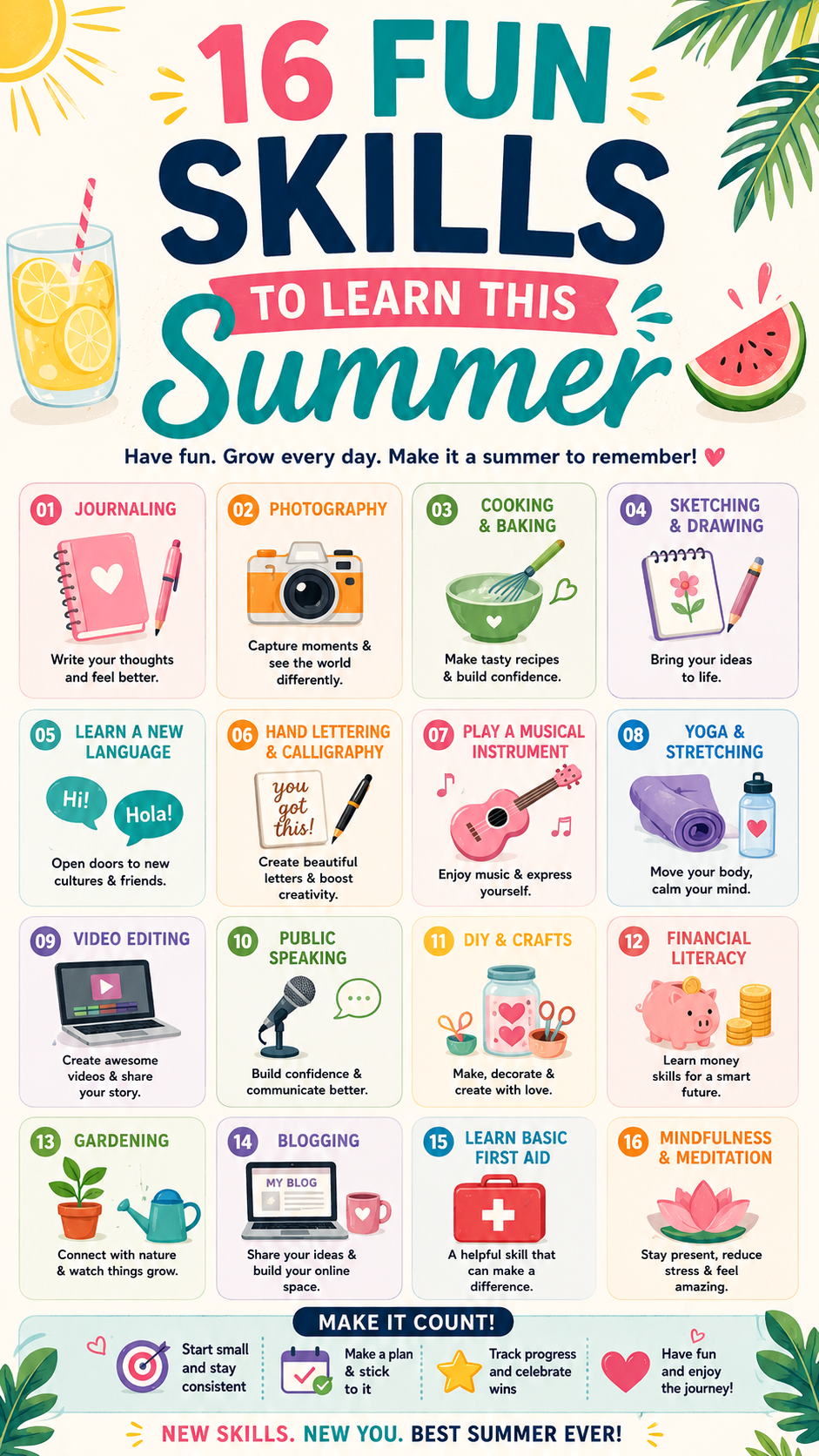
Summer is the perfect season to slow down, explore new interests, and invest in personal growth. With longer days, lighter schedules, and a fresh sense of energy, many people look for meaningful ways to make the most of their time. Instead of letting the weeks pass by, learning a new skill can transform an ordinary summer into a season of creativity, confidence, and self-discovery.
Whether your goal is to become more productive, express yourself creatively, improve your well-being, or simply try something different, there are countless skills that can enrich your life. From journaling and photography to cooking, mindfulness, and financial literacy, each new skill opens doors to personal development and exciting opportunities.
Key Takeaways
- Summer is an ideal time to learn practical and creative skills.
- Small daily efforts often lead to significant long-term growth.
- Creative hobbies help reduce stress and improve confidence.
- Life skills can create future opportunities and independence.
- Consistency matters more than perfection when learning.
- The best skill is one that matches your interests and goals.
Why Learning New Skills During Summer Matters
Summer provides a unique opportunity to step away from routines and focus on activities that inspire curiosity. Unlike busy workdays or academic schedules, summer often offers extra flexibility to explore interests without pressure.
Learning new skills keeps the mind active and engaged. It can improve creativity, strengthen discipline, and build confidence. More importantly, the process of learning itself teaches patience, problem-solving, and resilience.
Important: The biggest benefit of learning a new skill is not mastering it immediately. The real value comes from building habits, expanding your mindset, and discovering new possibilities for personal growth.
Creative Skills That Make Summer More Enjoyable
Journaling
Journaling is one of the easiest and most rewarding skills to start. It requires minimal supplies and offers numerous benefits. Writing your thoughts helps improve self-awareness, reduce stress, and organize ideas.
You can keep a gratitude journal, document daily experiences, record travel memories, or simply write about your goals and reflections. Over time, journaling creates a valuable record of your personal journey.
Photography
Photography encourages people to see the world differently. Learning how to frame a shot, use natural lighting, and capture meaningful moments can transform everyday experiences into lasting memories.
You do not need expensive equipment to begin. Many people start with a smartphone and gradually learn composition, editing, and storytelling through images.
Sketching and Drawing
Drawing develops creativity and observation skills. It teaches patience while encouraging self-expression. Whether you enjoy doodling, realistic sketches, or digital illustrations, practicing regularly can lead to noticeable improvement.
Many beginners find drawing relaxing because it allows them to focus entirely on the present moment.
Hand Lettering and Calligraphy
Beautiful handwriting and decorative lettering continue to be popular creative hobbies. Learning calligraphy improves attention to detail and can add a personal touch to journals, invitations, planners, and creative projects.
With consistent practice, hand lettering becomes both a useful skill and a relaxing artistic activity.
Expert Insight
Creative hobbies are not only enjoyable. Studies consistently suggest that creative activities can reduce stress, improve mood, and encourage problem-solving skills that benefit many areas of life.
Practical Skills That Add Real Value
Cooking and Baking
Cooking is one of the most practical life skills anyone can learn. Preparing meals at home can save money, improve nutrition, and increase independence.
Summer is a great time to experiment with recipes, learn kitchen basics, and discover new ingredients. Baking also provides opportunities to develop precision, patience, and creativity.
Pro Tip: Start with a few simple recipes and master them before moving on to more advanced dishes. Confidence grows quickly when you build a solid foundation.
Learning a New Language
Language learning opens doors to new cultures, friendships, and opportunities. Even learning basic phrases can boost confidence and expand your understanding of the world.
Apps, online courses, videos, podcasts, and language exchange communities make it easier than ever to start learning from home.
Basic First Aid
First aid is a skill that can make a meaningful difference during emergencies. Understanding how to respond to common injuries and situations increases preparedness and confidence.
Learning basic first aid principles is valuable for people of all ages and can provide peace of mind for families and communities.
Financial Literacy
Financial literacy is one of the most useful skills for long-term success. Learning how to budget, save, manage expenses, and set financial goals helps build a strong foundation for the future.
Even simple habits such as tracking spending and creating a budget can significantly improve financial awareness.
Building Confidence Through Communication Skills
Public Speaking
Public speaking is often considered one of the most valuable professional and personal skills. Strong communication abilities help in school, work, networking, and leadership situations.
Practice can begin with small steps such as speaking in front of friends, recording yourself, or joining discussion groups. Over time, confidence grows naturally.
Blogging and Content Creation
Blogging allows people to share knowledge, experiences, and passions with others. It combines writing, communication, creativity, and digital skills.
Creating content consistently also helps improve research abilities, storytelling, and audience engagement.
Video Editing
Video content continues to dominate online platforms, making editing a valuable modern skill. Learning how to cut clips, add transitions, improve audio, and tell visual stories can open many creative possibilities.
Beginners can start with simple editing software and gradually learn more advanced techniques.
Skills That Support Well-Being
Yoga and Stretching
Physical movement is important for both body and mind. Yoga and stretching improve flexibility, posture, balance, and relaxation.
Even a few minutes of daily practice can increase energy levels and reduce tension accumulated throughout the day.
Mindfulness and Meditation
Mindfulness encourages people to focus on the present moment. Meditation practices can help manage stress, improve concentration, and create a greater sense of calm.
Many beginners start with guided sessions that last only a few minutes each day.
Important: Personal growth is not always visible immediately. Consistent habits such as mindfulness, journaling, and movement often create lasting improvements over time.
Exploring Creative Lifestyle Hobbies
DIY and Crafts
Do-it-yourself projects offer a satisfying way to create something unique. Whether decorating a room, making gifts, or experimenting with handmade projects, crafting combines creativity with practical skills.
DIY hobbies often encourage resourcefulness and provide a strong sense of accomplishment.
Gardening
Gardening helps people connect with nature while learning patience and responsibility. Watching plants grow from seeds into thriving greenery can be incredibly rewarding.
Even small indoor plants or container gardens can provide a relaxing and enjoyable experience.
Playing a Musical Instrument
Music is both creative and therapeutic. Learning an instrument improves concentration, memory, coordination, and discipline.
Whether you choose guitar, keyboard, ukulele, or another instrument, consistent practice can turn small progress into impressive achievements over time.
How to Stay Consistent When Learning Something New
Many people start learning enthusiastically but struggle to maintain momentum. Consistency is often the biggest challenge.
- Start with manageable goals.
- Practice regularly instead of occasionally.
- Track your progress each week.
- Celebrate small achievements.
- Focus on improvement rather than perfection.
- Choose activities you genuinely enjoy.
Building a habit is easier when learning feels enjoyable and rewarding. Small daily efforts often outperform occasional bursts of motivation.
Choosing the Right Summer Skill for You
With so many possibilities available, choosing one skill can feel overwhelming. The best approach is to consider your interests, goals, and available time.
If you enjoy creativity, photography, drawing, blogging, or calligraphy may be ideal. If you want practical benefits, cooking, financial literacy, or first aid might be better options. Those focused on wellness may enjoy yoga, meditation, or gardening.
Remember that there is no perfect choice. Any skill that encourages learning and growth can make your summer more meaningful.
At a Glance
- Learn one new skill that genuinely interests you.
- Practice consistently in small sessions.
- Combine creative and practical learning.
- Track progress to stay motivated.
- Focus on growth rather than perfection.
Conclusion
Summer offers a valuable opportunity to learn, create, and grow. Whether you choose journaling, photography, cooking, language learning, financial literacy, yoga, blogging, or any other skill, every step forward contributes to personal development.
The most important thing is to begin. Start small, stay consistent, and enjoy the process. By the end of the season, you may discover new talents, develop useful abilities, and create memories that last far beyond summer itself.
Tags
Summer Skills Personal Growth Creative Hobbies Productive Summer Self Improvement Life Skills Mindfulness Summer Activities