
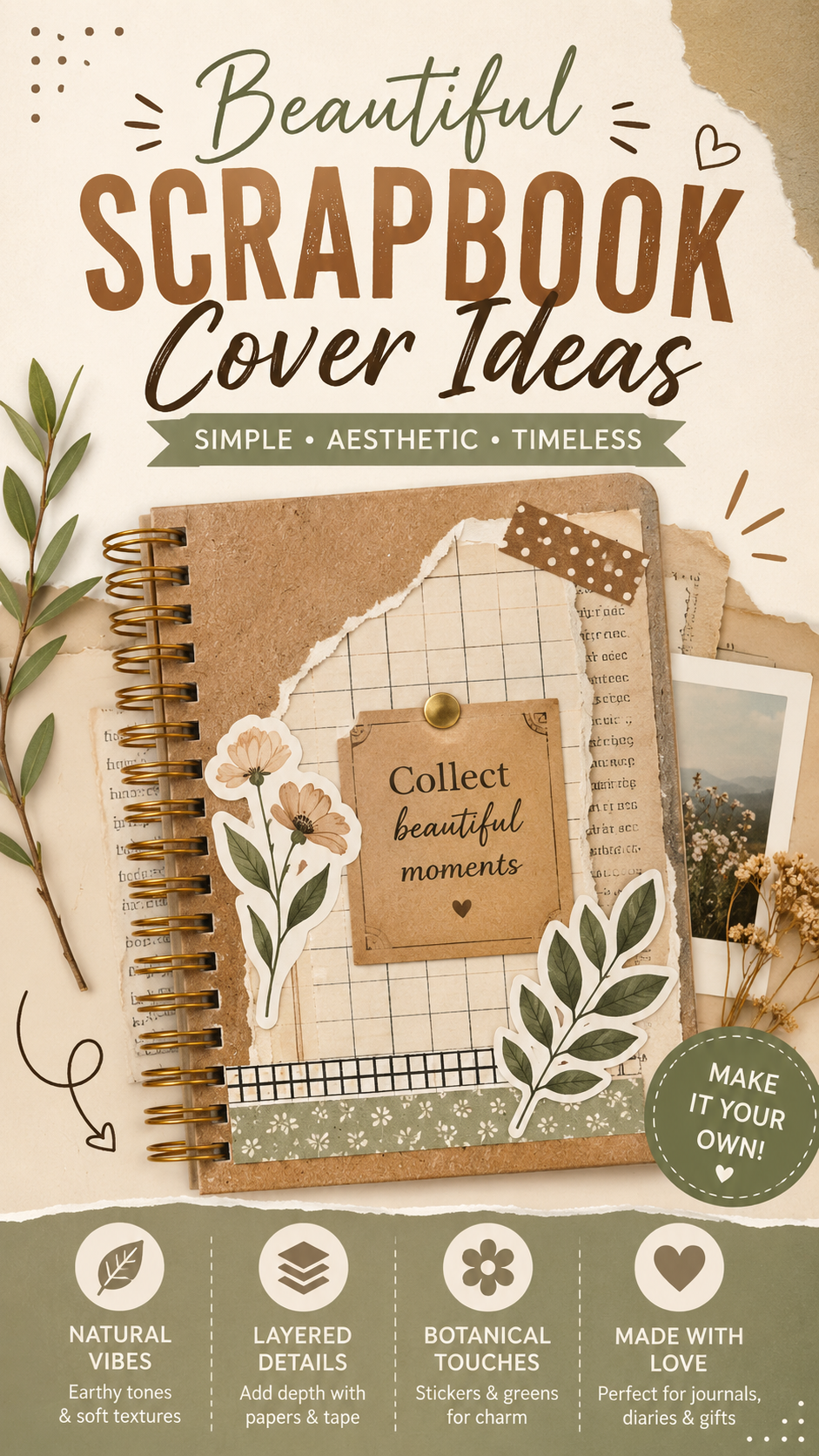
Beautiful scrapbook covers do more than protect the pages inside. They set the mood for every memory, sketch, quote, and keepsake waiting to be collected. A thoughtfully designed cover instantly creates excitement before the journal is even opened. Whether you enjoy scrapbooking as a relaxing hobby, love creating aesthetic journals, or simply want a notebook that reflects your personality, a vintage-inspired cover offers timeless charm and endless creative possibilities.
The warm neutral palette, layered papers, botanical accents, grid textures, and handcrafted elements commonly found in vintage scrapbook covers have become favorites among creative communities. Their soft, cozy appearance blends nostalgia with modern minimalism, making them suitable for journals, planners, memory books, travel diaries, and handmade gifts.
Key Takeaways
- Create depth by layering different paper textures.
- Choose a soft neutral color palette for a timeless aesthetic.
- Combine botanical stickers with vintage paper pieces.
- Use washi tape and labels to frame important design elements.
- Mix clean layouts with handcrafted details for visual balance.
Why Vintage Scrapbook Covers Never Go Out of Style
Vintage scrapbook covers have remained popular because they combine warmth, creativity, and personality. Instead of relying on bold graphics or bright colors, they use natural textures and subtle decorative elements that feel calming and welcoming.
Earthy kraft paper, aged book pages, soft floral illustrations, handwritten notes, and simple geometric backgrounds all contribute to an elegant look that feels handcrafted rather than mass-produced.
Important: A successful scrapbook cover tells a visual story before anyone opens the journal. Every layer, texture, and decorative piece should work together instead of competing for attention.
Essential Elements of an Aesthetic Scrapbook Cover
Natural Paper Textures
Kraft paper remains one of the most recognizable materials in vintage-inspired journals. Its warm brown tone creates a cozy foundation that pairs beautifully with almost any decorative element.
You can also experiment with:
- Recycled paper
- Handmade paper
- Music sheets
- Dictionary pages
- Old maps
- Vintage book pages
- Grid paper
- Light parchment paper
Layering Creates Depth
One characteristic that separates beautiful scrapbook covers from simple notebook decorations is thoughtful layering.
Instead of placing stickers directly onto the cover, build several overlapping layers using different materials. This creates shadows, texture, and visual movement.
Common layering materials include:
- Torn paper edges
- Transparent vellum
- Notebook paper
- Patterned scrapbook paper
- Washi tape
- Fabric scraps
- Postage-style labels
Botanical Decorations
Floral illustrations and leafy branches bring softness into vintage journal designs. They balance the structured appearance of grids, labels, and paper layers while keeping the overall composition natural.
Small botanical stickers work especially well because they can highlight corners without overwhelming the page.
Expert Insight
Limiting your design to three primary materials often produces a cleaner, more professional scrapbook cover than using too many decorative elements. Simplicity allows each texture to stand out.
Choosing the Perfect Color Palette
Neutral colors remain one of the biggest trends in aesthetic journaling because they create a relaxing visual experience.
Popular combinations include:
- Brown and cream
- Beige and ivory
- Olive green and tan
- Muted blush and kraft paper
- Warm gray and soft white
- Light sage with natural paper
These palettes allow decorative elements to shine without making the cover feel cluttered.
Pro Tip: Keeping your colors within the same warm tone family helps every decorative piece feel intentional, even when mixing different papers, stickers, and textures.
Creative Layout Ideas
Centered Label Design
A small handwritten quote or title placed in the center naturally becomes the focal point. Surround it with layered paper and soft decorative accents.
Torn Paper Composition
Tearing paper instead of cutting straight edges creates an organic appearance that feels authentic and handcrafted.
Decorative Bottom Border
Adding washi tape, vintage strips, or film-style borders near the bottom grounds the design and creates a polished finish.
Supplies Worth Having
You don’t need an expensive craft collection to create an elegant scrapbook cover. Many beautiful journals are made with simple materials.
- Kraft notebooks
- Decorative paper packs
- Botanical stickers
- Vintage labels
- Grid paper
- Glue stick
- Double-sided tape
- Scissors
- Paper trimmer
- Washi tape
- Fine-tip pen
Adding Personal Meaning
The most memorable scrapbook covers include details that reflect the owner’s personality.
Consider adding:
- A favorite quote
- Your initials
- The year
- Travel stamps
- Pressed flowers
- Meaningful color combinations
- Vintage postcards
- Mini envelopes
Small personal touches transform an attractive notebook into a treasured keepsake.
Common Design Mistakes to Avoid
Using Too Many Stickers
Empty space allows decorative elements to breathe. Resist the urge to fill every corner.
Ignoring Balance
If all embellishments appear on one side, the composition may feel visually heavy.
Mixing Too Many Styles
Combining modern neon graphics with vintage botanical elements can create a confusing aesthetic. Staying consistent results in a more polished appearance.
Important: Every decorative addition should have a purpose. If an embellishment doesn’t improve the overall composition, consider removing it to maintain visual harmony.
Ways to Use Your Finished Scrapbook
Once you’ve completed your cover, there are countless ways to fill the pages inside.
- Daily journaling
- Travel memories
- Photo collections
- Creative writing
- Reading logs
- Recipe collections
- Memory keeping
- Art inspiration
- Vision planning
- Gratitude journaling
Why Handmade Covers Feel More Special
Handmade scrapbook covers carry a sense of personality that factory-produced notebooks cannot replicate. Every torn edge, handwritten label, and carefully placed botanical detail reflects creativity and intention.
Rather than chasing perfection, embrace small imperfections that make each journal unique. Those subtle details often become the most charming part of the finished design.
At a Glance
- Use neutral colors for timeless appeal.
- Layer papers to create natural depth.
- Choose botanical accents for softness.
- Leave white space to avoid clutter.
- Personalize your cover with meaningful details.
Conclusion
A beautiful scrapbook cover serves as both protection and inspiration. By combining natural textures, soft neutral colors, botanical accents, layered papers, and meaningful personal details, you can create a journal that feels warm, inviting, and uniquely your own. Whether you’re beginning your first scrapbook or expanding an existing collection, thoughtful design choices can transform an ordinary notebook into a cherished creative companion that you’ll enjoy returning to again and again.
Tags
Scrapbook Cover Ideas Junk Journal Vintage Aesthetic DIY Journal Paper Crafts Botanical Stickers Creative Journaling Notebook Inspiration