
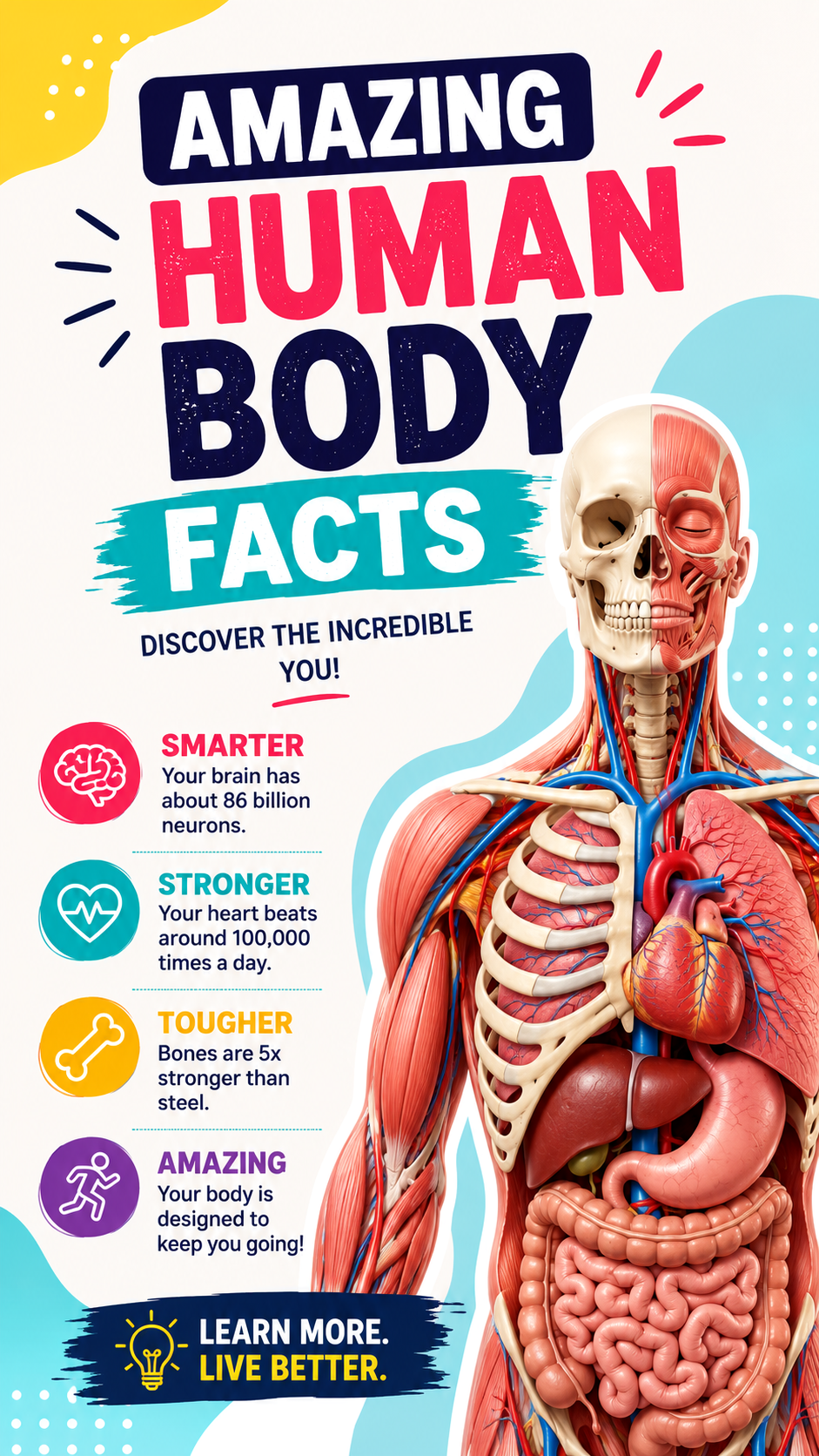
The human body is one of the most fascinating and complex systems in existence. Every second, countless processes take place without us even noticing. From the steady rhythm of your heartbeat to the way your brain interprets the world around you, every part of the body works together in remarkable harmony. Learning about basic anatomy is more than memorizing body parts. It helps you appreciate how your body functions, why healthy habits matter, and how incredible the human body truly is.
Whether you are a student, a curious learner, or simply interested in understanding yourself better, exploring anatomy opens the door to a deeper appreciation of biology, health, and everyday life. The more you learn, the easier it becomes to understand how your organs, muscles, bones, and systems interact to keep you alive and active.
Key Takeaways
- The human body contains multiple systems that work together continuously.
- Basic anatomy helps explain how organs, muscles, and bones function.
- Understanding your body supports healthier lifestyle choices.
- Every organ has a specialized role that contributes to overall health.
- Learning anatomy is valuable for students, educators, and lifelong learners.
What Is Human Anatomy?
Human anatomy is the scientific study of the body’s structure. It examines everything from the skeleton and muscles to organs, blood vessels, nerves, and tissues. Anatomy provides the foundation for medicine, biology, physical therapy, sports science, and many other fields.
When people first begin learning anatomy, they usually start with the body’s major systems. Each system has a specific purpose, yet all of them depend on one another for proper function. Understanding these relationships makes anatomy easier and more interesting to study.
Important: Learning anatomy is not only useful for healthcare professionals. It gives everyone a better understanding of how the body responds to exercise, nutrition, illness, and everyday activities.
The Major Systems of the Human Body
Skeletal System
The skeleton provides the body’s framework. It supports posture, protects vital organs, stores minerals, and works with muscles to create movement. Bones may seem rigid, but they are living tissues that constantly rebuild themselves throughout life.
- Supports body weight
- Protects the brain, heart, and lungs
- Produces blood cells inside bone marrow
- Stores essential minerals such as calcium
Muscular System
Muscles allow every movement you make, from smiling to running. They also help maintain posture, generate heat, and stabilize joints. The human body contains hundreds of muscles working together in coordinated patterns.
There are three primary muscle types:
- Skeletal muscles that move the body.
- Smooth muscles found inside organs.
- Cardiac muscle that powers the heart.
Nervous System
The nervous system acts as the body’s communication network. The brain, spinal cord, and nerves constantly exchange signals that control movement, sensation, memory, emotions, and decision making.
Without this system, even the simplest actions such as blinking or walking would be impossible.
Why This Matters
Every body system depends on the others. Healthy muscles require oxygen from the respiratory system, nutrients from the digestive system, and signals from the nervous system. Understanding these connections makes anatomy easier to understand and remember.
The Heart and Circulatory System
The circulatory system transports oxygen, nutrients, hormones, and waste products throughout the body. At its center is the heart, an extraordinary muscular organ that pumps blood continuously throughout your lifetime.
Blood vessels form an extensive network that reaches nearly every cell. This constant circulation helps maintain body temperature, supports healing, and delivers the resources every organ needs to function.
Pro Tip: Regular physical activity strengthens the heart, improves circulation, and supports nearly every other body system. Even moderate daily movement offers meaningful long term benefits.
How the Respiratory System Keeps You Alive
Breathing happens automatically, yet it is one of the body’s most important functions. The respiratory system brings oxygen into the lungs and removes carbon dioxide from the bloodstream.
The lungs contain millions of tiny air sacs where oxygen enters the blood. This oxygen is then transported throughout the body to fuel cells and produce energy.
- Supplies oxygen to tissues
- Removes carbon dioxide
- Supports speech and voice production
- Works closely with the circulatory system
The Digestive System
The digestive system transforms food into nutrients that fuel the body. Digestion begins in the mouth and continues through a series of organs that break down food into usable components.
Nutrients are absorbed into the bloodstream and distributed wherever they are needed. Any remaining waste is safely eliminated through the digestive tract.
Healthy digestion depends on balanced nutrition, hydration, regular activity, and sufficient dietary fiber.
The Amazing Human Brain
The brain serves as the body’s control center. It coordinates movement, processes sensory information, stores memories, regulates emotions, and enables learning.
Despite representing only a small percentage of total body weight, the brain requires a significant amount of energy and oxygen to function efficiently.
Memory and Learning
Every new skill you develop creates stronger connections between brain cells. Reading, practicing, exercising, and maintaining healthy sleep habits all support brain performance.
Interesting Human Body Facts
- Your skin is the body’s largest organ.
- Bones are constantly renewing themselves throughout life.
- Your heart beats thousands of times each day.
- Muscles work together in coordinated groups during movement.
- The brain communicates through billions of specialized nerve cells.
- Your body constantly replaces old cells with new ones.
Important: Small healthy habits performed consistently, including staying active, eating nutritious foods, drinking enough water, and getting quality sleep, help every body system perform at its best.
Why Learning Basic Anatomy Is Valuable
Understanding anatomy helps people make informed health decisions. It also improves communication with healthcare providers and makes medical information easier to understand.
Students gain a stronger foundation for biology and science classes, while athletes and fitness enthusiasts benefit from knowing how muscles and joints work during exercise.
Parents, teachers, and curious learners can all use anatomy knowledge to better understand growth, development, injury prevention, and overall wellness.
Simple Ways to Learn Human Anatomy
Use Visual Learning
Diagrams, labeled illustrations, and educational charts make anatomy easier to understand by showing how structures relate to one another.
Study One System at a Time
Breaking anatomy into smaller sections helps avoid feeling overwhelmed. Master one body system before moving to the next.
Review Regularly
Frequent review strengthens memory and improves long term understanding. Even a few minutes of practice each day can make a noticeable difference.
Common Anatomy Misconceptions
- Not all muscles are visible from the outside.
- Bones are living tissues, not lifeless structures.
- The body systems do not work independently.
- Healthy organs require support from every other system.
- Anatomy is useful for everyone, not only medical professionals.
At a Glance
- The human body is made up of interconnected systems.
- Anatomy explains how organs, tissues, and structures function.
- Healthy habits support every body system.
- Visual learning makes anatomy easier to understand.
- Basic anatomy knowledge benefits people of all ages.
Conclusion
The human body is an extraordinary example of biological engineering. Every organ, tissue, and body system performs specialized tasks while working together to maintain life. Learning basic anatomy helps transform everyday curiosity into meaningful knowledge that supports healthier choices and a deeper appreciation for the body’s remarkable design.
Whether you are just beginning your anatomy journey or expanding your understanding of biology, exploring the human body is both educational and inspiring. Every new fact you learn reveals another layer of complexity and reminds us just how amazing the human body truly is.
Tags
Human Body Basic Anatomy Human Anatomy Body Facts Biology Health Education STEM Learning Science Facts