
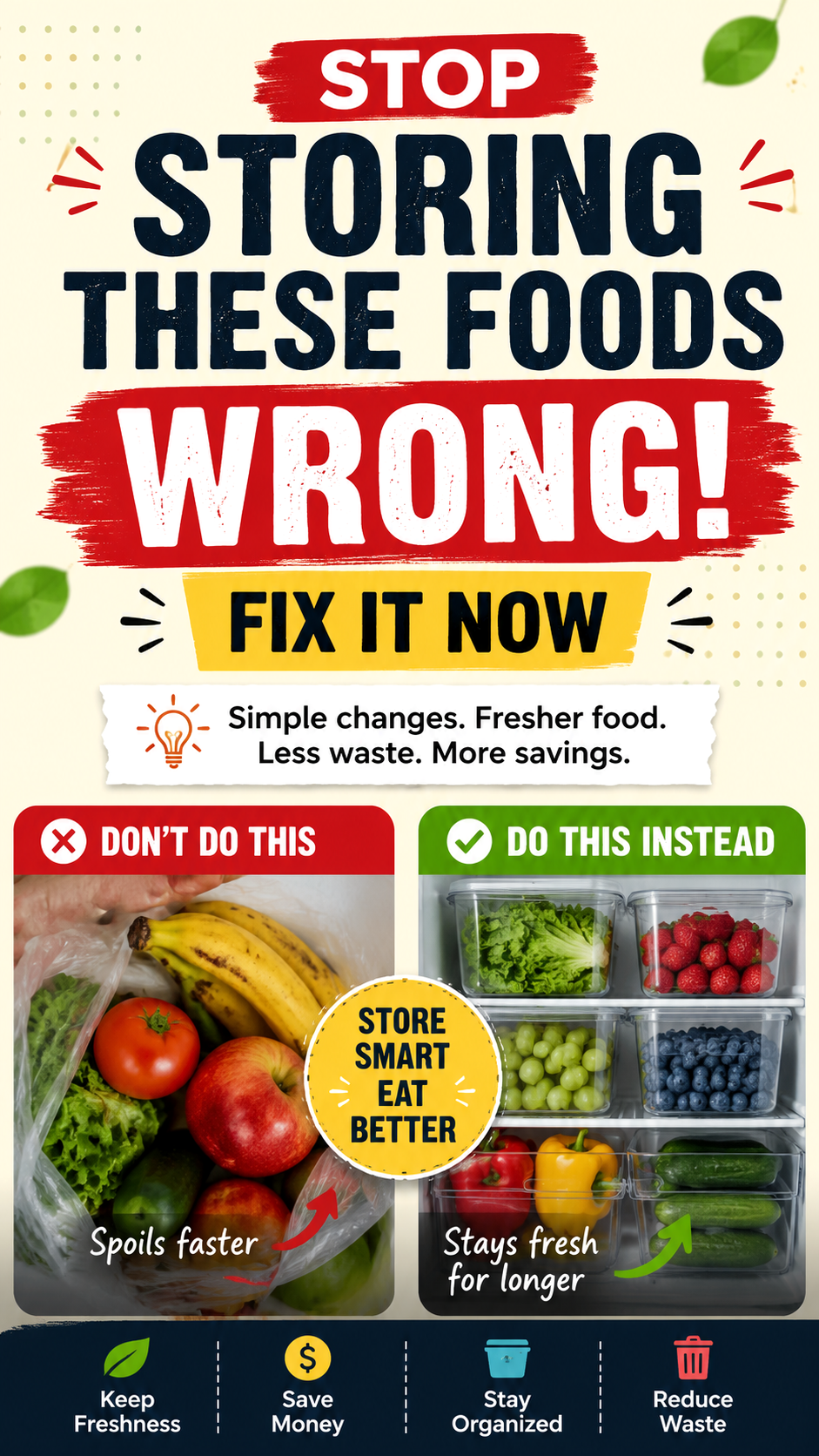
Have you ever opened the refrigerator only to discover wilted greens, mushy berries, or bread that has already gone stale? Food storage mistakes happen in almost every kitchen. Many people buy fresh ingredients with the best intentions, only to throw them away days later because they were stored incorrectly. The good news is that keeping food fresh for longer often requires small changes rather than expensive gadgets or complicated systems.
Understanding how different foods react to temperature, humidity, air, and light can help reduce food waste and save money. Proper food storage also helps preserve flavor, texture, and nutritional value. A few simple adjustments can make your groceries last longer and your kitchen feel more organized.
Key Takeaways
- Different foods require different storage conditions.
- Refrigerating everything is not always the best option.
- Improper storage leads to unnecessary food waste and higher grocery bills.
- Separating certain fruits and vegetables can extend freshness.
- Using airtight containers can protect many pantry staples.
- Simple storage habits can significantly improve food quality.
Why Proper Food Storage Matters
Food waste is a common household issue. Fresh produce, dairy products, baked goods, and leftovers are often discarded because they spoil before being used. Beyond the financial cost, food waste also has an environmental impact because producing, transporting, and packaging food requires valuable resources.
Important: Learning proper food storage habits is one of the easiest ways to reduce waste, save money, and get more value from every grocery trip.
When food is stored correctly, it stays fresher for longer periods and retains better flavor and texture. Proper storage can also improve meal planning because ingredients remain usable throughout the week.
Common Food Storage Mistakes That Ruin Freshness
Storing All Fruits and Vegetables Together
Many fruits release ethylene gas, a natural plant hormone that speeds up ripening. Apples, bananas, avocados, and pears are among the biggest producers of this gas. When stored next to sensitive vegetables such as lettuce, cucumbers, or broccoli, these foods may spoil much faster.
A better approach is to separate ethylene-producing fruits from vegetables whenever possible. This simple habit can noticeably extend the life of fresh produce.
Refrigerating Foods That Prefer Room Temperature
Not everything belongs in the refrigerator. Tomatoes can become mealy and lose flavor when chilled. Potatoes often develop an undesirable texture, while onions can absorb moisture and spoil faster.
- Store tomatoes on the counter.
- Keep potatoes in a cool, dark place.
- Store onions in a dry, ventilated area.
- Avoid placing onions and potatoes together.
Understanding which foods prefer room temperature can improve taste and prevent premature spoilage.
Ignoring Humidity Settings in the Refrigerator
Many refrigerators include crisper drawers with adjustable humidity settings, but they often go unused. High humidity settings are generally suitable for leafy greens and vegetables that lose moisture quickly. Low humidity settings are often better for fruits that produce ethylene gas.
Using these drawers correctly can make a surprising difference in keeping produce crisp and fresh.
Why This Matters
- Fresh produce often represents a large portion of grocery spending.
- Correct refrigerator organization can extend produce freshness by several days.
- Small storage improvements can dramatically reduce food waste.
Foods That Are Commonly Stored Incorrectly
Bread
Many people refrigerate bread to keep it fresh. Unfortunately, refrigeration can cause bread to become stale more quickly. Bread generally stays fresher at room temperature for a few days. For longer storage, freezing is often the better choice.
Berries
Berries are delicate and can spoil rapidly when moisture accumulates. Washing them immediately after purchasing may encourage mold growth.
The best approach is to keep berries dry and wash them only before eating. Storing them in a container with good airflow can also help.
Herbs
Fresh herbs often wilt quickly because they lose moisture. Tender herbs such as parsley and cilantro can benefit from being stored upright in a container with a small amount of water.
Covering herbs loosely and keeping them cool can help maintain freshness for much longer.
Avocados
Avocados can be tricky because storage depends on their ripeness. Unripe avocados generally do well at room temperature. Once ripe, refrigeration can slow further ripening and extend their usability.
Pro Tip: Place unripe avocados next to bananas if you want them to ripen faster. Once they are perfectly ripe, move them to the refrigerator to buy extra time.
The Importance of Airtight Storage
Pantry ingredients are often exposed to moisture, air, and pests because they remain in partially opened packaging. Flour, rice, cereal, nuts, and dried fruit can lose quality quickly if not stored properly.
Using airtight containers provides several advantages:
- Protects food from moisture.
- Prevents contamination.
- Preserves flavor and texture.
- Makes pantry organization easier.
- Helps ingredients remain fresh longer.
Clear containers also allow you to see what you have available, reducing unnecessary duplicate purchases.
How to Store Leftovers Safely
Leftovers are convenient and can save both time and money. However, improper storage can compromise quality and safety.
Cool Food Promptly
Allowing food to sit out for long periods can encourage bacterial growth. Refrigerating leftovers within a reasonable timeframe helps maintain safety and freshness.
Use Shallow Containers
Shallow containers help food cool more evenly and efficiently. They also stack easily and improve refrigerator organization.
Label Containers
It is easy to forget when leftovers were prepared. Labeling containers with dates can prevent food from lingering in the refrigerator longer than intended.
Important: Organized leftovers are more likely to be eaten rather than forgotten, helping households save money and reduce waste.
Simple Refrigerator Organization Tips
A cluttered refrigerator often leads to wasted food because ingredients become hidden behind newer purchases. Organizing your refrigerator can improve visibility and encourage better meal planning.
Store Similar Items Together
Keep dairy products, condiments, produce, and leftovers in designated zones. This system makes it easier to locate ingredients and monitor freshness.
Use the First In, First Out Method
Place older items toward the front and newer items toward the back. This simple approach encourages ingredients to be used before they spoil.
Avoid Overcrowding
Refrigerators require proper air circulation. Overfilling shelves can affect cooling efficiency and contribute to uneven temperatures.
Smart Food Storage Habits That Save Money
Food storage is not only about preserving freshness. It also plays an important role in household budgeting. Throwing away spoiled groceries means spending money on food that never gets eaten.
Developing a few practical habits can make a big difference:
- Check your refrigerator before shopping.
- Store produce according to its needs.
- Freeze ingredients you cannot use quickly.
- Use transparent containers for visibility.
- Create a designated leftovers shelf.
- Plan meals around ingredients that need to be used first.
Over time, these habits can reduce waste significantly while making meal preparation easier and more efficient.
Creating a Kitchen That Supports Freshness
A well-organized kitchen naturally encourages better food storage habits. Keeping storage containers accessible, maintaining a clean refrigerator, and regularly checking produce can prevent many common problems.
The goal is not perfection. Instead, focus on creating simple systems that make it easier to keep food fresh. Even one or two new habits can have noticeable benefits.
Expert Insight: The most effective food storage systems are usually the simplest ones. Clear containers, proper separation of produce, and routine refrigerator organization often produce the biggest improvements with the least effort.
At a Glance
- Separate ethylene-producing fruits from sensitive vegetables.
- Do not refrigerate every type of produce.
- Use airtight containers for pantry staples.
- Organize leftovers and label them clearly.
- Avoid refrigerator overcrowding.
Conclusion
Storing food correctly is one of the easiest ways to improve your kitchen routine. Simple changes such as separating fruits and vegetables, using airtight containers, organizing leftovers, and understanding which foods belong in the refrigerator can dramatically extend freshness.
Better food storage means fewer spoiled ingredients, less waste, and more value from every grocery purchase. It also creates a more organized and enjoyable cooking experience. By paying attention to where and how your food is stored, you can keep ingredients fresher, reduce unnecessary expenses, and make your kitchen work smarter every day.
Tags
Food Storage Tips Kitchen Organization Food Waste Reduction Fresh Produce Meal Prep Pantry Organization Kitchen Tips Food Freshness