
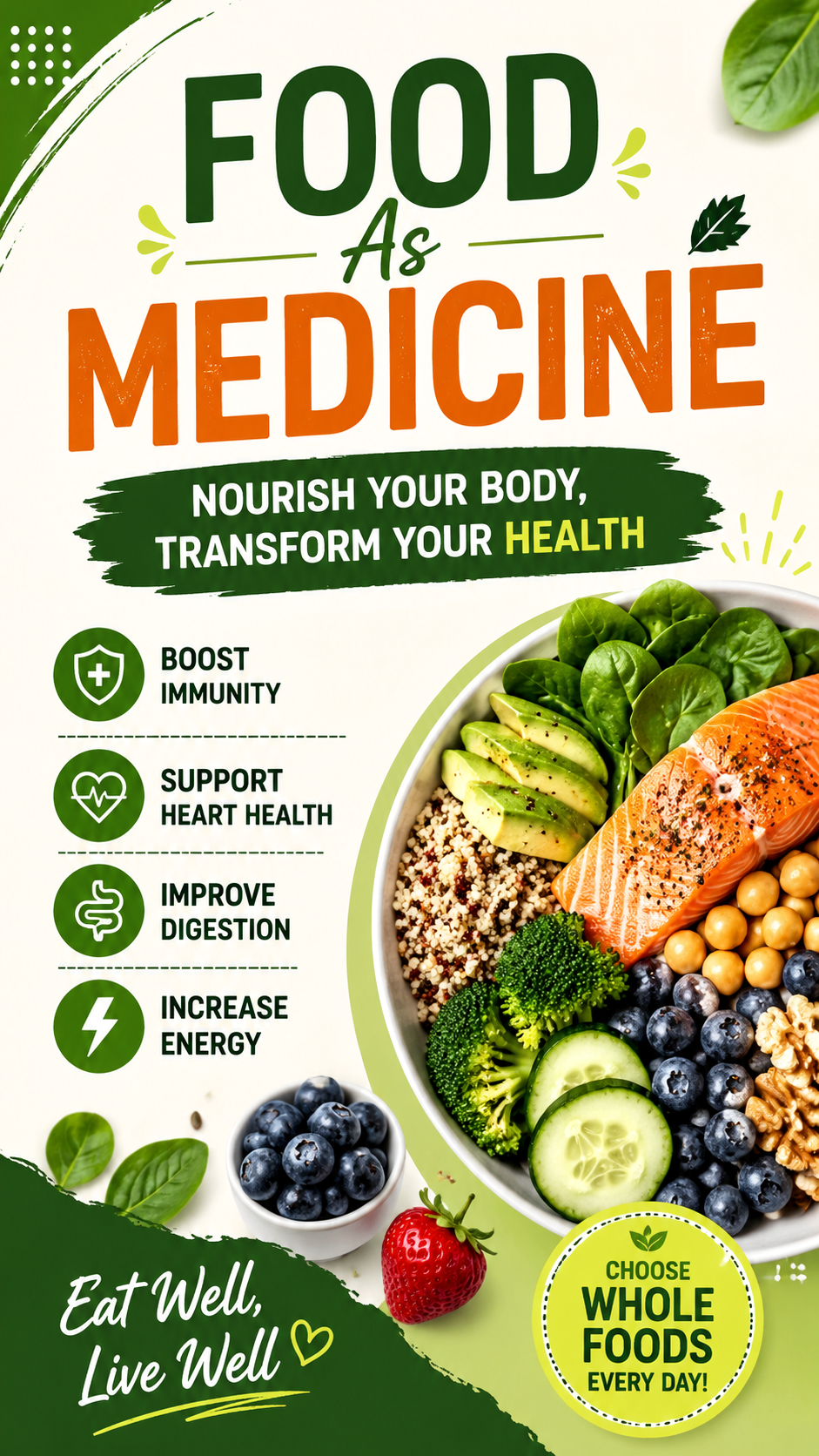
Good nutrition is one of the most powerful tools for supporting overall health. While no single food can prevent or cure every illness, many everyday ingredients contain vitamins, minerals, antioxidants, healthy fats, and plant compounds that help the body function at its best. This concept, often called food as medicine, encourages choosing nutrient-dense foods that nourish the body, strengthen natural defenses, and promote long-term wellness.
Instead of relying on restrictive diets or complicated eating plans, focusing on wholesome foods makes healthy living both enjoyable and sustainable. Whether your goal is boosting immunity, improving heart health, supporting digestion, increasing energy, or maintaining a healthy weight, the foods you eat each day play an important role in your overall wellbeing.
Key Takeaways
- Whole foods provide essential nutrients that support overall health.
- Colorful fruits and vegetables supply valuable antioxidants.
- Healthy fats, lean proteins, and fiber help maintain balanced nutrition.
- Consistent healthy eating habits matter more than occasional superfoods.
- Simple dietary changes can have lasting health benefits.
What Does Food as Medicine Mean?
The phrase “food as medicine” reflects the idea that nutrition influences nearly every system in the body. Every meal provides building blocks for muscles, bones, hormones, immune cells, and countless biological processes. Choosing nutrient-rich foods regularly helps support these systems while reducing the risk of many chronic health conditions.
Important: Healthy foods work best when they are part of a balanced lifestyle that includes regular physical activity, quality sleep, stress management, and routine healthcare. Nutrition is a foundation for wellness rather than a quick fix.
Best Foods That Support Overall Health
Leafy Green Vegetables
Spinach, kale, Swiss chard, and similar greens are packed with vitamins A, C, and K, along with folate, calcium, and antioxidants. These vegetables support healthy bones, vision, immune function, and cardiovascular health.
- Excellent source of fiber
- Low in calories
- Rich in protective plant compounds
- Easy to add to smoothies, salads, soups, and omelets
Berries
Blueberries, strawberries, raspberries, and blackberries are loaded with antioxidants that help protect cells from oxidative stress. Their natural sweetness also makes them a healthier alternative to sugary snacks.
- Add them to yogurt.
- Blend into smoothies.
- Top oatmeal with fresh berries.
- Enjoy them as a simple snack.
Fatty Fish
Salmon, sardines, trout, and mackerel provide omega-3 fatty acids that support heart health and brain function. These healthy fats also contribute to maintaining normal inflammatory responses within the body.
Whole Grains
Oats, quinoa, brown rice, and whole wheat contain fiber, vitamins, and minerals that promote digestive health and steady energy throughout the day. Whole grains are generally more filling than refined grains and help support balanced blood sugar levels.
Expert Insight
Rather than searching for one miracle ingredient, focus on creating meals that combine vegetables, lean proteins, healthy fats, and whole grains. Consistency over time delivers the greatest health benefits.
Powerful Fruits Worth Including
Fruits provide vitamins, minerals, water, and naturally occurring fiber. Eating a variety of colors helps ensure a wider range of nutrients.
Citrus Fruits
Oranges, lemons, grapefruit, and mandarins are well known for their vitamin C content, which supports normal immune function and collagen production.
Apples
Apples provide soluble fiber that supports digestive health while offering satisfying crunch and natural sweetness.
Avocados
Although technically a fruit, avocados are unique because they contain heart-healthy monounsaturated fats, fiber, potassium, and several vitamins.
Pro Tip: Aim to “eat the rainbow.” Different colored fruits and vegetables contain different beneficial plant compounds, giving your body access to a wider variety of nutrients.
Protein Foods That Nourish the Body
Protein supports muscle maintenance, tissue repair, hormone production, and immune health. Both animal and plant sources can be part of a balanced diet.
Beans and Lentils
These affordable pantry staples provide protein, fiber, iron, and important minerals while helping you stay full longer.
Eggs
Eggs are nutrient-rich and contain high-quality protein along with vitamins and minerals that support overall health.
Greek Yogurt
Greek yogurt offers protein and probiotics that support gut health. Choose plain varieties and add fresh fruit for natural sweetness.
Healthy Fats Matter Too
Not all fats are created equal. Healthy fats contribute to brain function, hormone production, nutrient absorption, and heart health.
- Nuts
- Seeds
- Olive oil
- Avocados
- Fatty fish
Including moderate portions of these foods creates satisfying meals while supporting long-term wellness.
Foods That Support Digestive Health
A healthy digestive system helps the body absorb nutrients efficiently. Fiber-rich foods and fermented products contribute to a balanced digestive environment.
High Fiber Foods
- Vegetables
- Whole grains
- Beans
- Fruits
- Seeds
Fermented Foods
Yogurt, kefir, kimchi, sauerkraut, and other fermented foods naturally contain beneficial bacteria that may support digestive balance.
Foods That Help Support Heart Health
A heart-friendly eating pattern focuses on foods rich in fiber, healthy fats, antioxidants, and essential nutrients.
- Choose whole grains over refined grains.
- Eat fish regularly.
- Include plenty of vegetables.
- Snack on nuts instead of processed foods.
- Use olive oil as your primary cooking fat.
Important: Building healthy eating habits does not require perfection. Small improvements made consistently often produce better long-term results than dramatic short-term changes.
Simple Ways to Eat These Foods Every Day
Making healthy eating sustainable starts with practical habits.
- Prepare vegetables ahead of time.
- Keep fruit visible on the kitchen counter.
- Cook extra whole grains for future meals.
- Add beans to soups and salads.
- Replace sugary desserts with fresh berries.
- Snack on nuts in moderate portions.
Building Balanced Meals
A simple approach to meal planning is filling half your plate with vegetables, adding lean protein, choosing whole grains, and including a healthy fat source. This combination delivers satisfying meals while supporting overall nutrition.
Example Breakfast
- Greek yogurt
- Fresh berries
- Oats
- Chopped walnuts
Example Lunch
- Grilled chicken
- Mixed greens
- Quinoa
- Olive oil vinaigrette
Example Dinner
- Baked salmon
- Roasted vegetables
- Brown rice
Healthy Eating Is About Consistency
Many people believe they need expensive superfoods to improve their health, but everyday ingredients often provide outstanding nutritional value. Fruits, vegetables, whole grains, legumes, healthy fats, lean proteins, and plenty of water create a strong nutritional foundation that supports the body’s natural processes.
At a Glance
- Choose colorful fruits and vegetables daily.
- Prioritize whole foods over heavily processed options.
- Include healthy fats and quality protein.
- Stay hydrated throughout the day.
- Focus on consistent habits instead of perfection.
Conclusion
Using food as medicine begins with simple daily choices. Every nutritious meal contributes to better overall health by supplying the vitamins, minerals, fiber, healthy fats, and antioxidants your body needs to thrive. Rather than searching for one perfect ingredient, aim to enjoy a wide variety of wholesome foods that work together to support energy, heart health, digestion, immunity, and long-term wellness.
Healthy eating is not about strict rules or complicated meal plans. It is about creating enjoyable habits that fit your lifestyle while giving your body the nourishment it deserves. Small improvements made consistently can have a meaningful impact over time, making every meal another opportunity to invest in your health.
Tags
Food as Medicine Healthy Foods Natural Nutrition Whole Foods Wellness Healthy Eating Superfoods Balanced Diet