
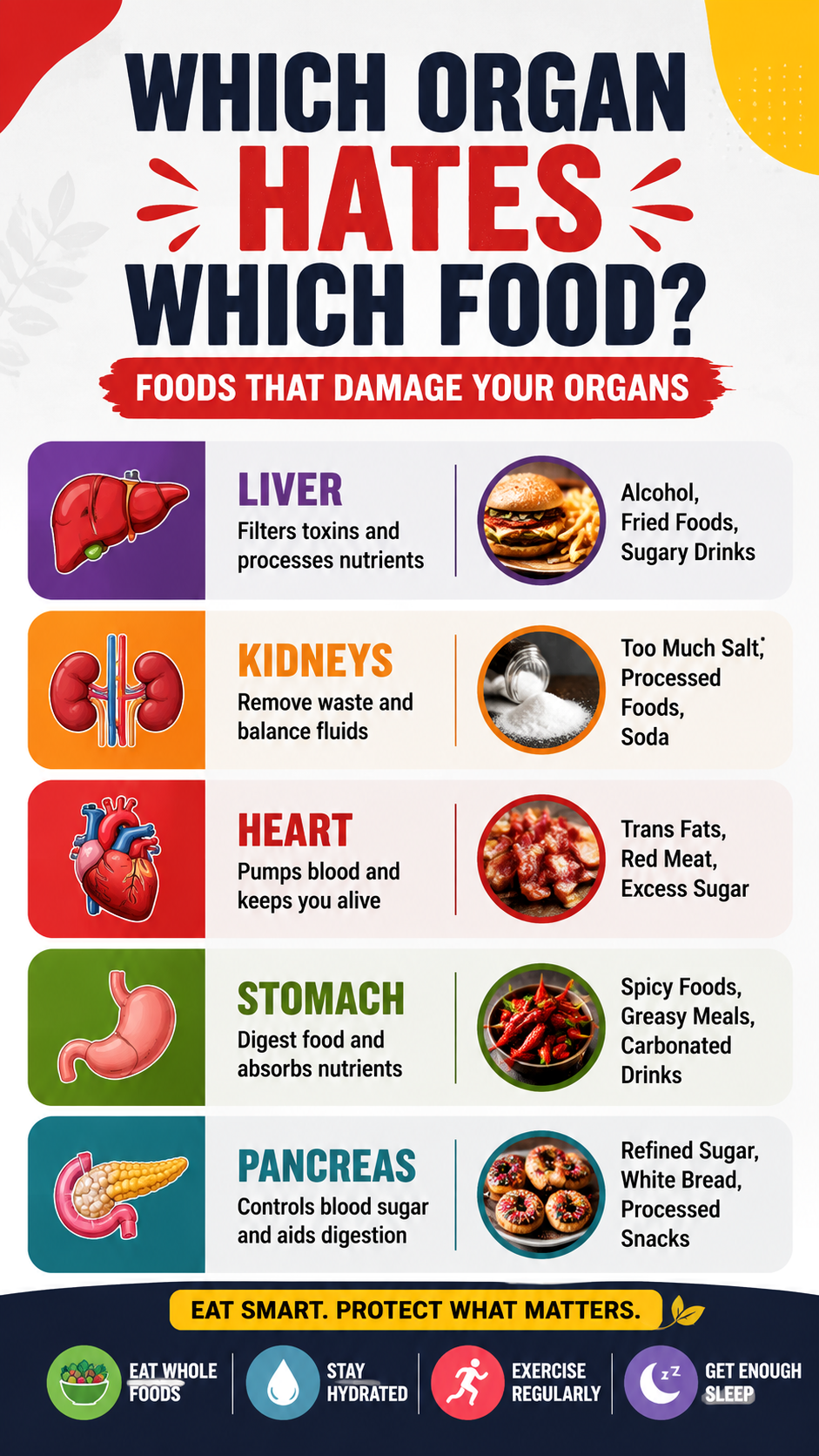
What you eat every day has a direct impact on how well your body functions. While most people think about calories, weight, or energy levels, fewer consider how specific foods affect individual organs. Your liver, kidneys, heart, stomach, pancreas, and other vital organs work around the clock to keep you healthy. When they are constantly exposed to highly processed foods, excess sugar, unhealthy fats, or excessive sodium, they may become stressed over time.
Understanding which foods can negatively affect certain organs is one of the smartest steps you can take toward better health. The goal is not to create fear around food but to encourage awareness and balance. Small dietary changes can make a significant difference in supporting your body’s natural functions and helping your organs perform at their best.
Key Takeaways
- Different organs can be affected by different dietary habits.
- Excess sugar, salt, and processed foods are common contributors to health issues.
- Balanced nutrition supports long-term organ function.
- Hydration plays a major role in protecting vital organs.
- Small daily changes often produce meaningful long-term benefits.
- Prevention is usually easier than treatment.
Why Organ Health Matters
Your organs form a highly connected system. When one organ experiences strain, others may eventually feel the effects as well. For example, poor dietary choices that affect the heart can also impact blood vessels, kidneys, and overall circulation.
Important: Many chronic health problems develop gradually over years rather than appearing suddenly. Daily eating habits often play a larger role than people realize.
By learning which foods may place additional stress on specific organs, you can make informed decisions without following extreme diets. A sustainable approach to nutrition is usually the most effective strategy for long-term wellness.
Foods That Can Stress the Liver
The liver is one of the hardest-working organs in the body. It helps process nutrients, remove toxins, regulate metabolism, and store important vitamins and minerals.
Excess Sugar
Large amounts of added sugar, particularly from sweetened beverages and heavily processed foods, may contribute to fat accumulation in the liver. Over time, excessive sugar intake can make it harder for the liver to perform efficiently.
Highly Processed Foods
Many packaged snacks contain combinations of refined carbohydrates, unhealthy fats, and added sugars. Consuming these products frequently can increase metabolic stress.
Healthier Choices
- Fresh fruits and vegetables
- Whole grains
- Lean proteins
- Healthy fats from nuts and seeds
- Adequate water intake
Foods That Can Affect the Kidneys
Your kidneys help filter waste products and maintain proper fluid balance. They are essential for regulating blood pressure and supporting overall health.
Too Much Sodium
Excess sodium is common in packaged meals, fast food, canned products, and many restaurant dishes. High sodium intake may increase strain on the kidneys and contribute to elevated blood pressure.
Sugary Drinks
Frequent consumption of sugar-sweetened beverages has been associated with several metabolic concerns that may indirectly affect kidney health.
Pro Tip: One of the easiest ways to support kidney health is to drink sufficient water throughout the day and reduce dependence on sugary beverages.
Kidney-Friendly Habits
- Choose fresh foods when possible
- Read nutrition labels carefully
- Limit heavily salted snacks
- Stay physically active
- Maintain healthy hydration
Foods That Challenge Heart Health
Your heart works continuously to circulate blood throughout your body. Supporting cardiovascular health begins with consistent lifestyle choices.
Trans Fats and Highly Processed Fats
Some processed foods contain fats that may negatively affect cholesterol balance. Although many countries have reduced the use of trans fats, highly processed products can still contribute to poor dietary patterns.
Excessive Sugar Consumption
Large amounts of added sugar may contribute to weight gain and other factors that affect cardiovascular health.
Why This Matters
- Heart health influences nearly every system in the body.
- Balanced nutrition can support healthy circulation.
- Small dietary improvements add up over time.
Heart-Supportive Foods
- Oats and whole grains
- Leafy green vegetables
- Berries
- Fish rich in omega-3 fatty acids
- Nuts and seeds
Foods That May Irritate the Stomach
The stomach plays a central role in digestion. While tolerance varies from person to person, certain foods commonly trigger discomfort in sensitive individuals.
Very Spicy Foods
Some people enjoy spicy meals without issues, while others may experience digestive discomfort. Individual tolerance levels matter.
Highly Greasy Foods
Heavy fried foods may slow digestion and contribute to feelings of bloating or discomfort for some individuals.
Better Options
- Lightly cooked vegetables
- Whole grains
- Lean protein sources
- Balanced portions
- Regular meal timing
Foods That Can Affect the Pancreas
The pancreas helps regulate blood sugar and produces digestive enzymes. Maintaining healthy eating patterns can support its important functions.
High-Sugar Diets
Consistently consuming large amounts of sugar may create metabolic challenges over time. Moderation remains an important principle.
Ultra-Processed Snacks
Many convenience foods provide high calories but limited nutritional value. Choosing nutrient-dense alternatives can support overall metabolic health.
Important: A balanced approach to carbohydrates, proteins, and healthy fats can help maintain stable energy levels and support healthy blood sugar management.
The Hidden Impact of Processed Foods
One of the most common themes in nutrition research is the effect of heavily processed foods on overall health. These products often contain multiple ingredients designed to improve flavor, texture, and shelf life.
While convenient, many processed foods are high in sodium, sugar, and unhealthy fats while being relatively low in fiber and essential nutrients.
Examples include:
- Packaged desserts
- Sugary breakfast cereals
- Fast food meals
- Sweetened beverages
- Highly processed snack foods
Reducing dependence on these products can benefit multiple organs simultaneously.
How to Build an Organ-Friendly Diet
The good news is that supporting your organs does not require complicated meal plans. Simple habits often provide the greatest benefits.
Focus on Whole Foods
Foods in their natural or minimally processed form tend to contain more nutrients and fewer unnecessary additives.
Increase Fiber Intake
Fiber supports digestive health and can contribute to overall metabolic wellness. Fruits, vegetables, legumes, and whole grains are excellent sources.
Stay Hydrated
Water supports nearly every organ system. Proper hydration helps maintain healthy circulation and assists the body’s natural filtering processes.
Practice Moderation
Healthy eating is rarely about perfection. Occasional treats can fit into a balanced lifestyle. The focus should remain on long-term habits rather than short-term restrictions.
Warning Signs Your Diet May Need Improvement
Although symptoms vary, some common indicators that dietary habits may need attention include:
- Persistent fatigue
- Frequent digestive discomfort
- Difficulty maintaining energy levels
- Excessive thirst
- Regular consumption of highly processed foods
- Low intake of fruits and vegetables
Improving nutrition can often enhance overall well-being, energy, and quality of life.
Long-Term Benefits of Smarter Food Choices
Making healthier food choices today can create lasting benefits in the future. A nutrient-rich diet helps support normal organ function, promotes healthy aging, and encourages overall wellness.
Many people notice positive changes such as improved energy, better digestion, more stable appetite control, and increased confidence in their health decisions.
Expert Insight: The most effective nutrition plan is often the one you can consistently follow. Sustainable habits typically outperform extreme diets over the long run.
At a Glance
- Limit excess sugar and sodium.
- Choose whole foods more often.
- Stay hydrated daily.
- Support heart, liver, kidney, and digestive health through balanced nutrition.
- Focus on long-term consistency rather than perfection.
Conclusion
Your organs work tirelessly to keep you healthy, and the foods you choose can either support or challenge that effort. While no single food determines your health outcome, consistent dietary habits play a major role in long-term wellness. Excess sugar, sodium, highly processed foods, and unhealthy fats can place additional stress on various organs when consumed regularly.
By focusing on whole foods, proper hydration, balanced meals, and moderation, you can help protect your liver, kidneys, heart, stomach, pancreas, and other vital systems. The best approach is not about strict rules but about making informed choices that support your body every day. Small improvements made consistently can lead to meaningful health benefits over time.
Tags
Organ Health Healthy Eating Nutrition Tips Liver Health Kidney Health Heart Health Healthy Lifestyle Wellness