
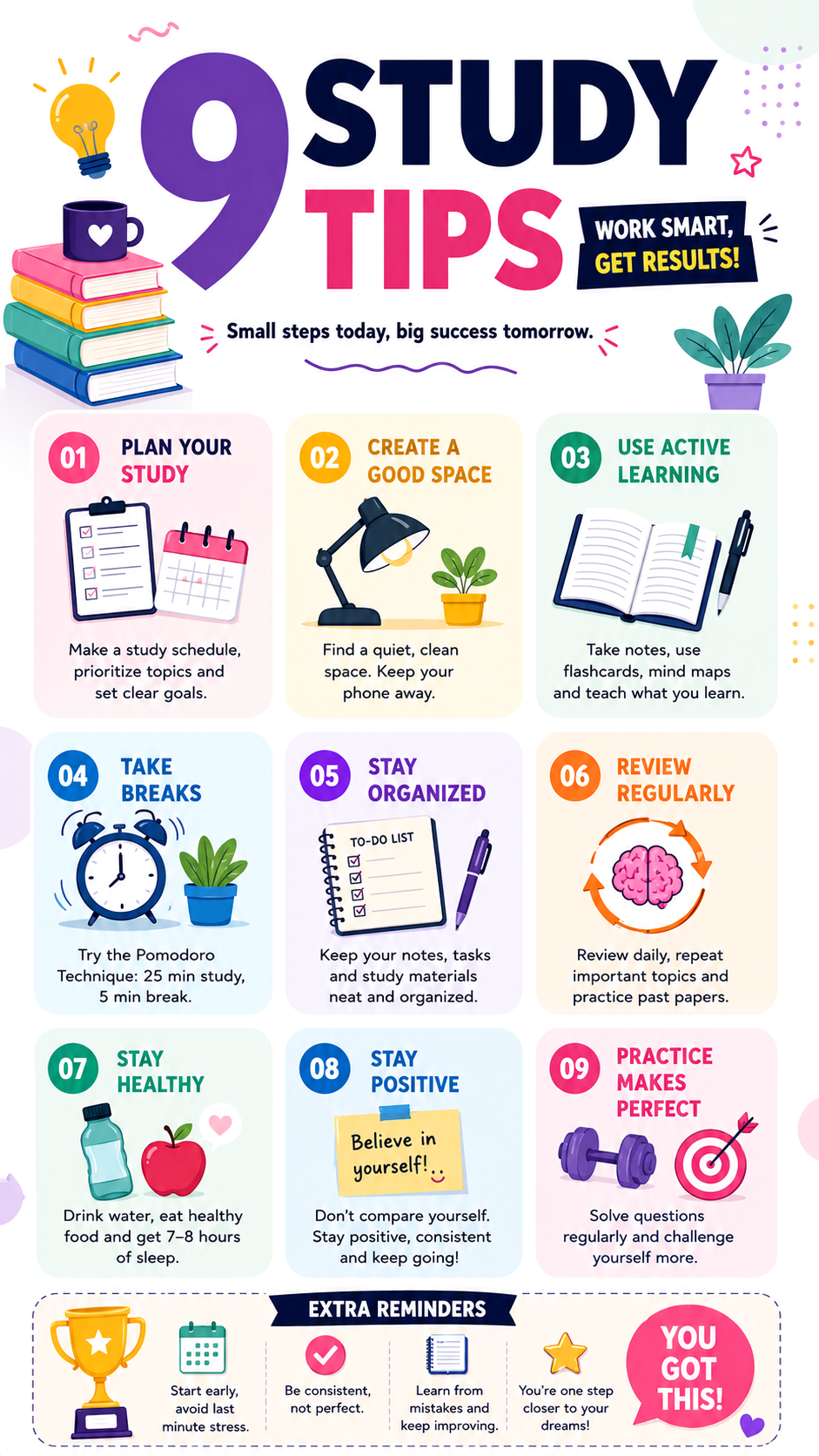
Success in school is not just about spending more hours with textbooks. It is about using effective strategies that help you learn faster, remember information longer, and stay motivated throughout your academic journey. Many students struggle with distractions, poor time management, and overwhelming workloads. Fortunately, the right study habits can transform the way you learn and help you achieve better results without unnecessary stress.
Whether you are preparing for exams, working on assignments, or trying to improve your overall academic performance, developing smart study techniques can make a significant difference. From creating a productive environment to practicing active learning and maintaining a healthy lifestyle, every small habit contributes to long-term success.
Key Takeaways
- Create a realistic study schedule and stick to it consistently.
- Design a distraction-free learning environment.
- Use active learning techniques instead of passive reading.
- Take regular breaks to maintain focus and energy.
- Stay organized with notes, planners, and task lists.
- Review material regularly to strengthen memory retention.
Why Smart Study Habits Matter
Many students believe that studying longer automatically leads to better grades. In reality, the quality of your study sessions often matters more than the quantity. Effective study habits help you process information more efficiently, reduce stress, and improve long-term retention.
When you establish productive routines, you spend less time feeling overwhelmed and more time making measurable progress. Smart study habits also help build confidence, which is essential during exams and challenging academic periods.
Important: Consistency beats intensity. Studying for a short period every day is usually more effective than cramming for several hours the night before an exam.
Plan Your Study Sessions Effectively
One of the most powerful ways to improve academic performance is to create a study plan. A clear schedule gives structure to your day and ensures that important subjects receive the attention they deserve.
Set Realistic Goals
Break large tasks into smaller, manageable goals. Instead of writing “Study Biology,” create specific objectives such as:
- Read Chapter 4.
- Complete practice questions.
- Review key diagrams.
- Summarize important concepts.
Specific goals make studying less intimidating and help track progress more effectively.
Prioritize Important Topics
Focus first on subjects that require more attention or have upcoming deadlines. Prioritizing allows you to use your energy where it will have the greatest impact.
Create a Productive Study Environment
Your surroundings play a major role in your ability to concentrate. A cluttered or noisy environment can make studying more difficult and less effective.
Choose a Quiet Space
Find a location where interruptions are minimal. This could be a library, a study room, or a quiet corner at home.
Improve Lighting and Comfort
Good lighting reduces eye strain and helps maintain focus. A comfortable chair and organized workspace also contribute to longer and more productive study sessions.
Limit Digital Distractions
Smartphones, social media notifications, and unnecessary tabs can quickly derail concentration. Consider using focus apps or placing your phone out of reach during study periods.
Expert Insight
Students often underestimate the impact of distractions. Even brief interruptions can significantly reduce concentration and increase the time needed to complete learning tasks.
Use Active Learning Techniques
Reading notes repeatedly may feel productive, but active learning methods often produce better results. These techniques engage your brain and improve understanding.
Take Notes in Your Own Words
Rewriting concepts using simple language helps strengthen comprehension. Instead of copying information directly, focus on explaining ideas as if teaching someone else.
Create Mind Maps
Mind maps help organize information visually and show connections between concepts. They are especially useful for subjects that involve complex relationships.
Use Flashcards
Flashcards are excellent for memorizing vocabulary, formulas, definitions, and key facts. Reviewing flashcards regularly supports active recall and long-term memory.
Pro Tip: Active recall is one of the most effective learning strategies. Test yourself frequently instead of simply rereading your notes.
Take Strategic Breaks
Studying for long periods without breaks can reduce concentration and increase mental fatigue. Short breaks help refresh the mind and improve productivity.
Try the Pomodoro Technique
A popular approach is the Pomodoro Technique, which involves:
- Study for 25 minutes.
- Take a 5-minute break.
- Repeat the cycle four times.
- Take a longer break afterward.
This method helps maintain focus while preventing burnout.
Use Breaks Wisely
Stretch, walk, hydrate, or rest your eyes. Avoid activities that might make it difficult to return to studying, such as endless social media scrolling.
Stay Organized Throughout the Semester
Organization reduces stress and helps prevent missed deadlines. When everything has a place, it becomes easier to stay on top of academic responsibilities.
Maintain a To-Do List
Writing down tasks creates clarity and helps prioritize daily responsibilities. Crossing completed items off a list can also boost motivation.
Organize Your Notes
Keep notes arranged by subject and topic. Color coding, folders, and digital organization systems can make review sessions more efficient.
Track Important Deadlines
Use planners, calendars, or digital reminders to stay informed about exams, assignments, and project due dates.
Review Material Regularly
Reviewing information consistently is essential for long-term retention. Waiting until the last minute often leads to stress and weaker recall.
Practice Spaced Repetition
Spaced repetition involves reviewing material at increasing intervals over time. This technique strengthens memory and reduces forgetting.
Use Practice Questions
Answering questions allows you to identify weak areas and apply knowledge in realistic scenarios. Practice testing is particularly valuable before exams.
Important: Reviewing notes is helpful, but applying information through quizzes, exercises, and practice papers leads to deeper learning.
Support Learning with Healthy Habits
Academic performance is closely linked to physical and mental well-being. Healthy habits provide the energy and focus needed for effective studying.
Stay Hydrated
Drinking enough water supports concentration, energy levels, and cognitive performance throughout the day.
Eat Nutritious Foods
Balanced meals provide sustained energy and help prevent the crashes associated with sugary snacks.
Get Adequate Sleep
Sleep plays a vital role in memory consolidation and learning. Aim for a consistent sleep schedule and prioritize rest before important exams.
Develop a Positive Mindset
Your attitude toward learning can significantly influence results. Students who approach challenges with confidence and persistence are often better equipped to overcome obstacles.
Avoid Comparing Yourself to Others
Every student learns differently. Focus on your personal growth and progress instead of measuring success against others.
Celebrate Small Wins
Completing study goals, improving quiz scores, or mastering difficult concepts are achievements worth recognizing.
Stay Consistent
Progress often comes from repeated effort over time. Even small daily improvements can produce significant long-term results.
Practice Makes Progress
One of the most reliable ways to improve academically is through regular practice. Solving problems, writing essays, answering questions, and completing exercises build familiarity and confidence.
Practice helps transform knowledge into skills. The more you engage with the material, the more comfortable and capable you become when facing exams or assignments.
At a Glance
- Create and follow a realistic study schedule.
- Study in a quiet, organized environment.
- Use active learning techniques daily.
- Take regular breaks to stay focused.
- Review and practice consistently.
Conclusion
Successful studying is about working smarter rather than simply working harder. By planning study sessions, creating a productive environment, using active learning techniques, taking strategic breaks, staying organized, reviewing regularly, and maintaining healthy habits, students can significantly improve both performance and confidence.
The journey toward academic success does not require perfection. Small, consistent actions performed every day can lead to remarkable improvements over time. Start with one or two strategies, build them into your routine, and gradually develop a study system that supports your goals and learning style.
Tags
Study Tips Student Success Study Habits Exam Preparation Time Management Learning Strategies Productivity Study Motivation