
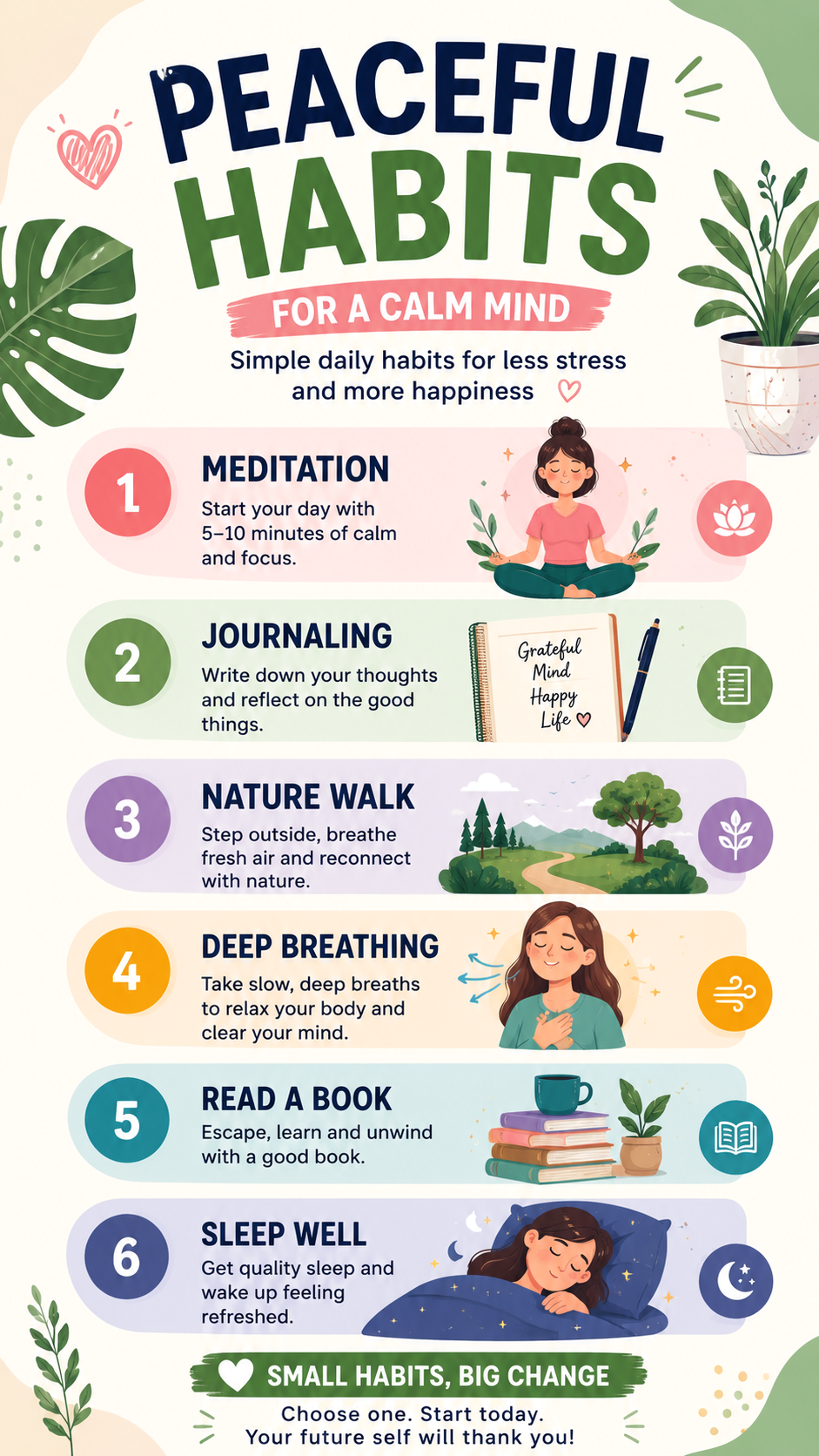
In a world filled with constant notifications, busy schedules, and endless distractions, maintaining a calm and balanced mind can feel like a challenge. The good news is that inner peace is often built through small daily habits rather than dramatic lifestyle changes. Simple routines practiced consistently can help reduce stress, improve focus, and create a greater sense of emotional well-being.
Many people search for practical ways to improve mental wellness without adding complexity to their lives. The most effective solutions are often the simplest. Activities like meditation, journaling, spending time in nature, deep breathing, reading, and prioritizing sleep can create a powerful foundation for a calmer, healthier mind.
Key Takeaways
- Small daily habits can significantly improve mental well-being.
- Meditation helps increase mindfulness and reduce stress.
- Journaling encourages self-reflection and emotional clarity.
- Nature walks support relaxation and mental refreshment.
- Deep breathing techniques help calm the nervous system.
- Quality sleep is essential for emotional and cognitive health.
Why Daily Habits Matter for Mental Wellness
Mental wellness is not something that appears overnight. It develops through the choices we make every day. Just as physical fitness requires regular exercise, emotional resilience requires intentional habits that support a healthy mindset.
Daily routines create structure and predictability. When life feels overwhelming, simple habits can provide stability and help reduce feelings of chaos. They act as anchors throughout the day, reminding us to slow down, breathe, and reconnect with ourselves.
Important: The most effective wellness habits are often the ones that feel manageable enough to practice consistently. Small actions repeated daily typically produce greater long-term benefits than occasional major efforts.
1. Start Your Day with Meditation
Meditation has become one of the most widely recommended practices for stress management and mindfulness. Taking just five to ten minutes each morning can help create a calm mental state before the demands of the day begin.
Meditation does not require special equipment or advanced techniques. Simply sitting quietly and focusing on your breath can be enough to experience positive effects.
Benefits of Meditation
- Reduces stress and anxiety.
- Improves concentration.
- Enhances emotional awareness.
- Promotes a sense of inner calm.
- Supports better decision-making.
Many people find that beginning the day with mindfulness creates a more balanced outlook and helps them respond thoughtfully rather than react impulsively to challenges.
2. Practice Journaling for Self-Reflection
Writing down thoughts and feelings is a powerful tool for mental clarity. Journaling creates space to process emotions, organize ideas, and recognize patterns in behavior and thinking.
Even a few minutes of writing each day can make a meaningful difference. Some people prefer free writing, while others focus on gratitude lists, daily reflections, or goal tracking.
Simple Journaling Prompts
- What am I grateful for today?
- What challenged me today?
- What went well today?
- What can I improve tomorrow?
- How am I feeling right now?
Journaling encourages self-awareness and can help reduce mental clutter by moving thoughts from the mind onto paper.
Why This Matters
- Writing regularly helps identify stress triggers.
- Gratitude journaling can shift attention toward positive experiences.
- Reflective writing improves emotional understanding and resilience.
3. Take a Relaxing Nature Walk
Spending time outdoors offers benefits that go far beyond physical exercise. Nature provides a calming environment that allows the brain to recover from overstimulation and mental fatigue.
A short walk through a park, garden, trail, or quiet neighborhood can improve mood and increase feelings of relaxation. Fresh air, natural light, and movement work together to support emotional well-being.
How Nature Supports Mental Health
- Encourages mindfulness.
- Reduces feelings of stress.
- Improves mood and energy.
- Provides a break from screens.
- Promotes physical activity.
Nature walks are particularly effective because they combine movement and mental restoration in a simple, accessible activity.
Pro Tip: Leave your phone in your pocket during a nature walk whenever possible. Paying attention to sounds, colors, textures, and movement around you can deepen the calming effects of the experience.
4. Use Deep Breathing to Reduce Stress
Breathing is something we do automatically, yet it is also one of the most effective tools for calming the mind. Deep breathing exercises can activate the body’s relaxation response and help reduce tension during stressful moments.
Many people underestimate the impact of intentional breathing. A few slow, controlled breaths can lower feelings of anxiety and create a sense of immediate calm.
A Simple Deep Breathing Exercise
- Inhale slowly through your nose for four seconds.
- Hold your breath for four seconds.
- Exhale gently through your mouth for six seconds.
- Repeat five to ten times.
Practicing this technique regularly can help improve emotional regulation and make stressful situations feel more manageable.
5. Read a Book to Unwind
Reading offers a healthy way to relax and escape daily pressures. Unlike many forms of digital entertainment, reading often encourages slower thinking and deeper concentration.
A good book can transport you to another world, introduce new ideas, and provide a much-needed mental break. Reading before bed is also a popular strategy for creating a calming evening routine.
Choosing Books for Relaxation
- Inspirational books.
- Personal development titles.
- Light fiction and novels.
- Nature writing.
- Positive memoirs.
The goal is not necessarily to learn something new every time. Sometimes reading simply provides a peaceful moment away from everyday demands.
6. Prioritize Quality Sleep Every Night
Sleep is one of the most important foundations of mental wellness. When sleep quality suffers, stress levels often rise, concentration becomes more difficult, and emotional resilience can decline.
Developing healthy sleep habits supports both physical and mental recovery. Consistent sleep schedules help regulate the body’s internal clock and improve overall well-being.
Healthy Sleep Habits
- Maintain a consistent bedtime.
- Reduce screen time before sleep.
- Create a comfortable sleep environment.
- Avoid excessive caffeine late in the day.
- Establish a relaxing evening routine.
Important: Sleep is not a luxury. It is a critical component of mental clarity, emotional balance, and overall health. Improving sleep quality often creates positive effects in multiple areas of life.
Building a Sustainable Calm Mind Routine
The most successful wellness routines are realistic and flexible. Trying to implement too many habits at once can feel overwhelming and lead to frustration.
Instead, begin with one or two practices that feel achievable. Once those habits become part of your daily routine, additional habits can be added gradually.
A Sample Daily Routine
- Morning: Five minutes of meditation.
- Midday: Short nature walk or breathing exercise.
- Evening: Journaling and reading.
- Night: Consistent bedtime routine.
This simple structure combines mindfulness, movement, reflection, relaxation, and recovery into a balanced approach to mental wellness.
Common Challenges and How to Overcome Them
Lack of Time
Many people believe they need large blocks of free time to improve their well-being. In reality, even five-minute practices can be highly beneficial when done consistently.
Difficulty Staying Consistent
Habit tracking, reminders, and pairing new habits with existing routines can make consistency easier. Focus on progress rather than perfection.
Expecting Immediate Results
Mental wellness habits often produce gradual improvements. Patience is essential. Consistent effort over weeks and months typically leads to meaningful change.
The Long-Term Benefits of Peaceful Habits
Over time, healthy routines can transform the way people respond to challenges, manage stress, and experience daily life. While no habit eliminates every difficulty, these practices can strengthen resilience and support a more balanced mindset.
Individuals who prioritize mindfulness, reflection, relaxation, and rest often report improved focus, greater emotional stability, better productivity, and a stronger sense of overall well-being.
The beauty of these habits lies in their simplicity. They require minimal resources, can be adapted to different lifestyles, and provide benefits that extend far beyond stress reduction.
At a Glance
- Meditation promotes mindfulness and focus.
- Journaling supports emotional clarity.
- Nature walks encourage relaxation.
- Deep breathing reduces stress quickly.
- Reading and quality sleep support recovery.
Conclusion
Creating a calm mind does not require a complete lifestyle overhaul. Often, the most powerful changes come from simple daily habits practiced consistently over time. Meditation, journaling, nature walks, deep breathing, reading, and quality sleep each contribute to a healthier relationship with stress and a greater sense of inner balance.
By incorporating even a few of these peaceful habits into your routine, you can build a foundation for lasting mental wellness. Start small, stay consistent, and allow these simple practices to guide you toward a calmer, more centered life.
Tags
Mindfulness Calm Mind Self Care Stress Relief Mental Wellness Healthy Habits Journaling Wellness Routine