
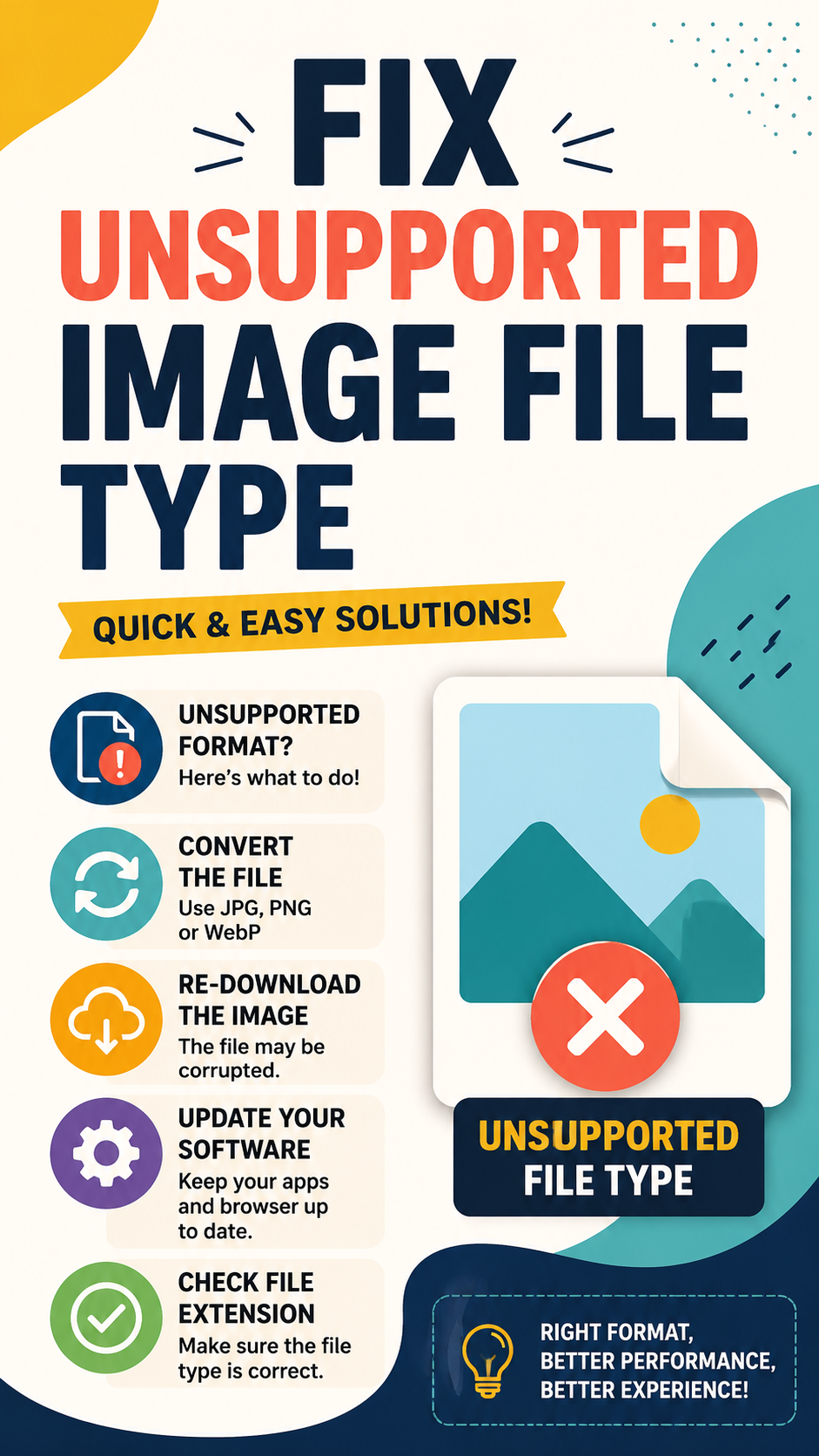
Few things are more frustrating than trying to open an image only to be greeted with a message stating that the file type is unsupported. Whether you are browsing online, managing content for a website, organizing personal photos, or working on a creative project, image compatibility issues can quickly interrupt your workflow. Understanding why unsupported image errors occur and how to fix them can save time, reduce stress, and help ensure that your images display correctly across devices and platforms.
Key Takeaways
- Unsupported image errors often result from incompatible file formats.
- Converting images to common formats usually resolves the issue.
- Corrupted files can also trigger display problems.
- Websites and apps may support only specific image types.
- Proper image optimization improves compatibility and performance.
- Knowing common image formats helps prevent future issues.
What Does an Unsupported Image File Type Mean?
An unsupported image file type message appears when software, a website, or a device cannot recognize or display a particular image format. Every application is built to support specific file extensions. When an image falls outside those supported formats, the system may refuse to load it.
For example, many platforms readily display JPG, PNG, GIF, and WebP images. However, some newer, specialized, or proprietary formats may not be supported by every browser, application, or operating system.
Important: An unsupported file error does not always mean the image is damaged. In many cases, the file is perfectly fine but simply uses a format that the current software cannot interpret.
Common Causes of Unsupported Image Errors
There are several reasons why an image may fail to display correctly.
1. Unrecognized File Format
The most common cause is a format mismatch. If a website or application supports only a limited number of image types, unsupported formats will not load properly.
2. Corrupted Image Files
Images can become corrupted during downloads, transfers, uploads, or storage. When corruption occurs, software may incorrectly identify the file as unsupported.
3. Incorrect File Extension
Sometimes a file extension does not match the actual image format. For instance, a file labeled as JPG might actually contain data from another format. This discrepancy can trigger compatibility errors.
4. Outdated Software
Older applications may not recognize modern image standards. Updating your browser, photo editor, or operating system can often solve the problem.
5. Platform Restrictions
Many websites impose strict upload requirements to optimize performance and security. Even valid image formats may be rejected if they fall outside platform guidelines.
Understanding Popular Image Formats
Knowing the strengths and limitations of common image formats can help you avoid compatibility issues.
JPEG or JPG
JPEG remains one of the most widely supported image formats in the world. It offers excellent compression and is commonly used for photographs and web content.
- Highly compatible
- Small file sizes
- Ideal for photos
- Lossy compression
PNG
PNG is known for preserving image quality and supporting transparent backgrounds.
- Excellent quality
- Transparency support
- Widely accepted online
- Larger file sizes than JPEG
GIF
GIF files are commonly used for simple animations and graphics.
- Animation support
- Broad compatibility
- Limited color range
WebP
WebP provides efficient compression while maintaining image quality. It is increasingly popular for websites seeking faster load times.
- Smaller file sizes
- Good quality retention
- Modern web optimization
HEIC
HEIC is commonly used by newer smartphones and offers efficient storage. However, compatibility can vary depending on the software being used.
Why This Matters
- Choosing the right image format improves compatibility.
- Supported formats reduce upload failures and display errors.
- Optimized images create a better experience for users and visitors.
How to Fix Unsupported Image File Type Problems
Fortunately, most unsupported image issues can be resolved with a few practical steps.
Convert the Image Format
Converting the image into a more widely accepted format is often the fastest solution. JPEG and PNG remain safe choices for most situations.
Many image editing applications include built-in export tools that allow users to save files in different formats. Online converters can also help when local software is unavailable.
Update Your Software
Outdated applications may lack support for newer image standards. Updating your browser, image viewer, or editing software can immediately restore compatibility.
Pro Tip: Before converting or editing any image, create a backup copy. This protects the original file in case quality is lost during conversion.
Verify the File Extension
Check whether the extension accurately reflects the actual file type. Incorrect labeling can confuse applications and lead to display errors.
Download the File Again
If corruption occurred during transfer, downloading the image again may solve the problem. This is especially useful when dealing with images received through email or downloaded from websites.
Use Alternative Software
Some image viewers support a wider range of formats than others. If one application cannot open the file, another may handle it successfully.
Best Practices for Website Owners
Website administrators frequently encounter image compatibility challenges. Adopting a few best practices can minimize issues and improve user experience.
Standardize Upload Formats
Establishing preferred image formats helps maintain consistency across your website. JPEG, PNG, and WebP are common choices.
Optimize Images Before Uploading
Large image files can slow page speed and increase the likelihood of upload failures. Optimization tools reduce file sizes while preserving quality.
Clearly Communicate Requirements
When users upload content, clearly displaying accepted file formats reduces confusion and support requests.
How Image Compatibility Affects User Experience
Image accessibility plays a major role in user satisfaction. When visitors encounter missing or unsupported images, trust can decline and engagement may suffer.
Businesses, bloggers, e-commerce stores, and content creators all benefit from ensuring images display correctly across browsers and devices. Consistent image delivery creates a more professional appearance and improves usability.
Important: Even visually stunning content loses its value if visitors cannot view it. Compatibility should always be considered alongside image quality and design.
Preventing Future Image Format Problems
Prevention is often easier than troubleshooting. Following a few simple habits can help avoid unsupported image errors in the future.
- Use widely accepted image formats whenever possible.
- Keep software and operating systems updated.
- Verify image compatibility before uploading.
- Store backup copies of important files.
- Test images across multiple devices and browsers.
- Monitor platform-specific image requirements.
Creating a Reliable Image Workflow
A structured workflow ensures images remain accessible throughout their lifecycle. Whether managing personal photos or professional assets, consistency reduces technical issues and improves efficiency.
Many content creators establish standard export settings, naming conventions, and storage practices. These small steps can significantly reduce compatibility problems over time.
At a Glance
- Unsupported image errors are usually fixable.
- Format conversion is often the quickest solution.
- JPEG and PNG remain highly compatible choices.
- Software updates can resolve many display issues.
- Preventive image management saves time and effort.
Conclusion
Unsupported image file type errors are common, but they rarely need to become major obstacles. By understanding image formats, checking compatibility requirements, updating software, and using reliable conversion methods, users can quickly restore access to their files. Whether you manage a website, create digital content, or simply organize personal photos, adopting smart image management practices helps ensure that your visuals remain accessible, professional, and ready to display wherever they are needed.
Tags
Image Formats Unsupported File Type Image Compatibility File Conversion Web Optimization Digital Images Troubleshooting Image Management