
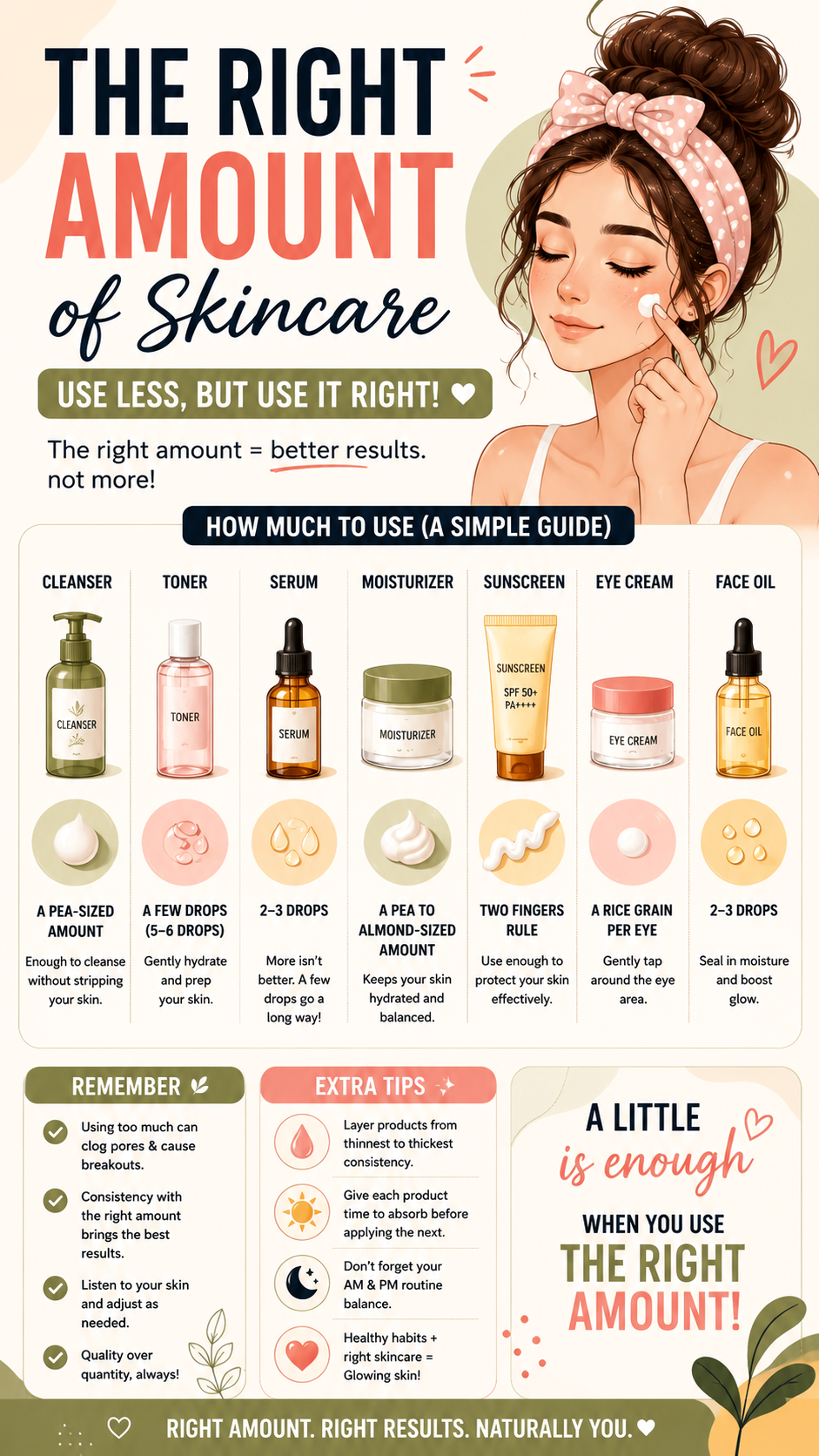
Many people assume that using more skincare products will automatically lead to better skin. In reality, the opposite is often true. Applying too much cleanser, serum, moisturizer, or sunscreen can overwhelm your skin, waste products, and sometimes even trigger irritation or breakouts. The secret to a successful skincare routine is not about quantity. It is about using the right amount of each product at the right time.
A balanced skincare routine helps your products absorb properly, work more effectively, and deliver the results you want without unnecessary waste. Whether you are new to skincare or looking to refine your daily regimen, understanding proper product amounts can make a significant difference in your skin’s appearance and health.
Key Takeaways
- Using more skincare does not necessarily improve results.
- Each product category has an ideal amount for maximum effectiveness.
- Overapplication can contribute to clogged pores and product waste.
- Layering products correctly improves absorption.
- Consistency matters more than excessive product use.
- A simple routine often delivers better long-term results.
Why Using the Correct Amount Matters
Your skin can only absorb a certain amount of product at one time. Once that limit is reached, any excess often sits on the surface, creating a heavy feeling and potentially interfering with the effectiveness of subsequent products.
Applying the proper amount allows active ingredients to work as intended while maintaining your skin’s natural balance. This approach not only improves results but also helps your skincare products last longer, saving money over time.
Important: Consistency with the correct amount of skincare products is usually far more effective than applying excessive quantities sporadically. Small daily habits often create the most noticeable improvements.
The Ideal Amount of Cleanser
Cleansing is the foundation of every skincare routine. A common mistake is using too much cleanser in the belief that it will clean the skin more thoroughly.
For most facial cleansers, a pea-sized amount is sufficient. This quantity effectively removes dirt, oil, sunscreen, and makeup residue without stripping the skin’s protective barrier.
Benefits of Using Less Cleanser
- Helps preserve natural moisture.
- Reduces the risk of dryness and irritation.
- Prevents over-cleansing.
- Extends product longevity.
If your skin feels tight or squeaky after washing, you may be using too much cleanser or cleansing too aggressively.
How Much Toner Should You Apply?
Toners are designed to refresh and prepare the skin for the next steps in your routine. Despite their lightweight consistency, only a small amount is needed.
A few drops, typically between five and six drops, are usually enough to lightly cover the face. Whether applied with clean hands or a reusable cotton pad, toner should lightly hydrate rather than saturate the skin.
Signs You Are Using Too Much Toner
- Product dripping down your face.
- Skin feeling sticky after application.
- Excessive product absorption by cotton pads.
- Rapid product depletion.
Serums: Why a Few Drops Are Enough
Serums often contain concentrated active ingredients such as vitamin C, niacinamide, peptides, or hyaluronic acid. Because they are formulated to be potent, more product does not necessarily mean better results.
For most serums, two to three drops are sufficient for the entire face. Spread the product evenly and gently press it into the skin.
Overusing serum may lead to product pilling, irritation, or unnecessary waste, especially when using active ingredients.
Expert Insight
Many high-performance serums are formulated to work effectively at very low doses. Increasing the amount rarely increases effectiveness and may actually reduce comfort and absorption.
Finding the Right Moisturizer Amount
Moisturizer plays an essential role in maintaining hydration and supporting the skin barrier. However, applying large amounts can leave skin feeling greasy and may contribute to congestion in some skin types.
A pea-sized to almond-sized amount is generally ideal for the face and neck. The exact amount may vary depending on your skin type and the richness of the formula.
Adjusting Moisturizer for Your Skin Type
- Dry skin: May benefit from a slightly larger amount.
- Oily skin: Often requires less product.
- Combination skin: Can use targeted application in drier areas.
- Sensitive skin: Benefits from gentle, even distribution.
Pro Tip: If your moisturizer takes a very long time to absorb or leaves a thick layer on the skin, try reducing the amount slightly. Often, less product provides a more comfortable finish.
Sunscreen: The Non-Negotiable Step
Sunscreen is one skincare product where underapplication is far more common than overapplication. Proper sun protection is essential for maintaining healthy skin and preventing premature signs of aging.
The widely recommended guideline is the two-finger rule. Apply sunscreen along the length of two fingers before spreading it evenly across the face and neck.
Why Sunscreen Quantity Matters
- Ensures adequate UV protection.
- Helps prevent sun damage.
- Supports anti-aging efforts.
- Reduces the appearance of uneven skin tone over time.
Even the best sunscreen formula cannot provide its intended protection if applied too sparingly.
The Correct Amount of Eye Cream
The skin around the eyes is thinner and more delicate than the rest of the face. Because of this, a tiny amount of product goes a long way.
A rice grain-sized amount per eye is typically sufficient. Gently tap the product around the orbital area using your ring finger rather than rubbing aggressively.
Applying excessive eye cream may lead to puffiness or product migration into the eyes, causing discomfort.
Using Face Oil Effectively
Face oils can be a valuable addition to a skincare routine when used appropriately. Their primary purpose is often to help seal in moisture and provide additional nourishment.
For most people, two to three drops are enough. Warm the oil between your hands and gently press it into the skin as the final step of your evening routine.
Common Face Oil Mistakes
- Using excessive amounts.
- Applying before water-based products.
- Skipping moisturizer entirely.
- Layering multiple oils unnecessarily.
The Importance of Proper Layering
The order in which you apply skincare products can be just as important as the amount you use.
A simple guideline is to move from the thinnest consistency to the thickest consistency. This approach allows each product to penetrate effectively without being blocked by heavier formulas.
Typical Layering Order
- Cleanser
- Toner
- Serum
- Moisturizer
- Face Oil
- Sunscreen in the morning
Giving each product a brief moment to absorb before applying the next one can improve comfort and performance.
Common Signs You Are Using Too Much Skincare
Many people unknowingly overload their skin with products. Learning to recognize the warning signs can help you make adjustments.
- Persistent stickiness after application.
- Product pilling or rolling on the skin.
- Frequent clogged pores.
- Increased sensitivity.
- Unnecessary product waste.
- Difficulty layering products smoothly.
Important: More skincare is not always better skincare. Overloading the skin can sometimes interfere with your routine and make it harder to identify which products are truly helping.
Creating a Sustainable Skincare Routine
One of the most effective beauty habits is developing a routine that is simple, consistent, and tailored to your skin’s needs. Rather than focusing on using numerous products in large amounts, prioritize quality formulations and proper application.
A sustainable routine helps maintain skin balance while reducing waste. It also encourages mindful skincare practices that support long-term results.
Listening to your skin remains one of the most valuable skills you can develop. Seasonal changes, environmental conditions, and individual skin concerns may occasionally require adjustments in product usage.
At a Glance
- Use a pea-sized amount of cleanser.
- Apply only a few drops of toner and serum.
- Choose a pea-sized to almond-sized amount of moisturizer.
- Follow the two-finger sunscreen guideline.
- Remember that consistency beats quantity.
Conclusion
Achieving healthy, glowing skin is not about using the most products or applying the largest amounts. Success comes from understanding what your skin needs and providing it with the right amount of each product. From cleansers and serums to moisturizers and sunscreen, proper application helps maximize effectiveness while minimizing waste and irritation.
When you focus on thoughtful skincare habits, your routine becomes more efficient, more affordable, and more enjoyable. Remember that a little can often go a long way. The right amount, applied consistently, is often the key to achieving your best skin.
Tags
Skincare Routine Skincare Tips Healthy Skin Beauty Guide Facial Care Glowing Skin Skincare Products Skin Health