
Homemade hair care continues to grow in popularity as more people look for simple, natural ways to support healthy, beautiful hair. Among the many DIY treatments available, rosemary hair oil stands out as one of the most talked-about options for promoting stronger, shinier, and healthier-looking hair. Combining nourishing carrier oils with rosemary creates a versatile treatment that can easily become part of a weekly hair care routine.
Whether your goal is to reduce breakage, improve scalp care, add shine, or simply enjoy a more natural approach to beauty, rosemary hair oil offers a straightforward solution that is easy to prepare at home. With just a handful of ingredients and a little patience, you can create a luxurious oil blend that supports overall hair wellness.
Key Takeaways
- Rosemary hair oil is a popular DIY treatment for scalp and hair care.
- Natural oils can help improve softness, shine, and manageability.
- Regular scalp massage may support healthier-looking hair growth.
- Simple ingredients make this recipe affordable and easy to prepare.
- Consistent use often delivers the best long-term results.
Why Rosemary Hair Oil Has Become So Popular
Rosemary has long been valued in traditional beauty routines. Its refreshing aroma and reputation for supporting scalp health have made it a favorite ingredient in countless hair care products. Today, many people choose to incorporate rosemary into homemade oil blends because it offers a natural alternative to heavily processed treatments.
When infused into nourishing oils, rosemary creates a treatment that can be applied directly to the scalp and hair strands. This combination delivers hydration, helps reduce dryness, and contributes to a healthier environment for hair.
Important: Consistency is often more valuable than intensity when using natural hair treatments. Applying rosemary hair oil regularly over time is generally more beneficial than using large amounts infrequently.
Understanding the Ingredients
A well-balanced rosemary hair oil recipe typically combines several ingredients that work together to nourish the scalp and improve the appearance of hair.
Castor Oil
Castor oil is known for its rich, thick texture. It is commonly included in hair care routines because it helps coat hair strands, reducing the appearance of dryness and promoting a smoother feel.
- Provides deep moisture.
- Creates a protective coating on hair strands.
- Supports softer, more manageable hair.
Coconut Oil
Coconut oil remains one of the most popular beauty ingredients worldwide. Its lightweight nature allows it to penetrate hair strands more effectively than some heavier oils.
- Helps reduce dryness.
- Adds natural shine.
- Improves hair softness.
Rosemary
Rosemary is the star ingredient in this recipe. Fresh or dried rosemary can be infused into oils to create a fragrant treatment that supports scalp care and contributes to healthier-looking hair.
- Supports scalp wellness.
- Adds a refreshing herbal scent.
- Pairs well with other natural oils.
Vitamin E
Vitamin E is commonly added to homemade beauty products because of its antioxidant properties. It can also help extend the shelf life of oil-based mixtures.
- Provides antioxidant support.
- Enhances homemade oil blends.
- Complements nourishing ingredients.
Benefits of DIY Rosemary Hair Oil
People choose rosemary hair oil for many reasons. While results vary from person to person, several commonly reported benefits make it a popular addition to natural beauty routines.
May Support Healthier-Looking Hair Growth
A healthy scalp is an important foundation for healthy hair. Regular scalp massage with nourishing oils may help create optimal conditions for maintaining stronger-looking hair over time.
Helps Reduce Dryness
Dry hair often appears dull and brittle. The moisturizing properties of castor oil and coconut oil can help improve softness while reducing roughness.
Adds Shine
One of the most noticeable benefits of oil treatments is enhanced shine. Well-moisturized hair reflects light more effectively, creating a smoother and healthier appearance.
Supports Scalp Comfort
Regular scalp care can contribute to overall hair health. Massaging rosemary-infused oil into the scalp encourages attention to scalp wellness and self-care.
Expert Insight
Scalp massage is often overlooked, yet it can be one of the most enjoyable and beneficial parts of a hair care routine. Taking a few extra minutes to gently massage the oil into the scalp may improve product distribution and enhance relaxation.
How to Make Rosemary Hair Oil at Home
Creating rosemary hair oil requires only a few simple ingredients and minimal equipment.
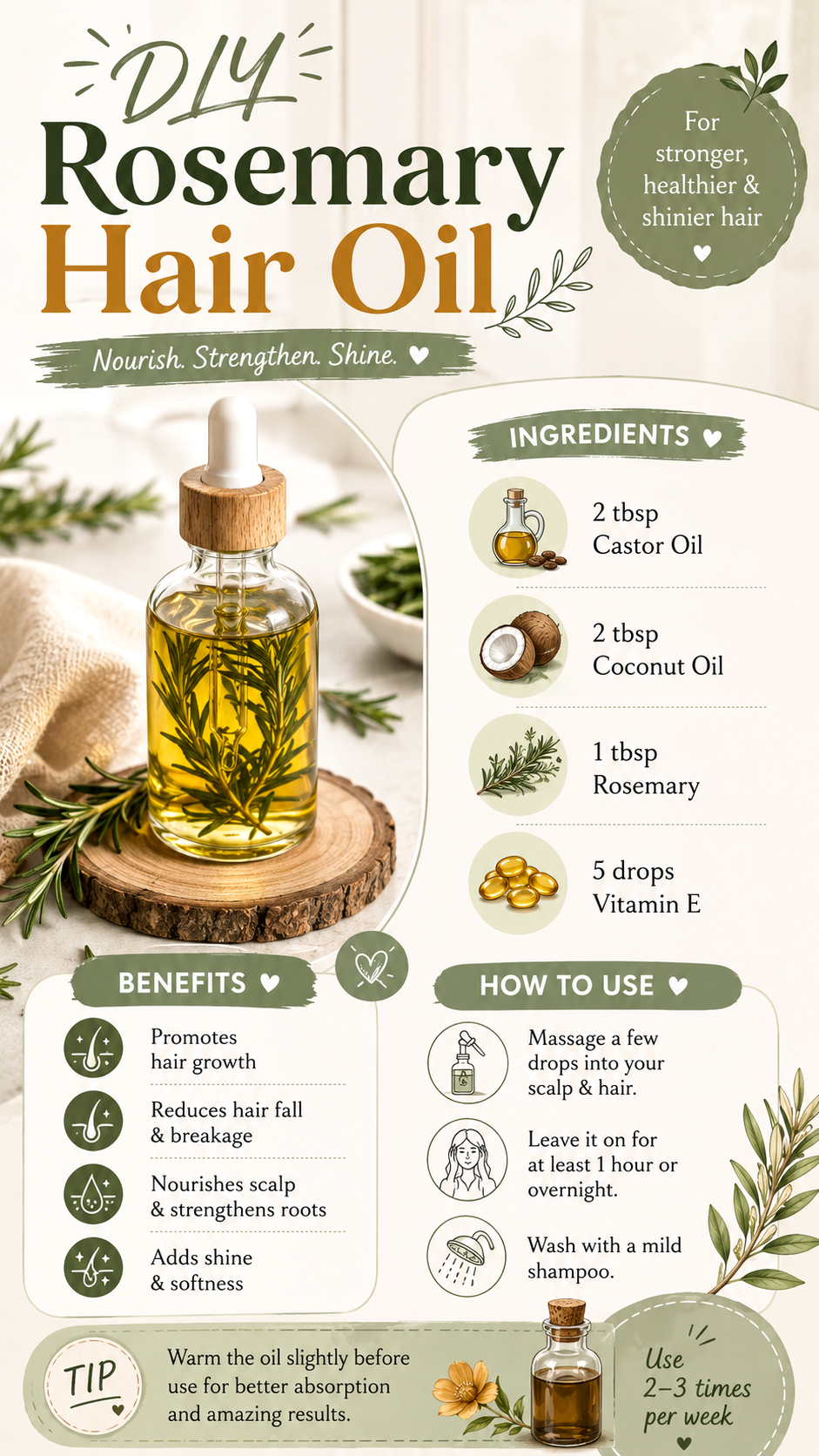
Ingredients
- 2 tablespoons castor oil
- 2 tablespoons coconut oil
- 1 tablespoon rosemary
- 5 drops vitamin E
Preparation Steps
- Combine castor oil and coconut oil in a clean container.
- Add rosemary to the oil mixture.
- Allow the rosemary to infuse into the oils.
- Add vitamin E and mix thoroughly.
- Store the blend in a clean glass bottle.
The result is a nourishing oil treatment that can be used throughout the week as part of a regular beauty routine.
How to Apply Rosemary Hair Oil
Proper application can help maximize the benefits of any hair oil treatment.
Step 1: Apply to the Scalp
Use a dropper or fingertips to distribute a small amount of oil directly onto the scalp.
Step 2: Massage Gently
Massage using circular motions for several minutes. This helps spread the oil evenly and creates a relaxing self-care experience.
Step 3: Leave It On
The oil can remain on the hair for at least one hour. Many people prefer leaving it overnight for added convenience.
Step 4: Wash Thoroughly
Use a gentle shampoo to remove excess oil while preserving the hair’s natural moisture balance.
Pro Tip: Slightly warming the oil before application may improve spreadability and create a more luxurious treatment experience.
Best Practices for Consistent Results
Natural hair care products often work best when used consistently. Creating a simple routine can make a significant difference.
- Use the treatment two to three times per week.
- Apply evenly to both scalp and hair lengths.
- Store the oil in a cool, dry place.
- Use clean tools and containers.
- Track your routine for better consistency.
Common Mistakes to Avoid
Using Too Much Oil
Applying excessive amounts can make washing more difficult and leave hair feeling heavy.
Skipping Regular Use
Many people expect immediate results. However, natural beauty routines generally require patience and consistency.
Neglecting Scalp Care
The scalp plays a crucial role in overall hair health. Focusing only on hair strands may limit potential benefits.
Who Can Benefit From Rosemary Hair Oil?
This DIY treatment appeals to a wide variety of people, including those interested in natural beauty, homemade self-care products, and simplified hair routines.
- Individuals seeking shinier hair.
- People looking to nourish dry hair.
- Fans of botanical beauty products.
- Those building a natural hair care routine.
- DIY beauty enthusiasts.
Important: Homemade hair treatments can complement a healthy hair care routine, but long-term results are often influenced by overall hair habits, consistency, and individual hair characteristics.
At a Glance
- Simple DIY recipe with four ingredients.
- Supports scalp nourishment and hair softness.
- Easy to use two to three times weekly.
- Adds shine and improves manageability.
- Affordable addition to a natural beauty routine.
Conclusion
DIY rosemary hair oil offers a simple and enjoyable way to enhance a natural hair care routine. Combining rosemary, castor oil, coconut oil, and vitamin E creates a nourishing treatment designed to support scalp care, improve softness, and add beautiful shine. Its affordability, ease of preparation, and versatility make it a favorite among people seeking more natural beauty solutions.
By applying the oil consistently, practicing regular scalp massage, and maintaining realistic expectations, you can enjoy the benefits of a homemade treatment that fits seamlessly into your self-care routine. Whether your goal is stronger-looking hair, enhanced shine, or improved scalp care, rosemary hair oil remains a timeless DIY beauty staple worth exploring.
Tags
Rosemary Hair Oil DIY Hair Care Hair Growth Tips Natural Hair Care Scalp Care Homemade Beauty Healthy Hair Beauty DIY