
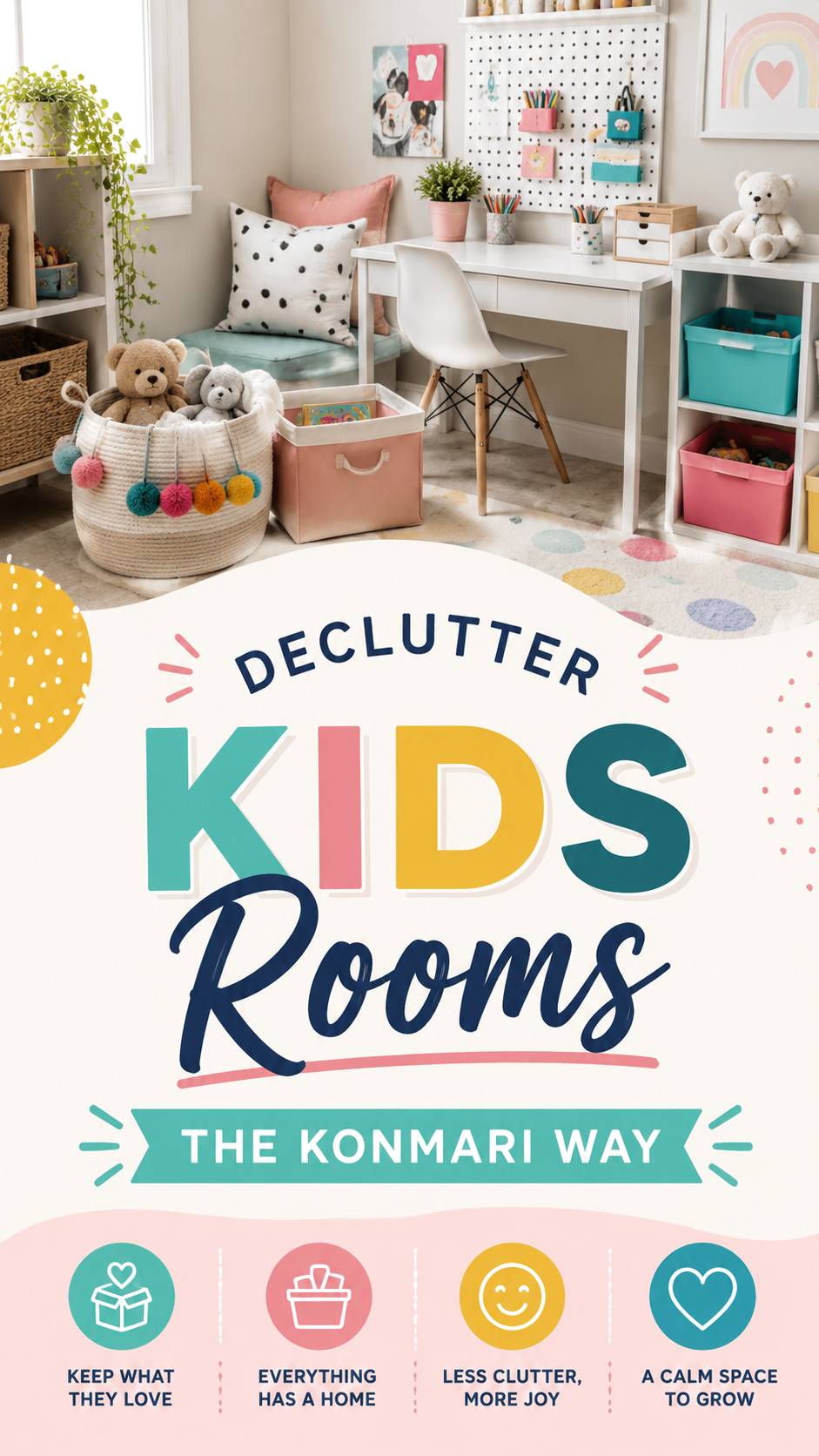
Kids room organization can feel like a never-ending cycle of toys, books, clothes, craft supplies, stuffed animals, and tiny treasures appearing in every corner. A child’s room is meant to be playful and full of personality, but it also needs simple systems that make cleanup feel possible. The best kids organization hacks are not about creating a picture-perfect space that never gets messy. They are about designing a room where every item has a home, children can find what they love, and parents can reset the space without feeling overwhelmed.
The cheerful, tidy kids room style seen in modern organization inspiration is built around a few smart choices: open storage, soft bins, a functional desk area, playful color, and easy-to-reach categories. When these details come together, the room feels calm without losing its fun. A child can still play, create, read, collect, imagine, and make memories, but the clutter no longer controls the space.
Key Takeaways
- Use child-friendly storage so kids can help maintain their own space.
- Group toys, books, craft supplies, and keepsakes into clear categories.
- Choose bins, baskets, shelves, and desk organizers that are easy to access.
- Keep favorite items visible while reducing excess clutter.
- Create zones for play, creativity, reading, and daily routines.
- Use simple KonMari-inspired habits to keep only what feels loved and useful.
Why Kids Room Organization Matters
A cluttered room can make everyday routines harder. Clothes get buried, favorite toys disappear, school supplies scatter, and bedtime cleanup becomes stressful. Kids are naturally active and creative, so mess is part of life. The goal is not to stop the mess from happening. The goal is to make the reset simple enough that everyone can participate.
When a child’s room is organized well, the space becomes easier to use. A desk can become a place for drawing, writing, or homework. A shelf can become a display for special toys and books. A basket can collect stuffed animals in seconds. A storage cube can turn a pile of clutter into an inviting play area.
Important: The best kids organization hacks work because they match real family life. They do not require perfection. They simply make it easier to put things away, see what matters, and keep the room feeling calm.
The KonMari-Inspired Approach for Kids Rooms
The KonMari method is often associated with keeping items that spark joy, but in a child’s room, the idea becomes even more practical. Children usually know which toys, books, stuffed animals, and art supplies they reach for again and again. When you organize around those favorites, the room becomes more meaningful and less crowded.
Instead of forcing a child to give up everything at once, begin with one small category. Start with stuffed animals, then move to books, craft supplies, dress-up clothes, small toys, or desk items. This keeps the process manageable and helps children build confidence as they make choices.
Keep What They Actually Love
Children often collect things quickly. Tiny toys, prize box items, party favors, drawings, stickers, and random pieces can multiply before anyone notices. A helpful first step is to separate what is truly loved from what is simply taking up space.
Ask simple questions. Do they still play with it? Does it belong to a favorite set? Is it broken? Does it make them happy when they see it? These questions help children understand that organizing is not about losing their belongings. It is about making room for the things they enjoy most.
Give Every Item a Home
One of the strongest organization ideas for kids rooms is assigning a clear home to each category. Blocks go in one bin. Art supplies go on the desk or pegboard. Stuffed animals go in a soft basket. Books go on a low shelf. Dress-up clothes go in a labeled container or hanging rack.
When the storage location is obvious, cleanup becomes less confusing. Kids do not have to guess where things belong, and parents do not have to reorganize the whole room after every play session.
Create Simple Zones in the Room
A well-organized kids room often has clear zones. These zones do not need to be large or expensive. A small desk can become a creativity zone. A basket beside a chair can become a cozy reading corner. A cube shelf with colorful bins can become a toy storage wall. A soft rug can become the play zone.
Zones make the room easier for children to understand. Instead of seeing one big messy space, they see smaller areas with specific purposes. This also helps when it is time to clean because each zone can be reset one at a time.
The Play Zone
The play zone should have the easiest storage system in the room. Soft baskets, open bins, cube shelves, and low containers are all great options because kids can use them independently. For younger children, avoid complicated lids or containers that are too heavy to move.
Place the most-used toys where children can reach them. Less-used toys can go higher, in a closet, or in a rotation bin. This keeps the visible space from feeling crowded while still allowing variety over time.
The Creative Desk Zone
A tidy desk area can encourage children to draw, write, read, and work on small projects. A clean tabletop, a comfortable chair, and simple organizers make the area feel inviting. Pencil cups, small drawers, wall pegboards, and desktop trays are all useful for keeping supplies contained.
Try to avoid storing too many unrelated items on the desk. When a workspace becomes a drop zone for toys, clothes, and random clutter, children are less likely to use it. Keep the surface mostly clear and store supplies nearby.
Pro Tip: A child’s desk does not need to be perfectly styled. It simply needs a clear surface, a few favorite supplies, and storage that can be reset in under five minutes.
The Reading and Rest Zone
Every kids room benefits from a small calming corner. This can be a window seat, floor cushion, soft chair, or simple rug with a basket of books. Keeping this area uncluttered helps create a sense of comfort, especially before bedtime.
Books should be stored in a way that invites use. Forward-facing shelves, small book bins, or low baskets can help kids see their options. If the collection is large, rotate books seasonally or by interest.
Use Bins and Baskets That Kids Can Understand
Storage is only helpful when children can actually use it. Matching containers may look beautiful, but they should also be practical. Choose bins that are sturdy, easy to pull out, and sized for the items inside. A giant bin full of mixed toys can become a problem because everything gets dumped out to find one thing. Smaller category-based bins usually work better.
For a cheerful kids organization style, consider mixing soft colors with clean neutrals. Aqua, blush, yellow, navy, white, and natural woven textures can make storage feel playful without looking chaotic. The room can feel bright and child-friendly while still looking organized.
Label Storage in a Kid-Friendly Way
Labels are one of the easiest kids organization hacks because they remove guesswork. For readers, use simple words like books, blocks, dolls, cars, art, puzzles, or stuffed animals. For younger children, add picture labels or color-coded stickers.
Labels also help other family members. When grandparents, babysitters, siblings, or friends help clean up, the system is easy to follow. This creates consistency, which is the secret to making organization last.
Choose Open Storage for Everyday Items
Open bins and baskets are ideal for items used daily. If children can toss toys into a basket without opening a lid, they are more likely to clean up quickly. Open storage also makes it easier to see when a category is overflowing.
Use closed storage for items that need protection, such as keepsakes, seasonal items, or delicate craft supplies. The more frequently something is used, the easier it should be to reach.
Expert Insight
A kids room stays organized longer when the storage system is simpler than the mess. If putting something away takes too many steps, the item will usually land on the floor, desk, or bed instead.
Smart Toy Storage Ideas for a Calm Room
Toy storage is often the biggest challenge in a child’s room. Toys come in different sizes, shapes, and categories, and many sets include small pieces that are easy to lose. The solution is to create simple boundaries.
Each category needs a container that fits the amount you want to keep. If the bin is overflowing, it may be time to declutter or rotate. A toy collection becomes easier to enjoy when it is not packed so tightly that nothing can be found.
Try Toy Rotation
Toy rotation is one of the most effective kids organization hacks for families with limited space. Instead of keeping every toy available all the time, choose a smaller selection to display and store the rest away. After a few weeks, swap some toys out.
This keeps the room feeling fresh without buying more. It also helps children focus more deeply on what is available. Too many choices can make play feel scattered, while a smaller selection can feel exciting and manageable.
Separate Small Pieces
Small pieces can make a room look messy very quickly. Use zipper pouches, clear boxes, drawer dividers, or small bins for tiny toys, game pieces, building sets, and craft supplies. Keep complete sets together whenever possible.
For puzzles and games, consider using labeled pouches instead of bulky boxes if space is tight. Just be sure to keep instructions or images with the pieces so the set remains easy to use.
How to Organize a Kids Desk Without Overcomplicating It
A desk can easily become one of the messiest spots in a child’s room because it collects papers, pencils, art projects, toys, books, and random objects. The trick is to keep desk organization simple and visual.
Use a few containers instead of many tiny systems. One cup for pencils, one tray for current papers, one small drawer for extras, and one bin for art supplies may be enough. A wall pegboard or shelf can free up desk space while keeping favorite supplies visible.
Limit What Lives on the Desktop
The desktop should be mostly clear so children can actually use it. Keep only daily essentials on top. Extra markers, craft supplies, notebooks, stickers, and paper can go in drawers, bins, or a nearby cart.
This one change can make the entire room feel cleaner. A clear desk creates visual calm and makes creative activities more inviting.
Important: A beautiful kids desk is not useful if it cannot handle real projects. Leave room for drawing, homework, reading, and creative messes, then give supplies an easy place to return afterward.
Decluttering with Kids Without Stress
Decluttering a child’s room can feel emotional because toys and keepsakes often hold memories. The process works best when it feels respectful and collaborative. Instead of removing items secretly, invite the child into the decision-making process when appropriate.
Start with items that are clearly easier to decide on, such as broken toys, dried-out markers, outgrown clothes, duplicate items, or incomplete sets that no longer get used. Save sentimental items for later because those choices can be harder.
Use Gentle Questions
Children may feel protective of their belongings, even things they rarely use. Gentle questions help them think without pressure. You can ask, “Do you still play with this?” or “Would another child enjoy this more?” or “Is this one of your favorites?”
The goal is to build decision-making skills. Over time, kids learn that letting go of unused items creates more room for the toys and activities they truly enjoy.
Create a Maybe Bin
A maybe bin is helpful for items your child is unsure about. Place the items inside, store the bin out of sight, and revisit it after a few weeks. If the child has not asked for the items, it may be easier to donate or pass them along.
This reduces conflict and gives children time to adjust. It also prevents quick decisions that might lead to regret.
Make Cleanup Part of the Daily Rhythm
Organization works best when cleanup is part of the day, not a huge weekend project. A five-minute reset before dinner or bedtime can keep the room from reaching overwhelming levels of clutter.
Use a timer, a favorite song, or a simple cleanup checklist. Keep the routine short and predictable. Children are more likely to cooperate when cleanup feels like a normal habit rather than a punishment.
Try the One Basket Reset
The one basket reset is simple. Walk through the room with one empty basket and collect anything that is out of place. Then return items to their correct homes. This works especially well when the storage system is already clear.
For younger kids, turn it into a game. Ask them to find all the books first, then all the stuffed animals, then all the blocks. Sorting by category makes cleanup easier to understand.
Use Visual Reminders
A small picture checklist can help children remember the steps: put toys in bins, place books on the shelf, return clothes to the hamper, clear the desk, and make the bed. Visual routines reduce the need for repeated reminders.
Keep the list short. Too many steps can feel overwhelming. Three to five clear actions are usually enough for a daily room reset.
Design Details That Help the Room Feel Organized
Organization is practical, but design matters too. A room with soft colors, clean lines, cozy textures, and playful accents can feel inviting while still supporting order. A woven basket, colorful storage bins, a cheerful rug, and a simple desk setup can make the room feel finished.
Choose decor that supports the room’s function. Wall shelves can display favorite books or keepsakes. Pegboards can organize supplies. Baskets can soften the look of toy storage. A bright rug can define the play area while adding personality.
Keep the Color Palette Cheerful but Balanced
Kids rooms can handle color beautifully, but too many competing colors can make clutter feel louder. Try using a neutral base with a few happy accent colors. White, cream, light wood, soft gray, or beige can ground the room, while pink, teal, yellow, or blue can add playful energy.
This approach works especially well with storage. Colorful bins can help kids identify categories, while neutral furniture keeps the room from feeling too busy.
Use Soft Textures for Warmth
Organization does not have to look cold. Soft baskets, cushions, rugs, fabric bins, and stuffed animal storage can make the room feel cozy. These textures help a tidy room still feel childlike and comfortable.
A calm kids room should feel lived in. The goal is a space that can handle play, creativity, and rest while still being easy to maintain.
At a Glance
- Start small with one category instead of the whole room.
- Use open bins and baskets for everyday toys.
- Keep the desk surface clear and ready for activities.
- Label storage so kids know where everything belongs.
- Build a quick daily reset into the routine.
Conclusion: A Kids Room That Feels Calm, Useful, and Joyful
Kids organization hacks are most successful when they make life easier for both children and parents. A tidy room is not about removing all personality or expecting children to keep everything perfect. It is about creating simple systems that support play, learning, creativity, and rest.
By using KonMari-inspired decision-making, easy storage bins, clear zones, labeled containers, and quick daily resets, any kids room can become more peaceful and functional. The room can still feel colorful, warm, and full of imagination, but the clutter has boundaries. When children can see what they love and know where things belong, cleanup becomes less stressful and the space becomes more enjoyable for everyone.
Final Thought: A well-organized kids room is not a one-time makeover. It is a flexible system that grows with your child, supports daily routines, and makes space for more calm, creativity, and joy.
Tags
Kids Organization Toy Storage Ideas Declutter Kids Room KonMari Kids Playroom Storage Kids Room Ideas Home Organization Mom Hacks