
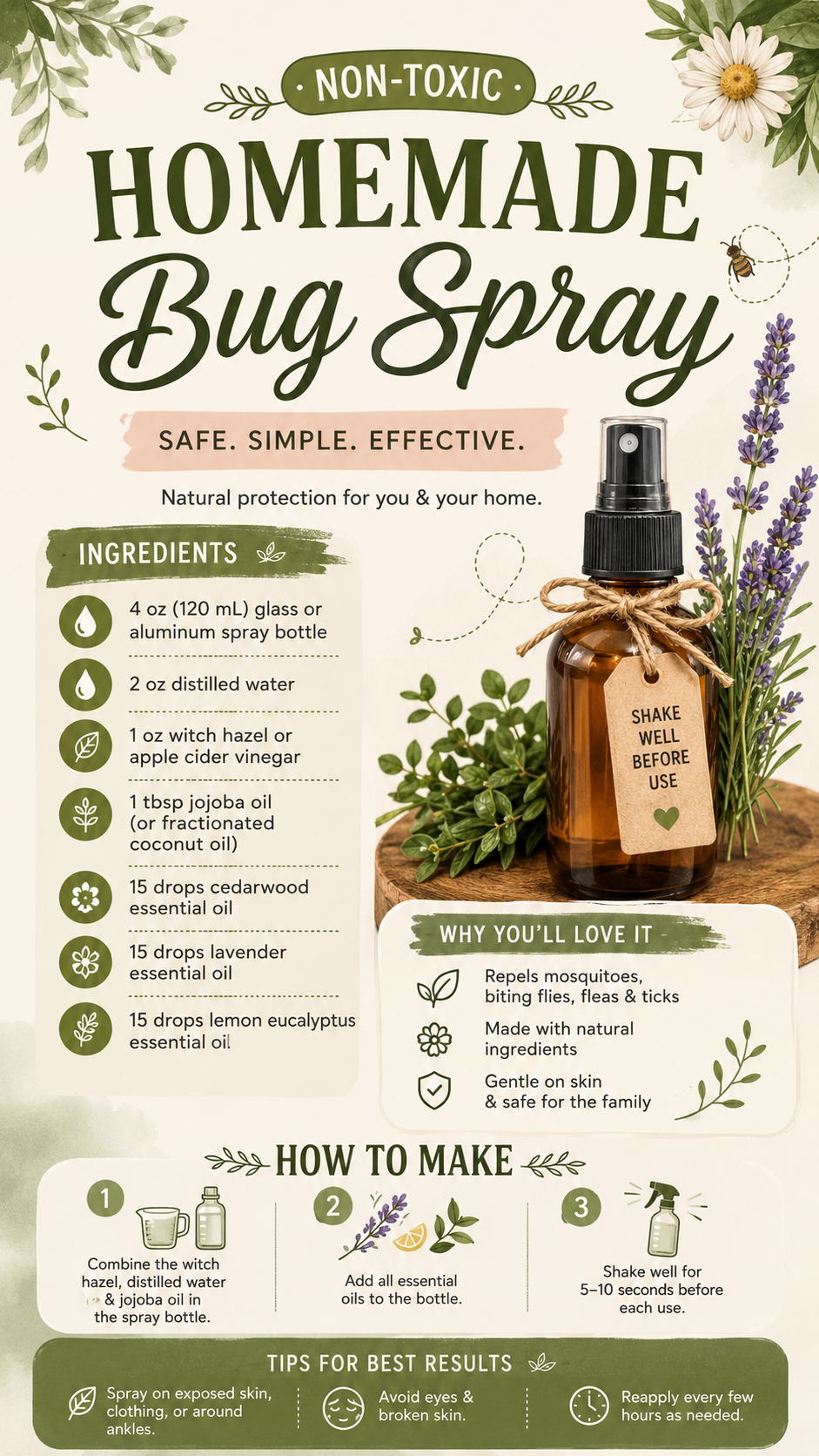
Natural bug repellents have become a popular choice for families, outdoor enthusiasts, and anyone looking to reduce their exposure to harsh chemicals. A homemade bug spray made with carefully selected ingredients offers a practical way to help discourage mosquitoes, biting flies, fleas, and ticks while using simple components that are easy to find. Whether you are preparing for summer adventures, relaxing in your backyard, or heading out on a hiking trip, creating your own insect repellent can be both rewarding and cost effective.
Making a DIY bug spray also gives you complete control over the ingredients. You can choose high-quality essential oils, adjust the scent to your preference, and avoid unnecessary additives commonly found in commercial products. While natural repellents may require more frequent application than some synthetic alternatives, many people appreciate the gentle approach they provide.
Key Takeaways
- Homemade bug spray uses simple natural ingredients.
- Essential oils can help discourage mosquitoes and other biting insects.
- Carrier oils help dilute essential oils and support skin comfort.
- Proper mixing and regular reapplication improve effectiveness.
- Always perform a patch test before widespread use.
Why More People Are Choosing Homemade Bug Spray
Natural living continues to influence everything from cleaning products to skincare, and insect repellents are no exception. Many people enjoy creating their own household essentials because they know exactly what goes into every bottle. A homemade bug spray fits perfectly into this lifestyle by combining practical protection with recognizable ingredients.
Important: A homemade insect repellent works best as part of a complete outdoor protection strategy. Wearing long sleeves, avoiding standing water, and limiting exposure during peak mosquito activity can greatly improve your overall defense against biting insects.
Understanding the Ingredients
Distilled Water
Distilled water provides a clean base for the spray. Because it contains fewer impurities than tap water, it helps create a more stable mixture.
Witch Hazel
Witch hazel is frequently included in natural body sprays because it blends well with essential oils and provides a refreshing feel when applied to the skin.
Jojoba Oil
Jojoba oil serves as a lightweight carrier oil that helps dilute essential oils before they come into contact with the skin. It also contributes a moisturizing touch.
Essential Oils
The featured recipe highlights cedarwood, lavender, and lemon eucalyptus essential oils. These oils are widely recognized in DIY bug spray recipes because of their pleasant aroma and their traditional use in helping discourage insects.
- Cedarwood offers an earthy, woodsy scent.
- Lavender provides a calming floral fragrance.
- Lemon eucalyptus delivers a fresh citrus aroma that is commonly associated with natural mosquito repellents.
Expert Insight
Consistency matters more than quantity. A light, even application followed by timely reapplication generally provides better coverage than applying a heavy amount once and forgetting about it for the rest of the day.
How to Make Your Homemade Bug Spray
The process is straightforward and requires only a few minutes.
- Add distilled water to a clean spray bottle.
- Pour in witch hazel.
- Add the carrier oil.
- Carefully add the essential oils.
- Close the bottle securely.
- Shake thoroughly before every use.
The ingredients naturally separate over time, making it important to shake the bottle well before each application.
How to Use It Effectively
Apply the spray to exposed skin and clothing before heading outdoors. Pay special attention to ankles, wrists, arms, and other areas where insects often gather. Reapply every few hours, particularly if you are sweating or spending an extended period outside.
Avoid spraying directly into your eyes, mouth, or onto broken skin. When applying to your face, spray the mixture onto your hands first before gently patting it onto the skin.
Pro Tip: Keep a travel-sized spray bottle in your backpack, picnic basket, beach bag, or car. Having it nearby makes regular reapplication much easier during outdoor activities.
Benefits of Natural Bug Spray
- Simple ingredients that are easy to recognize.
- Customizable fragrance based on essential oil preferences.
- Quick and inexpensive to prepare.
- Ideal for gardening, hiking, camping, and backyard gatherings.
- Reusable spray bottles help reduce waste.
When Natural Repellents Work Best
Homemade insect sprays are especially useful for everyday outdoor activities such as gardening, walking the dog, relaxing on the patio, family barbecues, and short hikes. During periods of intense insect activity, more frequent application may be necessary to maintain coverage.
Helpful Storage Tips
- Store the spray in a cool, dry location.
- Keep the bottle away from direct sunlight.
- Label the bottle with the preparation date.
- Shake thoroughly before each use.
- Discard the mixture if it develops an unusual odor or appearance.
Safety Tips to Remember
Although natural ingredients are popular in DIY recipes, they still deserve careful handling. Essential oils are concentrated and should always be properly diluted. Conduct a small patch test before regular use, especially if you have sensitive skin.
Important: Some essential oils may not be appropriate for young children, pets, or individuals with specific health conditions. Review reliable safety guidance for each oil you use and discontinue use if irritation occurs.
Making Your Outdoor Time More Enjoyable
One of the biggest advantages of preparing your own bug spray is the confidence that comes from knowing every ingredient inside the bottle. The pleasant botanical scent can make outdoor experiences more enjoyable while supporting a simple, natural lifestyle.
Whether you are tending your garden, exploring local trails, enjoying an evening picnic, or simply relaxing on your porch, a thoughtfully prepared homemade insect repellent can become a useful addition to your seasonal routine.
At a Glance
- Shake well before every application.
- Reapply regularly during outdoor activities.
- Store in a cool location away from sunlight.
- Always perform a skin patch test first.
- Pair with protective clothing for better results.
Conclusion
A homemade bug spray offers a practical and customizable way to help discourage mosquitoes, biting flies, fleas, and ticks using simple ingredients that many people already keep on hand. It combines convenience, flexibility, and a naturally inspired approach that fits well into everyday outdoor living.
By choosing quality ingredients, mixing them carefully, storing the spray correctly, and reapplying it as needed, you can create a reliable companion for camping trips, garden projects, family picnics, hiking adventures, and relaxing afternoons outside. With just a few minutes of preparation, you can enjoy a simple DIY solution that supports a more comfortable outdoor experience.
Tags
Homemade Bug Spray Natural Bug Repellent DIY Essential Oils Mosquito Repellent Eco Friendly Living Outdoor Tips Summer DIY