
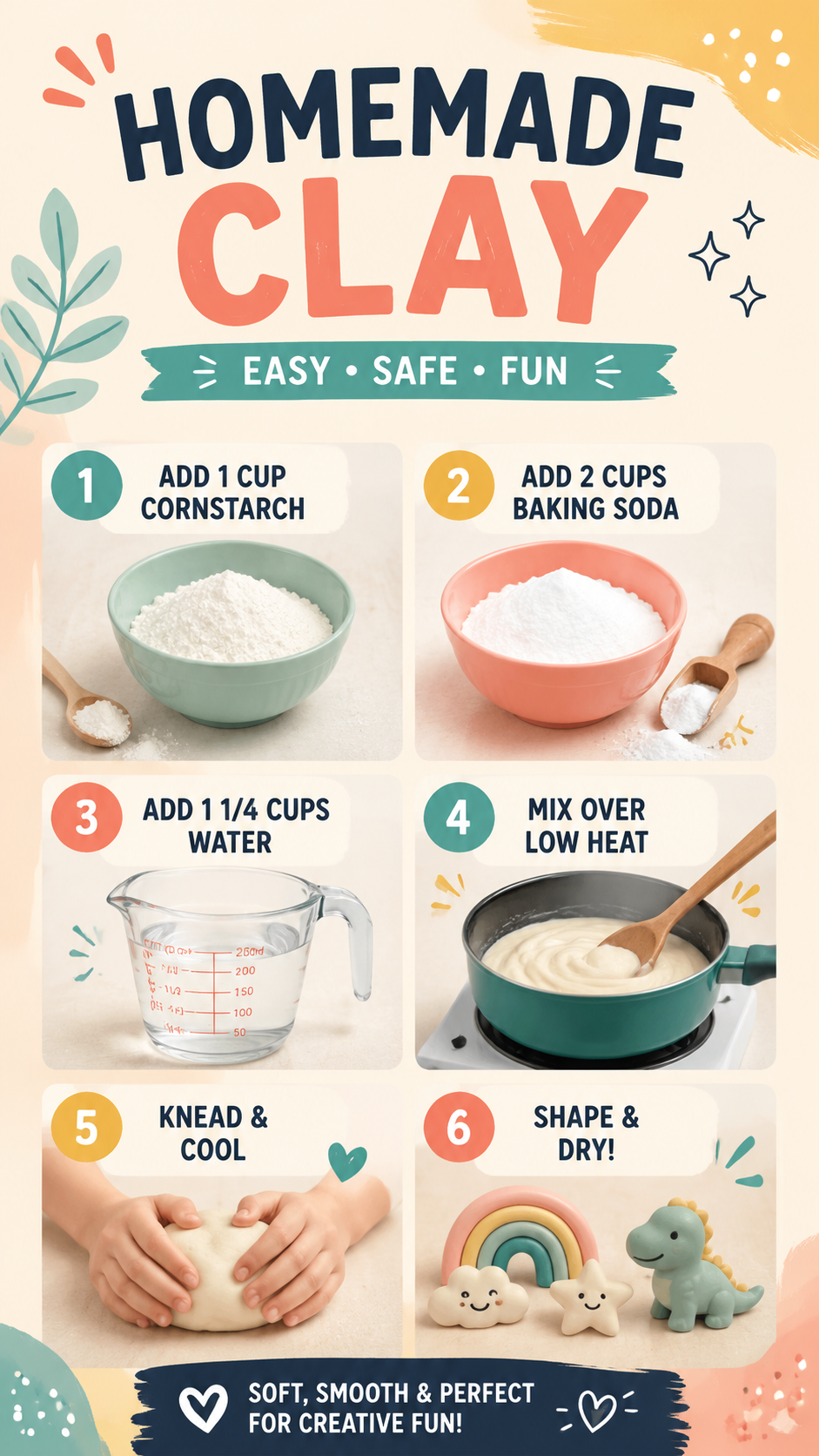
Homemade clay crafts for kids offer a simple, affordable, and highly creative way to bring hands-on learning into everyday life. Based on an easy DIY method using basic kitchen ingredients, this activity transforms everyday materials into a soft, moldable clay that children can shape, sculpt, and enjoy for hours. It is a perfect blend of fun and learning, encouraging imagination while supporting sensory development and fine motor skills.
Key Takeaways
- Easy homemade clay uses simple household ingredients for quick preparation
- Perfect for sensory play and early childhood development
- Encourages creativity, imagination, and hands-on learning
- Ideal for indoor activities, classrooms, or weekend crafts
- Safe and budget-friendly alternative to store-bought clay
Why Homemade Clay Crafts for Kids Are So Popular
DIY clay activities have become a favorite among parents, teachers, and caregivers because they combine creativity with learning in a very natural way. Children are naturally drawn to tactile experiences, and clay offers a unique medium where they can explore shapes, textures, and ideas freely. Unlike structured toys, clay encourages open-ended play, which is essential for cognitive development.
Important: One of the biggest advantages of homemade clay is that it is made from safe, edible-style ingredients often found in the kitchen. This makes it a more reassuring option for younger children who are still exploring objects with their hands and curiosity.
In addition to being fun, clay crafting also supports emotional expression. Kids often use shapes and figures to communicate feelings they may not yet have the words for. This makes clay an excellent tool for both education and emotional growth.
Simple Ingredients for Easy Homemade Clay
The beauty of this DIY activity lies in its simplicity. Most homemade clay recipes rely on common pantry items, making it accessible to almost everyone. The combination typically includes cornstarch, baking soda, and water, which together create a soft, pliable dough when heated and mixed properly.
These ingredients react when combined and warmed, forming a smooth texture that can be easily molded. The final consistency depends on the balance of dry and wet components, which is why gradual mixing is important.
Pro Tip: Always add water slowly while mixing. This helps prevent the mixture from becoming too sticky or too runny, ensuring the perfect clay texture for shaping and crafting.
Step-by-Step Process for Making Homemade Clay
Creating homemade clay is a simple process that can be turned into a fun family activity. Kids can even participate in certain steps under supervision, making it an interactive experience from start to finish.
Mixing the Dry Ingredients
Start by combining cornstarch and baking soda in a bowl. This forms the base of the clay. Mixing these dry ingredients thoroughly ensures an even texture later when water is added.
Adding Water Gradually
Slowly pour water into the mixture while stirring continuously. The transformation begins as the ingredients start forming a thick paste. The texture should be smooth and lump-free.
Heating the Mixture
The mixture is then heated over low heat while being stirred constantly. This step is crucial as it helps bind the ingredients together and creates a dough-like consistency. Patience is key during this stage.
Expert Insight
Consistent low heat is essential. If the heat is too high, the mixture may dry too quickly or form uneven textures. Slow heating ensures a smooth, flexible clay that is easy for kids to shape and reuse.
Cooling and Kneading
Once the mixture reaches a dough-like consistency, it should be removed from heat and allowed to cool. After cooling, kneading the clay helps improve its elasticity and smoothness. This step is especially enjoyable for kids as it feels like working with real dough.
Shaping and Drying
Now comes the most exciting part: shaping. Kids can create animals, stars, hearts, or any imaginative design they like. Once shaped, the clay pieces should be left to dry completely to harden and preserve their form.
Creative Ideas for Kids Clay Crafts
Homemade clay opens the door to endless creative possibilities. Children can explore different themes and projects depending on their interests and imagination. This flexibility is what makes clay such a powerful creative tool.
Some popular ideas include making small figurines, alphabet letters, holiday decorations, or simple shapes like circles and stars. These projects can also be integrated into learning activities, such as spelling games or counting exercises.
Important: Encourage children to experiment freely without focusing on perfection. The goal is creative expression, not flawless results. This approach builds confidence and encourages independent thinking.
Benefits of Clay Crafts for Child Development
Clay crafting is more than just a fun activity. It plays an important role in early childhood development. Working with clay strengthens hand muscles, improves coordination, and enhances fine motor skills.
It also supports sensory development as children engage with different textures and forms. The act of shaping clay helps improve concentration and patience, especially when completing detailed designs.
In group settings, clay activities also encourage collaboration and communication. Children often share tools, ideas, and creations, building social skills in the process.
Safety Tips for Homemade Clay Activities
Although homemade clay is generally safe, adult supervision is recommended during the cooking and heating stages. Ensuring the mixture is not overheated helps maintain safety and consistency.
It is also important to store unused clay in an airtight container to prevent it from drying out. This allows children to reuse it for multiple crafting sessions.
Why This Matters
Hands-on activities like clay crafting support early development in a way digital toys cannot. They engage multiple senses, encourage imagination, and help children build essential life skills through play-based learning.
Troubleshooting Common Clay Issues
Sometimes homemade clay may turn out too sticky or too dry. If the mixture is sticky, adding a small amount of cornstarch can help balance the texture. If it is too dry, a few drops of water can restore softness.
Consistency is key, and small adjustments often make a big difference. The goal is a smooth, pliable dough that holds its shape without cracking.
At a Glance
- Made from simple kitchen ingredients
- Easy step-by-step DIY process
- Perfect for kids’ creative learning
- Supports sensory and motor skill development
- Great for home, school, or group activities
Conclusion
Homemade clay crafts for kids are a timeless and meaningful activity that combines creativity, learning, and fun. From mixing simple ingredients to shaping imaginative figures, every step offers an opportunity for growth and exploration. Whether used at home or in the classroom, this DIY project provides lasting value beyond just entertainment. It nurtures creativity, strengthens skills, and creates memorable hands-on experiences that children will enjoy again and again.
Tags
clay crafts for kids DIY clay homemade clay recipe kids crafts sensory play creative activities for children easy kids DIY