
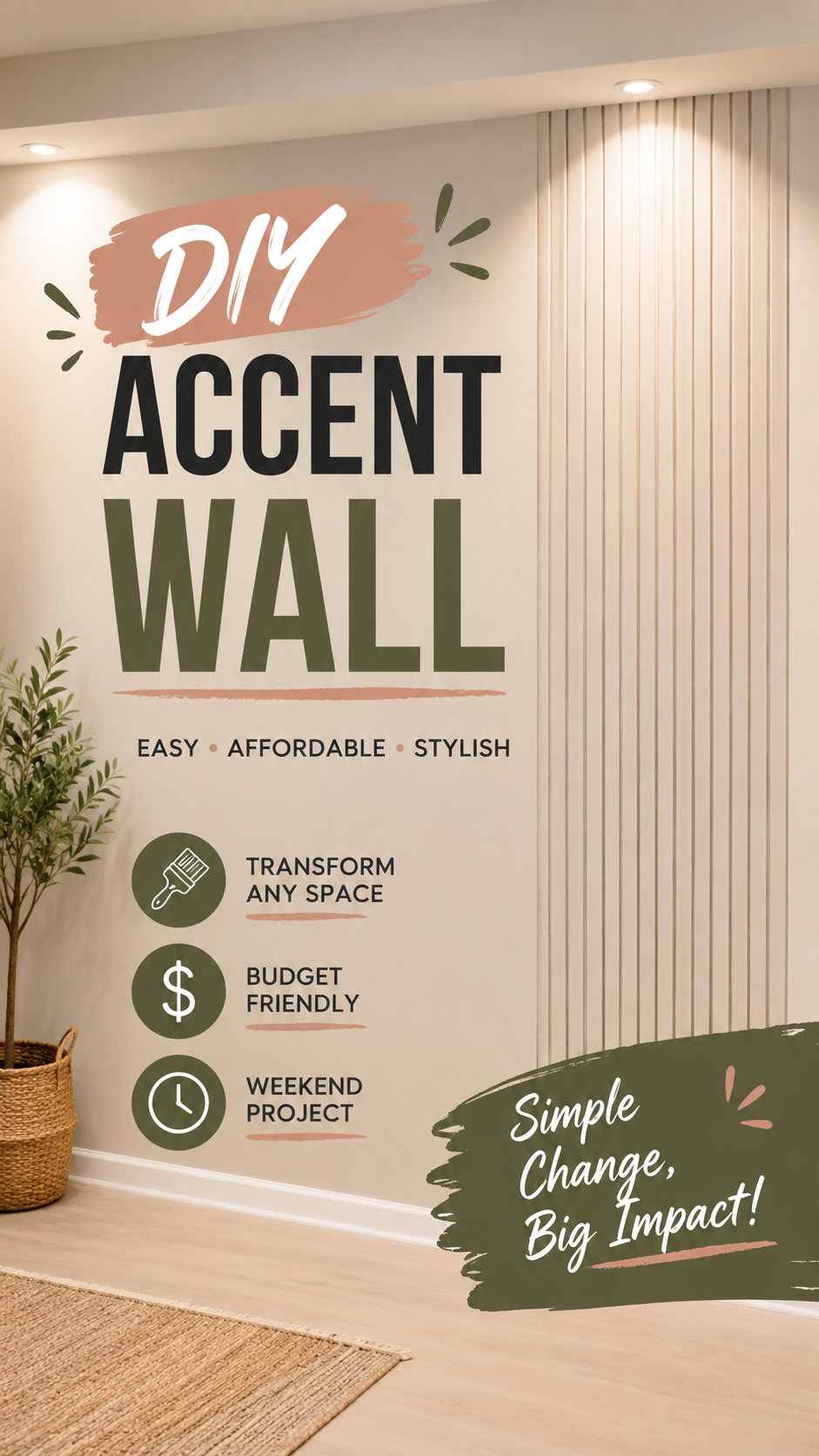
Few home improvement projects deliver as much visual impact as a DIY accent wall. Whether you are refreshing a blank room, adding personality to a finished basement, or creating a stylish backdrop for your living space, an accent wall offers an affordable way to transform your home without a complete renovation. With the right planning, materials, and creativity, you can turn an ordinary wall into a stunning focal point that reflects your personal style while increasing the overall appeal of your interior.
Modern accent walls have become one of the most popular DIY home improvement trends because they combine simplicity with dramatic results. From geometric trim designs to vertical slat walls, painted feature walls, and textured finishes, there is an option for every skill level and budget.
Key Takeaways
- DIY accent walls instantly create a focal point in any room.
- Most projects require only basic tools and beginner-friendly skills.
- Choosing the right color, texture, or trim dramatically changes the atmosphere.
- Accent walls are one of the most budget-friendly home upgrades.
- Careful planning leads to professional-looking results.
Why DIY Accent Walls Are So Popular
Today’s homeowners want affordable improvements that provide maximum visual impact. Rather than renovating an entire room, creating a feature wall allows you to introduce texture, depth, and character while keeping costs manageable.
Important: A well-designed accent wall can completely change how a room feels. It naturally draws attention, adds architectural interest, and gives even a simple space a polished, designer-inspired appearance.
Feature walls also provide flexibility. If trends change or your style evolves, repainting or updating one wall is much easier than redesigning an entire room.
Choosing the Perfect Wall
Not every wall should become an accent wall. The best choice is usually the first wall your eyes naturally notice when entering the room. This creates balance while emphasizing the room’s strongest architectural feature.
- Walls behind sofas
- Bedroom headboard walls
- Dining room feature walls
- Home office backgrounds
- Entertainment centers
- Finished basement living spaces
Popular DIY Accent Wall Styles
Vertical Wood Slat Walls
Vertical slats create clean lines that visually increase ceiling height while adding warmth and texture. This modern design pairs beautifully with minimalist, Scandinavian, and contemporary interiors.
Board and Batten
This timeless style uses evenly spaced trim boards to create elegant rectangular patterns. It works especially well in entryways, dining rooms, bedrooms, and hallways.
Geometric Trim Designs
Creative trim layouts offer a custom appearance while remaining surprisingly affordable. Angled patterns, diamonds, and abstract lines give modern spaces extra personality.
Painted Feature Walls
Sometimes all you need is a bold color. Deep greens, navy blue, charcoal gray, warm terracotta, or earthy beige shades can completely redefine a room with minimal effort.
Expert Insight
Texture often creates a stronger visual impact than color alone. Even subtle trim or panel details can make a neutral wall feel luxurious while maintaining a timeless appearance.
Planning Before You Begin
Every successful DIY project starts with careful planning. Measure the wall accurately and sketch your design before purchasing materials. This helps prevent waste while ensuring symmetry throughout the installation.
- Measure the wall dimensions.
- Create a scaled layout.
- Select your materials.
- Calculate paint or trim quantities.
- Gather all necessary tools.
- Protect flooring before beginning.
Taking time during the planning stage reduces mistakes and makes installation much smoother.
Essential Tools for Most Projects
- Measuring tape
- Level
- Pencil
- Painter’s tape
- Miter saw or hand saw
- Construction adhesive
- Nail gun or finishing nails
- Caulk
- Wood filler
- Paint brushes and rollers
Many homeowners already own several of these tools, making DIY accent walls surprisingly affordable.
Pro Tip: Dry-fit trim pieces before attaching them permanently. Small adjustments during this stage help achieve clean spacing and perfectly aligned patterns.
Selecting Colors That Complement Your Space
Color selection influences the mood of an entire room. Warm neutrals create comfort, while darker shades introduce depth and sophistication.
Light Neutral Colors
Soft beige, cream, greige, and warm white maintain an open, airy appearance while highlighting architectural details.
Bold Statement Colors
Dark charcoal, forest green, navy blue, and matte black create dramatic contrast and work beautifully with modern furnishings.
Natural Wood Finishes
Wood tones introduce warmth and texture while pairing effortlessly with both contemporary and rustic interiors.
Common DIY Mistakes to Avoid
- Skipping measurements
- Ignoring wall imperfections
- Using low-quality paint
- Installing trim without a level
- Forgetting to caulk seams
- Rushing the painting process
Attention to detail separates an average DIY project from one that looks professionally installed.
Important: Proper preparation often takes longer than installation itself. Filling holes, sanding surfaces, cleaning walls, and protecting nearby furniture greatly improve the final finish.
Budget-Friendly Ways to Create an Expensive Look
You do not need premium materials to achieve impressive results. Strategic design choices often matter more than expensive finishes.
- Use MDF trim instead of hardwood.
- Choose quality paint with excellent coverage.
- Keep patterns symmetrical.
- Limit decorative elements to avoid clutter.
- Use consistent spacing throughout the design.
Simple, clean layouts often appear more luxurious than overly complicated patterns.
Styling Your Finished Accent Wall
Once your project is complete, thoughtful decorating enhances the overall effect. Avoid overcrowding the feature wall. Instead, allow the texture and design to remain the main attraction.
- Add warm lighting.
- Use simple framed artwork.
- Incorporate indoor plants.
- Select coordinated furniture.
- Use neutral accessories for balance.
At a Glance
- Choose the room’s natural focal wall.
- Measure carefully before cutting materials.
- Use texture to create visual depth.
- Keep colors consistent with existing décor.
- Finish with thoughtful lighting and accessories.
Conclusion
A DIY accent wall is one of the easiest ways to give your home a fresh, custom look without investing in a major renovation. Whether you choose modern wall paneling, decorative trim, bold paint, or a combination of textures, the finished result adds personality, style, and value to your space. With careful planning, quality materials, and attention to detail, even beginners can create a feature wall that looks professionally designed and becomes the highlight of the room. If you have been searching for an affordable home improvement project with lasting impact, an accent wall is an excellent place to start.
Tags
DIY Accent Wall Home Improvement Interior Design Wall Panel Ideas Budget DIY Modern Home Decor Weekend Projects