
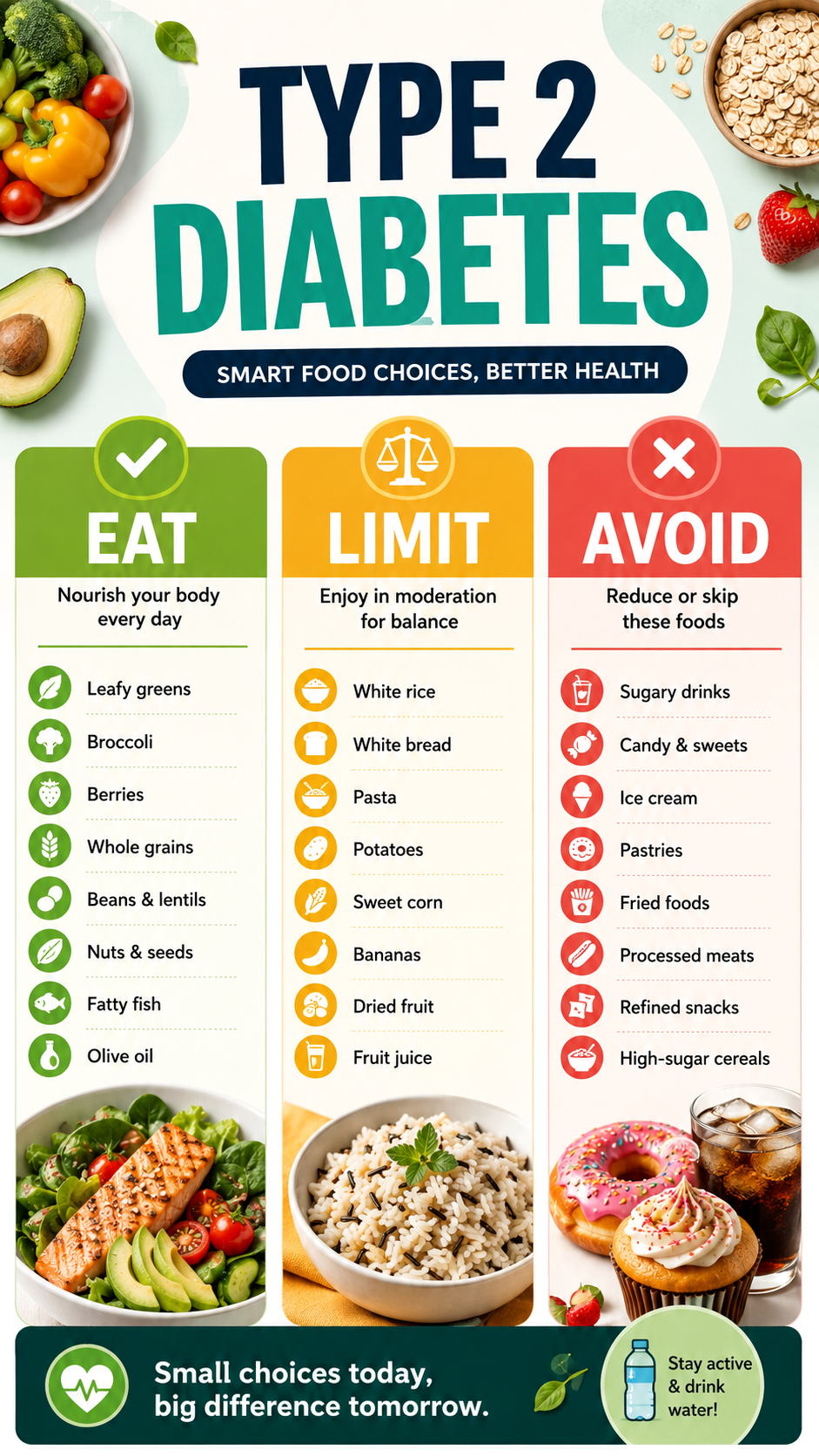
Managing Type 2 diabetes becomes much easier when healthy food choices are simple, practical, and easy to remember. A well-organized diabetes food list can serve as a daily reference for meal planning, grocery shopping, and building balanced plates that help support steady blood sugar levels. Instead of focusing on strict rules or giving up favorite foods forever, the goal is to understand which foods deserve a regular place on your plate, which should be enjoyed in moderation, and which are best reserved for occasional treats.
Whether you are newly diagnosed, supporting a family member, or simply looking for healthier eating habits, a printable diabetes food chart offers an excellent starting point. Keeping a visual guide in your kitchen or taking it along while shopping can make everyday decisions faster and less stressful.
Key Takeaways
- Choose nutrient-dense vegetables as the foundation of most meals.
- Limit refined carbohydrates and sugary beverages.
- Include lean proteins and healthy fats for better meal balance.
- Practice portion control even with nutritious foods.
- Use a printable grocery guide to simplify healthy shopping.
- Focus on long-term eating habits instead of temporary diets.
Understanding the Purpose of a Diabetes Food List
A diabetes food list is designed to organize foods into easy-to-understand categories that encourage healthier daily choices. Instead of counting every calorie or carbohydrate, it helps you recognize patterns that support balanced nutrition.
Many printable charts separate foods into three simple groups:
- Eat regularly because these foods provide excellent nutrition.
- Limit because portion size matters.
- Avoid or minimize because these foods often contain added sugars, refined carbohydrates, or unhealthy fats.
Important: No single food causes or cures Type 2 diabetes. The overall eating pattern, portion sizes, physical activity, and lifestyle choices all work together to support healthier blood sugar management.
Foods to Enjoy More Often
The healthiest section of a diabetes food chart usually includes vegetables, lean proteins, healthy fats, and high-fiber foods. These choices are filling, nutritious, and generally have a gentler effect on blood sugar.
Leafy Green Vegetables
Vegetables such as spinach, kale, cabbage, broccoli, cauliflower, Brussels sprouts, asparagus, cucumbers, celery, zucchini, and green beans are packed with vitamins, minerals, antioxidants, and fiber.
Fiber slows digestion, helping you feel satisfied longer while supporting more stable blood sugar after meals.
Colorful Vegetables
Bell peppers, tomatoes, onions, and garlic add flavor, texture, and important nutrients without requiring sugary sauces or heavy seasonings.
Lean Protein Sources
Protein plays an important role in balanced meals. Good options include:
- Chicken breast
- Turkey breast
- Eggs
- Tofu
- Tempeh
- Salmon
- Tuna
- Sardines
- Mackerel
Including protein alongside carbohydrates often helps meals feel more satisfying and may reduce hunger between meals.
Healthy Fats
Healthy fats support heart health while adding flavor and satiety. Popular choices include:
- Avocados
- Walnuts
- Almonds
- Chia seeds
- Flaxseeds
- Hemp seeds
Although nutritious, these foods are calorie-dense, making sensible portions important.
Expert Insight
Building each meal around vegetables, lean protein, healthy fats, and fiber-rich foods often creates a naturally balanced eating pattern without making every meal feel restrictive.
Foods That Are Best in Moderation
Many foods are perfectly acceptable in moderation, especially when paired with protein, healthy fats, or fiber-rich vegetables.
Starchy Vegetables
Sweet potatoes, white potatoes, corn, green peas, and butternut squash provide valuable nutrients but contain more carbohydrates than non-starchy vegetables. Smaller portions often fit well into balanced meals.
Fruit
Fresh fruit offers vitamins, antioxidants, and fiber. Bananas, grapes, cherries, pineapple, mangoes, watermelon, dates, raisins, and dried apricots may require greater attention to portion sizes because some contain concentrated natural sugars.
Whole fruit is generally a better option than fruit juice because it retains fiber.
Grains and Bread
Rice, bread, pasta, tortillas, couscous, oatmeal packets, and rice cakes are carbohydrate-rich foods. Choosing whole grain versions whenever possible may provide more fiber and help increase fullness.
Dairy and Nuts
Milk, cheese, peanut butter, pistachios, and cashews can all be part of a healthy eating plan. Portion awareness remains important because calories can add up quickly.
Pro Tip: Pair carbohydrate-rich foods with lean protein and vegetables whenever possible. This simple habit can help create more satisfying meals while supporting better overall nutrition.
Foods to Limit or Avoid More Often
The foods commonly listed in the “avoid” category are typically high in added sugars, refined flour, or unhealthy fats. They often provide plenty of calories with relatively little nutritional value.
Sugary Drinks
- Soda
- Sweet tea
- Sports drinks
- Energy drinks
- Lemonade
- Fruit punch
- Flavored coffee beverages
Liquid calories are easy to consume quickly and generally have little fiber to slow sugar absorption.
Desserts and Candy
Cookies, cakes, brownies, donuts, pastries, gummy candies, chocolate, ice cream, and popsicles are often high in sugar and refined carbohydrates.
These foods are usually best enjoyed occasionally rather than as everyday snacks.
Highly Processed Snacks
Potato chips, crackers, pretzels, corn chips, onion rings, and similar packaged snacks may be high in sodium, refined starches, and unhealthy fats.
Processed and Fried Foods
Hot dogs, deep-fried chicken, and heavily processed meats are often higher in sodium and saturated fat than fresher protein choices.
Simple Grocery Shopping Tips
Planning ahead makes healthy eating much easier.
- Write your grocery list before leaving home.
- Shop the produce section first.
- Choose lean proteins.
- Select whole foods more often than packaged snacks.
- Compare nutrition labels when buying packaged products.
- Avoid shopping while hungry.
Meal Planning Made Easy
A practical diabetes-friendly meal does not have to be complicated. One simple approach is filling half of your plate with non-starchy vegetables, adding a serving of lean protein, and finishing with a moderate portion of whole grains or starchy vegetables.
This balanced approach encourages variety while reducing the need for complicated meal calculations.
Why a Printable Food Chart Is Helpful
A printable food guide serves as a visual reminder that healthier choices can become everyday habits. Many people place one on the refrigerator, inside a pantry door, or take a copy while grocery shopping.
Instead of relying on memory, a simple chart helps make confident food decisions in just a few seconds.
Important: Healthy eating does not require perfection. Small improvements made consistently over weeks and months usually have a greater impact than following an overly restrictive plan for only a short period.
At a Glance
- Fill meals with vegetables and lean protein.
- Watch portions of carbohydrate-rich foods.
- Reduce sugary drinks and processed snacks.
- Keep a printable grocery guide nearby.
- Focus on consistency instead of perfection.
Conclusion
A Type 2 diabetes food list is more than just a grocery guide. It is a practical tool that encourages smarter food choices every day. By emphasizing vegetables, lean proteins, healthy fats, and high-fiber foods while limiting highly processed products and added sugars, you can create balanced meals that support both nutrition and long-term wellness.
Healthy eating does not have to feel overwhelming. Small, consistent improvements, thoughtful grocery shopping, and simple meal planning can make a meaningful difference over time. Keep a printable diabetes food chart nearby, use it as a daily reference, and let it guide healthier habits one meal at a time.
Tags
Type 2 Diabetes Diabetes Food List Low Sugar Foods Low Carb Foods Healthy Grocery List Meal Planning Printable Food Chart Healthy Eating