
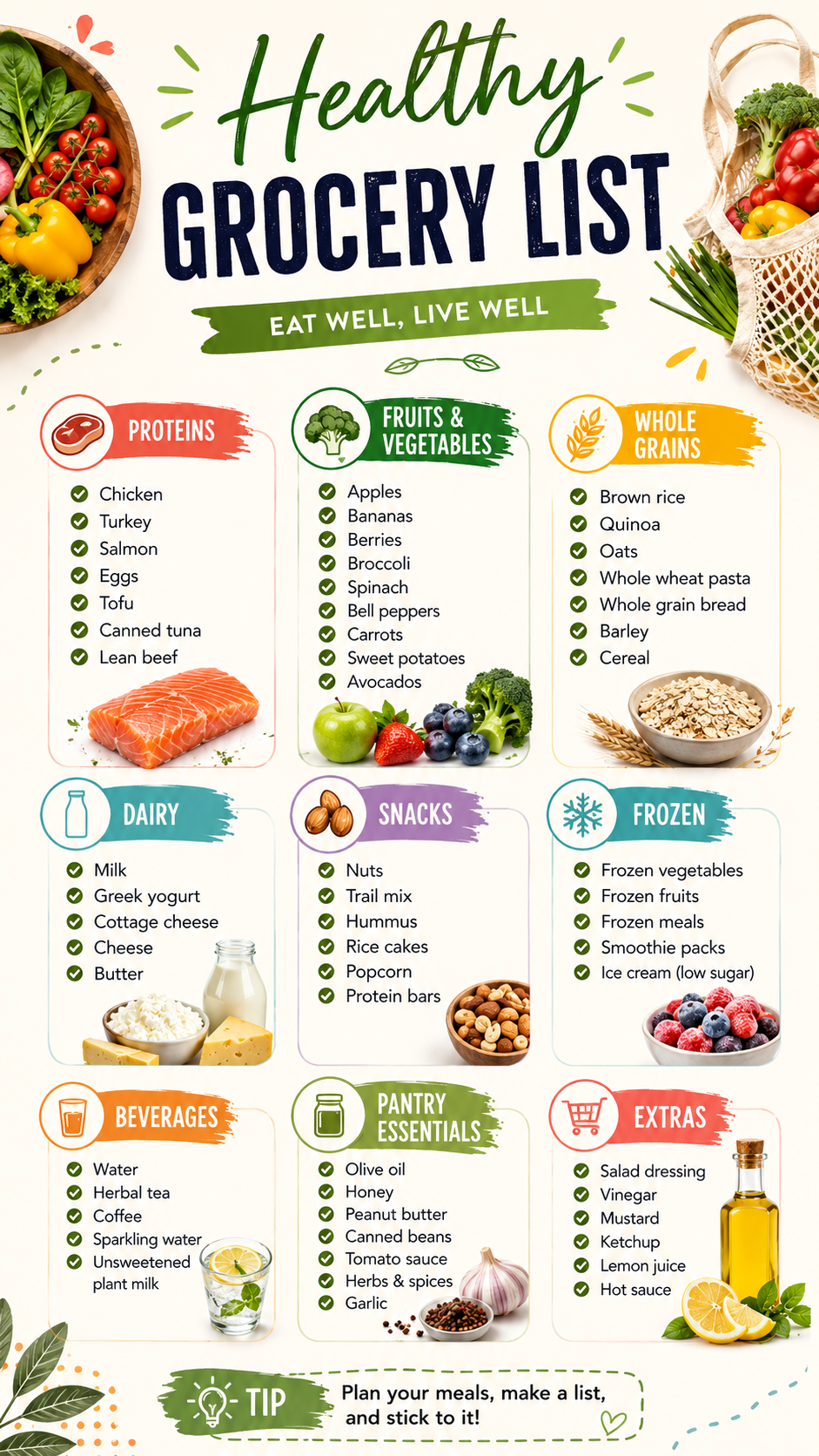
Planning meals when managing diabetes does not have to feel complicated. A well-organized grocery list can make healthy eating easier, reduce impulse purchases, and help you create balanced meals that support steady blood sugar levels. By stocking your kitchen with nutrient-rich foods such as lean proteins, whole grains, fresh vegetables, healthy fats, and fiber-rich fruits, you set yourself up for success every day.
The foundation of healthy blood sugar meal planning starts long before you prepare dinner. It begins at the grocery store. Making intentional choices allows you to build meals that are satisfying, flavorful, and packed with nutrients while avoiding unnecessary added sugars and highly processed foods. Whether you have recently been diagnosed with diabetes or simply want to improve your eating habits, a practical grocery shopping strategy can make healthy living much more manageable.
Key Takeaways
- Choose lean proteins to support balanced meals.
- Fill your cart with colorful vegetables and high-fiber fruits.
- Select whole grains instead of refined carbohydrates.
- Keep healthy snacks available to avoid unhealthy cravings.
- Use simple meal planning to stay consistent throughout the week.
Why a Smart Grocery List Makes Diabetes Management Easier
One of the biggest challenges for many people is deciding what to buy each week. Walking into a grocery store without a plan often leads to purchasing convenience foods that are high in sugar, unhealthy fats, and refined carbohydrates. A structured shopping list removes much of the guesswork.
Important: A carefully planned grocery list is one of the simplest tools for maintaining healthy eating habits. Consistency matters far more than perfection, and having nutritious foods readily available makes healthier choices much easier.
Instead of focusing on restriction, think about filling your shopping cart with foods that nourish your body. Prioritize ingredients that provide lasting energy, essential vitamins, minerals, healthy fats, and protein while helping you stay satisfied between meals.
Build Your Shopping List Around Whole Foods
Whole foods generally contain fewer additives and offer more nutritional value than highly processed alternatives. They also tend to contain more fiber, which plays an important role in slowing digestion and supporting stable blood sugar levels.
Lean Protein Choices
Protein helps you feel full longer and supports muscle maintenance. Including a quality protein source at every meal can also help balance carbohydrate intake.
- Skinless chicken breast
- Turkey
- Salmon
- Other fish varieties
- Canned tuna packed in water
- Lean beef
- Lean pork
- Eggs
- Tofu
- Low-fat deli meats with minimal sodium
Fatty fish such as salmon also provide omega-3 fatty acids that support heart health, which is especially important for people managing diabetes.
Colorful Fruits and Vegetables
Fresh produce adds vitamins, minerals, antioxidants, and fiber to your meals. Choosing a variety of colors ensures you receive a wide range of nutrients.
- Apples
- Berries
- Broccoli
- Spinach
- Leafy greens
- Tomatoes
- Cucumbers
- Bell peppers
- Garlic
- Onions
- Asparagus
- Beans
- Squash
- Melons
- Oranges
- Pineapple in moderation
Berries are often an excellent choice because they provide plenty of fiber while naturally satisfying sweet cravings.
Expert Insight
Rather than eliminating carbohydrates completely, focus on choosing higher-quality carbohydrates that contain fiber and nutrients. Pair them with lean protein and healthy fats to create balanced meals that help maintain steady energy levels.
Choose Better Grain Options
Whole grains digest more slowly than refined grains and generally provide more fiber and nutrients.
- Brown rice
- Wild rice
- Whole wheat bread
- Whole wheat pasta
- Oatmeal
- High-fiber cereal
- Whole grain crackers
- Quinoa
- Barley
Read nutrition labels carefully and choose products with whole grains listed as the first ingredient whenever possible.
Healthy Dairy Options
Dairy products can be part of a balanced eating plan when you select lower-fat varieties with limited added sugar.
- Low-fat milk
- Unsweetened soy milk
- Greek yogurt
- Plain yogurt
- Cottage cheese
- Reduced-fat cheese
Plain yogurt is often a better option than flavored varieties because it contains significantly less added sugar.
Pro Tip: Compare nutrition labels before purchasing dairy products. Small differences in added sugar can make a noticeable impact over time.
Healthy Snacks That Keep You Satisfied
Smart snacking can help prevent excessive hunger and reduce overeating during meals.
- Unsalted nuts
- Seeds
- Rice cakes
- Whole grain crackers
- Vegetables with hummus
- Plain popcorn
- Sugar-free gelatin
- Low-sugar pudding options
Portion control remains important, even with nutritious snacks. Pre-portioning snacks into small containers can help prevent mindless eating.
Stock Your Freezer Wisely
Frozen foods can make healthy eating easier on busy days. Many frozen vegetables are harvested and frozen at peak freshness, making them highly nutritious.
- Frozen broccoli
- Frozen spinach
- Mixed vegetables
- Frozen berries
- Frozen cauliflower rice
- Healthy frozen meal options with balanced nutrition
Check sodium levels and added sauces before purchasing frozen prepared meals.
Choose Better Pantry Staples
Your pantry should contain ingredients that make preparing healthy meals quick and convenient.
- Olive oil
- Canola oil
- Vinegar
- Mustard
- Low-sodium broth
- Herbs and spices
- Canned beans with reduced sodium
- Low-sodium canned vegetables
- Canned fruit packed in its own juice
Flavor meals with herbs, garlic, lemon juice, and spices instead of relying heavily on salt.
Smart Beverage Choices
Drinks can contribute a surprising amount of added sugar. Choosing beverages wisely supports overall blood sugar management.
- Water
- Sparkling water without added sugar
- Coffee without sugary syrups
- Unsweetened tea
- Low-sodium vegetable juice
Staying hydrated also supports overall wellness and may help reduce unnecessary snacking that is actually caused by thirst.
Meal Planning Tips for the Week
A grocery list becomes even more effective when paired with simple meal planning. Consider creating a weekly menu before shopping so every ingredient has a purpose.
Breakfast Ideas
- Oatmeal topped with berries and nuts
- Greek yogurt with fresh fruit
- Vegetable omelet with whole grain toast
Lunch Ideas
- Grilled chicken salad
- Turkey sandwich on whole grain bread
- Vegetable soup with beans
Dinner Ideas
- Baked salmon with broccoli and brown rice
- Turkey chili with vegetables
- Grilled chicken with roasted vegetables
- Stir-fried tofu with mixed vegetables
Simple Grocery Shopping Strategies
- Prepare your shopping list before leaving home.
- Eat before shopping to reduce impulse purchases.
- Spend most of your time around the fresh food sections.
- Compare nutrition labels.
- Avoid buying excessive sugary snacks.
- Purchase seasonal produce when available.
- Choose foods you genuinely enjoy so healthy eating remains sustainable.
Important: Healthy eating is not about eliminating favorite foods forever. Building consistent habits with balanced grocery choices creates a sustainable lifestyle that is much easier to maintain over the long term.
Quick Points
- Fill half your cart with vegetables and fruits.
- Choose lean proteins for every meal.
- Swap refined grains for whole grains.
- Keep healthy snacks readily available.
- Plan meals before grocery shopping.
Conclusion
A thoughtfully planned diabetic grocery shopping list makes healthy eating far less overwhelming. By focusing on fresh produce, lean proteins, whole grains, nutritious dairy products, healthy snacks, and smart pantry staples, you can create satisfying meals that support balanced blood sugar while still enjoying a wide variety of foods.
Remember that lasting success comes from building practical habits rather than seeking perfection. A consistent grocery routine, paired with simple meal planning and mindful food choices, provides a strong foundation for healthier living. Every trip to the grocery store is an opportunity to stock your kitchen with foods that nourish your body, simplify meal preparation, and help you stay on track throughout the week.
Tags
Diabetic Grocery List Healthy Blood Sugar Diabetes Meal Planning Healthy Grocery Shopping Whole Foods Low Glycemic Foods Healthy Meal Prep Nutrition Tips