
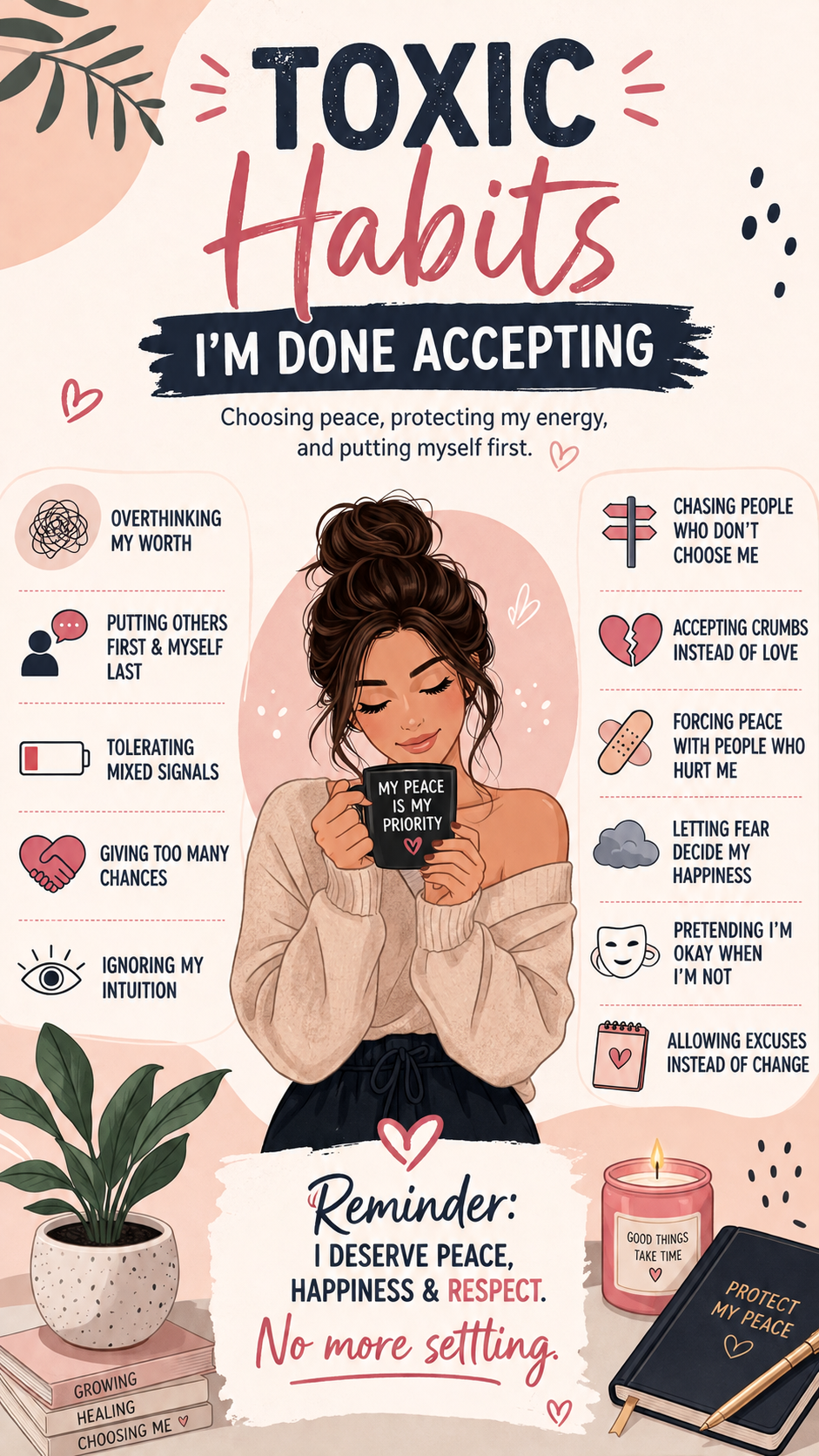
Protecting your peace is one of the most valuable forms of self-care. Many people spend years accepting behaviors, situations, and relationships that slowly drain their confidence, happiness, and emotional energy. Over time, these unhealthy patterns become habits, making it difficult to recognize what truly supports personal growth. Choosing healthier boundaries is not about becoming selfish. It is about respecting yourself enough to stop settling for less than you deserve.
This guide explores common toxic habits that many people unknowingly accept, explains why they are harmful, and offers practical strategies for building healthier relationships with yourself and others. Whether your goal is emotional healing, stronger confidence, or a more peaceful lifestyle, these insights can help you move forward with greater clarity.
Key Takeaways
- Recognize unhealthy habits that affect emotional well-being.
- Learn why setting boundaries improves self-respect.
- Discover practical ways to protect your peace every day.
- Build confidence by trusting your instincts.
- Create healthier relationships through intentional choices.
Why Letting Go of Toxic Habits Changes Everything
Small daily habits shape the quality of our lives. While positive routines help us grow, unhealthy emotional habits often keep us stuck in cycles of disappointment and frustration. Many people continue accepting these patterns because they fear conflict, rejection, or loneliness.
Choosing peace does not mean avoiding difficult conversations. Instead, it means recognizing what deserves your energy and what no longer serves your emotional health.
Important: Healthy boundaries are not walls that push people away. They are guidelines that teach others how to treat you while protecting your emotional well-being.
Common Toxic Habits Worth Leaving Behind
1. Over Explaining Your Worth
You never need to convince someone that you deserve respect, kindness, or love. Constantly explaining yourself often comes from seeking validation instead of trusting your own value.
- State your needs clearly.
- Avoid unnecessary justifications.
- Remember that your value is not determined by another person’s opinion.
2. Putting Everyone Else First
Caring for others is admirable, but consistently ignoring your own needs can lead to burnout, resentment, and emotional exhaustion.
Self-care allows you to show up as your healthiest and most compassionate self. Rest, personal goals, and emotional wellness deserve a place on your priority list.
3. Accepting Mixed Signals
Clear communication creates healthy relationships. Mixed signals often produce confusion, anxiety, and emotional uncertainty.
If someone’s actions consistently contradict their words, believe their actions. Healthy relationships are built on consistency rather than guesswork.
4. Giving Endless Chances
Forgiveness is healthy, but repeatedly accepting the same harmful behavior without meaningful change can damage your self-esteem.
Growth requires accountability. Genuine change appears through consistent actions rather than repeated promises.
Why This Matters
- Boundaries reduce emotional stress.
- Healthy relationships become easier to recognize.
- Your confidence naturally grows when you honor your own needs.
Learning to Trust Yourself Again
Listen to Your Intuition
Your instincts often notice warning signs before your logical mind accepts them. Paying attention to uncomfortable feelings can help prevent unhealthy situations from becoming long-term problems.
Pro Tip: When something consistently leaves you feeling anxious, disrespected, or emotionally drained, pause before making excuses. Your intuition deserves attention.
Stop Staying Where You Are Not Appreciated
Everyone deserves relationships built on mutual respect. Whether in friendships, family dynamics, romantic relationships, or professional environments, appreciation should never feel one-sided.
Walking away from unhealthy situations can feel difficult, but staying where you are consistently undervalued often costs much more over time.
Breaking Free From People Pleasing
People pleasing often begins with good intentions. However, constantly sacrificing your happiness to avoid disappointing others creates emotional imbalance.
- Practice saying no without guilt.
- Allow yourself time before agreeing to requests.
- Recognize that disappointment is a normal part of healthy relationships.
- Prioritize your physical and emotional energy.
Choosing Peace Over Fear
Fear often keeps people trapped in familiar but unhealthy situations. Fear of change, rejection, loneliness, or uncertainty can prevent meaningful personal growth.
Peace comes from making decisions that align with your values rather than your fears. Every healthy choice strengthens confidence for the next challenge.
Important: Courage is not the absence of fear. It is choosing growth despite fear and believing that your future deserves healthier choices.
Practical Daily Habits That Protect Your Peace
- Begin each morning with positive affirmations.
- Limit time spent with consistently negative influences.
- Journal your thoughts instead of suppressing emotions.
- Celebrate small personal victories.
- Protect your personal time without feeling guilty.
- Spend time with supportive people who encourage your growth.
- Practice gratitude while remaining honest about your challenges.
Building Healthy Relationships
Healthy relationships thrive through honesty, trust, communication, and mutual respect. Instead of chasing approval, focus on building genuine connections where both people feel heard, valued, and supported.
Remember that healthy love never requires abandoning your identity. The strongest relationships encourage individual growth while strengthening the connection between both people.
Signs You Are Growing Emotionally
- You say no without excessive guilt.
- You stop apologizing for healthy boundaries.
- You trust actions more than promises.
- You recover from setbacks more quickly.
- You spend less time seeking external validation.
- You value your peace above unnecessary drama.
Quick Points
- Protect your emotional energy daily.
- Healthy boundaries strengthen relationships.
- Trust consistent actions over empty promises.
- Your self-worth does not depend on outside approval.
- Choosing peace is an ongoing practice.
Conclusion
Personal growth begins with the decisions you make every day. Letting go of toxic habits is not about becoming perfect. It is about becoming more intentional with your time, energy, and emotional well-being. Every healthy boundary, every confident decision, and every moment you choose self-respect over self-sacrifice moves you closer to a happier and more balanced life.
You deserve relationships built on respect, opportunities that encourage growth, and a life filled with peace rather than constant emotional struggle. Start with one small change today. Over time, those choices will become powerful habits that shape a healthier future.
Tags
Self Love Healthy Boundaries Personal Growth Mental Wellness Self Worth Emotional Healing Positive Mindset Self Care