
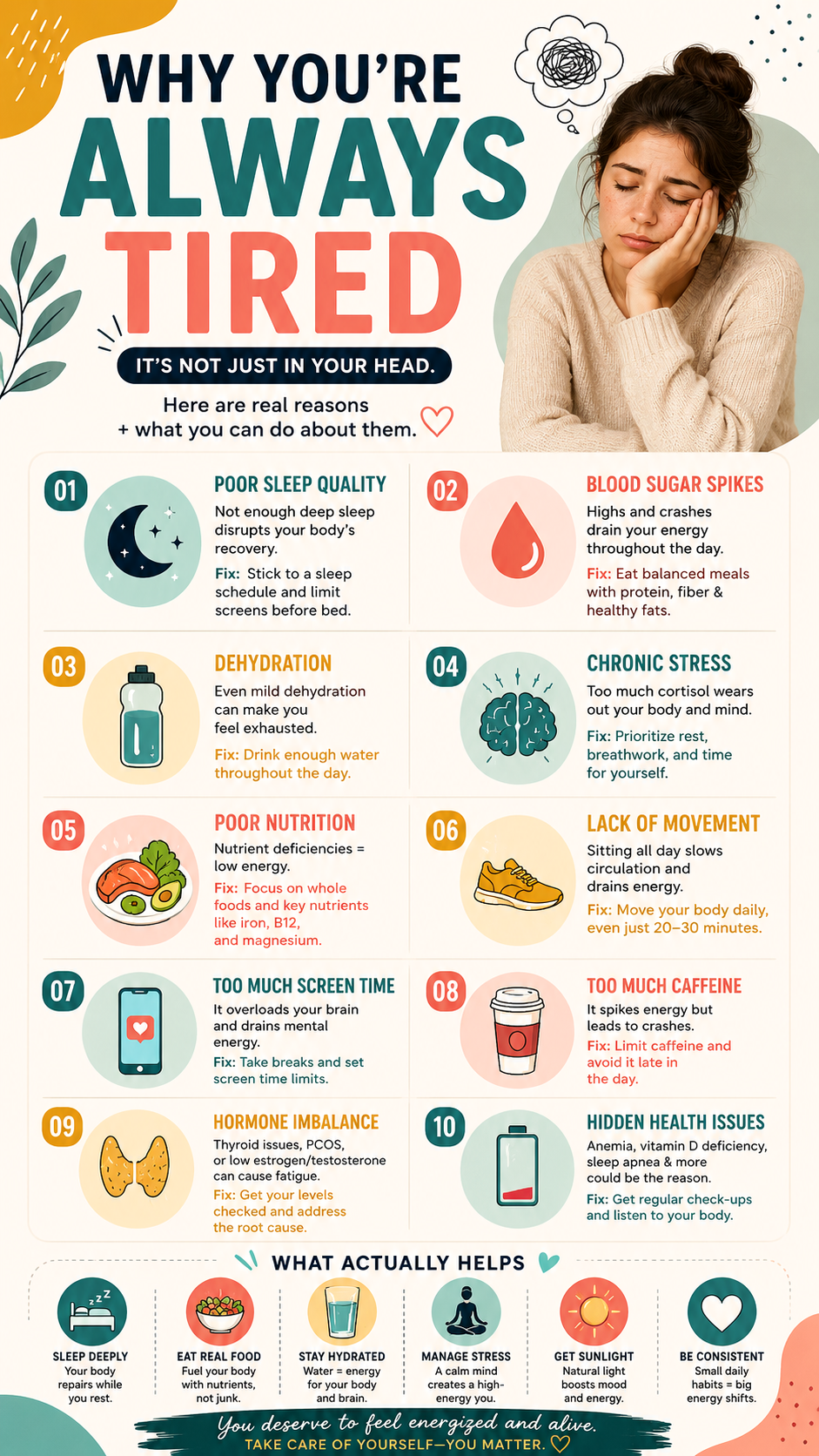
Feeling exhausted even after a full night’s sleep can be frustrating. Many people assume constant fatigue is simply part of a busy lifestyle, but persistent tiredness is often your body’s way of signaling that something needs attention. While an occasional energy slump is perfectly normal, feeling drained every day deserves a closer look. The good news is that many of the most common causes of low energy are linked to everyday habits that can be improved with small, consistent changes.
Whether your lack of energy comes from poor sleep, dehydration, stress, unhealthy eating habits, or other lifestyle factors, understanding the root cause is the first step toward feeling better. Instead of masking fatigue with endless cups of coffee or sugary snacks, learning what your body is trying to communicate can help you build sustainable energy that lasts throughout the day.
Key Takeaways
- Persistent fatigue often has multiple contributing factors rather than a single cause.
- Quality sleep, balanced nutrition, hydration, and regular movement are essential for steady energy.
- Managing stress plays a major role in reducing physical and mental exhaustion.
- Simple daily habits can significantly improve energy over time.
- Long-lasting or unexplained fatigue should be discussed with a healthcare professional.
Why Constant Fatigue Should Never Be Ignored
Energy levels naturally fluctuate throughout the day, but ongoing fatigue that interferes with work, relationships, or daily activities is worth investigating. Your body depends on sleep, nutrition, hydration, movement, and stress management working together. When one or more of these areas becomes unbalanced, you may notice declining energy, reduced concentration, and lower motivation.
Important: Feeling tired all the time is not always a sign of laziness or lack of motivation. It is often a signal that your body needs better recovery, improved nutrition, healthier habits, or medical attention if symptoms persist.
1. Poor Sleep Quality
Sleep is when your body repairs tissues, balances hormones, strengthens your immune system, and restores mental function. Even if you spend eight hours in bed, interrupted or low-quality sleep can leave you feeling exhausted the next day.
Signs Your Sleep Needs Improvement
- Waking up feeling unrefreshed
- Difficulty concentrating during the day
- Frequent nighttime awakenings
- Needing caffeine immediately after waking
How to Sleep Better
- Maintain a consistent bedtime.
- Reduce screen exposure before bed.
- Keep your bedroom cool, dark, and quiet.
- Avoid heavy meals late at night.
2. Blood Sugar Highs and Lows
Meals that are high in refined carbohydrates or added sugars may provide a quick burst of energy followed by an equally dramatic crash. These fluctuations can leave you feeling sleepy, irritable, and hungry again within a short time.
Instead, build meals around lean protein, healthy fats, whole grains, vegetables, and fiber-rich foods. Balanced meals help maintain more stable blood sugar levels and support sustained energy throughout the day.
Why This Matters
- Stable blood sugar supports consistent physical and mental energy.
- Balanced meals can reduce afternoon crashes and cravings.
- Small dietary improvements often produce noticeable results within days.
3. Dehydration Can Drain Your Energy
Your body relies on water for nearly every function, including circulation, temperature regulation, digestion, and brain performance. Even mild dehydration may contribute to headaches, poor concentration, and fatigue.
Many people mistake thirst for hunger or ignore it altogether. Carrying a reusable water bottle and drinking regularly throughout the day can make a meaningful difference in how energized you feel.
4. Chronic Stress
Stress affects both the mind and the body. When stress hormones remain elevated for extended periods, your body works harder than it should, leaving you mentally and physically exhausted.
Finding healthy ways to reduce stress can improve both mood and energy. Consider deep breathing, meditation, gentle stretching, journaling, spending time outdoors, or simply taking regular breaks during busy days.
Pro Tip: You do not have to eliminate every source of stress to feel better. Consistent stress management habits practiced for just a few minutes each day can have lasting benefits.
5. Poor Nutrition
Your body converts food into energy. Diets lacking important nutrients can leave you feeling sluggish even if you consume enough calories.
Nutrients That Support Energy
- Iron
- Vitamin B12
- Magnesium
- Protein
- Complex carbohydrates
- Healthy fats
Focusing on minimally processed foods, colorful vegetables, fruits, legumes, lean proteins, whole grains, nuts, and seeds provides your body with the nutrients needed to produce steady energy.
6. Lack of Physical Activity
It may sound surprising, but moving your body actually helps fight fatigue. Long periods of sitting can slow circulation, reduce muscle activity, and contribute to lower energy levels.
You do not need an intense workout to benefit. Walking, cycling, swimming, yoga, or even stretching for twenty to thirty minutes most days can improve circulation, cardiovascular health, and overall vitality.
7. Too Much Screen Time
Hours spent looking at phones, tablets, and computers can contribute to eye strain, mental fatigue, and disrupted sleep patterns. Blue light exposure in the evening may interfere with your body’s natural sleep cycle.
- Take regular screen breaks.
- Follow the 20-20-20 rule for eye comfort.
- Reduce device use before bedtime.
- Schedule technology-free moments during the day.
8. Excessive Caffeine
Caffeine can temporarily increase alertness, but relying on it throughout the day may contribute to disrupted sleep and energy crashes later on.
Consider gradually reducing caffeine intake if you notice dependence. Switching one afternoon coffee to herbal tea or water may improve nighttime sleep and overall energy.
9. Hormonal Changes
Hormones help regulate metabolism, mood, sleep, and energy production. Imbalances involving the thyroid or other hormone systems may contribute to persistent fatigue.
While lifestyle improvements remain valuable, persistent symptoms should be evaluated by a healthcare professional who can recommend appropriate testing when necessary.
10. Hidden Health Conditions
Sometimes fatigue is related to an underlying medical issue such as vitamin deficiencies, anemia, sleep disorders, or other health conditions. If your tiredness is severe, worsening, or accompanied by other symptoms, professional medical evaluation is important.
Important: Lifestyle improvements are incredibly valuable, but they should never replace medical advice when fatigue is persistent, unexplained, or affecting your quality of life.
Healthy Habits That Support Long-Term Energy
Improving your energy often comes down to consistently practicing simple habits rather than searching for a quick fix.
Prioritize Quality Sleep
Create an evening routine that encourages relaxation. Going to bed at the same time each night helps regulate your internal clock.
Eat Balanced Meals
Include protein, healthy fats, and fiber with each meal to promote sustained energy and reduce hunger between meals.
Stay Hydrated
Drink water consistently throughout the day instead of waiting until you feel thirsty.
Manage Daily Stress
Small mindfulness practices, hobbies, and regular breaks can reduce mental exhaustion and improve resilience.
Get Natural Light
Morning sunlight supports healthy circadian rhythms, which influence sleep quality, mood, and daytime alertness.
Stay Consistent
Healthy habits become powerful when practiced regularly. Lasting improvements usually come from small actions repeated over time.
Quick Points
- Sleep quality matters just as much as sleep duration.
- Hydration and balanced meals support steady energy.
- Regular movement reduces fatigue instead of causing it.
- Stress management is essential for physical and mental wellness.
- Persistent fatigue deserves professional evaluation.
Conclusion
Feeling constantly tired is often the result of multiple lifestyle factors working together rather than a single problem. Paying attention to your sleep, nutrition, hydration, movement, stress levels, and daily routines can help restore energy over time. The most effective approach is usually gradual and consistent, allowing healthy habits to build naturally.
Remember that your body communicates through symptoms. Listening to those signals, making thoughtful adjustments, and seeking medical guidance when needed can help you move toward better health, improved focus, and more sustainable energy every day.
Tags
Fatigue Healthy Lifestyle Energy Tips Sleep Health Stress Management Hydration Nutrition Wellness