
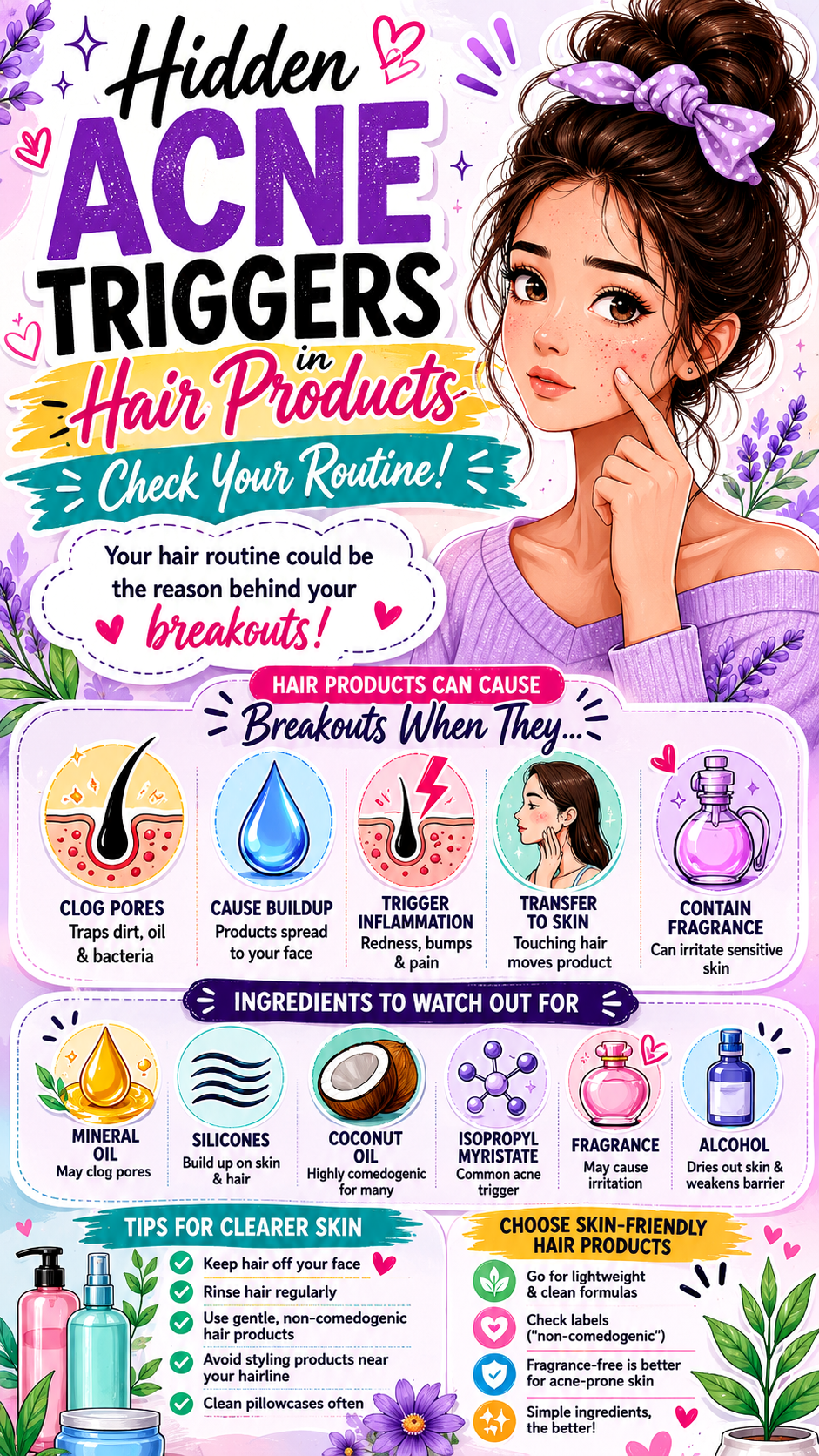
Acne can feel frustrating when you are doing everything right with your skincare routine, yet breakouts continue to appear around your forehead, temples, cheeks, and hairline. What many people overlook is the role that hair products can play in skin health. Shampoos, conditioners, leave-in treatments, serums, oils, and styling products often contain ingredients that come into direct contact with the skin throughout the day.
When these products transfer from hair to skin, they may contribute to clogged pores, irritation, and inflammation. Understanding the connection between hair care and acne can help you identify hidden triggers and make smarter choices for both healthy hair and clearer skin.
Key Takeaways
- Hair products can contribute to acne by clogging pores and irritating the skin.
- Heavy oils, silicones, fragrances, and certain styling ingredients are common triggers.
- Hairline, forehead, and temple breakouts are often linked to product transfer.
- Choosing lightweight, non-comedogenic formulas may help reduce acne risk.
- Good hair hygiene and clean pillowcases can support clearer skin.
The Connection Between Hair Products and Acne
Hair and skin interact more than many people realize. Throughout the day, strands of hair brush against the face, scalp oils move downward, and styling products can transfer onto the skin. During sleep, residue from hair products can also spread to pillowcases and eventually reach acne-prone areas.
While not every hair product causes breakouts, some formulas contain ingredients that may trap oil, block pores, or trigger irritation in sensitive individuals. This phenomenon is sometimes referred to as “pomade acne,” a term commonly used to describe acne associated with oily hair products.
Important: If your breakouts consistently appear along the hairline, forehead, temples, or sides of the face, your hair care routine may be worth examining just as closely as your skincare products.
How Hair Products Can Trigger Breakouts
Pore Clogging Ingredients
Some hair products contain heavy oils, waxes, and emollients that can create a film on the skin. When combined with sweat, dead skin cells, and natural oil production, these substances may contribute to clogged pores.
Individuals with oily or acne-prone skin often notice that thick styling products increase the likelihood of developing whiteheads, blackheads, or inflamed pimples around areas where hair frequently touches the skin.
Product Buildup
Over time, styling creams, sprays, and leave-in conditioners can accumulate on the scalp and hair. During exercise, hot weather, or daily activity, this buildup can migrate toward the face.
The result may be an increase in clogged pores and irritation, particularly around the forehead where bangs or loose strands rest against the skin.
Skin Irritation and Inflammation
Not all acne-related reactions stem from clogged pores. Certain ingredients can irritate the skin directly, causing redness, sensitivity, and inflammation that may worsen existing acne.
Fragrances, preservatives, and alcohol-based formulations can be problematic for people with sensitive skin barriers.
Constant Transfer to the Face
Touching your hair throughout the day may transfer oils, dirt, and styling products directly onto the skin. Hair brushing against the cheeks, forehead, and jawline creates repeated contact that can increase exposure to acne-triggering substances.
Common Hair Product Ingredients to Watch Out For
While ingredient responses vary from person to person, several ingredients frequently appear on lists of potential acne triggers.
Mineral Oil
Mineral oil is often used to create smoothness and shine. Although it is considered safe for many users, some acne-prone individuals find that heavy mineral oil-based products leave a residue that feels too occlusive on the skin.
Silicones
Silicones are popular because they improve softness and reduce frizz. However, they can contribute to buildup on the hair and scalp when not thoroughly cleansed, potentially increasing transfer to nearby skin.
Coconut Oil
Coconut oil is widely praised in beauty routines, but it may not be ideal for everyone. Some people find it highly comedogenic, meaning it has a greater likelihood of contributing to clogged pores.
If you frequently experience breakouts near your hairline, products rich in coconut oil may deserve closer attention.
Fragrance
Fragrance can make products more pleasant to use, but it is also a common source of irritation. Sensitive skin may react with redness, itching, or inflammation that can aggravate acne-prone areas.
Alcohol-Based Ingredients
Certain alcohols are used to improve product texture and drying time. While some alcohols are beneficial, others may contribute to excessive dryness, leaving the skin barrier compromised and more vulnerable to irritation.
Expert Insight
- The ingredient list matters, but so does how often a product touches your skin.
- Even non-comedogenic products can contribute to problems if they build up excessively.
- Consistency in cleansing both hair and skin often produces better results than constantly switching products.
Signs Your Hair Products May Be Causing Acne
Not sure whether your hair routine is affecting your skin? Certain patterns can offer clues.
- Breakouts are concentrated around the hairline.
- Forehead acne worsens after using styling products.
- You notice irritation near the ears and temples.
- Acne increases after introducing a new hair treatment.
- Breakouts improve when hair is kept away from the face.
While these signs do not guarantee a hair product is responsible, they can indicate that further investigation is worthwhile.
How to Choose Skin-Friendly Hair Products
Read Ingredient Labels Carefully
Becoming familiar with ingredient lists can help you identify recurring triggers. If you notice a pattern between breakouts and specific ingredients, keeping a product journal may be useful.
Look for Lightweight Formulas
Lightweight products generally leave less residue on the hair and skin. Water-based serums, lightweight conditioners, and non-greasy styling products are often preferred by those with acne-prone skin.
Choose Fragrance-Free Options When Possible
People with sensitive skin frequently benefit from minimizing unnecessary fragrance exposure. Fragrance-free products may reduce the likelihood of irritation and redness.
Keep Ingredients Simple
Complex formulas are not automatically problematic, but simpler ingredient lists can make it easier to identify potential triggers if a reaction occurs.
Pro Tip: When trying a new hair product, introduce only one new item at a time. This makes it easier to determine whether it affects your skin positively or negatively.
Daily Habits That Help Prevent Hair-Related Acne
Keep Hair Away From Your Face
Styles that reduce direct contact between hair and skin can help limit the transfer of oils and product residue.
Ponytails, braids, buns, or clipped-back styles may be particularly helpful during workouts and warm weather.
Wash Hair Regularly
The ideal washing frequency depends on hair type and personal needs, but allowing excessive buildup to accumulate can increase the chances of product transfer.
Focus on maintaining a clean scalp and removing residue effectively.
Clean Pillowcases Frequently
Pillowcases collect oils, sweat, hair products, and environmental debris. Regular laundering can help reduce exposure to substances that may contribute to breakouts.
Wash After Sweating
Exercise and hot weather can increase the movement of oils and product residue from the scalp toward the face. Rinsing hair and cleansing the skin after sweating may help reduce this effect.
Best Types of Hair Products for Acne-Prone Skin
Although every individual responds differently, certain categories are generally considered more skin-friendly.
- Water-based hair serums
- Lightweight leave-in conditioners
- Gentle sulfate-free shampoos
- Aloe vera-based styling gels
- Minimalist fragrance-free formulas
- Products labeled non-comedogenic when available
These options often provide hair care benefits while reducing the risk of heavy residue accumulation.
Creating a Balanced Hair and Skin Care Routine
Healthy hair and healthy skin do not have to compete. The goal is finding products that support both without creating unnecessary irritation.
Start by evaluating every product that touches your scalp and hair. Pay attention to ingredients, textures, and how your skin responds over time. Small changes can make a significant difference, especially when combined with consistent cleansing habits.
Important: Acne is influenced by multiple factors including hormones, genetics, stress, and skincare habits. Hair products may not be the sole cause, but identifying hidden triggers can remove one major obstacle on the path to clearer skin.
At a Glance
- Hair products can contribute to forehead and hairline acne.
- Heavy oils, silicones, and fragrances are common concerns.
- Lightweight formulas are often a better choice for acne-prone skin.
- Regular cleansing reduces buildup and residue transfer.
- Clean pillowcases support both scalp and skin health.
Conclusion
Many people focus exclusively on skincare when dealing with acne, but hair care products can be an overlooked piece of the puzzle. Ingredients that create shine, softness, and hold may also contribute to clogged pores, irritation, or increased breakouts when they repeatedly come into contact with the skin.
By choosing lightweight formulas, monitoring ingredient lists, maintaining good hygiene habits, and keeping hair away from acne-prone areas, you can reduce potential triggers and support a clearer complexion. A thoughtful approach to both hair care and skincare creates a stronger foundation for healthy, confident skin.
Tags
Acne Triggers Hair Products Hairline Acne Acne-Prone Skin Skincare Tips Non-Comedogenic Clear Skin Healthy Hair Care