
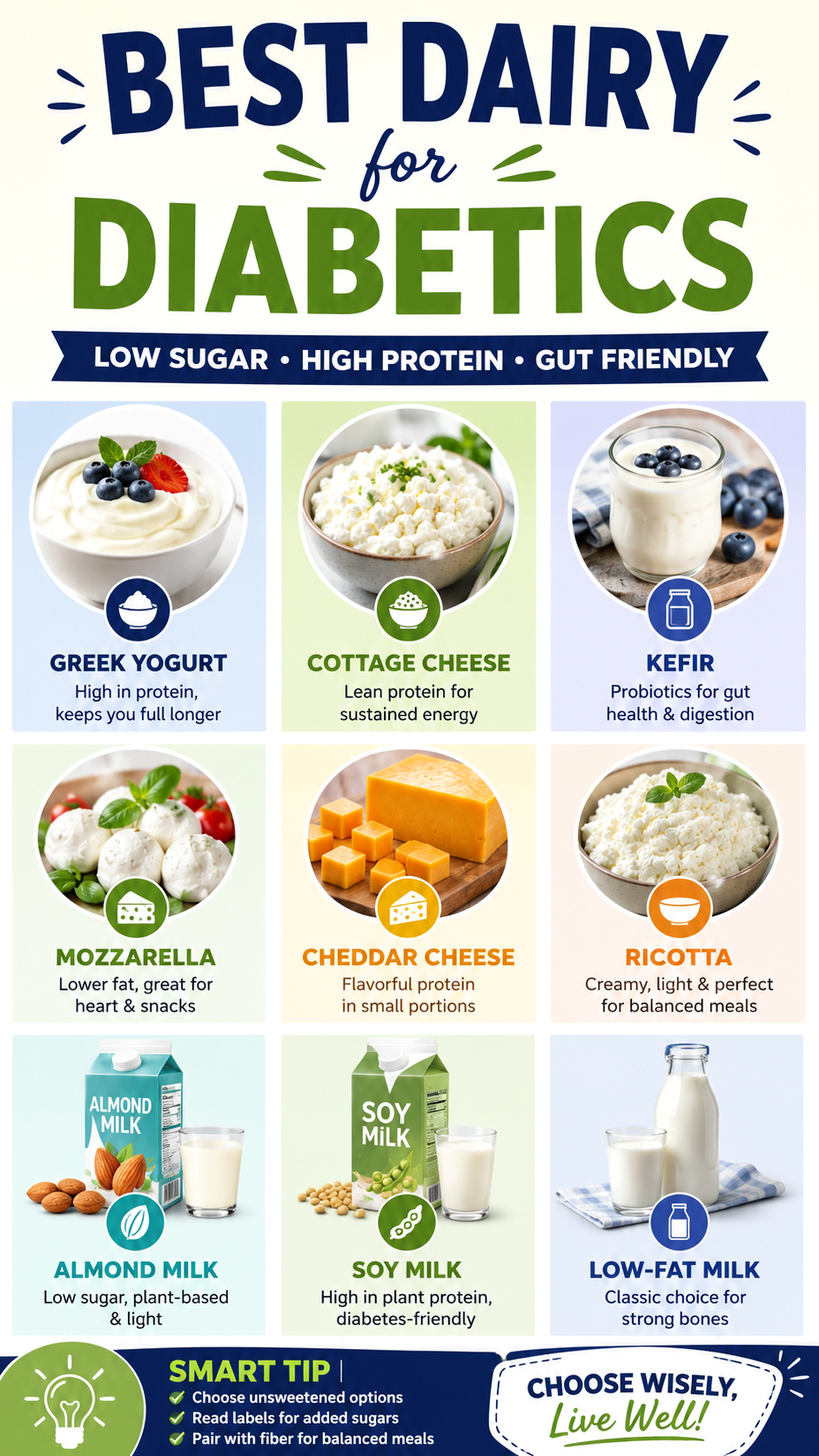
Choosing the right dairy products can make a meaningful difference when managing blood sugar levels. While dairy often gets mixed reviews in nutrition discussions, many options provide high-quality protein, essential nutrients, and satisfying texture without excessive sugar. The key is knowing which products offer the best balance of protein, healthy fats, and minimal added sugars. From creamy Greek yogurt to probiotic-rich kefir, there are several dairy foods that can fit comfortably into a diabetes-friendly eating plan while supporting overall wellness.
Key Takeaways
- High-protein dairy products can help promote fullness and support balanced meals.
- Unsweetened options are generally better choices than flavored varieties.
- Fermented dairy foods may support gut health through beneficial probiotics.
- Low-sugar dairy can fit into many diabetes-friendly meal plans.
- Portion awareness remains important even when choosing healthy dairy foods.
- Combining dairy with fiber-rich foods may help create more balanced snacks.
Why Dairy Matters for Blood Sugar Management
Dairy products contain a unique combination of protein, carbohydrates, fats, vitamins, and minerals. For people focusing on blood sugar control, protein is often one of the most valuable nutrients because it can help slow digestion and contribute to longer-lasting satiety.
Not all dairy products are created equal. Some contain significant amounts of added sugar, while others offer a much more favorable nutritional profile. Understanding which options naturally contain less sugar and more protein can help you make smarter choices at breakfast, lunch, dinner, and snack time.
Important: The best dairy choices for people managing blood sugar are often those that combine high protein with little or no added sugar. Reading labels carefully can make a significant difference.
Greek Yogurt: A Protein-Packed Favorite
Greek yogurt has become one of the most popular dairy foods for good reason. During production, excess liquid is strained away, creating a thicker texture and a higher concentration of protein compared to regular yogurt.
This protein boost helps make Greek yogurt a filling option that can fit into breakfast bowls, smoothies, snacks, or even savory recipes. Choosing plain, unsweetened varieties allows you to control sweetness by adding fresh berries, cinnamon, or a small amount of nuts.
Benefits of Greek Yogurt
- High protein content
- Creamy and satisfying texture
- Often contains beneficial probiotics
- Versatile for sweet and savory dishes
- Typically lower in sugar when unsweetened
A simple bowl of plain Greek yogurt topped with berries and seeds can provide a balanced combination of protein, fiber, and nutrients.
Cottage Cheese: An Underrated Nutrition Powerhouse
Cottage cheese has experienced a major resurgence among health-conscious eaters. Its mild flavor, impressive protein content, and versatility make it an excellent option for people seeking lower-sugar dairy choices.
Whether enjoyed with sliced vegetables, fruit, or whole-grain crackers, cottage cheese can create a satisfying snack that supports fullness between meals.
Ways to Enjoy Cottage Cheese
- Mixed with cucumber and herbs
- Paired with fresh berries
- Blended into smoothies
- Used as a toast topping
- Added to scrambled eggs
Its naturally high protein content makes cottage cheese one of the strongest dairy choices for individuals focused on balanced nutrition.
Expert Insight
Protein-rich dairy foods can help transform a simple snack into a more satisfying option. Pairing dairy with fiber-rich foods such as berries, vegetables, or seeds often creates a more balanced eating experience.
Kefir: A Probiotic-Rich Choice
Kefir is a fermented dairy beverage known for its probiotic content and tangy flavor. It has been enjoyed in various cultures for generations and is increasingly popular among people interested in gut health.
The fermentation process contributes to its unique taste and nutritional characteristics. Unsweetened kefir varieties can be incorporated into smoothies, breakfast bowls, or enjoyed on their own.
Many people appreciate kefir because it provides protein while also introducing beneficial bacteria that may support digestive wellness.
Choosing Kefir Wisely
Look for plain or unsweetened options whenever possible. Flavored versions can sometimes contain substantial amounts of added sugars, which may not align with blood sugar management goals.
Part-Skim Mozzarella: A Smart Cheese Option
Cheese can be a satisfying addition to a diabetes-friendly meal plan when enjoyed in appropriate portions. Part-skim mozzarella offers a favorable balance of protein and fat while remaining relatively versatile.
Its mild flavor works well in salads, wraps, sandwiches, and snack plates. Pairing mozzarella with vegetables creates a simple combination that is both satisfying and nutrient-rich.
Pro Tip: Combining cheese with crunchy vegetables such as bell peppers, cucumbers, or celery can create a filling snack that adds texture, nutrients, and variety without relying on sugary foods.
Cheddar Cheese and Blood Sugar-Friendly Eating
Cheddar cheese is another popular dairy product that contains very little carbohydrate while providing protein and flavor. A small amount can add richness to meals without significantly increasing sugar intake.
Because cheddar is calorie-dense, portion awareness remains important. However, when incorporated thoughtfully, it can be part of a balanced eating pattern.
Practical Uses for Cheddar Cheese
- Sprinkled over salads
- Added to omelets
- Served with vegetables
- Included in balanced snack boxes
- Used in homemade soups
Part-Skim Ricotta: Creamy and Nutritious
Ricotta often receives less attention than other dairy products, but it can be a valuable addition to healthy eating plans. Part-skim ricotta provides protein and a smooth texture that works in both savory and sweet recipes.
It can be spread on whole-grain toast, mixed into vegetable dishes, or used as a creamy ingredient in healthier desserts. Choosing part-skim varieties helps reduce overall fat content while maintaining excellent flavor.
Many people enjoy ricotta because it feels indulgent while still fitting into a balanced nutrition strategy.
Almond Milk: A Popular Dairy Alternative
For those seeking a non-dairy option, unsweetened almond milk is frequently chosen because it is typically low in sugar and calories. It can work well in coffee, smoothies, cereal, and cooking applications.
Not all almond milk products are identical. Some flavored versions contain added sweeteners that can significantly increase sugar content. Reading nutrition labels remains essential.
What to Look For
- Unsweetened varieties
- Fortified calcium and vitamin D
- Minimal ingredient lists
- No added sugars
Almond milk can be a useful option for individuals who avoid traditional dairy while still wanting a versatile milk substitute.
Soy Milk: High in Plant-Based Protein
Among plant-based milk alternatives, soy milk stands out because it typically contains more protein than many competing options. This makes it particularly attractive for people seeking a beverage that contributes to fullness and nutritional balance.
Unsweetened soy milk can be used in many of the same ways as dairy milk, including smoothies, oatmeal, baking, and cooking.
Its protein content helps distinguish it from some lower-protein alternatives, making it a strong choice for balanced meal planning.
Low-Fat Milk: A Traditional Choice
Low-fat milk continues to be a staple in many households. It provides protein, calcium, and other important nutrients while containing less fat than whole milk.
Although milk naturally contains lactose, a naturally occurring sugar, it can still fit into a balanced eating pattern when portions are considered and meals are planned thoughtfully.
Important: Focus on the overall nutritional profile rather than a single nutrient. Protein, total carbohydrates, portion size, and meal composition all contribute to how a food fits into your eating plan.
Tips for Selecting the Best Dairy Products
Making informed choices becomes easier when you know what to prioritize while shopping.
1. Read Labels Carefully
Nutrition labels can reveal hidden sugars that are not immediately obvious from front packaging claims.
2. Prioritize Protein
Higher-protein options often provide greater satiety and may support more balanced eating habits.
3. Choose Plain Versions
Plain products allow you to customize flavor without relying on added sweeteners.
4. Watch Portion Sizes
Even healthy foods are best enjoyed in appropriate portions that fit your overall nutrition goals.
Simple Meal and Snack Ideas
- Greek yogurt with berries and chia seeds
- Cottage cheese with cucumber slices
- Kefir blended into a fruit smoothie
- Mozzarella with cherry tomatoes
- Ricotta on whole-grain toast
- Low-fat milk with a balanced breakfast
- Unsweetened soy milk in oatmeal
- Almond milk in protein smoothies
At a Glance
- Choose low-sugar and unsweetened dairy products whenever possible.
- Protein-rich options help support fullness and meal satisfaction.
- Fermented foods like kefir may offer digestive benefits.
- Plant-based alternatives can be useful when chosen carefully.
- Reading labels remains one of the most important habits.
Conclusion
The best dairy choices for people managing blood sugar often share several important qualities: high protein content, minimal added sugar, satisfying texture, and strong nutritional value. Greek yogurt, cottage cheese, kefir, part-skim mozzarella, cheddar cheese, ricotta, low-fat milk, almond milk, and soy milk each offer unique advantages that can support balanced eating habits.
Rather than eliminating dairy entirely, focusing on smart selections can help you enjoy its nutritional benefits while supporting your wellness goals. By prioritizing protein, choosing unsweetened varieties, and paying attention to portion sizes, you can build meals and snacks that are both satisfying and nutritious.
Tags
Diabetes Friendly Foods Low Sugar Dairy Greek Yogurt Cottage Cheese Healthy Eating Blood Sugar Balance High Protein Foods Nutrition Tips