
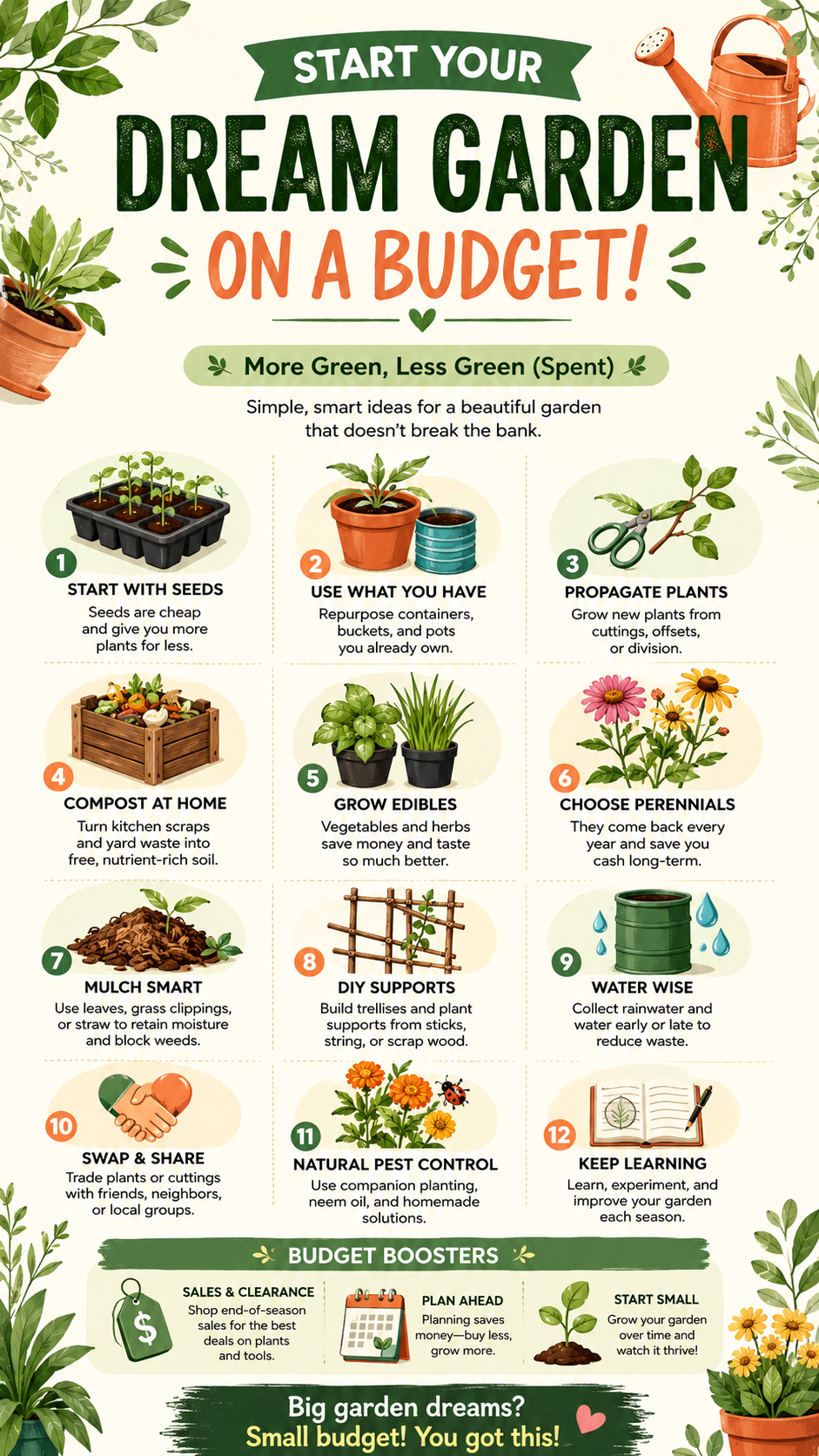
Starting a home garden does not have to mean spending a fortune on raised beds, expensive tools, and a cart full of nursery plants. In fact, some of the most productive gardens begin with a few seed trays, a handful of repurposed containers, and a simple plan. If you have been searching for practical home garden ideas that are affordable, beginner-friendly, and genuinely useful, the good news is that growing fresh food and beautiful plants on a budget is completely possible.
The smartest gardens are not always the biggest. They are the ones designed with intention. A few containers on a patio, a compact vegetable patch in the backyard, or a sunny corner filled with herbs can produce an impressive amount of food over time. With the right strategy, you can grow tomatoes, herbs, greens, flowers, and pollinator-friendly plants while keeping costs under control.
This guide pulls together the most effective budget garden ideas for beginners and everyday gardeners alike. You will learn how to start small, stretch your gardening budget, choose plants that give back season after season, and create a garden that looks beautiful while staying practical. Whether you are planning a container garden, a small backyard vegetable patch, or a low-cost raised bed setup, these tips will help you grow more for less.
Key Takeaways
- Start with a small, manageable garden space so you can learn what works before expanding.
- Growing from seed is one of the easiest ways to cut costs and increase plant variety.
- Repurposed pots, buckets, crates, and household items can work beautifully as planters.
- Compost, mulch, and homemade supports reduce waste while improving plant health.
- Perennials, edible plants, and high-yield vegetables give the best long-term value.
- Simple natural pest control methods can protect plants without expensive sprays.
Why Budget Gardening Works So Well
There is a common misconception that a productive garden requires a large upfront investment. In reality, gardening rewards consistency far more than it rewards spending. Sunlight, healthy soil, water, and plant care matter much more than matching pots or premium accessories. A thoughtful budget garden focuses on essentials first, then builds gradually as your confidence grows.
Budget gardening also encourages smarter habits. When you reuse materials, compost kitchen scraps, start plants from seed, and choose crops that suit your space, you naturally create a more sustainable garden. That means less waste, fewer unnecessary purchases, and better results over time. It is not just about saving money. It is about gardening in a way that feels practical, creative, and rewarding.
Important: The biggest money saver in any home garden is not a single product. It is the habit of building your garden step by step. Start with a few easy crops, learn your growing conditions, and reinvest only where it improves plant health, harvest size, or ease of maintenance.
1) Start Small and Grow With Confidence
One of the most valuable home garden ideas for beginners is also the simplest: start smaller than you think you need. A modest garden is easier to water, weed, feed, and monitor. It also helps you learn how much sun your space gets, which plants thrive in your climate, and how often your containers or beds dry out.
Instead of trying to fill an entire backyard at once, choose one focused project. That could be a compact herb garden near the kitchen, a few tomato plants in containers, or a single raised bed with salad greens and herbs. Starting small keeps costs lower and gives you space to experiment without feeling overwhelmed.
Best small-space starter projects
- A container herb garden with basil, mint, parsley, and chives
- A salad bed with lettuce, spinach, arugula, and green onions
- Two or three large pots with tomatoes, peppers, or cucumbers
- A compact pollinator corner with marigolds, zinnias, and basil
When your first setup feels manageable, you are more likely to stay consistent. That consistency is what turns a few small containers into a thriving home garden.
2) Grow From Seed to Save More Money
If you want to cut garden costs quickly, growing from seed is one of the best moves you can make. A single packet of seeds can produce dozens of plants for the price of one or two nursery starts. That is especially useful for vegetables, herbs, and flowers that are easy to germinate at home.
Seeds also open up more variety. Instead of choosing from whatever your local garden center has in stock, you can pick compact tomato varieties for containers, heat-tolerant lettuce, fragrant herbs, or pollinator flowers that fit your exact goals.
Easy plants to start from seed
- Basil, cilantro, dill, parsley, and chives
- Lettuce, spinach, kale, and arugula
- Zucchini, beans, peas, radishes, and cucumbers
- Marigolds, nasturtiums, sunflowers, and zinnias
For an even lower-cost setup, use seed trays you already have, recycled yogurt cups with drainage holes, or small nursery pots saved from previous seasons. Place them in a bright window or outdoors when temperatures are suitable for your area.
Pro Tip: Start with crops that germinate quickly and grow fast. Herbs, lettuce, radishes, beans, and marigolds give you visible progress early on, which builds momentum and confidence without requiring a big investment.
3) Use What You Already Have for Containers and Garden Supplies
Beautiful gardens do not need matching ceramic pots or custom-built beds. Repurposing materials is one of the easiest ways to create a stylish, functional garden on a budget. Buckets, crates, tubs, metal containers, wooden boxes, and old plant pots can all be reused as long as they are safe for growing and have proper drainage.
Container gardening is especially flexible because it works in patios, balconies, courtyards, and tiny backyards. You can group containers together for visual impact, move them to chase the sun, and adjust your setup as your garden evolves.
Smart repurposing ideas for a budget garden
- Use buckets or storage tubs for potatoes, tomatoes, or peppers
- Turn wooden crates into herb planters or salad boxes
- Reuse nursery pots for seed starting and plant divisions
- Transform old shelves, ladders, or benches into vertical plant displays
Just remember that drainage matters. Most vegetables and herbs dislike soggy roots, so any repurposed container should have drainage holes at the bottom. Adding a saucer or tray underneath helps protect patios and balconies while keeping watering mess under control.
Why This Matters
Repurposed containers do more than save money. They let you test plant placement, try new crops, and adapt your garden without committing to a permanent layout.
- Great for renters or small spaces
- Easy to rearrange as sunlight changes through the season
- Perfect for experimenting before building larger beds
4) Compost at Home for Free Garden Fertility
Compost is one of the most valuable resources in any home garden, and making it yourself is a smart way to reduce waste while improving soil. Vegetable peels, coffee grounds, fruit scraps, crushed eggshells, dry leaves, and yard trimmings can all become nutrient-rich compost over time. Instead of buying bag after bag of soil amendments, you can create your own slow, steady source of organic matter.
Adding compost to garden beds and containers helps improve soil structure, supports moisture retention, and provides gentle nutrition for plants. It is especially useful for vegetable gardens, where healthy soil directly affects growth and harvest quality.
Beginner composting basics
- Mix green materials like kitchen scraps with brown materials like dry leaves or cardboard
- Keep the pile slightly moist but not soggy
- Turn it occasionally to help air circulate
- Avoid adding oily foods, meat, or heavily processed leftovers
Even if you do not have room for a large compost pile, you can start small with a covered compost bin, a compact tumbler, or a simple corner pile tucked behind the shed. The key is consistency. Small scraps add up fast, and your garden will benefit from every batch.
5) Focus on Edible Plants That Earn Their Space
When space or budget is limited, every plant should work a little harder. That is why edible plants are such a smart choice in a budget garden. Herbs, leafy greens, tomatoes, beans, and compact vegetables can provide a steady return in fresh ingredients while also making the garden feel lush and productive.
Some crops offer especially good value because they produce repeatedly rather than all at once. Leaf lettuce can be harvested leaf by leaf, basil can be cut often to encourage more growth, and pole beans can keep producing over a long stretch of the season. This makes them ideal for gardeners who want maximum harvest from a small area.
High-value edible garden picks
- Herbs: basil, mint, parsley, oregano, thyme, and chives
- Leafy greens: lettuce, spinach, kale, Swiss chard
- Productive vegetables: tomatoes, beans, zucchini, cucumbers, peppers
- Cut-and-come-again crops: salad greens, green onions, cilantro
Mixing edible plants with flowers is another smart move. Marigolds, nasturtiums, and basil can look beautiful together while supporting pollinators and adding useful harvests to your garden.
Important: If you only have room for a few plants, choose the ones you actually love to eat and use often. A small container garden full of herbs, salad greens, and tomatoes can save more money than a larger garden filled with crops your household rarely cooks with.
6) Add Perennials for Long-Term Value
Annual vegetables and flowers are wonderful, but perennials can be the secret weapon of a low-cost garden. Unlike annuals, which need to be replanted each year, perennials return season after season once established. That means one purchase can keep paying off over time.
Perennial herbs are especially useful for home gardeners. Oregano, thyme, sage, and some types of chives can provide years of harvests with relatively little maintenance. Depending on your climate and space, berries, asparagus, and certain flowering plants can also become long-term garden staples.
Good perennial choices for budget-conscious gardeners
- Oregano, thyme, sage, and chives
- Lavender for fragrance, pollinators, and curb appeal
- Berry plants if you have the room and sunlight
- Asparagus where space allows for a permanent bed
Perennials work best when planted in a spot where they can stay put. Think of them as the foundation of your garden. Annuals can rotate around them, but those perennial anchors create a sense of structure and long-term value.
7) Mulch Everything You Can
Mulch is one of the simplest ways to make your garden healthier while reducing maintenance. A layer of mulch helps soil hold moisture, suppresses weeds, and keeps roots cooler during hot weather. It also gives beds and containers a more polished, finished look.
For a budget-friendly approach, use what is locally available and suitable for the type of garden you have. Shredded leaves, straw, grass clippings used lightly, bark, or arborist wood chips can all be helpful in the right setting. Vegetable beds often do well with lighter mulches, while ornamental beds and pathways may benefit from coarser wood-based options.
Benefits of mulching a home garden
- Reduces how often you need to water
- Helps block weed growth
- Protects soil from drying out and compacting
- Improves the overall appearance of beds and containers
If your area offers free wood chips or community compost programs, that can be a major money saver. Even a thin mulch layer can make a visible difference in plant health and garden upkeep.
8) Build Simple DIY Plant Supports
Climbing vegetables and tall plants often need support, but that does not mean you need to buy expensive cages or decorative trellises. A budget garden thrives on simple, functional structures. Stakes, bamboo poles, branches, twine, salvaged wood, and repurposed metal frames can all be turned into useful supports for tomatoes, cucumbers, peas, and beans.
DIY supports are especially handy in small gardens because they help you grow vertically. That means more harvest in less ground space. Cucumbers can climb up instead of sprawling across a path, beans can rise along a teepee frame, and tomatoes can stay upright and easier to manage.
Easy support ideas for a small garden
- A bamboo teepee for beans or peas
- Wooden stakes with garden twine for tomatoes
- A simple ladder-style trellis for cucumbers
- Wire or sturdy branches for flowering vines and lightweight climbers
Functional garden structures do not need to be perfect to be effective. What matters most is stability, airflow around the plant, and enough height for healthy growth.
9) Water Smarter, Not Harder
Watering can become one of the biggest ongoing efforts in a home garden, especially during warm weather. A budget-friendly garden strategy is to focus on efficiency. Water early in the day when evaporation is lower, direct water toward the base of the plant rather than the leaves, and use mulch to help lock moisture into the soil.
Containers usually dry out faster than in-ground beds, so group them by water needs when possible. Herbs that prefer drier conditions can be kept together, while thirsty vegetables like tomatoes or cucumbers can be grouped where they are easier to monitor.
Simple ways to save water in the garden
- Water in the morning to reduce evaporation loss
- Use mulch to slow moisture loss from the soil
- Choose larger containers when possible because they hold moisture longer
- Collect rainwater if it is practical and allowed in your area
Watering wisely does not just reduce waste. It also supports healthier roots and more consistent growth, which matters whether you are growing flowers, herbs, or a full vegetable garden.
10) Try Plant Swaps, Cuttings, and Shared Garden Resources
Some of the best home garden ideas cost almost nothing because they rely on community rather than shopping. Trading cuttings, dividing mature plants, swapping extra seedlings, or sharing surplus seeds with neighbors and gardening friends can expand your garden at very little cost. It also gives you access to varieties that are already doing well in your local area.
If you know someone with established herbs, berries, or flowering perennials, ask whether they divide plants in spring or have extra seedlings to share. Many gardeners are happy to pass along extras because they understand how quickly plants multiply.
Local gardening groups, community seed libraries, neighborhood swaps, and online plant communities can also be useful places to find budget-friendly additions. It is a great way to discover new varieties while building a more connected gardening routine.
11) Use Natural Pest Control and Companion Planting
Every gardener eventually runs into pests, but reaching for expensive sprays should not be the first step. A healthy garden can often manage minor pest pressure with simple, low-cost methods. Companion planting, regular plant checks, good airflow, and quick intervention all help keep problems from getting out of hand.
Flowers and herbs can play a useful role here. Marigolds, nasturtiums, basil, dill, and other pollinator-friendly plants attract beneficial insects while bringing color and life to the garden. Interplanting flowers among vegetables also makes a small garden feel fuller and more intentional.
Low-cost ways to support natural pest control
- Inspect leaves regularly so you can catch issues early
- Plant flowers and herbs that attract beneficial insects
- Space plants properly for airflow and easier drying after watering
- Remove heavily damaged leaves before pests spread further
Pro Tip: A mixed garden is often a stronger garden. Combining herbs, flowers, and vegetables can improve pollinator activity, soften the look of edible beds, and create a more resilient growing space without adding much to your budget.
12) Keep Learning and Let Your Garden Evolve
No garden is perfect in its first season, and that is part of the fun. A plant that struggles in one spot might thrive in another. A crop you thought would be high-maintenance may become your easiest grower. Every season teaches you something useful about sunlight, soil, timing, watering, and plant choices.
Keep a simple garden notebook or use your phone to track what you planted, where it went, when it performed well, and what you would change next year. Those notes can save you more money than any impulse purchase because they help you make smarter decisions season after season.
Over time, your budget garden becomes more efficient. You save seeds from favorite plants, divide perennials, refine your watering routine, and reuse materials that already work. That gradual improvement is what makes home gardening so satisfying. You are not just growing plants. You are building a system that gets better with experience.
A Simple Budget Garden Plan for Beginners
If you want to turn these ideas into action, keep the first season simple. Start with one or two containers or a small bed. Choose a mix of practical plants, prepare your soil, and build from there.
A beginner-friendly low-cost setup could look like this:
- Choose your growing area: a sunny patio, balcony, porch, or small backyard bed.
- Pick 4 to 6 easy plants: basil, parsley, lettuce, tomatoes, marigolds, and beans are all solid choices.
- Use repurposed containers or one compact raised bed: make sure drainage is covered.
- Add compost and mulch: these two steps improve the garden immediately.
- Install one simple support: a trellis or stake system will help you use vertical space.
- Track what works: note sun patterns, watering needs, and your most productive crops.
This kind of setup keeps costs realistic while giving you a meaningful harvest and a beautiful space to enjoy. It is manageable, flexible, and easy to expand later.
The Best Home Garden Ideas Are the Ones You Will Actually Use
There is no single perfect garden layout, and there does not need to be. The best home garden ideas are the ones that fit your space, your cooking habits, your schedule, and your budget. For one person, that might be a collection of herbs outside the kitchen door. For another, it might be a raised bed full of tomatoes, beans, and pollinator flowers. What matters most is that the garden works for your real life.
Budget gardening is not about doing less. It is about doing the right things first. Start with seeds, repurpose what you can, compost your scraps, choose productive plants, and let each season teach you something useful. A home garden built this way feels personal, practical, and deeply rewarding.
At a Glance
- Start with a small garden and a few reliable crops
- Save money by growing from seed and reusing containers
- Improve soil with homemade compost and protect it with mulch
- Choose edible, high-yield, and perennial plants for better long-term value
- Use simple DIY supports and natural pest control to keep costs down
Conclusion: Grow More, Spend Less, Enjoy the Process
A thriving garden does not begin with a huge budget. It begins with a few smart choices. Starting from seed, reusing containers, composting at home, planting productive crops, and building simple supports can transform even a tiny space into a hardworking garden. Whether your goal is fresh herbs for dinner, a small vegetable patch, or a beautiful backyard filled with useful plants, budget gardening makes that goal feel achievable.
Keep it simple, stay curious, and give yourself permission to learn as you go. Every tray of seedlings, every bucket turned planter, and every handful of compost moves your garden forward. With the right mix of creativity and consistency, your home garden can become greener, more productive, and more affordable season after season.