
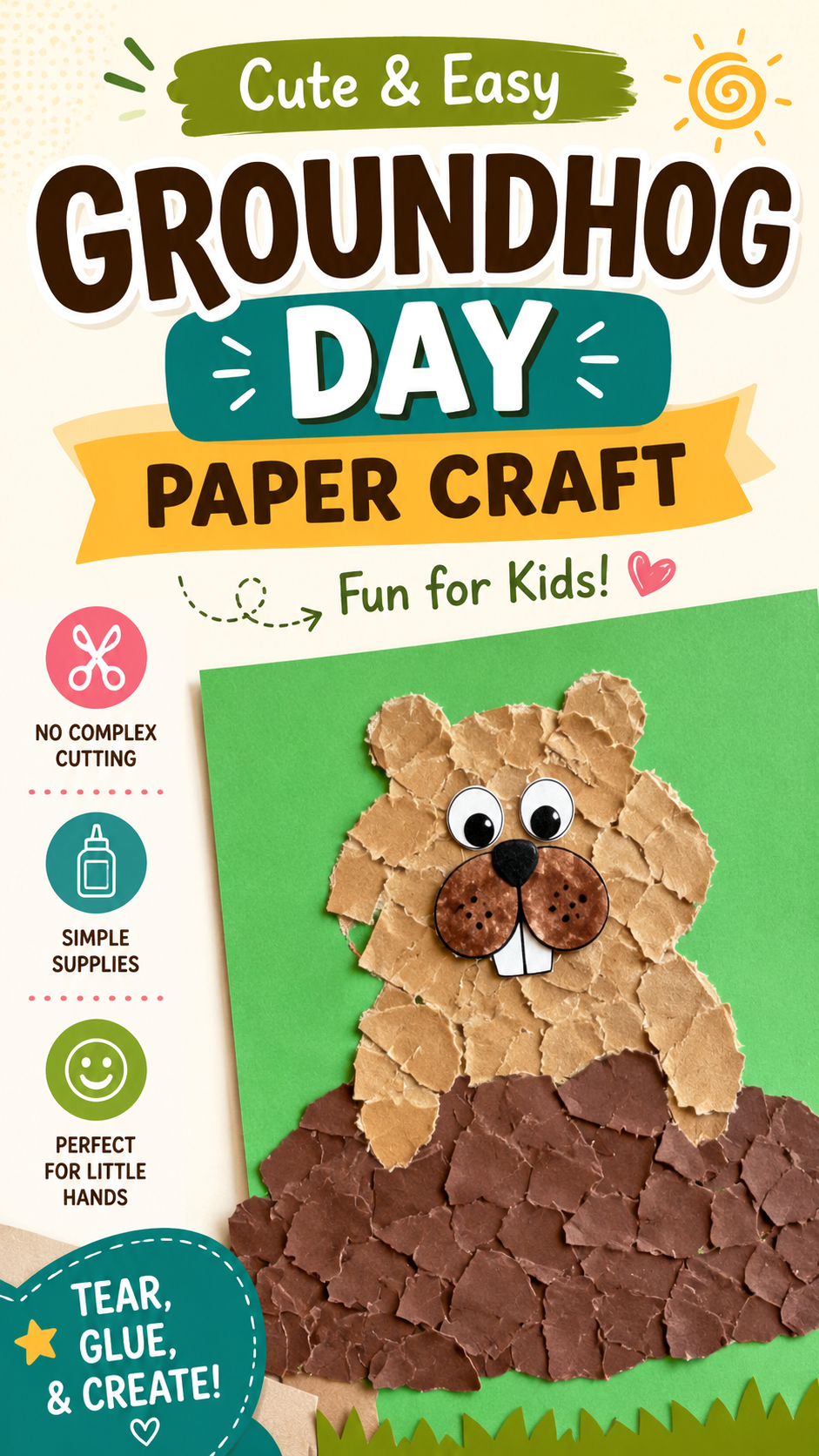
Groundhog Day is a fun seasonal moment to bring creativity, curiosity, and simple hands-on learning into the classroom or home. A torn paper groundhog craft is especially perfect for young kids because it uses basic materials, encourages texture and layering, and gives children a charming animal project they can proudly display. With green construction paper, torn brown paper pieces, a cute groundhog face, and a few playful details, this craft turns an ordinary paper activity into an engaging winter lesson.
This project works beautifully for preschool, kindergarten, early elementary classrooms, homeschool activities, library story time, or a cozy afternoon craft table. Kids can tear, glue, arrange, and decorate while learning about Groundhog Day, winter weather, animal burrows, and seasonal traditions. The finished design is simple, cheerful, and full of personality, which makes it ideal for bulletin boards, hallway displays, or take-home art.
Key Takeaways
- This Groundhog Day craft uses torn paper to create texture and movement.
- It is a simple cut, tear, and glue activity for preschool and kindergarten kids.
- The project supports fine motor skills, hand strength, and creative decision-making.
- It pairs well with Groundhog Day books, weather lessons, and winter classroom themes.
- The finished craft makes an adorable seasonal bulletin board display.
Why Groundhog Day Crafts Are So Fun for Kids
Groundhog Day gives children a playful reason to talk about seasons, shadows, weather, animals, and predictions. Even though the holiday is small compared with major classroom events, it is packed with kid-friendly learning opportunities. Children can ask questions like, “Will the groundhog see its shadow?” or “Where does a groundhog live?” These questions naturally lead into science, storytelling, and art.
A groundhog craft also gives kids a visual connection to the holiday. Instead of only hearing about a groundhog coming out of its burrow, they can create one with their own hands. The torn paper pieces make the dirt mound look textured, while the tan paper body gives the groundhog a soft, handmade look. This kind of craft feels approachable for young learners because the pieces do not need to be perfect.
Important: Torn paper crafts are excellent for young children because they remove the pressure of perfect cutting. Kids can focus on texture, shape, color, and placement while still creating a finished project that looks intentional and adorable.
The Main Idea Behind This Torn Paper Groundhog Craft
The central idea is simple: children build a groundhog peeking out from a mound of dirt using torn paper pieces. A bright green background creates a fresh outdoor setting, while layered brown pieces form the ground or burrow. The groundhog body is made from tan paper scraps, giving it a soft, textured appearance. The face can be completed with paper eyes, googly eyes, a nose, teeth, and round cheeks.
This style is especially appealing because it looks charming without requiring advanced art skills. The torn edges create a natural, handmade texture. The layered paper adds depth. The funny face makes the project feel playful and memorable. Even when every child follows the same directions, each finished groundhog will look unique because every torn paper piece is different.
A Great Craft for Different Age Groups
Preschoolers can focus on tearing paper and gluing pieces onto the page. Kindergarten students can practice arranging shapes to form the body, dirt mound, and face. Older children can add more detail, such as grass, clouds, shadows, labels, or a short Groundhog Day writing prompt. The activity can be as simple or as detailed as needed.
That flexibility makes it a strong choice for mixed-age groups. Younger kids can enjoy the sensory experience of tearing and gluing, while older kids can personalize the craft with extra design choices.
Supplies Needed for a Groundhog Day Paper Craft
One of the best things about this Groundhog Day craft for kids is that it uses common classroom and craft supplies. You do not need anything fancy to create a cute result. Most of the materials are easy to find in a preschool room, elementary classroom, homeschool shelf, or basic craft bin.
Basic Materials
- Green construction paper for the background
- Brown construction paper for the dirt mound
- Tan or light brown construction paper for the groundhog body
- White paper for teeth and eyes
- Black paper or marker for pupils and nose
- Glue stick or school glue
- Scissors for adult prep or older children
- Crayons, markers, or colored pencils for details
Optional Add-Ons
- Googly eyes for a fun, expressive face
- Scrap paper in different brown shades for extra texture
- Cotton balls for clouds
- Yellow paper for a sun
- Black or gray paper for a shadow
- A printable groundhog face template for younger children
Using different shades of brown can make the dirt mound look more natural. Children can also use leftover paper scraps from other projects, which makes this a great low-waste craft activity.
How to Make a Torn Paper Groundhog Craft
This paper groundhog activity is easy to set up and simple to guide. The steps below work well for individual crafting, small groups, or a whole-class project. For younger children, it helps to prepare a few basic shapes ahead of time. Older children can cut or draw their own pieces.
Step 1: Prepare the Background
Start with a full sheet of green construction paper. This will act as the outdoor background. Green works well because it creates contrast with the tan groundhog and brown dirt mound. It also gives the project a cheerful look, which is perfect for a Pinterest-worthy kids craft or classroom display.
Children can keep the background plain, or they can add simple details later. Grass lines, clouds, a sun, or a shadow can all help connect the craft to Groundhog Day themes.
Step 2: Tear Brown Paper for the Dirt Mound
Give each child brown construction paper and invite them to tear it into small pieces. The pieces do not need to match. In fact, uneven pieces create a better texture. Children can tear large pieces for the base and smaller pieces for filling gaps.
Once the pieces are ready, children can glue them along the lower part of the green paper to form a mound. Encourage them to overlap the edges slightly. This gives the dirt mound a layered look, making the groundhog appear as if it is peeking out of a burrow.
Pro Tip: Ask children to tear paper slowly using both hands. This strengthens fingers and improves control, which helps with writing, cutting, buttoning, and other fine motor skills.
Step 3: Build the Groundhog Body
Next, children can use tan or light brown torn paper pieces to build the groundhog’s head and body. A rounded shape works well for the head, while two side pieces can become arms or paws. The body should sit partly behind the dirt mound so it looks like the groundhog is emerging from underground.
This step gives children a chance to think about shape and placement. They can make the groundhog tall, round, fluffy, small, silly, or wide. Since the paper is torn, the body will have a soft, textured look that feels warm and handmade.
Helpful Teacher Tip
For younger children, lightly draw a simple groundhog outline on the background paper before they begin gluing. This gives them a guide while still allowing plenty of creative freedom.
Step 4: Add the Face
The face brings the groundhog to life. Children can add two eyes, a round nose, two cheek shapes, and long front teeth. The teeth are one of the cutest parts of the design because they instantly make the animal recognizable and funny.
Googly eyes can make the face extra playful, but paper circles work just as well. The cheeks can be colored reddish brown, brown, or tan. Children can draw small dots for whisker marks and add a simple smile if they want.
Step 5: Add Groundhog Day Details
Once the groundhog is finished, children can add details that connect the craft to the holiday. A shadow shape on the grass can represent the big Groundhog Day question. A sun can show a bright day. Clouds can suggest winter weather. A speech bubble can say, “Will I see my shadow?” or “Happy Groundhog Day!”
These details are optional, but they can turn the craft into a mini storytelling activity. Children can explain what their groundhog is doing and whether they think spring is coming soon.
Expert Insight
The strongest kids craft projects combine creativity with conversation. This groundhog activity is not just about making a cute paper animal. It also opens the door to questions about seasons, shadows, hibernation, weather predictions, and animal habitats.
Learning Benefits of Torn Paper Crafts
A torn paper groundhog craft may look simple, but it supports several important developmental skills. Young children learn best when they can touch, move, test, and create. This activity gives them a chance to do all of that while making something seasonal and fun.
Fine Motor Skill Development
Tearing paper is a powerful fine motor exercise. It requires children to pinch, pull, coordinate both hands, and control pressure. These movements strengthen the small muscles in the fingers and hands. Those same muscles are needed for writing, drawing, cutting, and using classroom tools.
Gluing small pieces also helps children practice precision. They learn where to place each piece, how much glue to use, and how to press pieces down without moving everything around.
Creativity and Confidence
Because torn paper crafts are naturally imperfect, children feel less worried about making mistakes. A crooked edge looks like texture. A lopsided face looks funny and expressive. A different body shape makes the groundhog unique. This helps children build confidence in their own creative choices.
Important: The best classroom crafts leave room for individuality. When every groundhog looks slightly different, children can see that creativity is not about copying a perfect example. It is about making choices and enjoying the process.
Following Directions
This activity also gives children practice following a sequence. They start with the background, then create the dirt mound, build the body, add the face, and finish with details. Step-by-step crafting helps children understand order, patience, and completion.
How to Use This Craft in a Groundhog Day Lesson
This project can stand alone as a fun seasonal craft, but it becomes even more valuable when paired with a simple lesson. Groundhog Day naturally connects to weather, shadows, seasons, animals, and prediction skills. That makes it a great cross-curricular activity for early learners.
Pair It With a Read-Aloud
Start with a Groundhog Day picture book or a short nonfiction passage about groundhogs. After reading, ask children what they noticed. Where do groundhogs live? What do they look like? Why do people talk about shadows on Groundhog Day? Then invite them to make their own groundhog craft.
This sequence helps children connect reading comprehension with hands-on art. The craft becomes a response to the story or lesson.
Add a Prediction Activity
Before making the craft, ask children to predict whether the groundhog will see its shadow. You can create a simple class chart with two columns: “Shadow” and “No Shadow.” Children can place their names or stickers under their predictions.
After the craft, they can add a paper shadow to their picture if they predicted a sunny day. If they predicted no shadow, they can add clouds instead. This makes the artwork feel connected to their own thinking.
Create a Writing Extension
For kindergarten and early elementary students, add a short writing prompt below the craft. Simple prompts might include:
- My groundhog sees…
- I predict…
- If I were a groundhog, I would…
- Spring is coming because…
- The groundhog is hiding in…
This turns the art project into a literacy activity. Children can practice sentence writing, vocabulary, and personal expression while staying connected to the holiday theme.
Classroom Display Ideas for Groundhog Day Crafts
A collection of torn paper groundhogs makes an adorable classroom display. The green backgrounds create a bright, unified look, while the different faces and paper textures add variety. Since the craft is flat and paper-based, it is easy to hang on bulletin boards, doors, windows, or hallway walls.
Bulletin Board Title Ideas
- Will We See a Shadow?
- Groundhog Day Predictions
- Peeking Into Spring
- Our Groundhog Day Craft
- Winter Weather Watchers
You can add a class prediction chart beside the crafts. This creates a display that is both decorative and educational. Families and other students can see the artwork and the learning goal at the same time.
Add Student Names and Captions
Small name labels under each craft help children feel proud of their work. You can also add a sentence strip with each child’s prediction. For example, “I think the groundhog will see its shadow.” This small addition makes the display more personal and meaningful.
Tips for Making the Craft Easier With Young Kids
Crafting with young children is most successful when the setup is simple and the expectations are clear. A little preparation can make this Groundhog Day activity smoother, cleaner, and more enjoyable for everyone.
Prep Small Paper Strips First
Instead of giving children full sheets of paper to tear, cut the construction paper into strips first. Strips are easier for small hands to manage. Children can tear the strips into smaller chunks without becoming overwhelmed.
Use Glue Sticks for Less Mess
Glue sticks are usually easier than liquid glue for this type of project. They help children apply glue without soaking the paper. If using liquid glue, pour small amounts into cups and let children apply it with cotton swabs or craft sticks.
Offer a Face Template
The face details can be the trickiest part for younger children. You can prepare circles for eyes, an oval or triangle for the nose, cheek shapes, and small white rectangles for teeth. Children can still choose where to place the features, but the prep work keeps the activity age appropriate.
Simple Variation
For toddlers or very young preschoolers, skip the tiny face pieces and let them draw the face with a marker after gluing the torn paper body. This keeps the project manageable and still gives them a cute finished groundhog.
Creative Variations for This Groundhog Day Craft
Once children understand the basic idea, you can adapt the craft in many ways. These variations help keep the activity fresh and allow you to match the project to your lesson goals, available supplies, and age group.
Add a Shadow
Cut a gray or black oval shape and place it beside the groundhog. This connects the craft directly to the Groundhog Day tradition. Children can decide whether their groundhog sees a shadow or not.
Make a Weather Scene
Invite children to add weather details around the groundhog. They can create sun, clouds, raindrops, snowflakes, or wind lines. This turns the craft into a weather activity and encourages vocabulary related to the seasons.
Use Recycled Paper
Old paper bags, packaging paper, magazine pages, and leftover construction paper scraps can all be used to create the dirt mound and groundhog body. Recycled materials add texture and make the craft more eco-friendly.
Turn It Into a Lift-the-Flap Craft
For a more interactive version, create a paper flap for the burrow. The groundhog can hide behind the dirt mound and pop up when the flap is lifted. This version works well for storytelling and dramatic play.
Why This Craft Works Well for Pinterest and Blogs
Groundhog Day crafts for kids are popular because they are seasonal, simple, and useful for parents and teachers. A torn paper version is especially appealing because it photographs well, uses inexpensive supplies, and looks handmade in the best way. The bold green background, textured brown dirt mound, and cute groundhog face create a clear visual theme that is easy to understand at a glance.
For blog readers, the craft is practical. They can quickly see what materials are needed and how the project can fit into a lesson or afternoon activity. For Pinterest users, the idea is easy to save because it solves a specific seasonal need: a cute Groundhog Day craft for kids that is not complicated.
Important: The most saveable kids craft ideas are clear, affordable, and easy to recreate. This groundhog project checks all three boxes while still leaving room for children to personalize their artwork.
Common Questions About Groundhog Day Crafts for Kids
What age is this craft best for?
This craft is best for preschool, kindergarten, and early elementary children. Toddlers can also enjoy a simplified version with larger paper pieces and adult help.
Can this craft be done without scissors?
Yes. The main texture comes from torn paper, so children can complete most of the project without scissors. Adults may want to prepare the face pieces ahead of time for younger groups.
How long does the activity take?
Most children can complete the craft in about 20 to 35 minutes, depending on age, prep work, and how many details they add. A writing extension or full lesson may make the activity longer.
Can it be used for a classroom bulletin board?
Absolutely. The finished crafts look adorable as a group display. Add a title, student predictions, and a few weather symbols to create a complete Groundhog Day bulletin board.
At a Glance
- Best for preschool, kindergarten, and early elementary kids.
- Uses simple supplies like construction paper, glue, and markers.
- Great for fine motor practice and Groundhog Day lessons.
- Easy to adapt with shadows, weather details, or writing prompts.
- Perfect for classrooms, homeschool, and seasonal craft boards.
Conclusion: A Cute and Easy Groundhog Day Craft Kids Will Remember
A torn paper groundhog craft is a wonderful way to celebrate Groundhog Day with creativity and purpose. It is simple enough for young children, flexible enough for different age levels, and meaningful enough to connect with lessons about weather, shadows, seasons, and animals. With torn brown paper, a green background, and a funny groundhog face, kids can create a project that feels cheerful, textured, and full of personality.
This craft also gives children valuable practice with fine motor skills, sequencing, creative choices, and classroom discussion. Whether you use it after a read-aloud, during a winter theme, as part of a Groundhog Day prediction chart, or as a seasonal bulletin board project, it brings learning and art together in a way that feels natural and fun.
For parents, teachers, and caregivers looking for easy Groundhog Day crafts for kids, this paper project is a reliable favorite. It is affordable, low-prep, and cute enough to save, display, and revisit every February.
Tags
Groundhog Day Crafts Kids Paper Crafts Preschool Crafts Kindergarten Activities Torn Paper Craft Winter Classroom Ideas Animal Crafts for Kids