
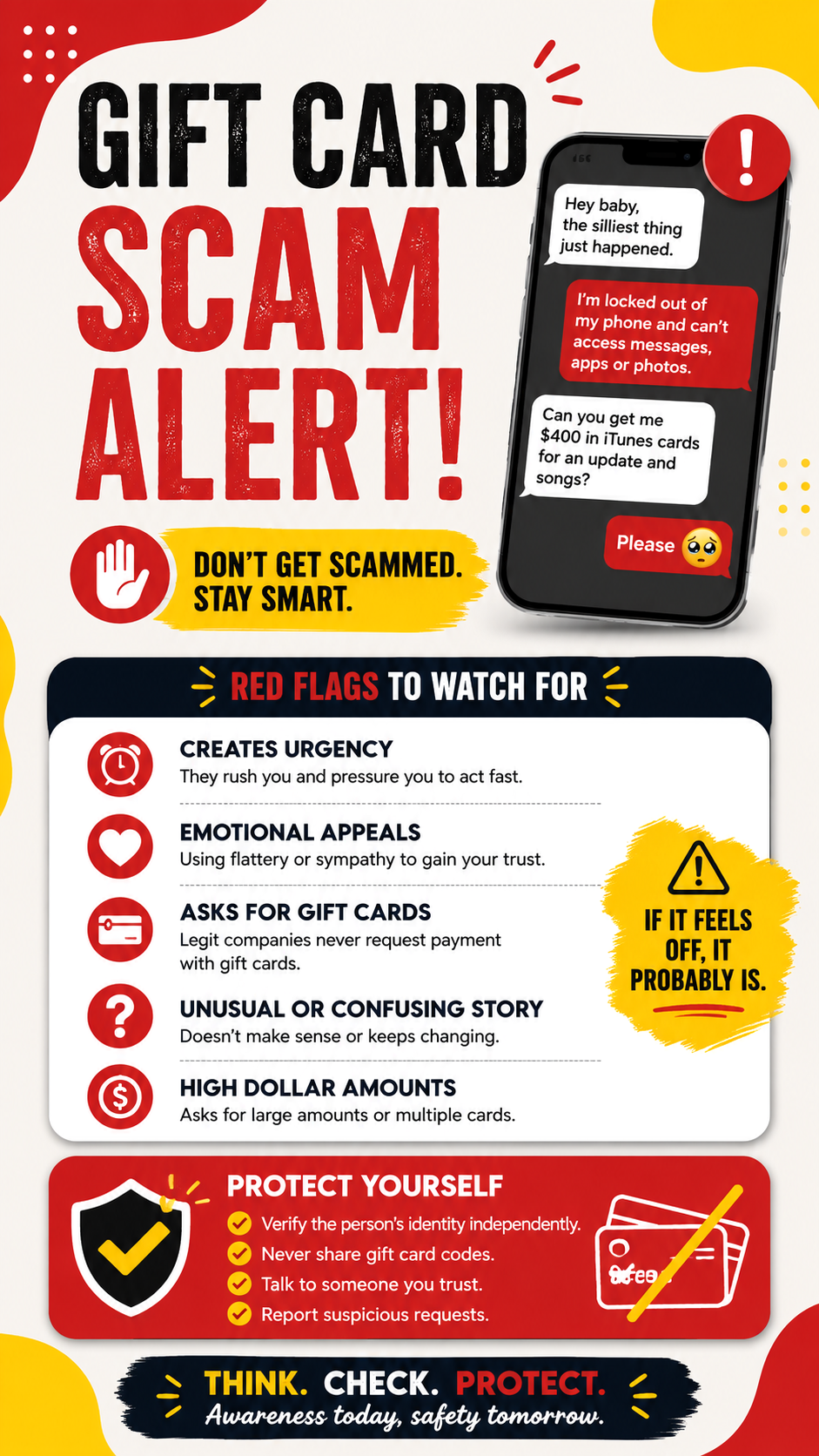
The image highlights a common online scenario where a person claims to be locked out of their phone and urgently requests hundreds of dollars in iTunes gift cards. Messages like these are frequently associated with gift card scams, social engineering tactics, and fraudulent payment requests that target emotions rather than logic. Understanding how these schemes work can help individuals, families, and businesses avoid financial loss while improving awareness of digital safety.
Key Takeaways
- Gift card requests are one of the most common online scam tactics.
- Scammers often create urgency and emotional pressure.
- Legitimate companies rarely request payment through gift cards.
- Verifying identity before sending money is essential.
- Understanding red flags can prevent costly mistakes.
- Awareness is one of the strongest defenses against fraud.
Why Gift Card Scams Continue to Grow
Gift cards were originally designed as convenient gifts and simple payment solutions. Unfortunately, fraudsters discovered that gift cards are difficult to trace once redeemed, making them attractive tools for scams. Unlike traditional bank transfers, gift card codes can be shared instantly and used almost immediately.
Scammers often target people through email, text messages, dating platforms, social media, and messaging apps. Their goal is simple: convince the victim to purchase gift cards and send the codes.
The message shown in the image demonstrates several classic persuasion techniques. The sender attempts to establish an emotional connection, explains a supposedly urgent technical problem, and then requests a large amount of money in gift cards.
Important: Any unexpected request for gift cards, especially when combined with urgency, emotional appeals, or unusual explanations, should be treated with extreme caution.
Common Red Flags in Gift Card Payment Requests
Many scam messages follow a predictable pattern. Recognizing these warning signs can help prevent fraud before money changes hands.
1. Urgent Deadlines
Fraudsters often create pressure by claiming that immediate action is required. They want victims to act quickly before taking time to verify the story.
2. Emotional Manipulation
Messages frequently include affectionate language, sympathy-inducing stories, or personal appeals. The goal is to lower skepticism and encourage trust.
3. Unusual Payment Methods
Gift cards are not a standard payment method for technical support, phone updates, account recovery, or business transactions. Requests involving gift cards should immediately raise concerns.
4. Technical Explanations That Make Little Sense
Scammers often invent confusing stories involving software updates, locked accounts, security issues, or payment requirements. These explanations are designed to sound believable without being easily verified.
5. Requests for Large Dollar Amounts
Fraudsters frequently ask for multiple gift cards because higher values mean larger payouts and less effort.
Understanding Social Engineering Tactics
Social engineering is the art of manipulating people into revealing information or sending money. Instead of exploiting computer systems, scammers exploit human emotions.
They often rely on psychological triggers such as:
- Trust
- Fear
- Urgency
- Romance
- Sympathy
- Authority
- Excitement
When these emotions are activated, people may overlook obvious warning signs. This is why education and awareness remain critical components of online safety.
Expert Insight
Most successful scams are not based on advanced technology. They succeed because they persuade people to trust a story before verifying the facts. Taking a few minutes to confirm details can prevent significant financial loss.
Why Scammers Prefer iTunes and Gift Cards
Gift cards offer several advantages for fraudsters. Once the redemption code is shared, recovering funds becomes extremely difficult. In many cases, the victim realizes the fraud only after the gift card balance has already been spent.
Popular gift card targets include:
- iTunes cards
- Google Play cards
- Amazon gift cards
- Retail store gift cards
- Gaming platform cards
Because these cards are widely available, scammers can instruct victims to purchase them from local stores within minutes.
Romance Scams and Emotional Requests
One of the most concerning aspects of gift card fraud is its connection to romance scams. Fraudsters often spend weeks or months building relationships before asking for money.
The language in many scam messages is intentionally affectionate. Compliments, emotional statements, and personal stories are designed to create attachment and trust.
Victims may feel they are helping someone they care about rather than responding to a financial request from a stranger.
Pro Tip: If an online relationship quickly progresses to requests for money, gift cards, financial assistance, or emergency payments, pause and independently verify the person’s identity.
How to Verify Suspicious Requests
Verification is one of the most effective ways to avoid scams. Before sending money or gift card codes, take several steps to confirm the situation.
Call the Person Directly
If the request comes from someone you know, contact them through a trusted phone number rather than replying directly to the message.
Ask Specific Questions
Fraudsters often struggle when asked detailed questions that only the real person would know.
Research the Story
Many scam claims involve common scenarios that have already been reported online. A quick search may reveal identical messages.
Check for Logical Inconsistencies
Ask whether the explanation makes practical sense. Most technology companies do not require gift card payments to unlock phones or update software.
Gift Card Fraud and Business Environments
Gift card scams are not limited to personal relationships. Businesses are frequently targeted as well.
A common business scam occurs when an employee receives a message appearing to come from a manager or executive. The message requests gift cards for clients, rewards, or urgent company needs.
The employee purchases the cards, sends the codes, and later discovers the request was fraudulent.
Organizations can reduce risk through:
- Employee awareness training
- Verification procedures
- Approval requirements for purchases
- Fraud reporting processes
- Cybersecurity education programs
What to Do If You Already Sent Gift Card Codes
If gift card information has already been shared, quick action is important.
- Contact the gift card issuer immediately.
- Save all messages and communications.
- Report the incident to the relevant platform.
- Notify local authorities if appropriate.
- Monitor financial accounts for suspicious activity.
- Inform friends and family if account compromise is suspected.
Although recovery is not always possible, reporting the incident can improve the chances of limiting further damage.
Building Strong Online Safety Habits
Preventing scams is easier than recovering from them. Developing consistent online safety habits can dramatically reduce risk.
Think Before Acting
Scammers want immediate decisions. Slowing down disrupts their strategy.
Verify Every Financial Request
Even messages appearing to come from trusted contacts should be confirmed independently.
Stay Informed
Fraud tactics evolve constantly. Awareness of current scam trends can help identify suspicious activity more quickly.
Protect Personal Information
Limiting publicly available personal information reduces opportunities for social engineering attacks.
Important: Legitimate organizations almost never request payment through gift cards for account recovery, software updates, taxes, technical support, or emergency fees.
Recognizing Scam Language Patterns
Many fraudulent messages contain similar wording. Common themes include emergencies, locked devices, account issues, travel problems, unexpected expenses, and requests for secrecy.
Another common characteristic is excessive emotional language mixed with financial requests. This combination aims to create urgency while discouraging critical thinking.
Learning to identify these patterns helps consumers, families, and businesses make better decisions when unexpected requests appear.
At a Glance
- Gift card requests are a major fraud warning sign.
- Emotional manipulation is a common scam tactic.
- Always verify identity before sending money.
- Urgency should increase skepticism, not speed.
- Report suspicious messages when possible.
Conclusion
Gift card scams continue to affect individuals and businesses because they exploit trust, emotion, and urgency rather than technical vulnerabilities. Understanding the warning signs can dramatically reduce the likelihood of becoming a victim. Whether the request comes from a stranger, an online acquaintance, or someone claiming to represent a trusted organization, verification should always come before payment.
By recognizing suspicious requests, questioning unusual stories, and refusing to share gift card codes without confirmation, people can protect themselves from one of the most common forms of online fraud. Awareness remains the strongest defense, and a few extra moments of caution can prevent significant financial and emotional losses.
Tags
Gift Card Scam Online Fraud Scam Awareness Cyber Safety Social Engineering Identity Verification Online Security Fraud Prevention