
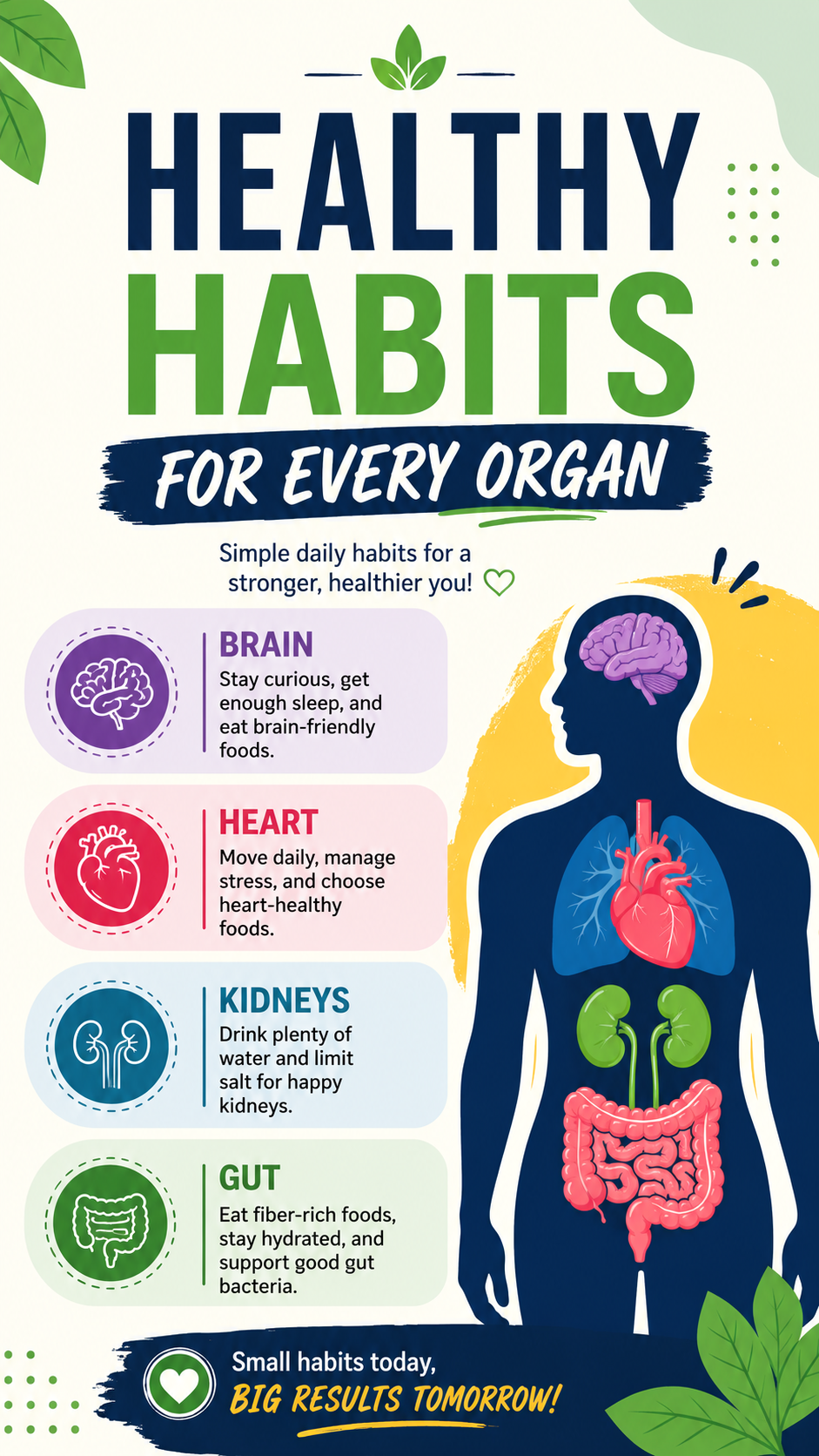
Good health is not built from one single habit. It comes from the small daily choices that support every major system in the body. The brain helps us think and focus, the heart keeps blood flowing, the kidneys filter waste, and the gut plays a vital role in digestion, immunity, and overall wellness. When these organs work together efficiently, the body feels energized, balanced, and resilient.
Many people focus on one area of health while overlooking the interconnected nature of the body. The truth is that healthy habits often benefit multiple organs at the same time. Drinking enough water, eating nutrient-dense foods, moving regularly, and managing stress can positively affect nearly every system in the body.
Key Takeaways
- Hydration supports kidney function, heart health, and mental performance.
- A nutrient-rich diet benefits the brain, gut, heart, and overall wellness.
- Regular physical activity strengthens multiple body systems simultaneously.
- Quality sleep helps the brain recover and supports healthy organ function.
- Stress management plays an important role in long-term health.
- Small daily habits often create the biggest long-term results.
Why Every Organ Deserves Attention
The human body operates as an integrated network. When one organ struggles, others may also feel the effects. For example, poor dietary choices can affect heart health, increase strain on the kidneys, and disrupt gut balance. Likewise, chronic stress can influence digestion, sleep quality, and cognitive performance.
Understanding this connection helps create a more holistic approach to wellness. Instead of chasing quick fixes, focusing on sustainable healthy habits provides benefits across the entire body.
Important: The most effective wellness routines are often the simplest. Consistency with basic habits such as hydration, movement, balanced meals, and sleep can have a profound impact on multiple organs over time.
Healthy Habits for Better Brain Function
The brain controls thought, memory, concentration, and decision-making. Supporting cognitive health can improve daily productivity and overall quality of life.
Prioritize Quality Sleep
Sleep allows the brain to process information, consolidate memories, and recover from daily demands. Adults should aim for consistent, restorative sleep each night.
Feed Your Brain Wisely
Foods rich in healthy fats, antioxidants, vitamins, and minerals can support cognitive function. Colorful fruits, vegetables, nuts, seeds, and fish are often associated with brain-friendly nutrition.
Keep Learning
Challenging the brain with reading, puzzles, learning new skills, or engaging conversations can help maintain mental sharpness.
Brain-Boosting Daily Practices
- Read for at least 15 minutes daily.
- Stay hydrated throughout the day.
- Limit excessive screen exposure before bedtime.
- Practice mindfulness or meditation.
- Learn something new regularly.
Heart-Healthy Habits That Make a Difference
The heart works continuously to deliver oxygen and nutrients throughout the body. Supporting cardiovascular health is one of the most valuable investments in long-term wellness.
Move Your Body Every Day
Regular movement helps improve circulation, supports healthy blood pressure, and contributes to overall cardiovascular fitness.
Choose Heart-Friendly Foods
A balanced diet rich in vegetables, fruits, whole grains, legumes, and healthy fats can support cardiovascular wellness.
Manage Stress Effectively
Chronic stress may place additional strain on the cardiovascular system. Incorporating relaxation techniques can support both mental and heart health.
Pro Tip: Even short periods of daily movement can be beneficial. A brisk walk, stretching routine, or light exercise session performed consistently often provides greater benefits than occasional intense workouts.
Supporting Kidney Health Through Everyday Choices
The kidneys perform essential functions including filtering waste products, balancing fluids, and helping regulate important bodily processes.
Stay Properly Hydrated
Water helps the kidneys perform their filtering role efficiently. Adequate hydration is one of the simplest ways to support kidney health.
Watch Sodium Intake
Excessive sodium consumption can increase strain on the body. Choosing fresh foods and minimizing heavily processed options may support overall health.
Maintain an Active Lifestyle
Physical activity contributes to healthy circulation and overall wellness, indirectly supporting kidney function.
Simple Kidney-Friendly Habits
- Carry a reusable water bottle.
- Eat more fresh fruits and vegetables.
- Limit highly processed foods.
- Stay physically active.
- Schedule regular health checkups.
Why This Matters
- Healthy kidneys support fluid balance throughout the body.
- Hydration benefits the brain, heart, kidneys, and digestive system simultaneously.
- Small preventive habits often help maintain long-term wellness.
The Importance of Gut Health
The digestive system does much more than process food. A healthy gut contributes to nutrient absorption, immune function, and overall well-being.
Eat Fiber-Rich Foods
Fiber supports healthy digestion and helps maintain balance within the digestive system. Whole grains, fruits, vegetables, legumes, and seeds are excellent sources.
Include Diverse Foods
Eating a variety of nutrient-dense foods can support a healthier digestive environment and improve overall nutrition.
Reduce Unnecessary Stress
The connection between the brain and gut is powerful. Managing stress can positively influence digestion and comfort.
Important: Digestive wellness often reflects broader lifestyle patterns. Consistent hydration, nutritious meals, movement, and adequate sleep can collectively support a healthier gut environment.
Habits That Benefit Multiple Organs at Once
Some lifestyle choices create positive effects across the entire body. These habits are particularly valuable because they deliver widespread benefits without requiring complicated routines.
Drink More Water
Hydration supports circulation, cognitive function, digestion, temperature regulation, and kidney performance.
Eat Whole Foods More Often
Whole foods provide essential nutrients that support nearly every organ system. They often contain vitamins, minerals, fiber, and beneficial plant compounds.
Stay Physically Active
Movement supports cardiovascular health, mental well-being, digestion, and metabolic function.
Get Consistent Sleep
Sleep influences recovery, immune function, brain performance, hormone balance, and overall wellness.
Practice Stress Management
Techniques such as meditation, breathing exercises, journaling, and time outdoors can support both physical and mental health.
Creating a Sustainable Daily Wellness Routine
Healthy living does not require perfection. The goal is to establish routines that are realistic, enjoyable, and sustainable over time.
Start by identifying one habit that feels achievable. Focus on consistency rather than intensity. Once that habit becomes automatic, gradually introduce another positive change.
Examples include drinking an extra glass of water each day, taking a short walk after meals, adding an extra serving of vegetables, or establishing a consistent bedtime routine.
Sample Daily Wellness Checklist
- Drink water throughout the day.
- Eat balanced meals rich in nutrients.
- Move your body regularly.
- Take short breaks to reduce stress.
- Get adequate sleep each night.
- Spend time outdoors when possible.
Common Mistakes That Can Affect Organ Health
Many people unknowingly adopt habits that may work against their health goals.
- Skipping meals regularly.
- Relying heavily on processed foods.
- Not drinking enough water.
- Spending long periods inactive.
- Ignoring chronic stress.
- Getting insufficient sleep.
Recognizing these patterns is the first step toward creating healthier routines that support the entire body.
At a Glance
- Hydration benefits multiple organs simultaneously.
- Nutritious foods provide essential support for overall wellness.
- Regular movement strengthens physical and mental health.
- Sleep and stress management are foundational habits.
- Small consistent actions create lasting results.
Conclusion
Supporting your brain, heart, kidneys, and gut does not require extreme measures. The most powerful improvements often come from simple daily habits repeated consistently over time. Drinking enough water, eating nutrient-rich foods, staying active, sleeping well, and managing stress can positively influence multiple organ systems at once.
When viewed as a whole, health becomes less about quick fixes and more about creating a balanced lifestyle. By focusing on sustainable habits that support every major organ, you can build a stronger foundation for long-term wellness, energy, and vitality.