
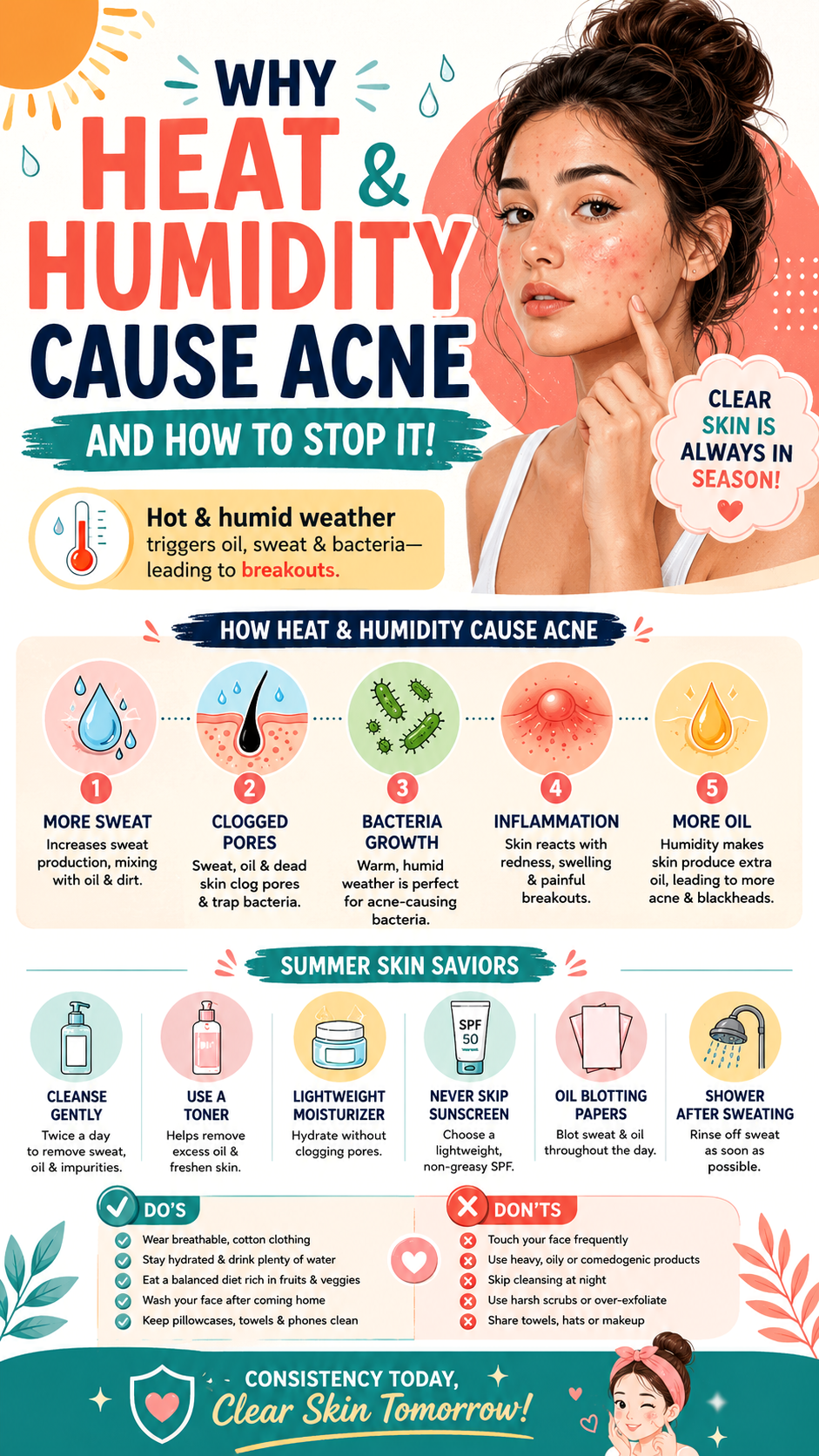
Hot weather can feel great, but your skin may not always agree. Many people notice an increase in breakouts during summer or in humid climates, even when they follow a consistent skincare routine. Excess sweat, increased oil production, clogged pores, and bacteria growth can create the perfect environment for acne flare-ups. Understanding how heat and humidity affect your skin is the first step toward preventing frustrating breakouts and maintaining a healthy complexion throughout the year.
Whether you struggle with occasional pimples or persistent acne, learning how environmental conditions influence your skin can help you make smarter skincare choices. The good news is that with a few adjustments, you can significantly reduce the impact of hot and humid weather on your skin.
Key Takeaways
- Heat increases sweat production, which can contribute to clogged pores.
- Humidity often causes excess oil production and shinier skin.
- Bacteria thrive in warm, moist conditions that may worsen acne.
- Lightweight skincare products can help reduce congestion.
- Proper cleansing and sun protection are essential during hot weather.
- Simple daily habits can significantly lower the risk of breakouts.
Why Heat and Humidity Can Trigger Acne
Acne develops when hair follicles become clogged with oil, dead skin cells, and debris. During hot and humid weather, several factors combine to make this process more likely. Your body naturally responds to higher temperatures by producing more sweat. While sweating itself does not directly cause acne, it can contribute to conditions that encourage breakouts.
When sweat mixes with excess oil, sunscreen, makeup, and environmental pollutants, pores can become congested. This creates an ideal environment for acne-causing bacteria to multiply.
Important: Many people mistakenly believe that sweating cleanses the skin. While sweat helps regulate body temperature, leaving sweat on the skin for extended periods can increase irritation and pore congestion.
The Connection Between Sweat and Breakouts
Sweat is one of the body’s natural cooling mechanisms. As temperatures rise, sweat glands become more active to help maintain a stable body temperature.
The challenge occurs when sweat remains trapped against the skin. Tight clothing, hats, headbands, and prolonged outdoor activity can increase friction and prevent proper evaporation. This combination can lead to clogged pores and skin irritation.
People who exercise outdoors or spend long hours in humid environments often notice acne appearing on the forehead, back, chest, and shoulders. These areas tend to trap moisture and experience more friction.
Common Sweat-Related Acne Triggers
- Leaving sweaty clothing on after workouts
- Wearing tight or non-breathable fabrics
- Touching the face frequently throughout the day
- Allowing sweat to dry repeatedly on the skin
- Using heavy skincare or makeup products during hot weather
How Humidity Increases Oil Production
Humidity refers to the amount of moisture present in the air. High humidity levels can affect the skin’s natural balance and often make the face feel greasy.
In humid conditions, the skin may produce more sebum, which is the natural oil secreted by sebaceous glands. Excess sebum can combine with dead skin cells and clog pores. Once pores become blocked, blackheads, whiteheads, and inflammatory acne lesions may develop.
Individuals with naturally oily or combination skin frequently notice a significant increase in shine and congestion during humid seasons.
Signs Humidity Is Affecting Your Skin
- Persistent facial shine
- Increased blackheads
- More frequent breakouts
- Makeup sliding off quickly
- A sticky or greasy feeling throughout the day
Why This Matters
Heat and humidity create multiple acne triggers simultaneously. Increased sweat, higher oil production, clogged pores, and bacterial growth can all occur at the same time, making prevention especially important during warm weather.
The Role of Bacteria in Hot Weather Acne
Warm and moist environments provide favorable conditions for bacteria to thrive. When pores become clogged with oil and dead skin cells, acne-causing bacteria can multiply more easily.
This bacterial activity contributes to redness, swelling, and inflammation. As a result, small clogged pores may develop into larger, more noticeable pimples.
Maintaining clean skin without over-cleansing is important. Excessive washing can strip away the skin’s protective barrier and sometimes lead to increased oil production as the skin attempts to compensate.
Inflammation and Skin Irritation During Summer
Heat exposure itself can contribute to inflammation. For individuals with acne-prone skin, this inflammatory response may worsen existing breakouts and make pimples appear more red and swollen.
Sun exposure can also irritate sensitive skin. While some people feel their acne improves temporarily after spending time in the sun, prolonged exposure often leads to dehydration, irritation, and increased oil production later.
Pro Tip: Hydrated skin often functions better than dehydrated skin. Choosing lightweight, non-comedogenic moisturizers can help maintain balance without contributing to clogged pores.
Best Skincare Habits for Hot and Humid Weather
Adjusting your skincare routine seasonally can make a noticeable difference. Products that work well in winter may feel too heavy during summer months.
1. Cleanse Gently Twice Daily
A gentle cleanser helps remove sweat, oil, sunscreen, and dirt without stripping the skin. Cleansing morning and evening is typically sufficient for most skin types.
Avoid harsh scrubs or aggressive cleansing methods that can damage the skin barrier.
2. Choose Lightweight Moisturizers
Many people skip moisturizer during summer because their skin feels oily. However, dehydration can sometimes trigger additional oil production.
Look for lightweight, oil-free, or gel-based moisturizers that provide hydration without leaving a heavy residue.
3. Use Sunscreen Daily
Sun protection remains essential regardless of skin type. Choose a lightweight, broad-spectrum sunscreen designed for acne-prone skin.
Modern sunscreen formulas are often non-greasy and formulated specifically to minimize pore congestion.
4. Remove Sweat Promptly
After exercise or outdoor activities, cleanse the skin or rinse away sweat as soon as possible. This simple step can reduce pore blockage and irritation.
5. Blot Excess Oil
Oil blotting papers can help control shine throughout the day without disturbing sunscreen or makeup. Blotting is often gentler than repeatedly washing the face.
Ingredients That May Help During Humid Weather
Certain skincare ingredients are particularly useful for managing excess oil and reducing acne during hot weather.
Niacinamide
Niacinamide is known for helping regulate oil production while supporting the skin barrier. It may also help reduce redness and improve overall skin texture.
Salicylic Acid
Salicylic acid penetrates pores and helps remove excess oil and debris. It is commonly used in products designed for acne-prone skin.
Zinc
Zinc is frequently included in skincare products aimed at reducing oiliness and supporting clearer-looking skin.
Aloe Vera
Aloe vera provides soothing hydration and can help calm skin that feels irritated by heat and sun exposure.
Green Tea Extract
Green tea extract contains antioxidants and is often used to help soothe the skin while reducing excess oil.
Important: Introducing too many active ingredients at once can overwhelm the skin. Add new products gradually and monitor how your skin responds.
Common Mistakes That Can Make Summer Acne Worse
Even a good skincare routine can be undermined by habits that encourage breakouts.
- Touching the face frequently
- Using heavy or greasy skincare products
- Skipping sunscreen
- Sleeping with makeup on
- Ignoring sweat after exercise
- Over-cleansing the skin
- Using dirty pillowcases or towels
- Wearing tight, non-breathable clothing
Lifestyle Tips for Clearer Skin in Summer
Skincare products are only part of the solution. Daily habits can also influence how your skin behaves during hot weather.
Stay Hydrated
Drinking enough water supports overall health and helps your body function efficiently in hot conditions.
Wear Breathable Fabrics
Lightweight cotton and moisture-wicking materials allow sweat to evaporate more effectively and reduce friction against the skin.
Keep Personal Items Clean
Phones, pillowcases, hats, and makeup brushes can accumulate oil, dirt, and bacteria. Regular cleaning may help minimize skin irritation.
Eat a Balanced Diet
A nutrient-rich diet supports overall skin health. Fruits, vegetables, lean proteins, and healthy fats contribute to a well-rounded approach to wellness.
How to Tell If Your Acne Is Weather-Triggered
You may be dealing with weather-related acne if you consistently experience breakouts during warmer months or periods of high humidity.
- Acne worsens in summer
- Breakouts appear after sweating
- Skin feels oilier than usual
- Forehead and cheeks develop more pimples
- Makeup becomes difficult to keep in place
- Blackheads increase during humid weather
Recognizing these patterns can help you proactively adjust your routine before major flare-ups occur.
At a Glance
- Heat increases sweat production.
- Humidity often boosts oil levels.
- Clogged pores can lead to breakouts.
- Lightweight skincare products work best in summer.
- Prompt sweat removal helps reduce acne risk.
Conclusion
Heat and humidity can create the perfect storm for acne by increasing sweat, boosting oil production, encouraging bacterial growth, and triggering inflammation. While summer breakouts can be frustrating, understanding the connection between weather and skin health makes prevention much easier.
By using gentle cleansers, lightweight moisturizers, appropriate sunscreen, and acne-friendly ingredients, you can help your skin stay balanced even during the hottest months. Combined with healthy lifestyle habits and consistent skincare practices, these simple strategies can reduce breakouts and support clearer, healthier-looking skin throughout the season.
Tags
Summer Acne Humidity Acne Oily Skin Skincare Tips Acne Prevention Summer Skincare Clear Skin Skin Health