
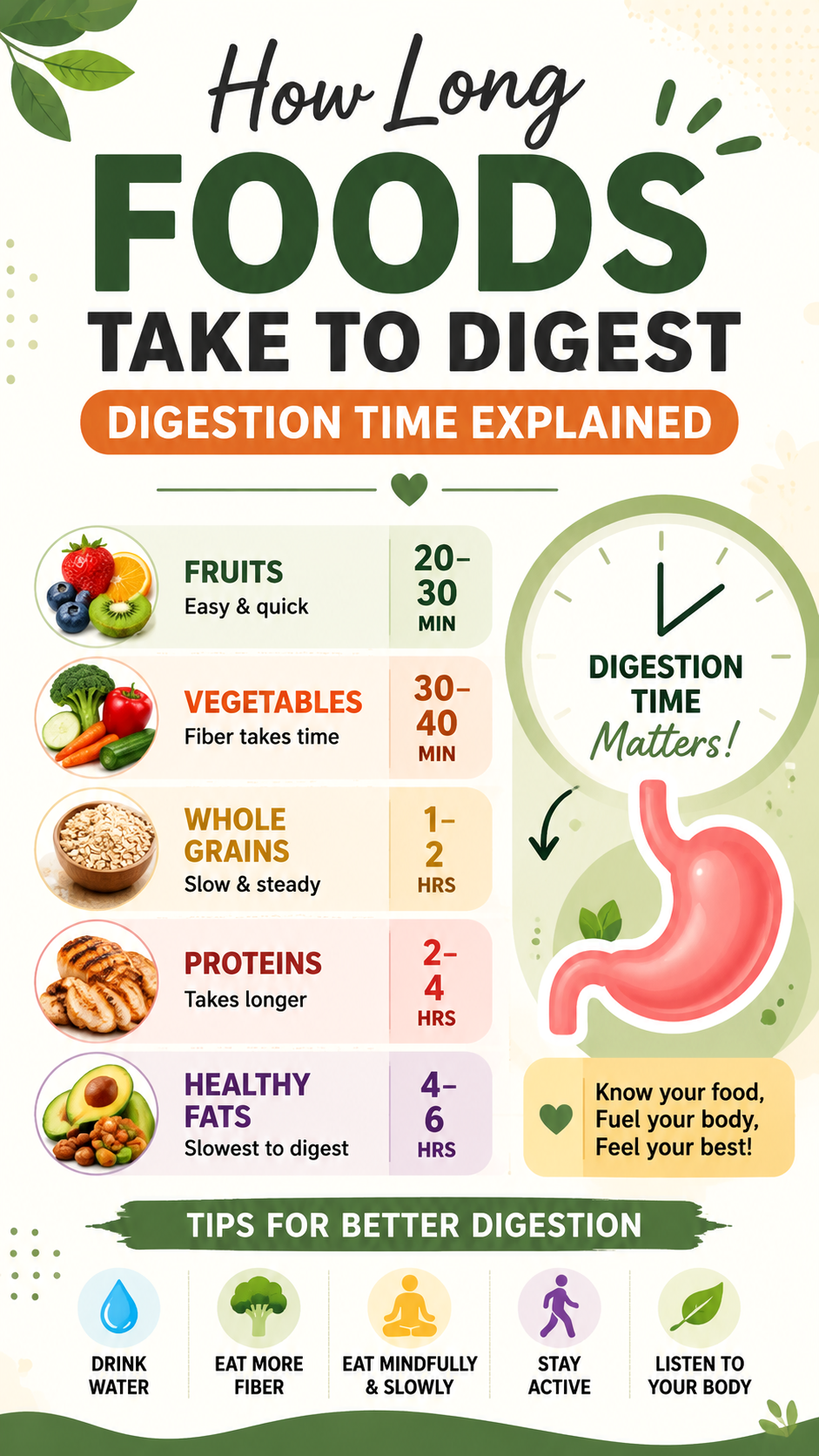
Understanding how long foods take to digest can be surprisingly helpful when making everyday nutrition decisions. Whether you are trying to improve digestive health, manage energy levels, reduce bloating, or simply learn more about how your body works, knowing the digestion time of common foods provides valuable insight. Different foods move through the digestive system at different rates, and factors such as fiber content, fat levels, protein composition, hydration, and overall health all influence the process.
Many people assume that all foods digest at roughly the same speed, but the reality is much more complex. Some foods can move through the stomach relatively quickly, while others remain there for several hours before entering the small intestine. Understanding these differences can help you plan meals more effectively and make informed dietary choices.
Key Takeaways
- Different foods digest at different speeds based on their composition.
- Fiber, fat, and protein significantly influence digestion time.
- Hydration plays an important role in healthy digestion.
- Balanced meals often digest more slowly than single food items.
- Digestion speed can affect energy levels and feelings of fullness.
- Individual factors such as age, activity, and health conditions matter.
What Digestion Time Really Means
Digestion time refers to the period it takes for food to move through various stages of the digestive system. This process begins in the mouth, continues through the stomach and intestines, and ends when waste leaves the body.
The digestive journey is not identical for everyone. Factors such as metabolism, meal size, hydration status, stress levels, and physical activity can influence how quickly food moves through the system. Even the same meal may digest differently on different days.
Important: Digestion time is not necessarily a measure of whether a food is healthy or unhealthy. Fast-digesting foods and slow-digesting foods both have important roles in a balanced diet.
The Digestive Process Step by Step
Before exploring the digestion times of common foods, it helps to understand what happens during digestion.
1. The Mouth
Digestion begins with chewing. Saliva contains enzymes that start breaking down carbohydrates before food even reaches the stomach.
2. The Stomach
The stomach mixes food with acids and digestive enzymes. Proteins begin breaking down here, while fats and carbohydrates continue undergoing processing.
3. The Small Intestine
Most nutrient absorption occurs in the small intestine. Enzymes from the pancreas and bile from the liver help break down nutrients into absorbable forms.
4. The Large Intestine
Water and electrolytes are absorbed, while beneficial gut bacteria help process certain fibers and undigested compounds.
How Long Fruits Typically Take to Digest
Fruits are often among the fastest-digesting foods due to their high water content and natural sugars.
Water-Rich Fruits
Fruits such as watermelon, oranges, grapefruit, and berries generally move through the stomach relatively quickly. Their high moisture content makes them easier to process.
Moderate-Fiber Fruits
Apples, pears, peaches, and plums contain more fiber, which can slightly slow digestion while supporting gut health.
- Rich in vitamins and antioxidants
- Provide hydration
- Support digestive regularity
- Can promote satiety despite lower calorie density
Vegetable Digestion Times
Vegetables vary considerably in digestion speed depending on their fiber content and cooking method.
Cooked Vegetables
Cooking softens plant fibers, making vegetables easier to digest. Steamed carrots, zucchini, squash, and spinach are generally gentler on the digestive system.
Raw Vegetables
Raw vegetables often require more digestive effort because their fiber structures remain intact. Salads, cabbage, broccoli, and cauliflower may stay in the digestive tract longer.
While slower digestion may sometimes cause temporary fullness, fiber-rich vegetables contribute significantly to long-term digestive wellness.
Why This Matters
- Fiber helps support regular bowel movements.
- Vegetables contribute to a healthy gut microbiome.
- Slower digestion can improve feelings of fullness after meals.
Protein Foods and Digestion Speed
Protein-rich foods generally take longer to digest than simple carbohydrates because the body must break complex protein structures into amino acids.
Eggs
Eggs are highly nutritious and provide quality protein. They typically offer a balance between digestibility and sustained satiety.
Fish
Many types of fish digest relatively efficiently compared to some heavier protein sources. Fish also provides beneficial omega-3 fatty acids.
Chicken and Turkey
Lean poultry supplies protein without excessive fat, making it a popular option for balanced digestion and sustained energy.
Red Meat
Red meat often requires more digestive effort due to its protein density and varying fat content. Larger portions may remain in the stomach longer than leaner protein sources.
Pro Tip: Pair protein-rich foods with vegetables and adequate hydration to support comfortable digestion and balanced nutrient absorption.
How Grains and Carbohydrates Digest
Carbohydrates can digest at dramatically different speeds depending on their structure and fiber content.
Refined Carbohydrates
White bread, pastries, crackers, and other refined products often digest more rapidly because much of their fiber has been removed.
Whole Grains
Brown rice, oats, quinoa, barley, and whole wheat products contain fiber that slows digestion and helps stabilize energy levels.
- Support longer-lasting fullness
- Provide valuable nutrients
- May contribute to more balanced blood sugar responses
- Help support digestive regularity
The Impact of Fat on Digestion
Fat is one of the most influential nutrients when it comes to digestion speed. Meals high in fat often stay in the stomach longer because fat slows gastric emptying.
Foods such as nuts, seeds, avocados, cheese, and certain oils contribute healthy fats that can increase satiety and support nutrient absorption.
This slower digestive process is not necessarily negative. In many cases, it helps people feel satisfied for longer periods after eating.
Healthy Sources of Dietary Fat
- Avocados
- Nuts and seeds
- Olive oil
- Fatty fish
- Natural nut butters
How Mixed Meals Affect Digestion
Most meals contain a combination of carbohydrates, proteins, fats, and fiber. These combinations significantly influence overall digestion time.
A meal consisting of grilled chicken, vegetables, and brown rice will digest differently than a bowl of fruit or a piece of toast. Because nutrients interact during digestion, mixed meals often digest at a moderate pace.
Important: The slowest-digesting component of a meal often has the greatest influence on how long the entire meal remains in the stomach.
Factors That Influence Digestion Time
Food composition is only part of the story. Many personal and lifestyle factors affect digestion.
Hydration
Water helps food move smoothly through the digestive tract and supports many digestive processes.
Physical Activity
Regular movement supports healthy digestion and overall gastrointestinal function.
Stress Levels
High stress may alter digestive function and contribute to digestive discomfort in some individuals.
Meal Size
Larger meals naturally take longer to process than smaller portions.
Individual Health Factors
Age, metabolism, digestive conditions, medications, and overall health can all affect digestion speed.
Tips to Support Healthy Digestion
While digestion speed varies naturally, certain habits can help promote digestive comfort and efficiency.
- Eat meals at a relaxed pace.
- Chew food thoroughly.
- Stay hydrated throughout the day.
- Include fiber-rich foods regularly.
- Maintain consistent physical activity.
- Manage stress when possible.
- Avoid excessively large meals before bedtime.
Understanding Fullness and Digestion
Many people associate feeling full with how slowly food digests. While slower digestion can contribute to satiety, other factors such as protein intake, fiber content, and meal volume also play important roles.
Foods that combine fiber, protein, and healthy fats often provide the most sustained feeling of fullness. This balance can help support healthy eating habits and consistent energy levels throughout the day.
At a Glance
- Fruits generally digest faster than protein-rich foods.
- Fiber tends to slow digestion while supporting gut health.
- Fat significantly increases meal digestion time.
- Mixed meals digest differently than single foods.
- Hydration and lifestyle habits affect digestive efficiency.
Conclusion
Learning how long foods take to digest offers valuable insight into the relationship between nutrition and digestive health. While digestion times vary from person to person, understanding the general patterns of fruits, vegetables, proteins, grains, and fats can help you make more informed food choices.
Rather than focusing solely on speed, it is important to consider overall nutritional quality, balance, and how different foods make you feel. A healthy digestive system thrives on variety, hydration, movement, and mindful eating habits. By paying attention to digestion and food composition, you can create meals that support both comfort and long-term wellness.
Tags
Digestion Time Food Digestion Digestive Health Nutrition Guide Healthy Eating Gut Health Meal Planning Wellness Tips