
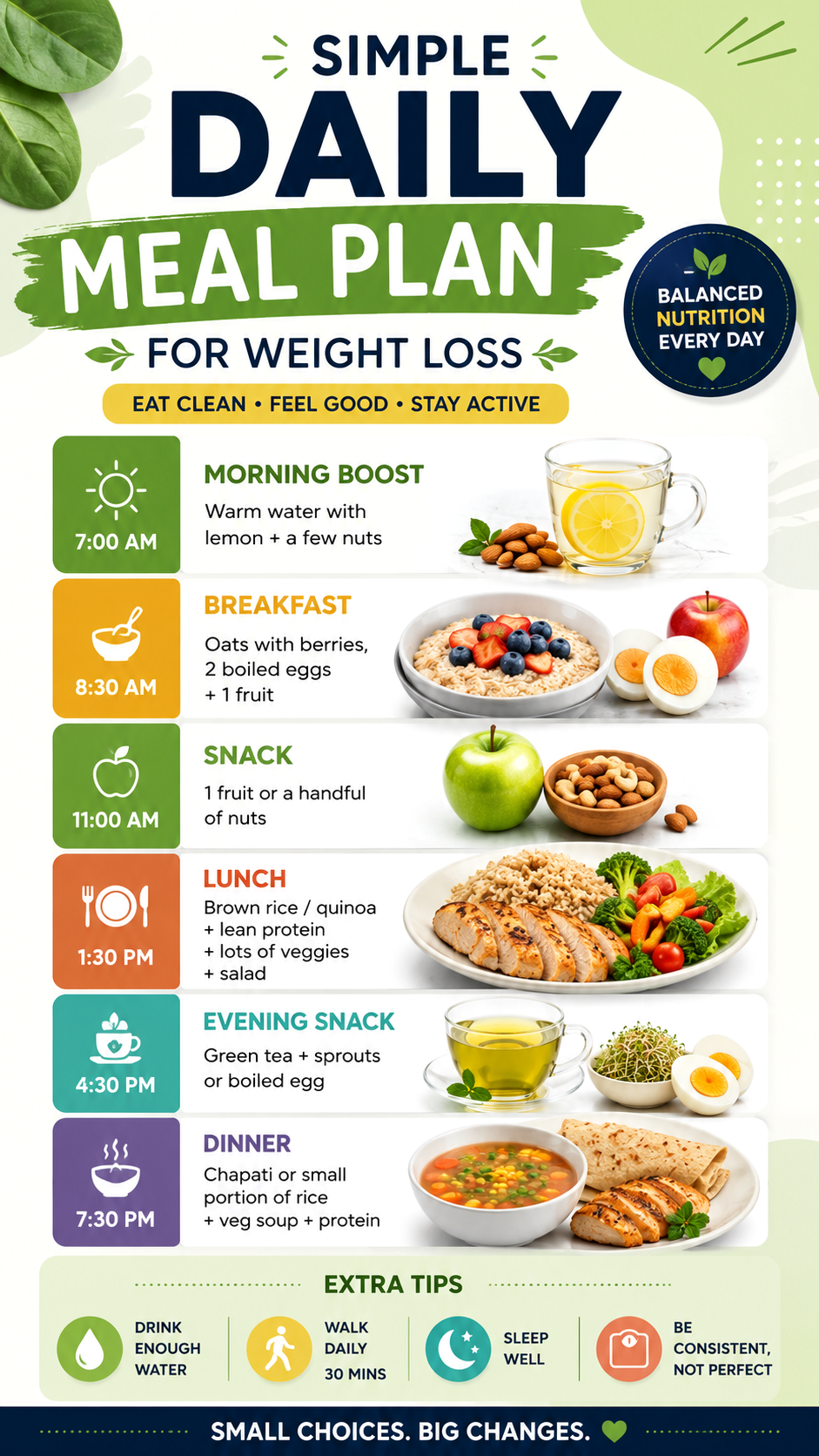
Weight loss often feels complicated because there is so much conflicting advice online. One day you are told to skip meals, the next day you are encouraged to eat every two hours. In reality, a sustainable approach is usually much simpler. A balanced daily meal structure built around whole foods, smart portions, and consistency can make healthy eating easier to follow.
The meal pattern featured here reflects a practical approach that many people use when aiming to support fat loss while maintaining energy throughout the day. Rather than focusing on extreme restrictions, the emphasis is on balanced meals, nutrient variety, and daily habits that can become part of everyday life.
Key Takeaways
- Build meals around protein, fiber, and whole foods
- Eat consistently instead of relying on extreme restriction
- Choose satisfying snacks to reduce overeating later
- Focus on portion awareness rather than eliminating food groups
- Combine healthy eating with regular daily movement
Why Simple Meal Plans Work for Weight Loss
Many successful weight loss routines share one thing in common: simplicity. When meals become predictable and easy to prepare, decision fatigue decreases and consistency becomes easier.
A simple meal plan can help:
- Reduce impulsive eating
- Create regular eating patterns
- Support balanced nutrition
- Make grocery shopping easier
- Encourage mindful portion sizes
Healthy eating does not require expensive ingredients or highly structured diets. Everyday foods prepared thoughtfully can support long term goals.
Important: Sustainable weight loss is rarely about perfection. Small habits repeated daily usually create better long term results than short periods of extreme dieting.
Starting the Morning with Light Hydration
Morning routines often set the tone for the rest of the day. Beginning with warm water and simple additions such as lemon can feel refreshing and encourage hydration early in the day.
Adding a small portion of nuts provides a light source of healthy fats and can help make the transition into breakfast feel more satisfying.
Morning Routine Ideas
- Drink water shortly after waking up
- Avoid jumping straight into sugary foods
- Create a calm eating environment
- Maintain consistency instead of seeking perfection
Hydration itself does not directly cause fat loss, but staying hydrated can support energy levels and healthy daily routines.
Building a Balanced Breakfast
Breakfast is often easier to maintain when it combines protein, fiber, and carbohydrates. A simple combination such as oats, eggs, and fruit creates variety while remaining approachable.
Oats provide satisfying texture and fiber. Eggs contribute protein. Fruit introduces natural sweetness and additional nutrients.
Breakfast Components That Support Fullness
- Whole grains
- Protein sources
- Fresh fruit
- Moderate portions
Skipping breakfast is not necessary for weight loss unless it fits personal preference. What matters more is the quality and total balance of your daily intake.
Smart Snacking Without Overcomplicating It
Snacks often get blamed for slowing progress, but thoughtful snacks can actually support healthy eating habits.
Choosing fruit or a moderate portion of nuts offers convenience and helps bridge longer gaps between meals.
Useful snack characteristics include:
- Easy to prepare
- Reasonably filling
- Balanced in nutrients
- Portion conscious
Pro Tip: Prepare snacks before hunger becomes intense. Pre-portioned options often make mindful eating easier than eating directly from large packages.
Creating a Balanced Lunch Plate
Lunch is often where energy levels either stabilize or crash. A balanced plate typically includes complex carbohydrates, vegetables, protein, and fresh elements.
The featured structure combines foods that many people find satisfying:
- Rice or flatbread for energy
- Vegetables for volume and nutrients
- Protein to support fullness
- Salad for freshness
This style of eating supports variety while avoiding unnecessary restriction.
Why This Matters
Balanced lunches can improve satisfaction and reduce afternoon cravings. Meals that combine multiple food groups are often easier to sustain over time.
The Role of Protein in Everyday Eating
Protein appears repeatedly throughout balanced meal plans because it contributes to satisfaction and supports everyday nutrition goals.
Protein choices may include:
- Eggs
- Chicken
- Fish
- Beans
- Lentils
- Greek yogurt
- Tofu
There is no single perfect protein source. Variety can make meals more enjoyable and easier to maintain.
Simple Ways to Include More Protein
- Add eggs to breakfast
- Include legumes with lunch
- Pair snacks with protein
- Include protein at dinner
Evening Snacks That Feel Light Yet Satisfying
Late afternoon and evening hunger can lead to overeating later if ignored completely.
Light options such as tea, sprouts, or boiled eggs may feel more balanced than highly processed alternatives.
Some people benefit from structured snacks because they reduce intense evening cravings.
Important: Hunger is not failure. Building planned eating moments into your day can improve consistency and reduce unnecessary overeating.
Keeping Dinner Balanced and Comfortable
Dinner often becomes the largest meal of the day, but lighter balanced meals can feel more comfortable for many people.
A practical dinner structure may include:
- Moderate carbohydrates
- Vegetable soup
- Lean protein
- Reasonable portions
Eating enough at dinner matters just as much as avoiding excess. Satisfaction helps maintain healthy routines the next morning.
Healthy Habits Beyond the Plate
Nutrition is only one part of the picture. Daily movement and lifestyle habits often support progress in meaningful ways.
Lifestyle Habits That Complement Healthy Eating
- Walk regularly
- Prioritize sleep
- Drink enough water
- Reduce highly processed foods
- Create realistic expectations
Walking is especially approachable because it does not require specialized equipment and can fit many schedules.
How to Stay Consistent Without Feeling Restricted
One of the biggest reasons people abandon healthy routines is feeling deprived. Consistency becomes easier when meals feel enjoyable and flexible.
Strategies for Long Term Success
- Plan meals ahead
- Allow flexibility
- Avoid all-or-nothing thinking
- Celebrate small wins
- Track habits instead of only outcomes
Healthy eating should fit into life rather than take over life.
Adjusting a Meal Plan to Your Lifestyle
No daily meal structure works perfectly for everyone. Activity levels, preferences, schedules, and cultural eating patterns all matter.
Questions worth considering include:
- Do you prefer larger or smaller meals?
- Do you enjoy cooking?
- Do certain foods keep you fuller?
- What routines feel realistic?
Pro Tip: Build your routine around foods you genuinely enjoy. Sustainability usually beats intensity.
At a Glance
- Prioritize balanced meals over strict rules
- Include protein and fiber throughout the day
- Plan satisfying snacks
- Stay active with simple daily movement
- Focus on habits that feel sustainable
Conclusion
A simple daily meal plan for weight loss does not need to be restrictive or complicated. Building meals around balanced ingredients, regular eating patterns, and realistic habits creates a foundation that feels achievable.
Whether your goal is healthier eating, improved consistency, or gradual progress, focusing on simple routines can make the process feel less overwhelming and more enjoyable.
Start small, stay flexible, and allow your routine to evolve over time. Sustainable habits often create the most meaningful results.
Tags
Weight Loss Healthy Meal Plan Clean Eating Balanced Diet Nutrition Tips Healthy Lifestyle Meal Prep