
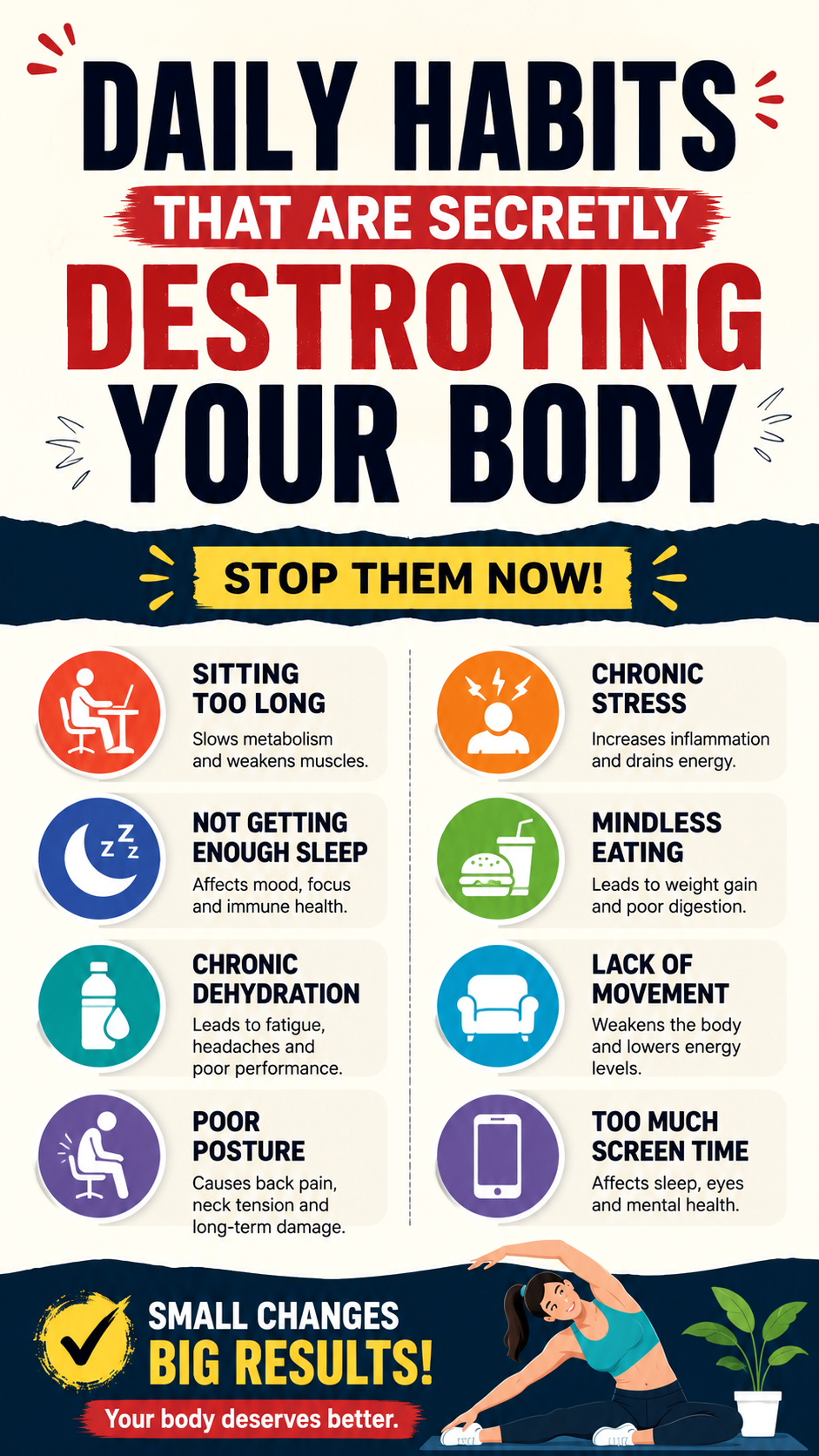
Many people focus on major health decisions such as diet plans, workout programs, or medical checkups. While those choices certainly matter, it is often the small daily habits that have the biggest long-term impact on overall well-being. Certain routines can slowly wear down your body without obvious warning signs. Over time, these seemingly harmless behaviors may affect energy levels, posture, metabolism, sleep quality, cardiovascular health, and mental performance.
Understanding which habits may be working against your health is the first step toward creating a stronger, healthier lifestyle. The good news is that most of these habits are completely reversible with simple adjustments and greater awareness.
Key Takeaways
- Small daily habits can have major long-term health consequences.
- Poor sleep, prolonged sitting, and dehydration affect physical performance.
- Chronic stress impacts both mental and physical wellness.
- Healthy routines are often more effective than extreme lifestyle changes.
- Consistency matters more than perfection.
- Simple adjustments can dramatically improve overall health.
Why Daily Habits Matter More Than You Think
Your body is constantly adapting to the choices you make. Whether you are sitting, walking, eating, sleeping, or working, your body responds to repeated patterns. Positive habits create a foundation for health, while unhealthy habits gradually contribute to physical strain and reduced performance.
One unhealthy decision rarely causes major damage on its own. The real problem occurs when small behaviors are repeated every day for months or years. These accumulated effects often become visible only after symptoms begin to appear.
Important: Most health challenges do not develop overnight. They are often the result of repeated daily actions that slowly influence the body’s systems over time.
Habit #1: Sitting for Too Long
Modern lifestyles encourage extended periods of sitting. Whether working at a desk, driving, or relaxing in front of screens, many people spend most of their day seated.
Prolonged sitting can contribute to:
- Reduced circulation
- Poor posture
- Back and neck discomfort
- Lower calorie expenditure
- Muscle weakness
Even regular exercise may not fully offset the effects of sitting all day. Short movement breaks throughout the day can make a significant difference.
How to Improve
- Stand up every 30 to 60 minutes.
- Take short walking breaks.
- Stretch regularly.
- Use a standing desk when possible.
Habit #2: Not Getting Enough Sleep
Sleep is one of the most powerful recovery tools available to the human body. Yet many people consistently sacrifice sleep due to work, entertainment, or busy schedules.
Insufficient sleep may affect:
- Memory and concentration
- Hormonal balance
- Immune function
- Mood regulation
- Energy levels
The body performs critical repair processes during sleep. Missing out on these restorative hours can gradually affect overall health and performance.
Healthy Sleep Habits
- Maintain a consistent sleep schedule.
- Limit screen exposure before bed.
- Create a dark and quiet sleeping environment.
- Avoid excessive caffeine late in the day.
Why This Matters
Sleep affects nearly every system in the body. Improving sleep quality often leads to better energy, improved focus, enhanced recovery, and stronger long-term health outcomes.
Habit #3: Chronic Dehydration
Many people underestimate the importance of hydration. Mild dehydration can affect physical performance, concentration, mood, and overall comfort.
Water plays a role in numerous bodily functions, including:
- Temperature regulation
- Nutrient transportation
- Joint lubrication
- Digestion
- Cell function
Waiting until you feel extremely thirsty is not always the best indicator that your body needs water.
Simple Hydration Tips
- Carry a reusable water bottle.
- Drink water consistently throughout the day.
- Increase intake during exercise.
- Monitor hydration during hot weather.
Habit #4: Constant Stress Without Recovery
Stress is a natural part of life, but chronic stress can place significant strain on the body. When stress becomes constant, the body’s recovery systems struggle to keep up.
Long-term stress may contribute to:
- Fatigue
- Sleep disruption
- Digestive issues
- Reduced concentration
- Increased muscle tension
Pro Tip: Recovery is just as important as productivity. Building relaxation into your schedule can help maintain both physical and mental well-being.
Ways to Reduce Daily Stress
- Practice deep breathing.
- Spend time outdoors.
- Exercise regularly.
- Maintain social connections.
- Set realistic boundaries.
Habit #5: Poor Posture Throughout the Day
Technology has changed how people work and communicate, but it has also introduced posture challenges. Looking down at devices or slouching for long periods can create unnecessary strain.
Common consequences include:
- Neck discomfort
- Back pain
- Shoulder tension
- Reduced mobility
- Muscle imbalances
Improving posture does not require perfection. Small corrections made consistently can produce meaningful results.
Posture Improvement Strategies
- Keep screens at eye level.
- Strengthen core muscles.
- Stretch tight muscle groups.
- Use ergonomic workstations.
Habit #6: Mindless Snacking and Overeating
Many eating decisions occur automatically. Snacking while distracted or eating due to boredom can contribute to excessive calorie intake without providing meaningful satisfaction.
Mindful eating encourages greater awareness of hunger and fullness cues. Paying attention during meals often improves food choices and portion control.
Better Eating Habits
- Eat without distractions when possible.
- Slow down during meals.
- Focus on nutrient-dense foods.
- Plan healthy snacks ahead of time.
Habit #7: Ignoring Physical Activity
Regular movement supports cardiovascular health, muscular strength, mobility, and mental well-being. Unfortunately, many people spend entire days with minimal physical activity.
Exercise does not need to be extreme. Consistent movement often delivers better results than occasional intense workouts.
Important: Walking, stretching, cycling, strength training, and recreational activities all contribute to better health. The best exercise routine is the one you can maintain consistently.
Easy Ways to Move More
- Take daily walks.
- Use stairs instead of elevators.
- Schedule exercise sessions.
- Find activities you genuinely enjoy.
Habit #8: Excessive Screen Time
Digital devices offer incredible convenience, but excessive screen exposure can influence sleep quality, posture, productivity, and mental wellness.
Many people spend hours switching between smartphones, computers, tablets, and televisions without realizing how much time has passed.
Managing Screen Use
- Set designated screen-free periods.
- Take regular eye breaks.
- Avoid screens before bedtime.
- Prioritize real-world activities and movement.
Building Healthier Daily Habits
One of the biggest mistakes people make is trying to change everything at once. Sustainable health improvements often come from small, manageable adjustments that become part of everyday life.
Instead of focusing on perfection, concentrate on progress. Choose one habit to improve and build momentum gradually.
A Practical Habit-Building Approach
- Identify one unhealthy habit.
- Create a simple replacement behavior.
- Track progress consistently.
- Celebrate small wins.
- Add new improvements over time.
Healthy routines are not built overnight. They are created through repeated actions that align with your long-term goals.
At a Glance
- Move regularly throughout the day.
- Prioritize consistent sleep.
- Stay hydrated.
- Manage stress proactively.
- Focus on sustainable habits rather than quick fixes.
Conclusion
Your health is influenced by countless small decisions made every day. While some habits may seem harmless in the moment, their long-term effects can significantly impact how you feel, move, and perform. The encouraging reality is that positive change does not require dramatic action.
By becoming aware of habits such as prolonged sitting, poor sleep, dehydration, chronic stress, inactivity, excessive screen use, and unhealthy eating patterns, you can begin making practical improvements that support lasting wellness. Small adjustments practiced consistently often create the biggest transformation over time.
Start with one habit, stay consistent, and allow those improvements to build upon each other. Your future self will thank you for the healthy choices you make today.
Tags
Healthy Habits Wellness Tips Healthy Lifestyle Body Health Self Care Daily Wellness Health Tips Lifestyle Changes